
Ambiance and warmth, without the chimney.
Berkeley County's mild Lowcountry winters rarely call for a wood-burning setup—electric fireplaces give Moncks Corner, Goose Creek, and Hanahan homes real ambiance and supplemental heat with no venting, no chimney, and a same-day install. Find the right unit and connect with a trusted local dealer.
Every Project Starts From One of These Five Situations
A climate built for flexible heat, not furnace-grade output.
Berkeley County sits in climate zone 3A, with an average winter low around 39°F and roughly 1,844 heating degree days a year—about a fifth of what a home in Duluth, MN racks up over the same winter. Cold snaps do come through the Lowcountry, but they're short, and most homes here are built and heated for South Carolina's long cooling season, not January in the northern plains. That's a very different heating equation than a wood-heavy county, and it's part of why wood stoves and pellet stoves see almost no demand here—oak, pine, and hickory are common trees across Berkeley County, but they're landscape and lumber species, not part of a heating culture the way they are farther inland or up north.
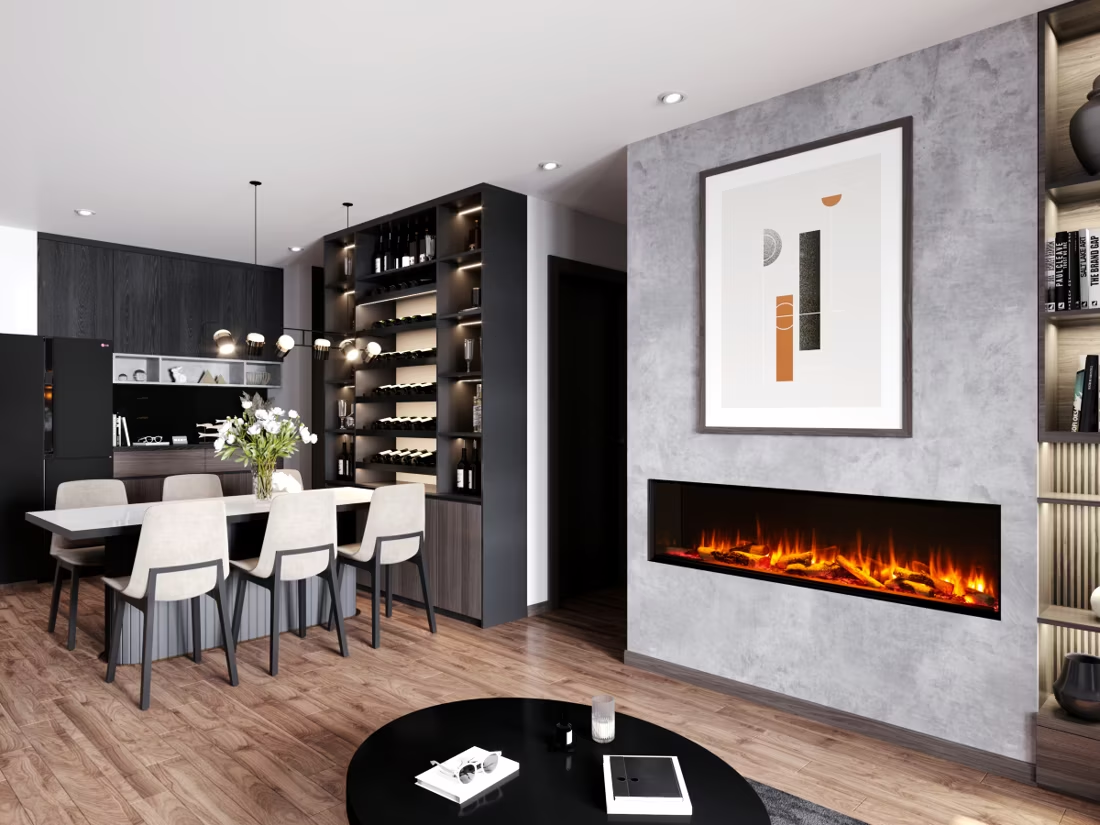
Electric fireplaces fill the gap well. They plug into a standard outlet or a dedicated circuit run by a licensed electrician tied to your Berkeley Electric Cooperative service, need no chimney, no gas line, and no combustion venting, and can go into a new-construction great room in Cane Bay or Carnes Crossroads, a renovated living room in older Moncks Corner, or a condo near Hanahan just as easily. They also sidestep any indoor air quality tradeoffs—Berkeley County has no wood-smoke or non-attainment concerns to navigate, but an electric unit produces zero combustion byproducts regardless, which matters to homeowners who want the look of a fire without any emissions question at all.
Three steps. No salesperson until you're ready.
Tell us about your project
Your zip code, your situation, and the fuel you're leaning toward—or let the answers point you to one.
See what's actually available
The brands dealers within 100 miles genuinely carry—real options, never a catalog mirage.
Get your dealer & Project Guide
A trusted local dealer, plus the free Project Guide & Parts List that names every component of the job.
Frequently Asked Questions
How much does an electric fireplace installation cost in Berkeley County?
Most electric fireplace projects in Berkeley County run $300 to $2,500. A plug-in insert or wall-mounted unit that uses an existing outlet sits at the low end. A built-in electric fireplace or mantel package that requires a licensed electrician to run a dedicated 20-amp circuit—common for larger units in a Goose Creek or Summerville-area new build—lands higher, though still well under what a gas line install or masonry chimney work would cost. There's no venting, flue, or chimney to budget for, which is the single biggest reason electric projects here come in cheaper and faster than gas or wood equivalents.
Will an electric fireplace actually heat my home in Berkeley County's winters?
For most of the county, yes as supplemental heat—not as your primary system. With an average winter low near 39°F and only around 1,844 heating degree days a year, Berkeley County doesn't see the sustained sub-freezing stretches that demand a whole-home heat source. A typical electric fireplace puts out 5,000 to 9,000 BTUs, which is plenty to take the chill off a living room in Moncks Corner or a sunroom near Lake Moultrie on a cold January morning, alongside your existing HVAC. If you're trying to heat a large open floor plan as the sole source of warmth, talk to a local dealer about zone heating strategy rather than relying on the fireplace alone.
Do I need a permit to install an electric fireplace in Berkeley County?
It depends on the scope. A plug-in electric insert or freestanding unit that uses an existing outlet typically doesn't require a permit. If the installation involves running a new dedicated circuit or altering existing wiring, Berkeley County's building codes enforcement requires an electrical permit and the work must be done by a licensed electrician. This is a much lighter lift than the gas line and venting permits required for a gas fireplace, and most local dealers can tell you within a few minutes of seeing your space whether your project needs one.
What's the difference between an electric insert, a wall-mounted unit, and a built-in electric fireplace?
An electric insert is sized to slide into an existing masonry fireplace opening, which makes it a popular retrofit option for older homes around Moncks Corner that have a fireplace but no interest in dealing with wood or a chimney sweep. A wall-mounted electric fireplace hangs like a large flat-screen TV and needs only a nearby outlet, making it a favorite in newer Goose Creek and Hanahan builds without an existing hearth. A built-in electric fireplace is framed into a wall or custom surround during a remodel or new construction, giving the most seamless, furniture-grade look but usually requiring that dedicated circuit. Which one fits depends mostly on whether you're retrofitting an old fireplace or starting from a blank wall.
Will my electric fireplace still work during a power outage?
No—this is worth being upfront about. Unlike a wood stove, an electric fireplace has zero function without grid power, and Berkeley County does see outages during hurricane season and severe summer storms. If backup heat during an outage is a real priority for your household, a gas fireplace with a battery-backed ignition system is the better fit, since it can run without electricity at all. Many homeowners here choose electric for everyday ambiance and easy operation and accept that it simply won't be available during a Berkeley Electric Cooperative outage—that tradeoff is worth discussing with a local dealer before you buy.
Electric vs. gas fireplace—which makes more sense for my Berkeley County home?
Gas is the standard choice locally when you want real, consistent heat output, a live flame, and function during a power outage—it requires a gas line or propane tank and a proper venting plan, and the installation is more involved and more expensive. Electric is the standard choice when you want ambiance, supplemental warmth, flexible placement anywhere in the house, and the lowest-cost, lowest-hassle install—with the tradeoff that it does nothing during an outage and won't be your primary heat source on the county's occasional hard freeze. Many homeowners in newer Cane Bay or Carnes Crossroads developments start with electric for a secondary room and consider gas for the main living space later.
Are wood stoves or pellet stoves an option in Berkeley County?
Realistically, no—not as a practical heating choice. With winter lows averaging 39°F and heating degree days under 2,000 a year, Berkeley County's climate simply doesn't generate the sustained cold that makes wood or pellet heat worthwhile, and there's no local cutting-permit infrastructure or wood-heat culture the way there is in colder states. Oak, pine, and hickory are common trees across the county, but they show up in landscaping and lumber, not as firewood stacked for winter. A small number of homeowners still install a wood-burning fireplace purely for aesthetic and occasional-use appeal, but it's the exception rather than the norm here—electric and gas cover the vast majority of what local dealers install.
What should I look for in an electric fireplace for a humid coastal climate?
Berkeley County's Lowcountry humidity isn't usually a problem for electric units since there's no combustion, moisture byproduct, or creosote to manage—but it's still worth choosing a unit with a sealed heating element and corrosion-resistant hardware, especially for installs near Lake Moultrie, Lake Marion, or closer to the coast where salt air is a factor. LED flame-effect units with minimal moving parts tend to hold up well with low maintenance over time. A local dealer can point you toward models that are a good match for your specific location and usage—full-time living room use versus occasional sunroom ambiance calls for different unit classes.
Can an electric fireplace go into an older Moncks Corner home, or is it better suited to new construction?
Both work well, for different reasons. In an older home with an existing masonry fireplace, an electric insert is often the simplest upgrade—it drops into the opening you already have, requires no chimney work, and instantly makes a dormant fireplace usable again. In new construction or a remodel in growing areas like Cane Bay, Carnes Crossroads, or Nexton, a built-in electric fireplace with a custom surround is usually planned into the wall during framing, giving a cleaner, more furniture-integrated look. Either path is far less invasive than adding gas or wood-burning infrastructure, which is a big part of why electric shows up in both historic and brand-new Berkeley County homes.
Can I put a TV above my fireplace?
Yes—with an asterisk. Fireplaces are hot and TVs don't like heat. Either put a mantel between them to deflect rising warmth, or choose a fireplace with heat-management technology that creates a cool zone on the wall above—the wall stays around 125 degrees, barely warm, while the room still gets full heat. If you like clean lines and don't want a mantel, heat management is the answer.
Do electric fireplaces actually produce heat?
Yes—most put out around 4,800–5,000 BTUs from a standard outlet, which comfortably warms a bedroom, office, or den as a comfort-zone heater. What they won't do is carry a whole house the way wood, gas, or pellet can. Think of electric as ambiance-first with honest supplemental heat: flames on with no heat in July, flames plus warmth in January.
Can a fireplace actually lower my heating bill?
Yes—by creating a comfort zone. A furnace heats every square foot of the house just to warm the one room you're in; a gas fireplace on low burns roughly a sixth of the gas a typical furnace does. Set the furnace around 55–60 degrees as a baseline, then heat the rooms your family actually uses. Families who heat this way commonly save $20–$60 a month.
What is an in-home preview and do I need one?
It's a visit where a hearth professional measures your space, confirms the model you picked actually works in your home, and walks the specs—framing, gas line, venting, finish work—before anything is ordered. Some details you just can't know until you see the house. Never make a down payment without one; it's the single most-skipped step that burns buyers.
Stove and Fireplace Dealers in Berkeley County
Listings include WhyFire partner dealers, dealers we have verified as authorized for the brands we recommend, and established local businesses that carry hearth products. Every listing shows which one it is. The ones marked Preferred run on WhyFire's software, so they can show you real pricing and book your appointment right here. No manufacturer pays for placement. How we verify dealers →
WilliamSmith Fireplaces & Home Accents
Dirty Chimney, LLC
Berkeley Propane
Berkeley Propane
Fireplaces Plus
Four Corners Building Supply
Palmetto Outdoor Kitchens
Find your electric fireplace in Berkeley County.
Tell us a bit about your home and we'll put together a free Project Guide & Parts List for your electric fireplace—matched with a trusted local dealer who can size the unit, handle any electrical work, and get it installed right.
Find Your Fireplace →