
Effortless Warmth for Belton's Mild Winters.
No chimney, no wood, no gas line—just plug in or hardwire and go. Find the right electric fireplace for your Anderson County home and connect with a trusted local dealer.
Every Project Starts From One of These Five Situations
A mild climate makes electric the simple choice.
Belton sits in climate zone 3A at just under 900 feet elevation, with an average winter low of 31°F and a fairly mild heating season overall. That's a fraction of what a place like Fargo, ND sees—Fargo has a heating season nearly three times as demanding in a typical winter. Belton homeowners aren't fighting sub-zero nights or trying to keep a house warm through a week-long power outage in January. They're looking for supplemental heat on the occasional cold snap and a good-looking focal point the rest of the year, and that's exactly the job an electric fireplace is built for.
Depending on where you sit in Anderson County, your home is served by either Duke Energy Carolinas or Little River Electric Cooperative, with residential rates running around 13.9 cents per kWh. That makes electric heat inexpensive to run for zone heating in a den, sunroom, or bonus room—and because there's no venting, no gas line, and no wood to haul, installation is dramatically simpler than a wood or gas project. It's also the practical answer for the area's mobile and manufactured homes, where a wood-burning chimney or gas line retrofit often isn't realistic.
Three steps. No salesperson until you're ready.
Tell us about your project
Your zip code, your situation, and the fuel you're leaning toward—or let the answers point you to one.
See what's actually available
The brands dealers within 100 miles genuinely carry—real options, never a catalog mirage.
Get your dealer & Project Guide
A trusted local dealer, plus the free Project Guide & Parts List that names every component of the job.
Frequently Asked Questions
How much does an electric fireplace installation cost in Belton?
A plug-in electric insert or freestanding unit can run as little as $300 to $700 installed, since it typically just needs a standard 120V outlet. A built-in wall unit or a linear electric fireplace set into custom cabinetry or a media wall runs higher, often $2,000 to $4,000, mostly for the carpentry and finish work rather than the electrical hookup itself. If your chosen unit needs a dedicated 20-amp circuit, add an electrician's visit—usually a few hundred dollars—but there's no chimney, no venting, and no gas line to budget for, which is what keeps electric projects on the low end compared to wood or gas.
Can an electric fireplace actually heat a room, or is it just for looks?
Most electric fireplaces include a built-in heater in the 5,000 to 9,000 BTU range, which is enough to comfortably warm a single room—a den, bedroom, or sunroom—especially given Belton's mild winter lows around 31°F. They won't replace central heat for the whole house, but for zone heating on a cold snap, or for taking the chill off a room you use often, they do real work. If you're picturing whole-house heat, that's not the right expectation for electric; if you want supplemental warmth in the rooms you actually spend time in, it performs well here.
What does it cost to run an electric fireplace in Belton?
With Duke Energy Carolinas and Little River Electric Cooperative both charging around 13.9 cents per kWh in this area, a typical 1,500-watt heater setting costs roughly 21 cents per hour to run. Run it a few hours an evening through a cold snap and you're looking at under $2 a week in most cases—noticeably cheaper than running central heat to cover the same room. Flame-only mode with the heater off draws only a few watts, so ambiance without heat costs next to nothing.
Do I need a permit to install an electric fireplace in Belton?
In most cases, no. A plug-in electric fireplace that uses an existing outlet doesn't trigger a permit requirement. If your installer needs to run a new dedicated circuit or do any wiring modification for a built-in unit, that electrical work should go through a licensed electrician, and Anderson County may require an electrical permit for that specific work. Either way, it's a far simpler process than the building and venting permits required for wood or gas installations—there's no chimney or gas line inspection involved.
What's the difference between an electric fireplace, insert, and stove?
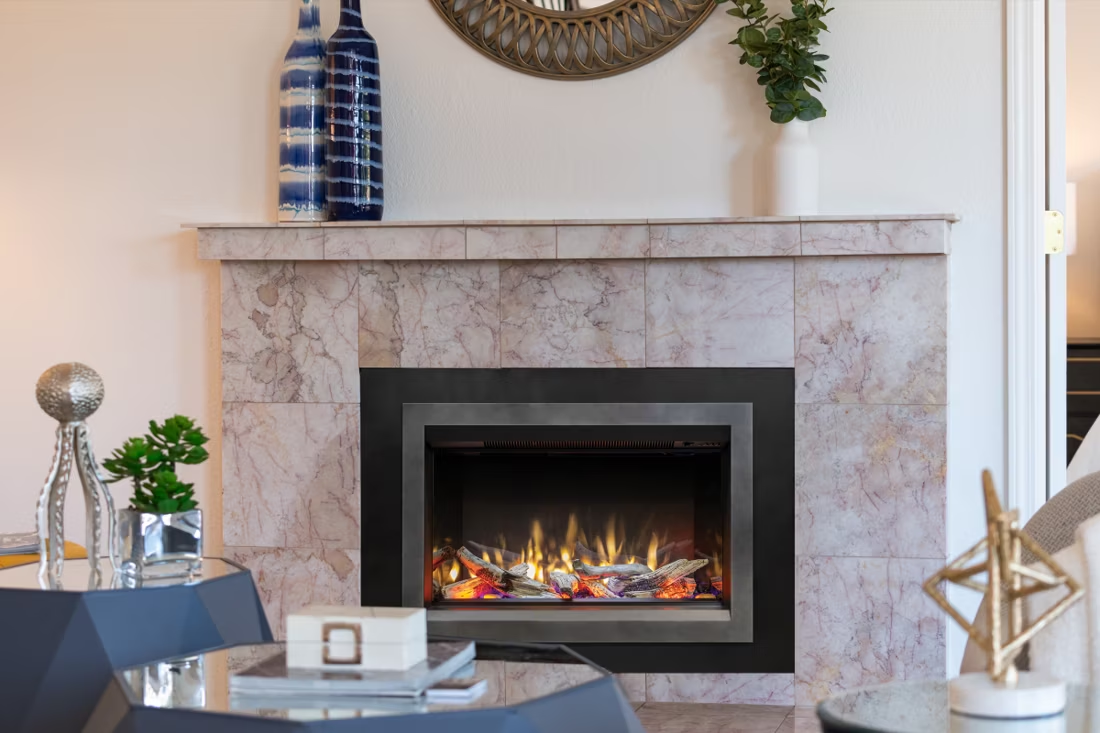
An electric fireplace is typically a built-in or wall-mounted unit, often a linear design, meant to be the focal point of a room. An electric insert is sized to slide into an existing masonry or wood-burning fireplace opening, letting you keep the existing mantel and surround while swapping in electric heat and flame effects. An electric stove is a freestanding cabinet-style unit made to look like a traditional wood stove, which works well in homes that want that look without the wood-burning maintenance. For Belton homes with an old, unused masonry fireplace, an insert is often the easiest upgrade since it uses the opening you already have.
Which electric utility serves my home in Belton—does it matter for my fireplace?
Belton is served by a mix of Duke Energy Carolinas and Little River Electric Cooperative depending on the exact address, and both charge similar residential rates around 13.9 cents per kWh. It doesn't affect which fireplace models will work—any standard electric fireplace runs on regular household voltage regardless of provider—but it's worth checking your bill to know your actual rate if you want to estimate running costs precisely, since co-op and investor-owned utility rates can shift over time.
Why don't more homes in Belton use wood or pellet stoves?
It comes down to climate. With winter lows averaging 31°F and only a mild, short heating season overall, Belton just doesn't get the sustained cold that makes wood or pellet heat worth the investment the way it is in, say, Burlington, VT. A handful of rural Anderson County homes still keep a wood stove for backup heat or nostalgia—oak, pine, and hickory are all common locally if someone wants to burn—but for most homeowners here, the mess of ash and the need for chimney maintenance isn't worth it when an electric fireplace delivers comparable comfort for the mild snaps this area actually sees.
What's the best electric fireplace for a South Carolina home?
Look for models with a good LED flame engine—brands like Dimplex, Napoleon, and Amantii are common choices carried by dealers in the Upstate. In Belton's humid subtropical climate, it's worth asking about a unit's moisture tolerance if it's going into a sunroom or a home without central air conditioning running constantly, since humidity can affect electronics over time. Beyond that, sizing comes down to the room and whether you want the heater running most days or mostly for ambiance—a local dealer can walk you through wattage and flame-effect options in person.
Electric vs. gas fireplace—which is right for my Belton home?
Gas fireplaces are also a solid fit here and give you a more authentic flame with higher heat output, but they require a gas line or propane tank and typically a larger upfront investment for venting. Electric skips all of that—no fuel line, no venting, and a much simpler install—in exchange for a lower ceiling on heat output and a flame effect that, while good on modern units, is still simulated. For a primary living space where you want serious heat, gas is worth considering. For a bedroom, sunroom, rental property, or anywhere simplicity and low running cost matter most, electric is usually the better fit in a climate as mild as Belton's.
Can I put a TV above my fireplace?
Yes—with an asterisk. Fireplaces are hot and TVs don't like heat. Either put a mantel between them to deflect rising warmth, or choose a fireplace with heat-management technology that creates a cool zone on the wall above—the wall stays around 125 degrees, barely warm, while the room still gets full heat. If you like clean lines and don't want a mantel, heat management is the answer.
Do electric fireplaces actually produce heat?
Yes—most put out around 4,800–5,000 BTUs from a standard outlet, which comfortably warms a bedroom, office, or den as a comfort-zone heater. What they won't do is carry a whole house the way wood, gas, or pellet can. Think of electric as ambiance-first with honest supplemental heat: flames on with no heat in July, flames plus warmth in January.
How much should I budget for a fireplace?
For an average home—covering the fireplace, the vent pipe, and basic installation—a budget between $3,900 and $5,500 gives you a lot of options across wood, gas, and pellet. By the time you add finish work, gas line, and electrical, the average complete installation lands between $5,000 and $12,000 all-in. In a remodel or new build, a good rule is to put about 2.5% of the total project cost toward the fireplace.
What is an in-home preview and do I need one?
It's a visit where a hearth professional measures your space, confirms the model you picked actually works in your home, and walks the specs—framing, gas line, venting, finish work—before anything is ordered. Some details you just can't know until you see the house. Never make a down payment without one; it's the single most-skipped step that burns buyers.
Nearby Dealers
Hearth shops serving Belton and the surrounding area. Every listing shows whether it is a WhyFire partner, a dealer we have verified as authorized for the brands we recommend, or a local business carrying hearth products. No manufacturer pays for placement. How we verify dealers →
White Jones Ace Hardware
Carolina Elite Fire
Blossman Gas - Anderson
Viridien Patio + Fireplace
Electric Service in Belton
An electric fireplace's heater draws about 1,500 watts—pennies per hour at local rates.
Duke Energy Carolinas, LLC
Little River Electric Coop Inc
Find your electric fireplace in Belton.
Tell us a bit about your home and we'll match you with the right electric fireplace or insert, plus a free Project Guide & Parts List with your exact parts and a trusted local dealer near Belton.
Find Your Fireplace →