
Warm, Reliable Heat for Lexington County's Mild Winters.
Instant heat at the flip of a switch, and a fireplace that still works when a Midlands ice storm takes the power out. Find the right gas unit and connect with a trusted local dealer.
Every Project Starts From One of These Five Situations
Comfort heat built for the occasional cold snap.
Batesburg-Leesville sits in climate zone 3A with an average winter low near 35°F and just 2,636 heating degree days a year—a far cry from the deep-freeze winters of places like Bismarck or Duluth. Most homes here don't need a fireplace to survive January; they need one that looks good, lights instantly, and adds real warmth on the handful of nights each winter when temperatures actually drop into the 20s.
In-town properties are generally within reach of Dominion Energy South Carolina's natural gas lines, while many homes on the outskirts of Lexington County—including outlying parts of the 29070 and 29006 zip codes—rely on propane instead. Either fuel works well in a modern direct-vent fireplace or insert. A gas insert dropped into an older masonry fireplace, common in the homes around downtown Batesburg-Leesville, is one of the most popular upgrades: it keeps the historic mantel and hearth while replacing a drafty, rarely-used firebox with something that actually gets used all winter.
Three steps. No salesperson until you're ready.
Tell us about your project
Your zip code, your situation, and the fuel you're leaning toward—or let the answers point you to one.
See what's actually available
The brands dealers within 100 miles genuinely carry—real options, never a catalog mirage.
Get your dealer & Project Guide
A trusted local dealer, plus the free Project Guide & Parts List that names every component of the job.
Frequently Asked Questions
How much does a gas fireplace installation cost in Batesburg-Leesville?
Most gas fireplace installations in the Batesburg-Leesville area run $3,800 to $9,500. A direct-vent gas insert going into an existing masonry fireplace with gas already run to the house sits at the lower end. A new built-in gas fireplace for a remodel or addition—with framing, venting, and a fresh gas line—lands in the middle to upper range. If your property is outside Dominion Energy's natural gas footprint and needs a new propane tank set, budget toward the higher end. A local dealer will give you a firm number after seeing your home.
Can I convert my existing wood-burning fireplace to gas?
Yes, and it's a common project in the older homes around downtown Batesburg-Leesville and the surrounding Lexington County neighborhoods. A gas insert typically installs into the existing masonry firebox using a stainless liner run up your current chimney, so the exterior chimney and mantel stay untouched. Expect $3,800 to $8,000 depending on whether you're on natural gas or propane and whether a new gas line needs to be run from the meter or tank to the fireplace. It's a straightforward way to get daily-use heat out of a fireplace that currently just sits there.
Should I plan for natural gas or propane?
It depends on where your property sits. In-town addresses close to Batesburg-Leesville's core are more likely to have access to Dominion Energy South Carolina's natural gas lines, especially if the home already has a gas water heater, range, or furnace. Rural and outlying properties throughout Lexington County typically rely on propane, delivered by one of several regional suppliers, either from a leased tank or one you own. Nearly every gas fireplace and insert sold today can be configured for either fuel—your installer sets the correct orifice and regulator based on what's available at your address.
Will a gas fireplace still work if the power goes out?
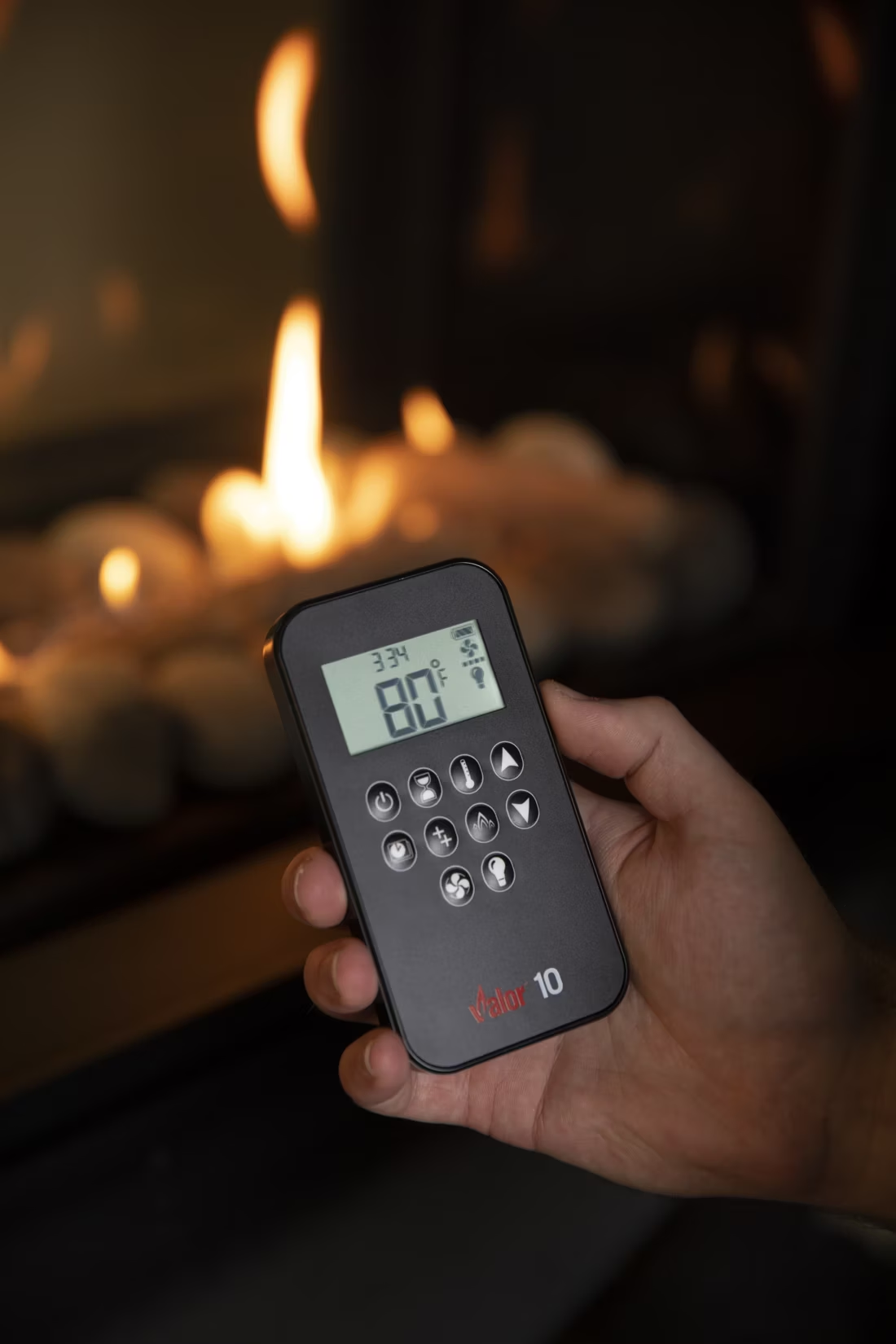
For most models, yes. South Carolina's Midlands see their share of ice storms and downed lines in winter, and a standing pilot or IPI (intermittent pilot ignition) gas fireplace will light and run on battery backup even with the grid down—just remember to keep fresh batteries in the unit. Valor fireplaces take a different approach: their pilot assembly generates its own electricity through a thermocouple, so the fireplace works during an outage with no batteries at all. If backup heat during storm season matters to you, ask your local dealer specifically about the ignition system before you buy.
What's the difference between a gas fireplace, gas insert, and gas stove?
A gas fireplace is a fully built-in unit framed into a wall, typically chosen for new construction or a remodel. A gas insert is sized to slide into an existing masonry firebox, turning an old wood fireplace into a sealed, efficient gas unit that vents through the existing chimney. A gas stove is a freestanding cabinet-style unit that sits on the floor and vents through a wall or existing flue, similar to a wood stove but running on gas. Given how many homes in Batesburg-Leesville have an older masonry fireplace already in place, an insert is usually the natural fit; new builds and additions lean toward a built-in fireplace or freestanding stove instead.
Do I need a permit to install a gas fireplace in Batesburg-Leesville?
Yes. Both the fireplace installation and any new gas line work require permits through Lexington County's Building Codes Department, and gas line work has to be performed or signed off by a licensed gas-fitter. Most established local hearth dealers handle the permit filing and inspection scheduling as part of the installation, so you're not left coordinating separate trades or paperwork on your own.
Should I get a vented or vent-free gas fireplace?
Vented (direct-vent) fireplaces draw combustion air from outside and exhaust it back outside through a sealed pipe—they run cleaner and are the most widely recommended option, especially for a room you use daily. Vent-free fireplaces burn fuel directly into the room with no outside venting; they're legal to install in South Carolina but come with strict room-size and ventilation requirements, and they release some water vapor and combustion byproducts into the living space. For a primary living area in a Batesburg-Leesville home, most local dealers steer customers toward direct-vent units; vent-free is sometimes used for smaller supplemental spaces like a converted sunroom or workshop.
How often does a gas fireplace need to be serviced?
Plan on an annual inspection, ideally in early fall before you start using it for the season. A technician checks the burner, pilot or ignition system, venting, and gas connections, and cleans the glass and interior. It's a much smaller job than sweeping a wood chimney—most local service providers charge somewhere between $125 and $200 for the visit—but it's still the step that catches a failing thermocouple or a sooted burner before it becomes a bigger repair.
Gas vs. wood—which makes more sense for a Batesburg-Leesville home?
With oak, pine, and hickory all common and easy to source locally, wood heat is still very workable here, and plenty of homeowners keep a wood-burning fireplace or stove for the look and feel of a real fire. But with only about 2,636 heating degree days a year and winter lows averaging in the mid-30s, few homes in this climate truly need wood as a primary heat source the way a colder region like Burlington, Vermont would. Gas tends to win for the room you actually use every evening—no wood to split or haul, no ash cleanup, and heat on demand—while some homeowners keep a wood-burning unit elsewhere in the house for backup or ambiance. Many local dealers can walk you through both if you're not sure which fits your household.
Can I put a TV above my fireplace?
Yes—with an asterisk. Fireplaces are hot and TVs don't like heat. Either put a mantel between them to deflect rising warmth, or choose a fireplace with heat-management technology that creates a cool zone on the wall above—the wall stays around 125 degrees, barely warm, while the room still gets full heat. If you like clean lines and don't want a mantel, heat management is the answer.
What's the difference between an insert and a zero-clearance fireplace?
An insert is a fireplace that slides into a pre-existing wood-burning fireplace—if you don't have one, there's nothing to insert it into. A zero-clearance fireplace is built into a framed wall, which makes it the answer for remodels and new construction. Simple test: existing masonry fireplace means insert; blank or framed wall means zero-clearance.
Can I install a fireplace myself?
If you're putting a fire in your house on purpose, it's best to work with an expert. Unless you're genuinely experienced in framing, gas line, vent pipe, and the national code on clearances to combustibles, have a professional do it—and ideally the same company that sells you the fireplace, so warranty, service, and liability all live under one roof.
Should the dealer who sells my fireplace also install it?
Ideally, yes. A fireplace project involves vent pipe, gas line, electrical, and often tile or stone. Hire three or four separate trades and you own the liability and the game of telephone between them. One company selling and installing means one accountable party, start to finish—ask about factory training, on-time completion records, and what happens if an inspection fails.
Nearby Dealers
Hearth shops serving Batesburg-Leesville and the surrounding area. Every listing shows whether it is a WhyFire partner, a dealer we have verified as authorized for the brands we recommend, or a local business carrying hearth products. No manufacturer pays for placement. How we verify dealers →
Barnes Oil And Propane
Ridge Lp Gas Inc.
Advanced Chimney Sweep, LLC
Palmetto Propane, Fuels, & Ice
Southern Propane
Find your gas fireplace in Batesburg-Leesville.
Tell us about your home and we'll match you with a trusted local dealer and send over a free Project Guide & Parts List—the right gas fireplace or insert, the exact vent kit, and what it takes to get it installed correctly.
Find Your Fireplace →