
Steady Gas Warmth for Andrews' Mild Lowcountry Winters.
Andrews doesn't need a furnace-grade heating system, but a propane fireplace turns a chilly Lowcountry evening into a comfortable one. Find the right unit and connect with a trusted local dealer.
Every Project Starts From One of These Five Situations
Warmth on demand for a town that rarely needs much of it.
Andrews sits at just 33 feet above sea level in Georgetown County's Lowcountry, where winter lows average a mild 34 degrees and the town has a winter heating load that's roughly a third of what a place like Fargo, ND sees in an average winter. Most Andrews homes get by with a heat pump for the handful of genuinely cold nights each January, which is exactly why a gas fireplace makes sense here: it's not about survival heat, it's about instant, radiant comfort on the nights that do dip into the 30s.
There's no natural gas utility serving Andrews—homes here run on propane, typically delivered and stored in an above-ground or buried tank from a regional supplier like Blossman Gas or AmeriGas. That doesn't change much about the fireplace itself; nearly every gas fireplace, insert, and stove on the market today can be configured to run on propane instead of natural gas. What it does mean is your installer will coordinate with a propane supplier as part of the project, and your ongoing fuel cost is tied to propane pricing rather than a metered gas bill.
Three steps. No salesperson until you're ready.
Tell us about your project
Your zip code, your situation, and the fuel you're leaning toward—or let the answers point you to one.
See what's actually available
The brands dealers within 100 miles genuinely carry—real options, never a catalog mirage.
Get your dealer & Project Guide
A trusted local dealer, plus the free Project Guide & Parts List that names every component of the job.
Frequently Asked Questions
How much does a gas (propane) fireplace installation cost in Andrews?
Most propane fireplace and insert installations in the Andrews area run $3,500 to $8,000, depending on the unit, whether you're converting an existing wood-burning fireplace or starting from scratch, and whether a new propane tank needs to be set. A direct-vent propane insert into an existing masonry fireplace with a tank already on the property tends to land on the lower end. Homes that need a new above-ground propane tank installed and a longer gas line run from the tank to the fireplace will sit toward the higher end. Local dealers will give you a firm number after seeing the space.
Does Andrews have natural gas, or is propane the only option?
Andrews doesn't have a natural gas utility running mains to homes, so propane is effectively the standard fuel for gas fireplaces here. That's true for most of Georgetown County outside the larger municipal areas. Propane is delivered and stored on-site in a tank—usually above-ground for residential fireplace use—through a regional supplier such as Blossman Gas. The fireplace itself doesn't change: nearly every model on the market ships in both natural gas and propane configurations, so you're not limited on style or brand by living outside a gas utility's service area.
Do I need a permit to install a gas fireplace in Andrews?
Yes—a building permit is required through the Georgetown County Building Codes Department for new gas fireplace installations, and any new propane line or tank work typically requires sign-off from your propane supplier's certified installer as well. Most local hearth dealers handle the county permitting as part of the installation, so you're not left coordinating trades yourself. Keep documentation of the permit and inspection—it matters for insurance and for resale.
Will my gas fireplace still work if the power goes out?
Most will, with the right ignition system. Units with a standing pilot or intermittent pilot ignition (IPI) and battery backup will light and run without grid power—useful in Andrews during the tropical storms and hurricane-season outages that hit the Lowcountry more often than winter cold does. Valor fireplaces take this further: their pilot assembly generates its own electricity through the thermocouple, so there are no batteries to remember or replace. Ask your local dealer about the ignition system on any unit you're considering, especially given how storm season affects power reliability here.
What's the difference between a gas fireplace, gas insert, and gas stove?
A gas fireplace is a built-in unit installed into a framed wall opening—the usual choice for new construction or a full remodel. A gas insert slides into an existing masonry fireplace opening and uses the existing chimney chase (lined for gas) to vent, which is common in older Andrews homes with a brick fireplace that's rarely used. A gas stove is a freestanding cabinet-style unit that sits on the floor, similar in footprint to a wood stove but running on propane. For most homes in town with an existing fireplace, an insert is the simplest upgrade.
Vented or vent-free—which is allowed in Andrews?
South Carolina permits both vented (direct-vent) and vent-free propane fireplaces, so the choice is really about performance and preference rather than code. Vented units draw combustion air from outside and exhaust it back outside, which is the safer and more universally recommended option, especially in a smaller or well-sealed home. Vent-free units burn directly into the room and are legal here provided the room meets minimum size requirements and the unit has an oxygen depletion sensor, but they add moisture and combustion byproducts to indoor air. Local dealers can walk you through both, but direct-vent is the more common install in this area.
How often does a propane fireplace need to be serviced?
Plan on an annual inspection, ideally before the first cool snap in November. A technician checks the burner, pilot assembly, gas connections, and venting, and cleans the glass and interior—usually $150 to $250. Because Andrews fireplaces run on propane rather than natural gas, it's also worth having the technician check your regulator and tank connection during that same visit, since propane systems depend on correct pressure regulation in a way natural gas systems handled by a utility don't.
Should I consider a wood fireplace instead of gas?
For most Andrews homes, no—wood heat isn't really a fit here. With winter lows averaging 34 degrees and a winter heating load that's on the light side overall, there's rarely a night cold enough to justify tending a wood fire for warmth, and local oak, pine, and hickory are more commonly split for backyard cookouts and hog-smoking than for home heating. A handful of rural properties in Georgetown County keep a wood stove for backup heat during outages, but it's the exception, not the rule. Propane gas gives you the same instant comfort and, unlike wood, doesn't require storing and drying cordwood in a humid Lowcountry climate.
Gas vs. electric fireplace—which makes more sense in Andrews?
Both work well in this climate, and the choice usually comes down to installation cost and how you want the heat to feel. Electric fireplaces and inserts run $400 to $1,500 installed, plug into a standard outlet in most cases, and work fine as supplemental warmth—an easy option on Duke Energy Progress or Santee Cooper (South Carolina Public Service Authority) rates, which run roughly 11 to 15 cents per kWh in this area. Gas costs more upfront but produces genuine radiant heat and keeps working during a power outage, which matters more here during hurricane season than during a rare cold snap. If ambiance and backup heat matter, gas is worth the extra investment; if you just want a quick electric-bill-friendly accent, electric is the simpler path.
Can I put a TV above my fireplace?
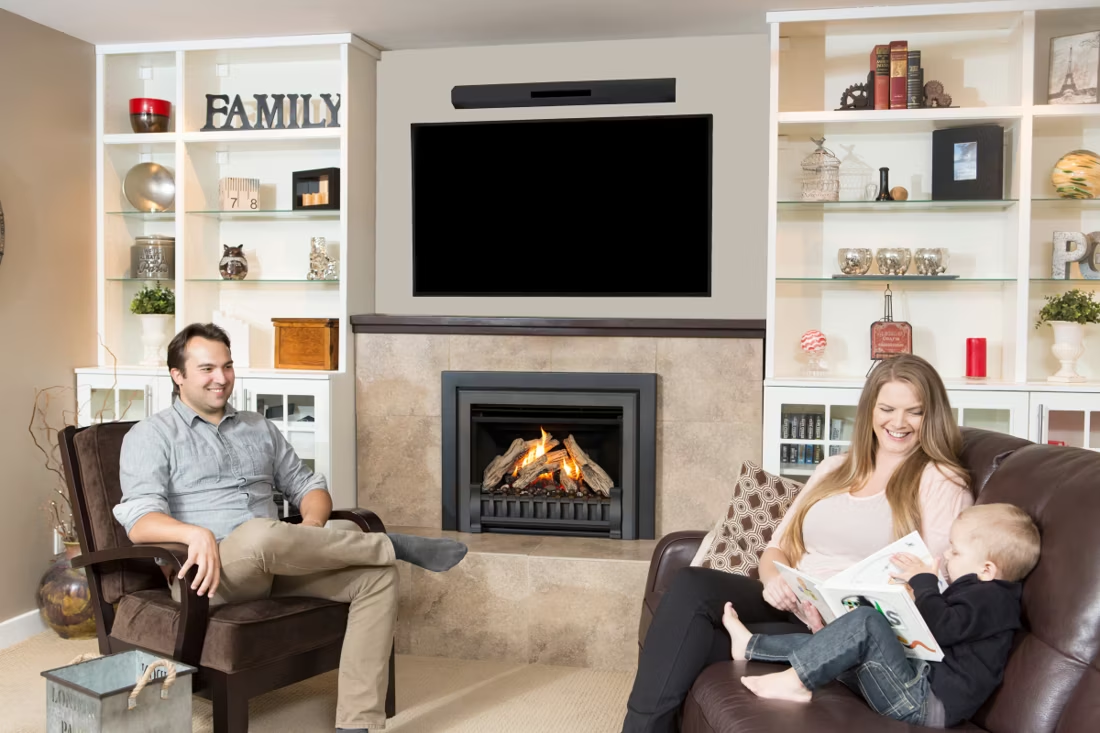
Yes—with an asterisk. Fireplaces are hot and TVs don't like heat. Either put a mantel between them to deflect rising warmth, or choose a fireplace with heat-management technology that creates a cool zone on the wall above—the wall stays around 125 degrees, barely warm, while the room still gets full heat. If you like clean lines and don't want a mantel, heat management is the answer.
Why is a fireplace insert so efficient?
An insert does two things: it seals the chimney completely, so you stop losing air you already paid to heat, and it radiates warmth into the room through the firebox and glass. Most add a heat-exchange fan that pulls cool room air underneath, wraps it around the hot firebox, and pushes it back out warm. Your home is more efficient before you've even lit the first fire.
How much should I budget for a fireplace?
For an average home—covering the fireplace, the vent pipe, and basic installation—a budget between $3,900 and $5,500 gives you a lot of options across wood, gas, and pellet. By the time you add finish work, gas line, and electrical, the average complete installation lands between $5,000 and $12,000 all-in. In a remodel or new build, a good rule is to put about 2.5% of the total project cost toward the fireplace.
Can a fireplace actually lower my heating bill?
Yes—by creating a comfort zone. A furnace heats every square foot of the house just to warm the one room you're in; a gas fireplace on low burns roughly a sixth of the gas a typical furnace does. Set the furnace around 55–60 degrees as a baseline, then heat the rooms your family actually uses. Families who heat this way commonly save $20–$60 a month.
Nearby Dealers
Hearth shops serving Andrews and the surrounding area. Every listing shows whether it is a WhyFire partner, a dealer we have verified as authorized for the brands we recommend, or a local business carrying hearth products. No manufacturer pays for placement. How we verify dealers →
H&S Oil Company
Thomlinson & McWhite Inc
Mishoe Oil And Propane
Berkeley Propane
Coastal Energy Inc.
Berkeley Propane
Paramount Contractors
Dirty Chimney, LLC
Find your gas fireplace in Andrews.
Tell us about your home and propane setup, and we'll match you with a trusted local dealer and send over your free Project Guide & Parts List—the exact parts, including the vent kit, for your Andrews gas fireplace project.
Find Your Fireplace →