
Real fireplace ambiance, zero chimney required, right here in Allendale County.
With winter lows averaging just 33°F and only about 2,500 heating degree days a year, Allendale County doesn't need a wood-burning workhorse—it needs a clean, plug-in-simple flame that adds warmth on the rare cold night and ambiance the rest of the year.
Every Project Starts From One of These Five Situations
Mild winters, real ambiance, none of the venting.
Allendale County sits in South Carolina's climate zone 3A along the Savannah River, and its winters are short and mild compared to most of the country—an average winter low of 33°F and roughly 2,498 heating degree days a year, a fraction of what a place like Duluth, Minnesota racks up in a single cold spell. That means heat isn't the daily battle it is farther north. What most homeowners here actually want out of a fireplace is the look and feel of a fire—in a living room, a bedroom, or a converted den—without a chimney, gas line, or wood supply to manage.
With a population under 5,000 spread across small towns like Allendale, Fairfax, Sycamore, and Ulmer, this county doesn't have a hearth showroom on every corner. That's exactly the gap we help close. Electric fireplaces and inserts install fast—most plug into an existing outlet, and even hardwired built-ins add a single dedicated circuit rather than a full venting system. We match you with a trusted dealer, in-county or in the nearest service area, who knows what's actually installable in an Allendale County home and who pulls whatever permit the job requires.
Three steps. No salesperson until you're ready.
Tell us about your project
Your zip code, your situation, and the fuel you're leaning toward—or let the answers point you to one.
See what's actually available
The brands dealers within 100 miles genuinely carry—real options, never a catalog mirage.
Get your dealer & Project Guide
A trusted local dealer, plus the free Project Guide & Parts List that names every component of the job.
Frequently Asked Questions
How much does an electric fireplace installation cost in Allendale County?
Plug-in electric fireplace inserts and freestanding units are the least expensive option, often $200 to $800 installed since no wiring changes are needed—you just need an existing outlet near the unit. Hardwired built-ins or wall-mounted units that require a dedicated 120V or 240V circuit run higher, typically $800 to $2,500, depending on how far the electrical panel is from the install location and whether an electrician needs to open a wall. Because Allendale County is rural, expect a modest trip charge if your installer is coming from a neighboring county—factor that into quotes.
What size electric fireplace do I need for my home?
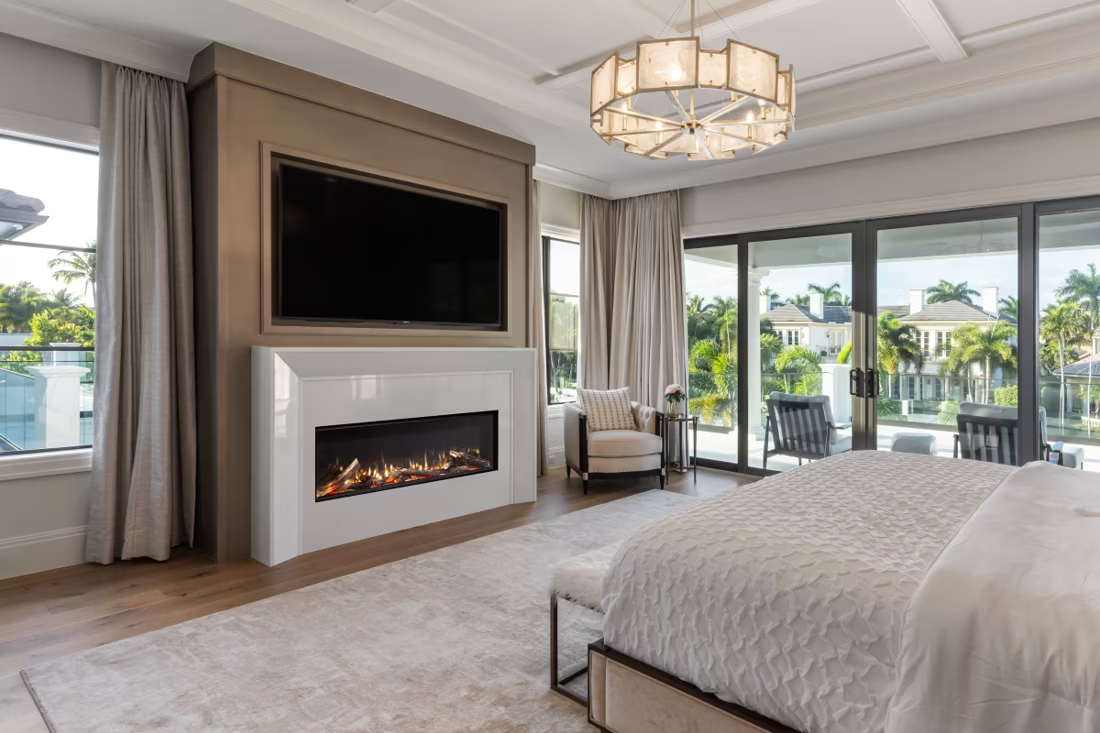
Since Allendale County's mild climate means most electric fireplaces here supplement a room rather than heat a whole house, sizing is driven more by the space you're filling than raw BTU output. A 26- to 36-inch insert or wall unit suits a bedroom or den; a 50-inch or larger linear unit works for an open living room or a media wall install. Most models offer 4,000 to 5,000 BTUs of heat output on top of the flame effect—plenty for taking the edge off a rare 20-degree night without straining a small home's electrical service.
Do I need a permit for an electric fireplace in Allendale County?
A plug-in unit that uses an existing outlet generally doesn't require a permit. A built-in or wall-mounted unit that needs a new dedicated circuit does require an electrical permit through the Allendale County Building Department, since it involves new wiring. Most licensed installers pull this permit as part of the job, so you're not left coordinating it yourself. If you're converting an old masonry fireplace to hold an electric insert, there's no gas or venting inspection involved—just the electrical work, which keeps the process simpler than a wood or gas conversion.
What's the difference between an electric fireplace, insert, and stove?
An electric fireplace is typically a wall-mounted or built-in unit designed to sit flush in a wall or media console. An electric insert is sized to slide into an existing wood or gas fireplace opening, which is common in older Allendale County homes that have an unused masonry firebox. An electric stove is a freestanding cabinet-style unit that mimics a wood stove's look and can go almost anywhere with an outlet nearby. For most homes here with an existing but unused fireplace, an insert is the simplest upgrade—it reuses the opening and skips any chimney work entirely.
Is an electric fireplace really practical in a South Carolina climate like Allendale County's?
Yes, and honestly it's a good fit for exactly this climate. Allendale County only sees about 2,498 heating degree days a year—nights in the 20s and 30s are the exception, not the rule—so homeowners rarely need the sustained high heat output of a wood stove or gas insert. An electric unit gives you a real flame effect for ambiance year-round and a heat boost of a few thousand BTUs for the handful of genuinely cold nights each winter, without committing to a fuel source you'll barely use nine months of the year.
How much maintenance does an electric fireplace need?
Very little compared to wood or gas. There's no chimney to sweep, no gas line to inspect, and no ash or soot to clean. Most upkeep is dusting the glass front, occasionally replacing an LED module or fan motor after years of use, and checking that the unit's electrical connections stay secure—something any local electrician can verify in a few minutes. This low-maintenance profile is part of why electric units are popular in Allendale County's smaller and secondary homes, including weekend or hunting properties along the Savannah River where nobody wants to manage a wood supply between visits.
Where can I find an electric fireplace dealer near Allendale County?
Allendale County's population is under 5,000, so there isn't a large hearth retail presence within the county itself—most homeowners end up working with a dealer based in a neighboring service area who covers Allendale, Fairfax, and Sycamore as part of their route. We vet these dealers directly so you're not guessing between a big-box store and a random installer; the dealer we match you with knows the local electrical code requirements and can size a unit correctly for your room before ordering anything.
Electric vs. wood—which is right for my Allendale County home?
Wood has deep roots in this part of South Carolina, with oak, pine, and hickory all common as firewood species, and a wood stove or insert still makes sense for a home wanting real backup heat during power outages. But wood also means chimney maintenance, ash cleanup, and a fuel supply to manage in a climate where you might only burn a handful of nights a year. Electric skips all of that: no fuel to store, no venting, and instant on-off operation—the tradeoff is that electric won't function without power. For most primary living spaces in Allendale County's mild climate, electric wins on convenience; wood still has a place for anyone who wants a genuine backup heat source.
Can an electric fireplace be installed into an old, unused fireplace?
In most cases, yes—this is one of the most common projects local dealers see in older Allendale County homes. An electric insert slides into the existing masonry opening, and no chimney work, liner, or venting is required since electric units produce no combustion byproducts. The main consideration is getting power to the opening, which sometimes means running a new circuit if there isn't an outlet already nearby. It's a straightforward way to bring a dead fireplace back to life without touching the chimney at all.
Do electric fireplaces actually produce heat?
Yes—most put out around 4,800–5,000 BTUs from a standard outlet, which comfortably warms a bedroom, office, or den as a comfort-zone heater. What they won't do is carry a whole house the way wood, gas, or pellet can. Think of electric as ambiance-first with honest supplemental heat: flames on with no heat in July, flames plus warmth in January.
Does an electric fireplace need a vent or chimney?
No—that's its superpower. An electric fireplace needs a wall and an outlet, period. No vent pipe, no gas line, no clearances to design around, which is why it works in bedrooms, offices, apartments, and walls where venting a gas or wood unit would be impractical or impossible. Installation is typically the simplest and least expensive of any fireplace type.
Can a fireplace actually lower my heating bill?
Yes—by creating a comfort zone. A furnace heats every square foot of the house just to warm the one room you're in; a gas fireplace on low burns roughly a sixth of the gas a typical furnace does. Set the furnace around 55–60 degrees as a baseline, then heat the rooms your family actually uses. Families who heat this way commonly save $20–$60 a month.
Does a fireplace add value to my home?
On average, a fireplace adds back to the home about the same amount you spent installing it. Add the monthly savings from heating the rooms you actually use instead of the whole house—often hundreds of dollars a year—and the value case is strong before you even count what a fire does for how your family uses the room.
Stove and Fireplace Dealers in Allendale County
Listings include WhyFire partner dealers, dealers we have verified as authorized for the brands we recommend, and established local businesses that carry hearth products. Every listing shows which one it is. The ones marked Preferred run on WhyFire's software, so they can show you real pricing and book your appointment right here. No manufacturer pays for placement. How we verify dealers →
Thompson Gas - Barnwell
Lower State Gas Company
Find your electric fireplace in Allendale County.
Tell us about your room and your existing fireplace, if you have one, and we'll match you with a trusted local dealer and send over a free Project Guide & Parts List—the exact unit, wiring needs, and install plan for your Allendale County home.
Find Your Fireplace →