
A no-permit way to add warmth through Foam Lake's -22°C winters.
With a heating season that runs six months or more here in the aspen parkland, most Foam Lake homes lean on SaskEnergy gas or a wood stove for the real work. An electric fireplace fills in where those systems don't reach. We'll help you find a local dealer and send a free Project Guide & Parts List sized to your room.
Every Project Starts From One of These Five Situations
The simplest upgrade in a town built around gas and wood heat.
Foam Lake sits in climate zone 7B at 552 metres, and a winter low averaging -22.1°C means this is not a climate where anyone treats heat as optional. Most of the town's roughly 1,138 residents heat primary living space with SaskEnergy natural gas or with wood cut from the aspen parkland and boreal fringe just north of town—trembling aspen, paper birch, jack pine, and white spruce are the species most local burners split. An electric fireplace was never meant to compete with either of those for whole-home heat, and it's worth saying plainly: it's a zone heater, not a furnace replacement, in a place this cold.
Where electric earns its place is the spots gas line runs and wood venting don't reach—a basement rec room, a garage conversion, a rental suite above a Main Street business, or an older Foam Lake farmhouse where running new gas or a full Class A chimney isn't worth the cost. Installed electric units typically run $500 to $1,600 CAD, a fraction of the $6,000-$15,000 a gas install or $6,000-$12,000 a wood install can reach, and most plug-in models need no permit at all. SaskPower bills the electricity at $0.159 per kWh, so a 1,500-watt unit running a few evening hours costs pocket change compared to heating an entire home electrically.
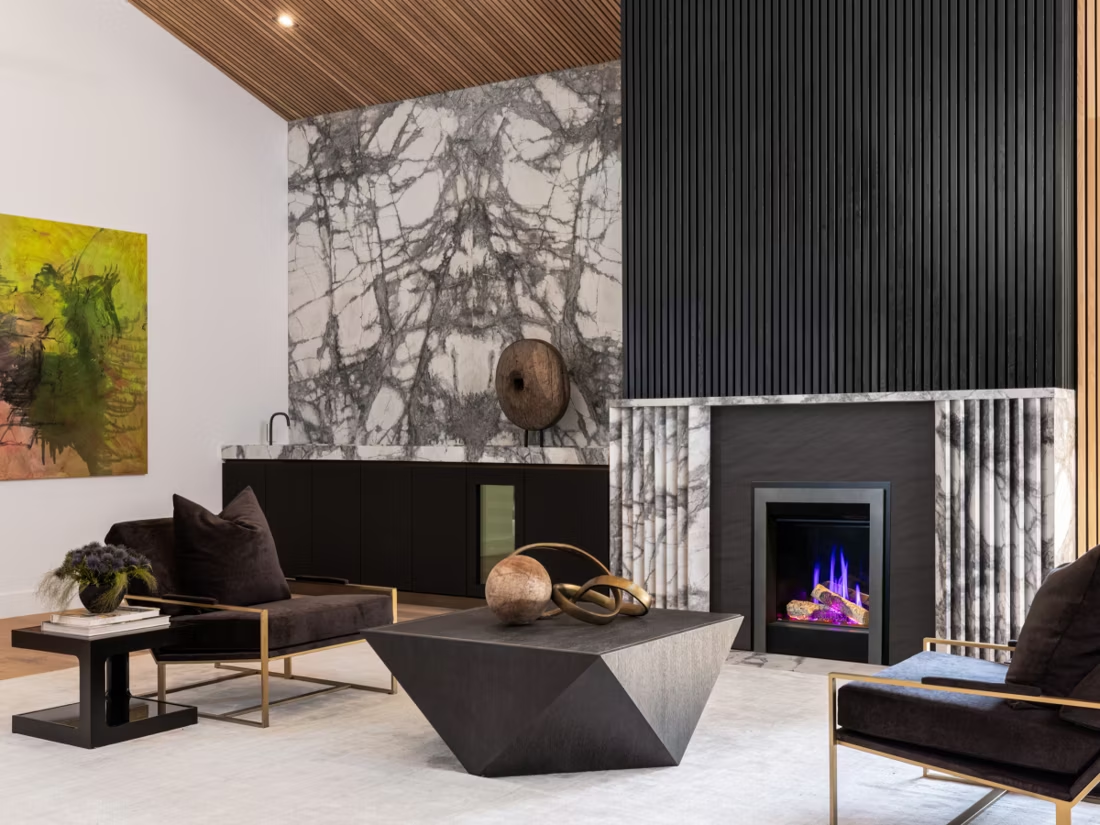
Three steps. No salesperson until you're ready.
Tell us about your project
Your postal code, your situation, and the fuel you're leaning toward—or let the answers point you to one.
See what's actually available
The brands dealers within 100 miles genuinely carry—real options, never a catalog mirage.
Get your dealer & Project Guide
A trusted local dealer, plus the free Project Guide & Parts List that names every component of the job.
Frequently Asked Questions
How much does an electric fireplace installation cost in Foam Lake?
Most jobs land between $500 and $1,600 CAD. A plug-in freestanding unit or a simple insert into an existing mantel surround sits at the low end—it just needs a standard outlet. A built-in wall unit that requires an electrician to run a dedicated circuit, or framing to recess it into drywall, pushes toward the top of that range. Compare that to a $6,000-$15,000 gas install through SaskEnergy or a $6,000-$12,000 wood stove project, and it's easy to see why electric is the go-to for a secondary room rather than a whole-house retrofit.
Will an electric fireplace actually heat my house through a Foam Lake winter?
No, and we'd rather tell you that up front than have you find out in January. With winter lows averaging -22.1°C and a heating season stretching well past six months, a 1,500-watt electric unit that puts out roughly 5,000 BTU can comfortably take the edge off a bedroom, den, or basement—but it isn't sized to replace a furnace or a wood stove as primary heat. Most Foam Lake households running electric units pair them with SaskEnergy gas heat or a wood stove for the main system, and use the fireplace to warm one room without running the furnace harder than it needs to.
Do I need a permit to install an electric fireplace in Foam Lake?
A plug-in unit that runs off an existing outlet typically doesn't need one. A built-in model that requires a new dedicated circuit does need an electrical permit through the municipal building department, since that's wiring work, not appliance work. There's no gas line, no venting, and no WETT inspection involved—that requirement only applies to combustion appliances like wood stoves and gas fireplaces, which is one of the reasons electric is the fastest option to get installed in town.
Electric vs. gas vs. wood—what actually makes sense for a Foam Lake home?
SaskEnergy gas service covers Foam Lake and is the default for whole-home heat, with fireplace installs running $6,000-$15,000. Wood is the traditional backup here—the Saskatchewan Ministry of Environment's Forest Service Branch issues free permits year-round for dead-and-down, own-use cutting of trembling aspen, paper birch, jack pine, and white spruce, and a stove keeps working through a power outage, which gas and electric can't. Electric is the odd one out: cheapest to install at $500-$1,600, cleanest to run, but purely a zone heater. Most households here end up with gas or wood as the backbone and add electric only where the other two don't reach.
What does it cost to actually run an electric fireplace on SaskPower rates?
At SaskPower's residential rate of $0.159 per kWh, a typical 1,500-watt electric fireplace costs a little under 24 cents an hour to run on high. Used a few hours most evenings through the coldest stretch of a Foam Lake winter, that's a modest add to your bill—nothing close to what it would cost to heat the same square footage electrically as a primary system, which is exactly why it's used as supplemental heat rather than a furnace substitute.
Where does an electric fireplace make the most sense in a Foam Lake house?
Basements and additions are the classic fit—spots that are often the last to warm up on a gas or wood system and where running new gas line or a chimney isn't practical. Rental suites and secondary units, common in some of Foam Lake's older two-storey homes, are another good match since a plug-in unit needs no combustion venting and no landlord sign-off on gas work. Garage conversions and home offices round out the list, anywhere you want heat without touching the main heating system.
What's the difference between an electric insert, a built-in, and a freestanding stove?
An electric insert drops into an existing fireplace opening or mantel surround, which is a common way to modernize an older wood-burning fireplace that a family no longer wants to feed and clean. A built-in wall unit gets framed into new construction or a renovation and usually needs an electrician for a dedicated circuit. A freestanding electric stove sits on the floor like a wood stove but just needs an outlet—a straightforward option for a basement or a rental suite where you want stove styling without any venting at all.
How much maintenance does an electric fireplace need?
Very little compared to a combustion appliance. There's no chimney, no flue, and no WETT inspection required, since there's nothing burning. Most upkeep is dusting the heating element and wiping the glass front occasionally, and replacing an LED light strip after years of use on some models. That low-maintenance profile is part of the appeal in a town where a wood stove or gas unit needs annual servicing to get through a long heating season safely.
Can I add an electric fireplace to an older Foam Lake house without upgrading the panel?
Often, yes. A plug-in unit under 1,500 watts runs on a standard 15-amp household circuit and rarely causes issues, even in older housing stock common around town. Where it gets more involved is a built-in unit needing its own dedicated circuit—if your panel is already near capacity, which isn't unusual in a home that's also running electric baseboard heat or well pump equipment, an electrician may recommend a subpanel or circuit upgrade first. A local dealer can tell you quickly which category your project falls into before you buy anything.
How much does an electric fireplace cost to run?
With the heater on, a typical unit draws about 1,500 watts—at average electric rates that's roughly 20 cents an hour. Run the flame effect alone and it costs pennies; the flames are LED-driven and use about as much power as a light bulb. There's no pilot light, no fuel delivery, and essentially no maintenance.
What fireplace styles should I know before shopping?
Four cover most of the market: screen-front traditional (mesh front, open feel, fits craftsman homes), traditional door set (the classic look you grew up with), modern linear (wide, low, the statement piece for entertaining), and clean face contemporary (no trim—your tile or stone runs right to the fire's edge). Walk in knowing those four terms and you're ahead of most buyers.
Do electric fireplaces actually produce heat?
Yes—most put out around 4,800–5,000 BTUs from a standard outlet, which comfortably warms a bedroom, office, or den as a comfort-zone heater. What they won't do is carry a whole house the way wood, gas, or pellet can. Think of electric as ambiance-first with honest supplemental heat: flames on with no heat in July, flames plus warmth in January.
Does an electric fireplace need a vent or chimney?
No—that's its superpower. An electric fireplace needs a wall and an outlet, period. No vent pipe, no gas line, no clearances to design around, which is why it works in bedrooms, offices, apartments, and walls where venting a gas or wood unit would be impractical or impossible. Installation is typically the simplest and least expensive of any fireplace type.
Nearby Dealers
Hearth shops serving Foam Lake and the surrounding area. Every listing shows whether it is a WhyFire partner, a dealer we have verified as authorized for the brands we recommend, or a local business carrying hearth products. No manufacturer pays for placement. How we verify dealers →
We’ve paused dealer listings for this connection today. Enter your zip or postal code above to find dealers near you, or come back tomorrow.
Popular Electric Brands
Where each brand came from, what's inside it today, and every current model. No brand pays to be here. Not every dealer carries every brand, so enter your postal code to see what's sold near Foam Lake.
Fireplace Xtrordinair
Fireplace Xtrordinair, now often called FireplaceX, is the fireplace brand of Travis Industries, Inc., of Mukilteo, Washington.
5 electric models →DaVinci
DaVinci Custom Fireplaces is a brand of Travis Industries, Inc., of Mukilteo, Washington, the company behind Lopi and Fireplace Xtrordinair.
5 electric models →Kozy Heat
Kozy Heat was founded in 1976 by Dudley Hussong in Lakefield, Minnesota, and incorporated as Hussong Manufacturing Co., Inc. in 1978.
3 electric models →Forge & Flame
Forge & Flame is the stove brand Hearth & Home Technologies introduced in August 2023 to bring Vermont Castings, Harman, and Quadra-Fire under one name.
1 electric model →Electric Service in Foam Lake
An electric fireplace's heater draws about 1,500 watts—pennies per hour at local rates.
SaskPower
Get your free Project Guide & Parts List for a Foam Lake electric fireplace.
Tell us about your home and where you want the heat—basement, addition, rental suite—and we'll help you find a local dealer and send a free Project Guide & Parts List with the right unit, circuit needs, and parts for your project.
Find Your Fireplace →