
Real heat, zero venting, for Newport's historic homes.
From Bellevue Avenue mansions to Point Section colonials, electric heat solves the venting problem that stops other fireplace projects cold. Find the right unit and connect with a trusted local dealer.
Every Project Starts From One of These Five Situations
A no-permit answer to a historic-district problem.
Newport sits at sea level on Aquidneck Island, where salt air, narrow colonial lots, and a housing stock protected by the Newport Historic District Commission make chimney and venting work genuinely difficult. Winters here bring an average low around 24°F and a moderate, several-month heating season—cold enough to want supplemental heat, but not the deep-freeze extremes of inland New England towns like Burlington, VT. Electric fireplaces have found a real foothold in Newport for exactly that reason: no exterior venting, no chimney, no masonry alterations that trigger a Historic District review.
That matters in a city where a huge share of the housing stock predates 1900 and where The Narragansett Electric Co (National Grid) delivers power at a residential rate around $0.25/kWh—higher than the national average, which makes efficient, zone-heated electric units more sensible than whole-room space heaters. A well-placed electric insert or built-in can take the chill off a drafty Colonial parlor, add supplemental heat to a converted carriage house, or bring fireplace ambiance to a condo where a real chimney was never an option.
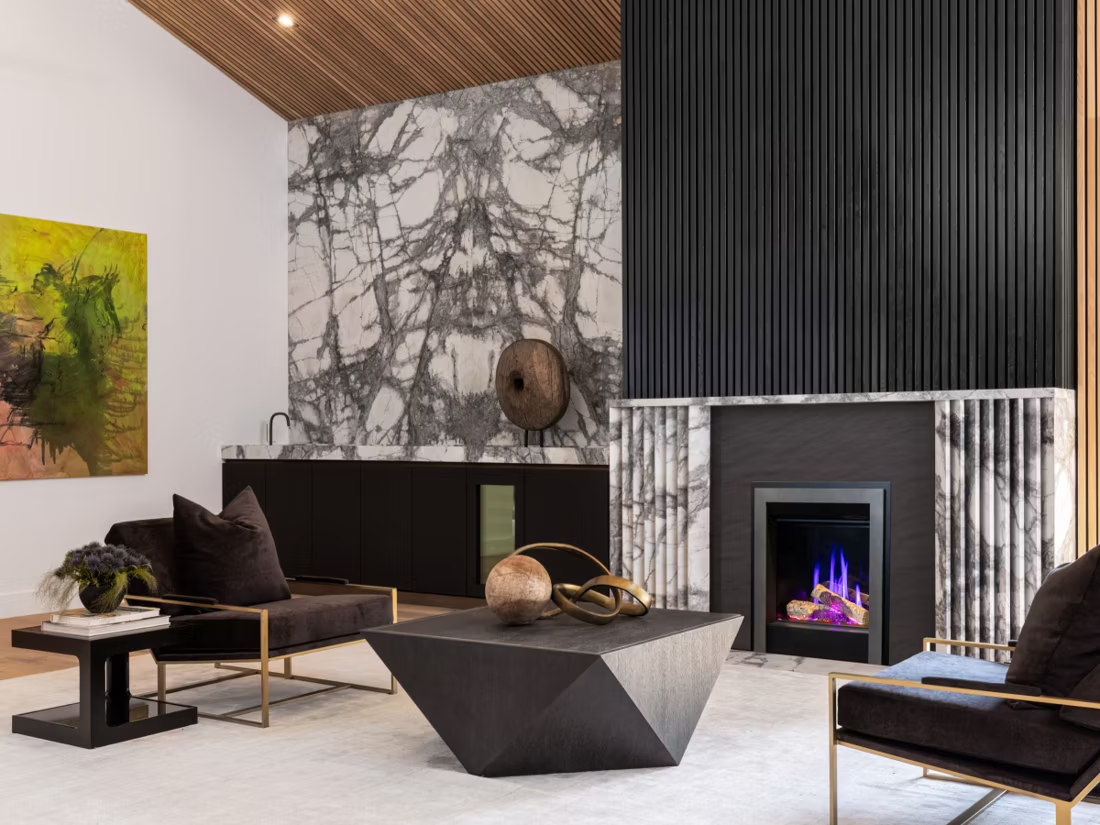
Three steps. No salesperson until you're ready.
Tell us about your project
Your zip code, your situation, and the fuel you're leaning toward—or let the answers point you to one.
See what's actually available
The brands dealers within 100 miles genuinely carry—real options, never a catalog mirage.
Get your dealer & Project Guide
A trusted local dealer, plus the free Project Guide & Parts List that names every component of the job.
Frequently Asked Questions
How much does an electric fireplace installation cost in Newport?
Electric fireplaces are the least expensive hearth project in Newport by a wide margin. A plug-in freestanding unit or a simple insert into an existing masonry opening typically runs $300 to $1,500 installed, since there's no venting, no gas line, and often no permit. A built-in wall unit with custom framing and dedicated circuit work—common in Newport condo conversions and carriage-house renovations—runs closer to $1,500 to $3,500. Because there's no chimney or flue involved, most projects skip the multi-trade coordination that drives up wood and gas installs in this city's older housing stock.
Will an electric fireplace actually heat a room, or is it just for looks?
Most modern electric fireplaces include a built-in fan-forced heater rated around 1,500 watts, enough to noticeably warm a 300-to-400-square-foot room—a realistic supplemental heat source for a single parlor or bedroom in one of Newport's older, harder-to-heat homes. They won't replace a furnace on a January night with the wind coming off Narragansett Bay, but as a zone heater for a room you actually occupy, they're effective and immediate. Some homeowners run the flame effect without the heater in shoulder seasons and switch on the heat only when needed, which also helps manage the cost at Narragansett Electric's residential rate.
Do I need an electrician to install an electric fireplace?
Smaller plug-in units just need a standard outlet, so no electrician is required. But most built-in electric fireplaces and larger inserts draw enough current that a dedicated 120V or 20-amp circuit is recommended, especially in older Newport homes with original knob-and-tube or undersized panels that weren't built for modern loads. A licensed electrician can add that circuit in an afternoon. The local dealers we match homeowners with typically coordinate this as part of the installation rather than leaving you to hire a separate electrician.
What's the difference between an electric insert and a built-in electric fireplace?
An electric insert is sized to slide into an existing masonry fireplace opening—a common choice in Newport's older homes where the original hearth is decorative and cold, and the goal is to reclaim it as a working heat source without touching the chimney. A built-in electric fireplace is a self-contained unit framed into a wall like a piece of built-in cabinetry, which works well in newer construction, condo units, or additions where there's no existing fireplace opening at all. Both plug into standard household power; neither requires venting.
Do I need a permit to install an electric fireplace in Newport?
Generally no—because electric fireplaces don't involve combustion, venting, or gas lines, most installations fall outside building permit requirements, and there's no Historic District Commission review since nothing changes on the building's exterior. The one exception is if the installation requires new electrical circuit work, in which case the electrical portion may need a permit through the City of Newport, typically pulled by the electrician doing the work. This is one of the biggest practical advantages of electric heat for a home in a designated historic district.
What's the best electric fireplace for a Newport home?
For older Colonial and Victorian homes with an existing but non-functional masonry fireplace, an electric insert from a brand like Dimplex or Napoleon fits the original opening and restores the hearth as a heat source without any chimney work. For condos, carriage-house conversions, or new construction along the Newport waterfront, a linear built-in unit gives a more modern look and can be sized to a specific wall. Given the salt air common near the harbor and Ocean Drive, look for units with corrosion-resistant components if the fireplace will sit near an exterior wall or unheated space.
How much does it cost to run an electric fireplace in Newport?
At Narragansett Electric's residential rate of roughly $0.25/kWh, a typical 1,500-watt electric fireplace running on high heat costs about 38 cents per hour, or a little over $9 for a full 24 hours of continuous use. In practice, most homeowners run the heater intermittently as supplemental warmth for a few hours a night, which keeps monthly costs modest—usually well under what it would cost to heat the same room with baseboard electric resistance heat alone. Running the flame effect without the heater draws only 20-30 watts, essentially negligible.
Do electric fireplaces need any maintenance?
Very little compared to wood or gas. There's no chimney to sweep and no annual gas safety inspection required. Most upkeep is limited to periodically dusting the heating element and vents, occasionally replacing the LED light strip that creates the flame effect (a multi-year component, not an annual one), and keeping the unit's air intake clear of furniture or drapes. This low-maintenance profile is part of why electric units are popular in Newport's seasonal rental properties and vacation homes, where nobody is checking on the house every week.
Electric vs. gas or wood—which makes sense for my Newport home?
Wood and gas both deliver more total heat and remain the choice for homes wanting a primary or serious supplemental heat source—wood pairs well with the oak, maple, and birch firewood common in this part of New England, and gas offers instant, higher-BTU warmth where a gas line is available. But both require venting or a chimney, which runs into Historic District review on many Newport properties and adds real cost and complexity to older homes. Electric skips all of that: no permit fight, no masonry work, install in an afternoon. For a historic home, a rental unit, or a room where a wood or gas install simply isn't feasible, electric is often the only practical answer—and for many Newport homeowners, that's exactly the point.
Can I put a TV above my fireplace?
Yes—with an asterisk. Fireplaces are hot and TVs don't like heat. Either put a mantel between them to deflect rising warmth, or choose a fireplace with heat-management technology that creates a cool zone on the wall above—the wall stays around 125 degrees, barely warm, while the room still gets full heat. If you like clean lines and don't want a mantel, heat management is the answer.
Do electric fireplaces actually produce heat?
Yes—most put out around 4,800–5,000 BTUs from a standard outlet, which comfortably warms a bedroom, office, or den as a comfort-zone heater. What they won't do is carry a whole house the way wood, gas, or pellet can. Think of electric as ambiance-first with honest supplemental heat: flames on with no heat in July, flames plus warmth in January.
Can I install a fireplace myself?
If you're putting a fire in your house on purpose, it's best to work with an expert. Unless you're genuinely experienced in framing, gas line, vent pipe, and the national code on clearances to combustibles, have a professional do it—and ideally the same company that sells you the fireplace, so warranty, service, and liability all live under one roof.
Can a fireplace actually lower my heating bill?
Yes—by creating a comfort zone. A furnace heats every square foot of the house just to warm the one room you're in; a gas fireplace on low burns roughly a sixth of the gas a typical furnace does. Set the furnace around 55–60 degrees as a baseline, then heat the rooms your family actually uses. Families who heat this way commonly save $20–$60 a month.
Nearby Dealers
Hearth shops serving Newport and the surrounding area. Every listing shows whether it is a WhyFire partner, a dealer we have verified as authorized for the brands we recommend, or a local business carrying hearth products. No manufacturer pays for placement. How we verify dealers →
Mr. Chimney's Stove Shoppe
Mr. Chimney Woodstoves & Fireplaces
Electric Service in Newport
An electric fireplace's heater draws about 1,500 watts—pennies per hour at local rates.
The Narragansett Electric Co
Find your electric fireplace in Newport.
Tell us a bit about your home and we'll put together your free Project Guide & Parts List—the right electric fireplace or insert for your space, matched with a trusted local Newport dealer.
Find Your Fireplace →