
Get instant heat without the wood pile.
Clean, reliable warmth for East Providence's damp Narragansett Bay winters. Find the right gas fireplace or insert and connect with a trusted local dealer.
Every Project Starts From One of These Five Situations
Reliable heat for a damp, coastal climate.
East Providence sits low along the eastern shore of Narragansett Bay, at just 93 feet of elevation, in a 5A climate zone that averages a winter low around 22 degrees F and a winter heating season comparable to other Rhode Island coastal towns. That's a milder heating season than harsher inland New England climates like Burlington, VT, but the raw, damp cold coming off the bay still cuts through older homes, and many of the capes and colonials scattered through the Rumford, Riverside, and Kent Heights neighborhoods were built decades before modern insulation standards.
A large share of East Providence's older housing stock includes existing masonry fireplaces that were never designed for efficient heat—perfect candidates for a gas insert conversion. Natural gas service reaches most of the city's 02914, 02915, and 02916 zip codes through Rhode Island Energy, the same company (formerly National Grid, still legally chartered as The Narragansett Electric Co for power) that also delivers electricity locally at a residential rate around 25 cents per kWh. With electric rates that high, gas heat is often the more economical choice for daily use, and it gives homeowners instant, thermostat-controlled warmth without hauling wood or tending a fire on a raw, windy night off the bay.
Three steps. No salesperson until you're ready.
Tell us about your project
Your zip code, your situation, and the fuel you're leaning toward—or let the answers point you to one.
See what's actually available
The brands dealers within 100 miles genuinely carry—real options, never a catalog mirage.
Get your dealer & Project Guide
A trusted local dealer, plus the free Project Guide & Parts List that names every component of the job.
Frequently Asked Questions
How much does a gas fireplace installation cost in East Providence?
A typical gas fireplace or insert installation in East Providence runs between roughly $4,500 and $10,000, depending on the unit, the venting path, and whether new gas line work is needed. A direct-vent insert going into an existing masonry fireplace with gas already run to the house tends to land on the lower end. New construction, remodels, or homes needing a gas line extension from the street run higher. Because East Providence sits directly on Narragansett Bay, installers here often spec corrosion-resistant venting components to handle the salt air, which can add a modest amount to material costs versus an inland RI town.
Can I convert my existing wood fireplace to gas?
Yes, and it's one of the most common projects for East Providence's older housing stock. Many of the capes and colonials in neighborhoods like Rumford and Riverside still have their original brick fireplace and chimney, which makes them good candidates for a direct-vent gas insert using a stainless steel liner run through the existing flue. Costs typically fall in the $4,500 to $8,500 range locally, with the exact number depending on chimney condition, liner length, and whether the home already has a gas line nearby. The conversion keeps the look of the original fireplace while eliminating drafts and creosote buildup.
Do I need natural gas, or should I use propane?
Most of East Providence, including the 02914, 02915, and 02916 zip codes, has natural gas service available through Rhode Island Energy, so if your home already has a gas water heater, range, or furnace, adding a fireplace is usually a straightforward tap-in. A smaller number of homes on the outer edges of the city, or those without an existing gas connection, use propane instead, typically with a small tank set on a pad outside. Nearly every gas fireplace model on the market can be configured for either fuel, so the choice usually comes down to what's already running to your house.
Will my gas fireplace still work if the power goes out?
For the most part, yes. East Providence sees its share of nor'easters and coastal wind events that can knock out power for hours or days, and most modern gas fireplaces are built with that in mind. Units with intermittent pilot ignition include a battery backup that keeps the igniter working when the power drops, so the fireplace lights on demand just like normal. Valor fireplaces go a step further: their pilot assembly generates its own electricity through a thermocouple, so there are no batteries to remember at all. Given how exposed the East Providence shoreline is to winter storms, that's a detail worth asking your local dealer about.
What's the difference between a gas fireplace, gas insert, and gas stove?
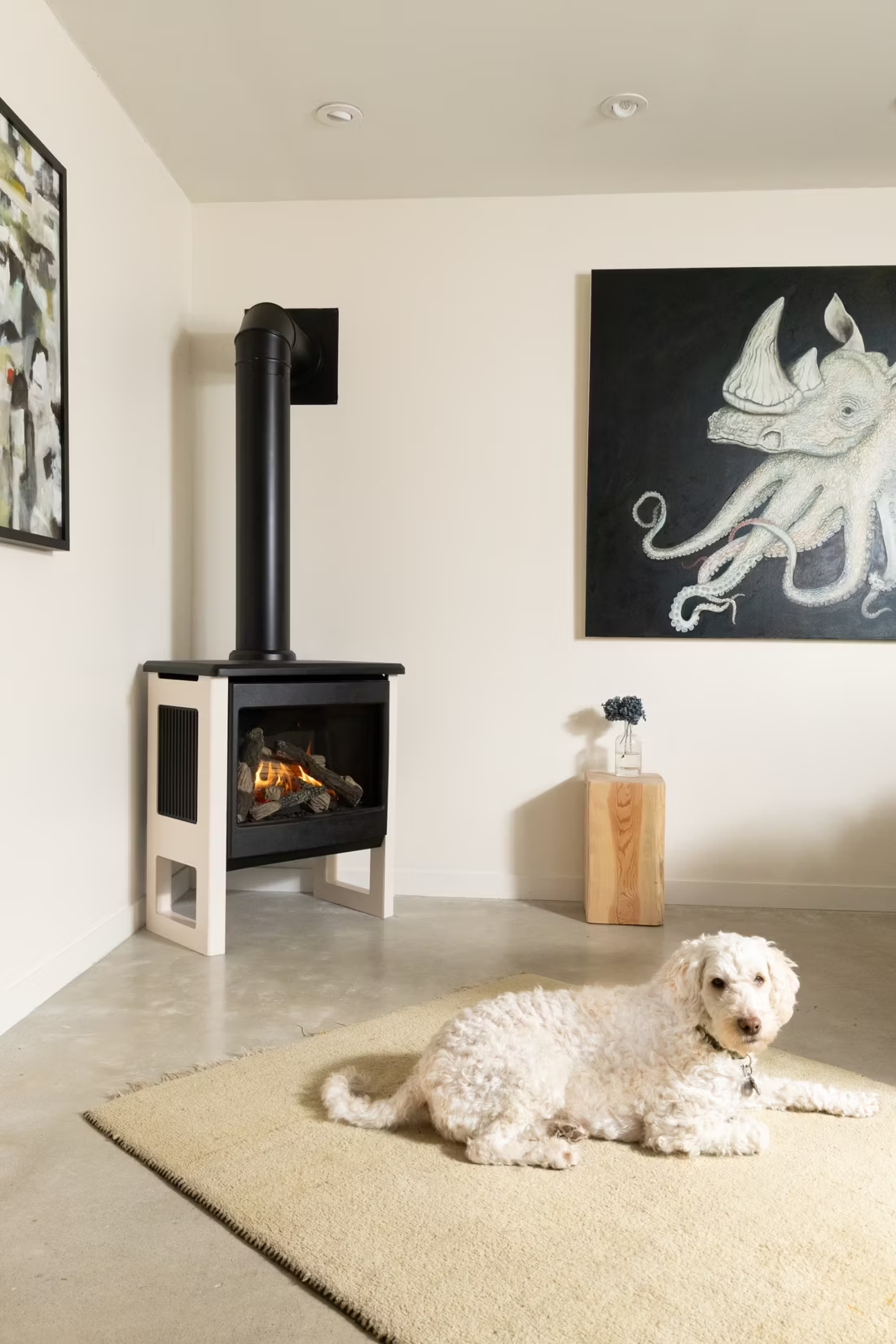
A gas fireplace is a fully built-in unit framed into a wall, typically chosen for new construction or a full remodel. A gas insert is sized to slide into an existing masonry fireplace opening, using the home's existing chimney as the venting path. A gas stove is a freestanding cast-iron or steel unit that sits on the floor, similar in footprint to a wood stove but running on gas. Given how many East Providence homes already have a working masonry fireplace, an insert is usually the fastest and most cost-effective upgrade, while a built-in fireplace or freestanding stove makes more sense for a room that never had one.
Do I need a permit to install a gas fireplace in East Providence?
Yes. The City of East Providence Building Official's office requires a building permit for the fireplace installation itself, and Rhode Island's fire and gas codes require a licensed gas fitter to handle any new gas line or connection work. Most established hearth dealers coordinate both the building permit and the gas hookup as part of the installation, so you're not left managing separate trades and inspections yourself. Expect a final inspection before the unit is signed off for use.
What's the difference between vented and vent-free gas fireplaces?
Vented, direct-vent gas fireplaces draw combustion air from outside and exhaust the byproducts back outside through a sealed pipe, which keeps them safe for use in any room and in any quantity. Vent-free units burn gas directly into the room without external venting; they're legal in Rhode Island under specific room-size and ventilation rules, but they release some moisture and combustion byproducts indoors. Given the humid, coastal air East Providence already deals with off Narragansett Bay, most local dealers steer homeowners toward direct-vent units, both for indoor air quality and because sealed venting holds up better against salt-air corrosion over time.
How often should my gas fireplace be serviced?
Plan on an annual inspection, ideally in early fall before regular use starts. A technician will check the burner, pilot assembly, gas connections, and venting, and clean the glass and interior components. This is a much smaller job than a wood chimney sweep, but it matters just as much for safety, especially in a coastal climate like East Providence's, where salt-laden air can accelerate corrosion on exterior vent caps. Local service providers in Providence County typically charge $150 to $250 for a standard annual visit.
Gas vs. wood—which is right for my East Providence home?
Wood offers real ambiance, works without electricity during a nor'easter power outage, and locally available species like oak, maple, and birch burn well in a traditional stove or insert. But wood means splitting, stacking, and tending a fire, and with East Providence's residential electric rate running around 25 cents per kWh, gas heat is often the more cost-effective everyday choice compared to plug-in electric heaters, without the hands-on work wood requires. For most East Providence homeowners upgrading a primary living space, gas wins on convenience and daily cost; wood tends to stay in the mix as backup heat or for the homes and buyers who want the real thing.
Why is a fireplace insert so efficient?
An insert does two things: it seals the chimney completely, so you stop losing air you already paid to heat, and it radiates warmth into the room through the firebox and glass. Most add a heat-exchange fan that pulls cool room air underneath, wraps it around the hot firebox, and pushes it back out warm. Your home is more efficient before you've even lit the first fire.
Can I put a TV above my fireplace?
Yes—with an asterisk. Fireplaces are hot and TVs don't like heat. Either put a mantel between them to deflect rising warmth, or choose a fireplace with heat-management technology that creates a cool zone on the wall above—the wall stays around 125 degrees, barely warm, while the room still gets full heat. If you like clean lines and don't want a mantel, heat management is the answer.
Can I install a fireplace myself?
If you're putting a fire in your house on purpose, it's best to work with an expert. Unless you're genuinely experienced in framing, gas line, vent pipe, and the national code on clearances to combustibles, have a professional do it—and ideally the same company that sells you the fireplace, so warranty, service, and liability all live under one roof.
Does a fireplace add value to my home?
On average, a fireplace adds back to the home about the same amount you spent installing it. Add the monthly savings from heating the rooms you actually use instead of the whole house—often hundreds of dollars a year—and the value case is strong before you even count what a fire does for how your family uses the room.
Nearby Dealers
Hearth shops serving East Providence and the surrounding area. Every listing shows whether it is a WhyFire partner, a dealer we have verified as authorized for the brands we recommend, or a local business carrying hearth products. No manufacturer pays for placement. How we verify dealers →
Atlas Insulation Co.
Frederickson Farm
Mr. Chimney Woodstoves & Fireplaces
Acushnet Alternative Heating
Find your gas fireplace in East Providence.
Tell us a bit about your home and we'll match you with a trusted local dealer and send over your free Project Guide & Parts List—the exact parts, vent kit, and recommended installer for your East Providence gas fireplace project.
Find Your Fireplace →