
Keep Your Family Warm and Safe—No Matter What
At 307 metres elevation on the edge of the James Bay boreal forest, Waswanipi runs a heating season that starts early and ends late. I'll match you with a trusted local dealer who can size a wood system for real cold and handle the permit paperwork.
Every Project Starts From One of These Five Situations
Wood heat here isn't a lifestyle choice—it's infrastructure.
Waswanipi sits at 49.7°N in Nord-du-Québec, in climate zone 7A—one of the coldest building code zones in the country. Average winter lows near -24.9°C put it in the same company as Fort McMurray or Thunder Bay for sheer duration of cold, and the heating season here runs from early fall well into spring. For a community this remote, a wood stove or insert isn't a design accent; it's a heat source homeowners can count on when a hydro line goes down in a January storm.
Sugar maple, yellow birch, American beech, and red oak are the hardwoods most local burners split and stack, and they hold a coal bed long enough to matter through an eight-hour work shift. Cutting your own is an option through the Ministère des Ressources naturelles et des Forêts, which issues permits running April 1 to March 31 at roughly $1.85 per cubic metre plus taxes, capped at 22.5 cubic metres per household—regional harvest windows vary, so it's worth checking with MRNF before you head out with a chainsaw. On the installation side, the municipal building department administers permits, the CSA B365 code governs how the appliance and venting go in, and most insurers here will ask for a WETT inspection before they'll cover a wood-burning appliance—steps a good local dealer walks through as a matter of course, not as a hurdle.
Firewood Cutting Permits Near Waswanipi
Ministère Des Ressources Naturelles Et Des Forêts (Mrnf)
Three steps. No salesperson until you're ready.
Tell us about your project
Your postal code, your situation, and the fuel you're leaning toward—or let the answers point you to one.
See what's actually available
The brands dealers within 100 miles genuinely carry—real options, never a catalog mirage.
Get your dealer & Project Guide
A trusted local dealer, plus the free Project Guide & Parts List that names every component of the job.
Frequently Asked Questions
How much does a wood stove installation cost in Waswanipi?
Most installations run $6,000 to $12,000 CAD, and where you land in that range depends mostly on venting. A stove going into a home with an existing masonry chimney or a straightforward through-wall run sits toward the low end. Homes needing a full Class A chimney system built from the roofline down—not unusual in a community where a lot of housing stock is newer construction without an existing flue—land closer to the top. Because Waswanipi is remote, freight on the chimney kit and venting components can also add to the timeline and the quote, so it pays to work with a dealer who orders parts early in the season rather than mid-cold-snap.
Do I need a permit to install a wood stove in Waswanipi?
Yes. The municipal building department handles the permit, and the installation itself has to meet the CSA B365 code, which governs clearances, venting, and hearth protection for wood-burning appliances across Quebec. On top of the building permit, most home insurers operating in Nord-du-Québec will ask for a WETT inspection before they'll add coverage for a new wood appliance—budget for that as a separate step, and ask your dealer to schedule it as part of the project rather than as an afterthought.
What size wood stove do I need for a Waswanipi home?
With average winter lows near -24.9°C and a heating season that runs a good eight months, undersizing is the mistake to avoid. A stove rated for a small cabin or seasonal camp won't keep up with a full-time home here through a January cold snap. Most main living spaces in Waswanipi do better with a medium to large stove capable of a long, steady overnight burn, sized against your home's actual insulation and ceiling height rather than square footage alone—something a local dealer will walk through with you before you buy.
What kind of firewood burns best in Waswanipi?
Sugar maple, yellow birch, American beech, and red oak are the four hardwoods local burners rely on, and all four are dense enough to hold coals through a long overnight burn—useful when you're heating through a stretch of -25°C nights. Beech and sugar maple in particular season well and split cleanly. Whatever you burn, give it a full year to season under cover before it goes in the stove; green hardwood in this climate creates more creosote and less heat exactly when you need the opposite.
How do I get a permit to cut my own firewood near Waswanipi?
The Ministère des Ressources naturelles et des Forêts issues personal-use cutting permits valid April 1 to March 31, at roughly $1.85 per cubic metre plus taxes, with a cap of 22.5 cubic metres per household per year. Regional harvest windows within that season vary by sector, so check with the MRNF office serving the Nord-du-Québec territory before you plan your cut. Twenty-two and a half cubic metres is a meaningful supply for most households running a wood stove as a primary or serious secondary heat source through a winter this long.
Will my home insurance cover a wood stove in Waswanipi?
Most insurers will, but they'll typically want a WETT inspection completed after installation, confirming the stove, clearances, and venting meet the CSA B365 code. Skipping this step is one of the most common reasons a claim gets denied after a chimney fire, so treat the inspection as part of the project, not an optional extra. A dealer familiar with Nord-du-Québec installs will usually have a certified WETT inspector they work with regularly, which saves you from tracking one down separately in a small, remote community.
Wood vs. pellet vs. electric—what makes sense in Waswanipi?
Wood wins on outage resilience: it needs no electricity, which matters given how far Waswanipi sits from the nearest Hydro-Québec service crews when a winter storm takes down a line. Pellet stoves burning regional brands like Granules LG, Energex, or Trebio run cleaner and need less daily tending, but at $400 to $575 a ton and with an auger that needs power, they're a better fit as a secondary system than a storm-season backup. Electric heat is cheap here—Hydro-Québec's residential rate runs about 7.8 cents a kWh, among the lowest in the country—but it's the first thing to go dark in an outage. Natural gas, through Énergir, barely reaches this part of Nord-du-Québec at all, so it's not a realistic option for most Waswanipi homes; wood remains the fuel most households lean on when the power is out and the temperature is well below -20°C.
How often should I get my chimney swept in Waswanipi?
Once a year, ideally in September before the first hard freeze, is the standard recommendation—and it's not one to skip given how many months of the year a Waswanipi wood stove is actually running. Households burning wood as a primary heat source through a winter this long often need a mid-season check as well, particularly if any of the wood in the stack didn't get a full year to season. Creosote builds up faster on less-dry hardwood, and a stove running eight months instead of three sees a lot more hours of use per season than in most of southern Quebec.
Do Quebec's wood-burning bylaws apply to my stove in Waswanipi?
The registration and 2.5 g/h emissions bylaw you may have heard about is specific to the island of Montréal and doesn't extend to Nord-du-Québec, so there's no municipal certification registry to navigate here. That said, an EPA or CSA-certified stove is still the right call regardless of bylaws—it burns less wood for more heat, produces less creosote, and it's what the CSA B365 code and most insurers expect to see during a WETT inspection anyway. Your municipal building department is the office to confirm any local permit requirements before installation.
Why do fireplace quotes vary so much?
Because a fireplace is an iceberg—there's more behind the wall than in front of it. A low quote often covers only the unit; the full scope includes vent pipe, gas line or electrical, framing, and the tile or stone that has to come off and go back on. Make every bidder price the whole job. If a dealer can't speak to the full scope with confidence, that's your signal to keep looking.
Louvered or clean face—which fireplace front is better?
Louvered fronts have grill work above and below the glass for airflow, move heat a little better with a fan, and suit traditional mantels. Clean face designs drop the louvers entirely so finish work runs to the fire's edge—they fit both modern and traditional rooms. When we did our own home we chose clean face: a big viewing area beat a little extra airflow. It depends on your room, not on a rulebook.
What's the difference between an insert and a zero-clearance fireplace?
An insert is a fireplace that slides into a pre-existing wood-burning fireplace—if you don't have one, there's nothing to insert it into. A zero-clearance fireplace is built into a framed wall, which makes it the answer for remodels and new construction. Simple test: existing masonry fireplace means insert; blank or framed wall means zero-clearance.
Why is a fireplace insert so efficient?
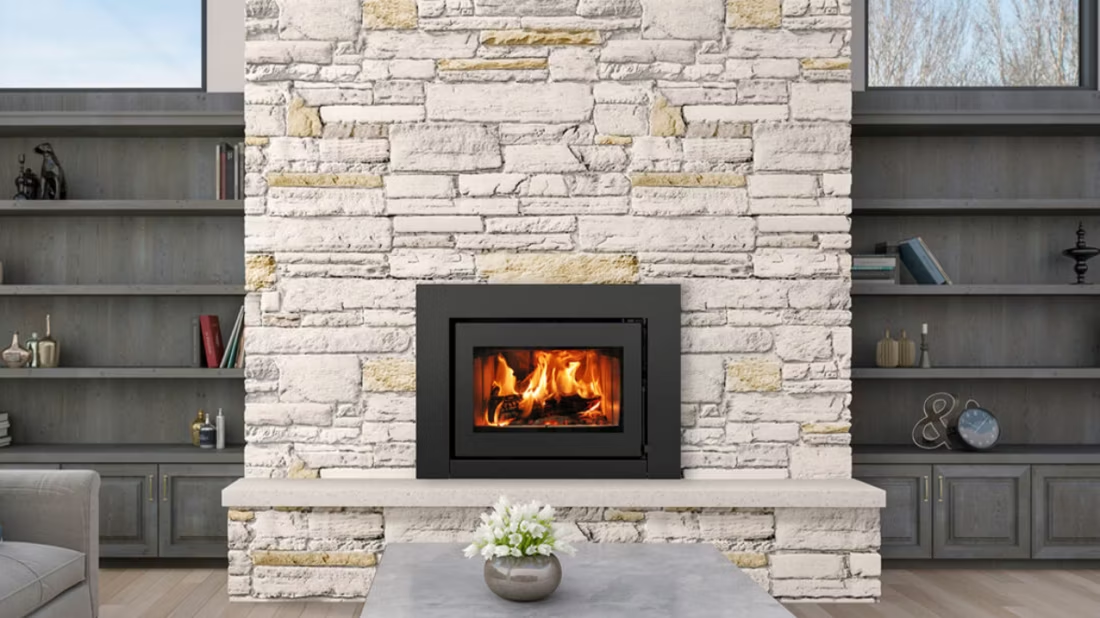
An insert does two things: it seals the chimney completely, so you stop losing air you already paid to heat, and it radiates warmth into the room through the firebox and glass. Most add a heat-exchange fan that pulls cool room air underneath, wraps it around the hot firebox, and pushes it back out warm. Your home is more efficient before you've even lit the first fire.
Get your free Project Guide & Parts List for a Waswanipi wood project.
Tell me about your home and I'll match you with a trusted local dealer and send a free Project Guide & Parts List—sized for James Bay winters, with the vent kit and parts specified so nothing gets left off the freight order.
Find Your Fireplace →