
Find your fireplace across Nord-du-Québec.
Wood, pellet, electric, and gas resources for one of Canada's largest, most sparsely populated regions—from Chibougamau and Chapais in the south to the Cree and Inuit communities along James Bay and Hudson Strait. Pick a fuel and get matched with a local dealer who actually works this far north.
Every Project Starts From One of These Five Situations
Subarctic winters, minus 23°C lows, and a region the size of France.
Nord-du-Québec is enormous and sparsely settled—about 32,838 people spread across a territory bigger than France, from the mining and forestry towns of Chibougamau, Chapais, and Lebel-sur-Quévillon in the south to the James Bay Cree communities of Eeyou Istchee and the Inuit villages of Nunavik along Hudson Strait. Winters here sit in climate zone 7A, with average lows near -23.1°C and a heating season that runs eight months or more, putting the region in the same cold-weather class as Fort McMurray, Alberta or Whitehorse, Yukon. Firewood sold in the region's southern communities is often sugar maple, yellow birch, American beech, and red oak trucked up from the mixed forest belt near Lac Saint-Jean, since the boreal forest that actually surrounds Chibougamau and points north is mostly black spruce and jack pine. Anyone cutting their own wood on Crown land needs a permit from the Ministère des Ressources naturelles et des Forêts (MRNF), which issues cutting rights across most of the territory.
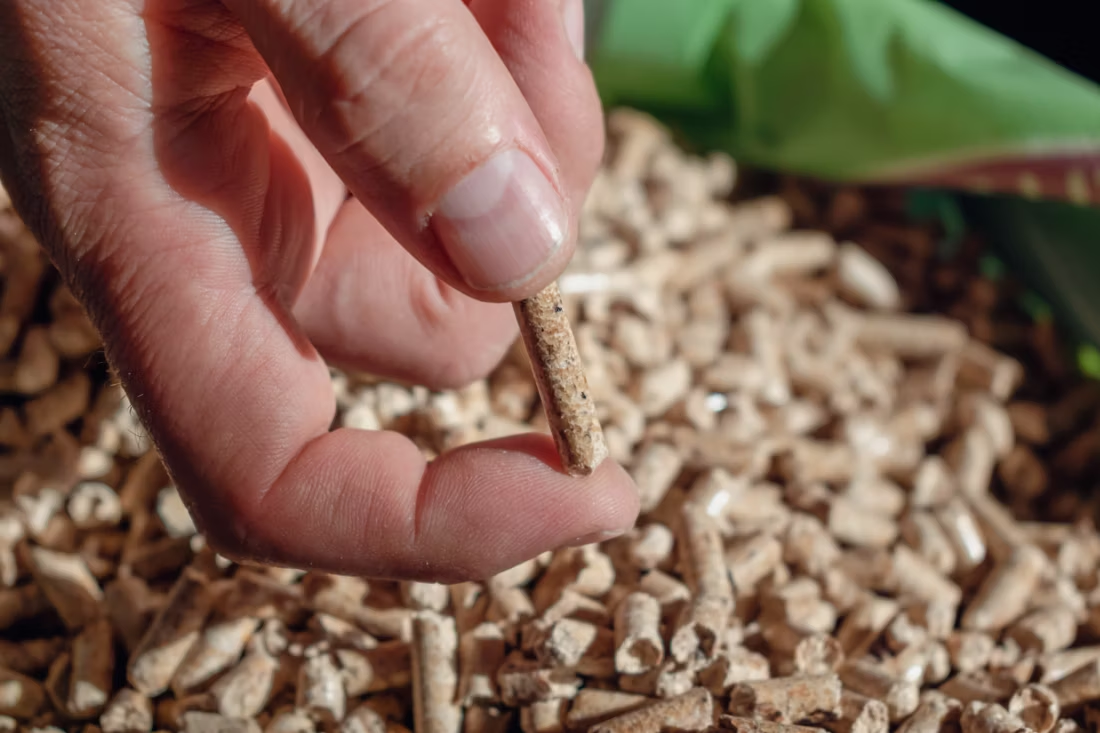
Fuel choice here is shaped by distance as much as by cold. Wood and electric heat carry most homes through the winter—Hydro-Québec's rates are among the lowest in North America, which makes electric fireplaces and baseboard backup genuinely practical rather than just supplemental. Pellet stoves have a real foothold too, with Granules LG, Energex, and Trebio all distributed into the region by truck, appealing to households who want wood-stove heat without the twice-daily loading. Gas is the outlier: Énergir's mains network doesn't reach this far north, so a gas fireplace in Nord-du-Québec almost always means a propane appliance and tank rather than a hookup to piped gas—worth confirming availability before you fall in love with a specific unit. Whatever fuel you choose, installations run through your municipal building department, follow the CSA B365 installation code, and for wood appliances typically need a WETT inspection before an insurer will sign off. This hub rolls up retailers, technicians, and fuel suppliers across the whole territory; pick a fuel below for town-specific dealers and costs.
Four fuels. One honest answer for Nord-du-Québec.
Three steps. No salesperson until you're ready.
Tell us about your project
Your postal code, your situation, and the fuel you're leaning toward—or let the answers point you to one.
See what's actually available
The brands dealers within 100 miles genuinely carry—real options, never a catalog mirage.
Get your dealer & Project Guide
A trusted local dealer, plus the free Project Guide & Parts List that names every component of the job.
Frequently Asked Questions
Which fireplace fuel actually makes sense in Nord-du-Québec?
It depends more on distance from a service centre than on preference. Wood remains the workhorse fuel in the southern communities—Chibougamau, Chapais, and Lebel-sur-Quévillon—where a catalytic stove burning sugar maple or yellow birch will hold a fire through a -23°C night without much trouble, and MRNF cutting permits keep firewood affordable. Electric is the quiet backbone almost everywhere else, since Hydro-Québec's rates make an electric fireplace or supplemental electric heat genuinely cheap to run, not just decorative. Pellet stoves, running on Granules LG, Energex, or Trebio, are a good middle option for households who want wood heat without splitting and stacking cordwood, though bulk delivery has to be scheduled around your community's trucking routes. Gas is the fuel to be cautious about: Énergir's piped network doesn't extend into Nord-du-Québec, so a gas fireplace here almost always runs on delivered propane, and it's worth confirming tank logistics before you commit to one.
Do I need a WETT inspection for a wood stove or insert here?
In most cases, yes, if you want your insurer to actually pay out on a claim. Insurance companies operating across Nord-du-Québec commonly require a WETT (Wood Energy Technology Transfer) inspection on wood-burning appliances, especially in older homes or after a change of ownership, and the installation itself has to follow the CSA B365 code regardless of whether an inspection is required. A trusted local dealer who installs wood stoves regularly in Chibougamau or Matagami will typically arrange the WETT inspection as part of the project rather than leaving you to track down an inspector on your own—worth asking about upfront given how few WETT-certified inspectors serve communities this far north.
Can I cut my own firewood on Crown land in the region?
Much of Nord-du-Québec is Crown land, and cutting your own firewood there requires a permit from the Ministère des Ressources naturelles et des Forêts (MRNF), which manages timber rights across most of the territory. That said, the hardwood species people actually prefer for a long overnight burn—sugar maple, yellow birch, American beech, red oak—aren't the dominant trees in the boreal forest immediately around most Nord-du-Québec communities, which lean heavily to black spruce and jack pine. A lot of the good hardwood firewood sold locally is trucked up from the mixed forest belt near Lac Saint-Jean, so factor that into your cost comparison against cutting your own softwood closer to home.
What permits does a fireplace or stove installation need?
Installation permits run through your municipal building department rather than a single regional office, since Nord-du-Québec covers dozens of municipalities and Cree and Inuit communities with their own local authorities. Whichever office covers your address, the installation itself needs to follow the CSA B365 code, and wood appliances typically need that WETT inspection for insurance purposes on top of the building permit. Gas installations, where propane service is actually available, need a licensed gas fitter for the tank and line work. Most retailers we match homeowners with handle the permit paperwork directly with the local building department as part of the project, so it's rarely something you're chasing down solo.
What does a fireplace or stove installation cost in Nord-du-Québec?
Costs run higher here than in southern Quebec mainly because of freight and travel time for installers. Wood stove or insert installs typically run $5,000-$10,000 CAD, with full chimney work pushing higher in remote communities where materials have to be trucked in. Pellet stove or insert installs generally land around $4,500-$8,000 CAD. Electric fireplaces are the affordable outlier—$300-$3,500 CAD for the unit, plus a few hundred more in labour for anything beyond a plug-and-play placement. Gas is harder to price generically since it usually means a propane conversion with a new tank; expect $6,000-$12,000 CAD once tank installation and line work are included. The region and fuel pages above break these down further by community.
How does installation and service work in such a remote region?
Service techs and installers are concentrated around Chibougamau and Lebel-sur-Quévillon in the south, and they travel out to Matagami, Radisson, and the Eeyou Istchee communities as projects come in, though trip charges and lead times grow with distance. Communities in Nunavik, along the Hudson Strait coast, are often fly-in only, which changes the calculus entirely—parts and technicians may need to be flown in, and scheduling around weather windows matters more than in almost any other region in the country. Booking your project or annual service well before freeze-up, rather than waiting for the first cold snap, is the single best way to avoid a long wait once winter travel gets harder.
How many BTUs do I need in a fireplace?
Wrong question—and the industry's favorite way to confuse you. More BTUs isn't better if the fireplace cooks you out of the room you spent thousands to enjoy. Think in terms you can verify: how many square feet the unit heats, whether it's primary or backup heat, and whether you want it running overnight. Those three answers size a fireplace correctly every time.
Will we actually use a fireplace once we have one?
In my own home, the room with the fireplace has never been the same—it became the social hub. Game nights, holidays, date nights after the kids are down: the fire is where the house gathers. There's a reason people in this industry joke that we're really in the romance and entertainment business. You won't wonder whether you'll use it; you'll wonder how the room worked before.
What's the best fireplace for power outages?
Wood wins outright—no electricity, no moving parts, just fuel and a match, and a radiant stove keeps heating with the grid down for weeks. Gas is a close second: battery-backup ignition runs the fireplace fine without power (the blower stops, but radiant heat keeps coming). Pellet is the one to check carefully—most models need electricity for the auger and fans, so ask about battery backup.
What does it take to replace an existing fireplace?
Fireplaces are like icebergs—bigger behind the wall than in front of it. Replacement means removing the surrounding tile or stone (the finish material laps onto the fireplace face), pulling the old unit, setting the new one in the same enclosure, and re-finishing the wall. A hearth professional can determine what's behind your wall without demolition during an in-home preview.
Get matched with a local Nord-du-Québec dealer.
Pick your fuel below and we'll put together a free Project Guide & Parts List—the right unit, the vent kit it needs, and the local dealer we recommend for your project, wherever in the territory you're located.
Find Your Fireplace →