
A rare fit in a town Énergir barely reaches.
Venise-en-Québec sits on the shore of Lake Champlain in Montérégie, home to under 1,600 people, and Énergir's mains network only reaches part of the surrounding region. Most homeowners here who want a gas fireplace end up running propane instead. I'll match you with a local dealer who knows which streets actually have a line and which don't.
Every Project Starts From One of These Five Situations
Wood and electric heat this shoreline town—gas is the exception.
Venise-en-Québec sits in climate zone 6A with winter lows averaging -13.3°C, and lake-effect wind off Champlain makes those nights feel colder than the number suggests. The dominant heat sources here are wood and electric, not gas. Sugar maple, yellow birch, American beech, and red oak grow throughout Montérégie and are the species most local burners split, with cutting permits available through the Ministère des Ressources naturelles et des Forêts at roughly $1.85 per cubic metre up to 22.5 cubic metres. Pellet stoves running regional brands like Granules LG, Energex, and Trebio are common too, and Hydro-Québec's residential rate of about 7.8 cents per kilowatt-hour keeps straight electric fireplaces genuinely affordable as a low-maintenance option.
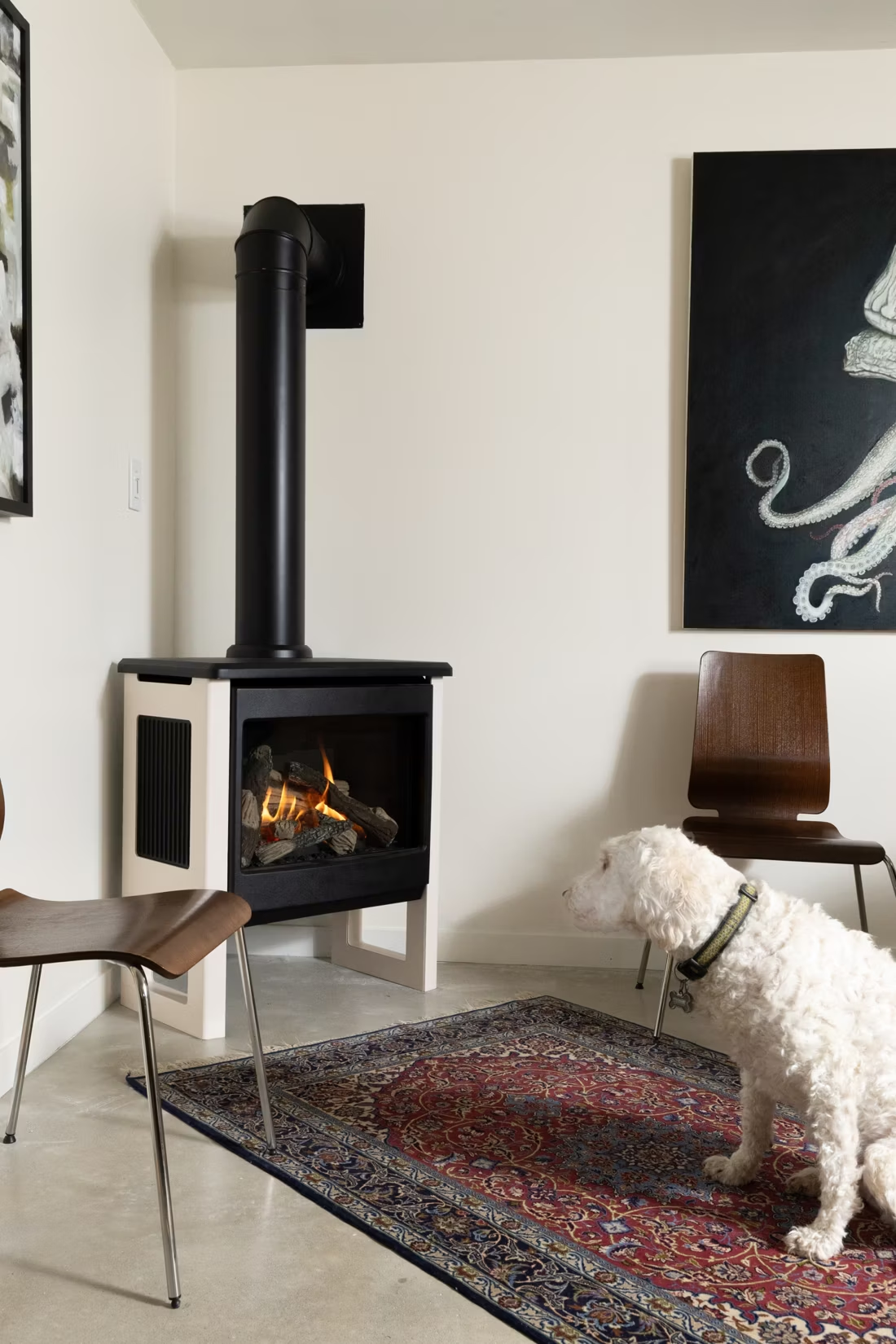
Against that backdrop, gas is a real but minority choice. Énergir's distribution network covers only part of the region, and a lot of Venise-en-Québec addresses sit outside it entirely, which means a propane tank rather than a mains hookup is often how a gas fireplace actually gets built here. That's not a dealbreaker—direct-vent gas units run just as well on propane—but it changes the budget and the site plan, so it's worth confirming your street's status before you fall in love with a specific fireplace design. Installs through a municipal building department typically run $6,000 to $15,000 CAD, with propane tank setups landing toward the higher end.
Three steps. No salesperson until you're ready.
Tell us about your project
Your postal code, your situation, and the fuel you're leaning toward—or let the answers point you to one.
See what's actually available
The brands dealers within 100 miles genuinely carry—real options, never a catalog mirage.
Get your dealer & Project Guide
A trusted local dealer, plus the free Project Guide & Parts List that names every component of the job.
Frequently Asked Questions
Is natural gas actually available in Venise-en-Québec?
Only in part of the surrounding region. Énergir's mains network doesn't cover every street here, and a fair number of addresses around the lake are outside its footprint entirely. Before you commit to a design, a local dealer can check whether your address has a line or whether you're better off planning around a propane tank from the start—it changes the equation, not the outcome, since a direct-vent fireplace runs equally well on either fuel.
How much does a gas fireplace installation cost here?
Typical installs run $6,000 to $15,000 CAD. A unit tied into an existing Énergir line where one is available sits toward the lower end. Most projects in Venise-en-Québec, though, involve a new propane tank and line run since mains gas doesn't reach every property, which pushes the number toward the top of that range. Your local dealer can quote the difference once they know your address.
Should I plan for Énergir gas or propane?
It depends on where you live. If your street already has an Énergir line and your water heater or range runs on it, tying a fireplace into the existing service is the simpler and usually cheaper path. If not, propane with a tank set on the property is the standard fallback in this part of Montérégie, and it's not a downgrade—most direct-vent fireplace models a local dealer carries can be configured for propane just as reliably as natural gas.
Do I need a permit to install a gas fireplace in Venise-en-Québec?
Yes. You'll need a building permit through the municipal building department, plus the gas or propane line work has to be done and signed off by a licensed gas-fitter under the applicable gas code. Most dealers who install fireplaces in this area handle both the permit paperwork and the final inspection as part of the job, which matters here since propane tank placement often needs its own sign-off separate from the fireplace itself.
Will a gas fireplace still work if the power goes out?
Most will, and that matters in a region with a real history of ice-storm outages—Montérégie was among the hardest-hit areas in the 1998 ice storm, and shoreline properties near Lake Champlain still see their share of winter power interruptions. Units with intermittent pilot ignition run on AA battery backup that kicks in automatically. Some models, including certain Valor units, skip batteries entirely because the pilot's thermocouple generates its own current. Ask your dealer which ignition system is in any unit you're considering.
Wood vs. gas—which makes more sense for a home in Venise-en-Québec?
Wood is the more established choice here, and for good reason: sugar maple, yellow birch, American beech, and red oak are all available under MRNF cutting permits for about $1.85 per cubic metre, and a wood stove keeps working through a power outage without needing a propane tank or gas line at all. Gas wins on convenience and instant heat, but given that Énergir's coverage is partial and a propane setup adds cost, most homeowners here who want gas are doing it for a specific room or design reason rather than as their main heat source, while keeping wood or electric as the workhorse.
How does a gas fireplace compare to electric heat in this area?
Hydro-Québec's residential rate, around 7.8 cents per kilowatt-hour, is low enough that a straight electric fireplace is genuinely cheap to run, and the install itself is only $500 to $1,600 with no venting or gas line to plan around. A gas fireplace costs more upfront and, outside Énergir's footprint, needs a propane tank, but it delivers a real flame and can put out serious heat during a -13°C night in a way electric units generally can't match. A lot of homeowners here use electric in secondary rooms and reserve gas or wood for the main living space.
Vented vs. vent-free gas units—does it matter here?
Direct-vent units pull combustion air from outside and exhaust it back outside through sealed venting, and they're the standard, code-compliant choice for daily use in a home this size. Vent-free units are technically permitted in Quebec but come with strict room-volume rules and are less common in shoreline homes where indoor air exchange is already limited in winter. Most local dealers steer homeowners toward direct-vent for a fireplace that's going to run regularly through a Montérégie winter.
What size gas fireplace do I need for a Venise-en-Québec home?
With winter lows averaging -13.3°C and open wind exposure off Lake Champlain, a fireplace meant to actually contribute heat, not just ambiance, should be sized for the room's real exposure rather than square footage alone—a lakefront great room with big windows loses heat faster than an interior room of the same size. A local dealer will size the BTU output against your insulation, window area, and ceiling height, which matters more here than in a sheltered inland home.
Can a gas fireplace run on a thermostat?
Most modern gas fireplaces can—turn it on and off from the couch with a remote, or set a room temperature and let the fireplace hold the comfort zone for you. If low maintenance matters to your family, this is the feature set that makes gas the convenience pick over wood and pellet.
Why do fireplace quotes vary so much?
Because a fireplace is an iceberg—there's more behind the wall than in front of it. A low quote often covers only the unit; the full scope includes vent pipe, gas line or electrical, framing, and the tile or stone that has to come off and go back on. Make every bidder price the whole job. If a dealer can't speak to the full scope with confidence, that's your signal to keep looking.
Is my gas fireplace wasting gas?
If it was installed more than 15 years ago, probably. Older gas fireplaces keep a standing pilot light burning all the time, and that little flame can cost a couple hundred dollars a year. Newer models use pilot-on-demand ignition—the pilot lights only when you use the fireplace and goes out when you turn it off.
What's the difference between an insert and a zero-clearance fireplace?
An insert is a fireplace that slides into a pre-existing wood-burning fireplace—if you don't have one, there's nothing to insert it into. A zero-clearance fireplace is built into a framed wall, which makes it the answer for remodels and new construction. Simple test: existing masonry fireplace means insert; blank or framed wall means zero-clearance.
Nearby Dealers
Hearth shops serving Venise-en-Québec and the surrounding area. Every listing shows whether it is a WhyFire partner, a dealer we have verified as authorized for the brands we recommend, or a local business carrying hearth products. No manufacturer pays for placement. How we verify dealers →
McCuin Fuels, Inc.
Chauffage Gadbois
Piscines Jacques-Cartier
Suroît Boutique (Cowansville)
Napert Signature
Thermopompes N & R Sol
Suroît Boutique (Sainte-Martine)
Perfecto Gaz Propane
Suroît Boutique (St-Hyacinthe)
Foyer-Gaz
Max Oxygene Pur
Natural Gas Service in Venise-en-Québec
Confirm service at your address before planning a gas fireplace—a quick call settles it.
énergir
Get your free Project Guide & Parts List for a Venise-en-Québec gas project.
Tell me about your home and whether your street has Énergir service or you're planning around propane, and I'll match you with a trusted local dealer and send a free Project Guide & Parts List with the exact vent kit and parts your project needs.
Find Your Fireplace →