
Simple heat for a lakeside town built around camps and chalets.
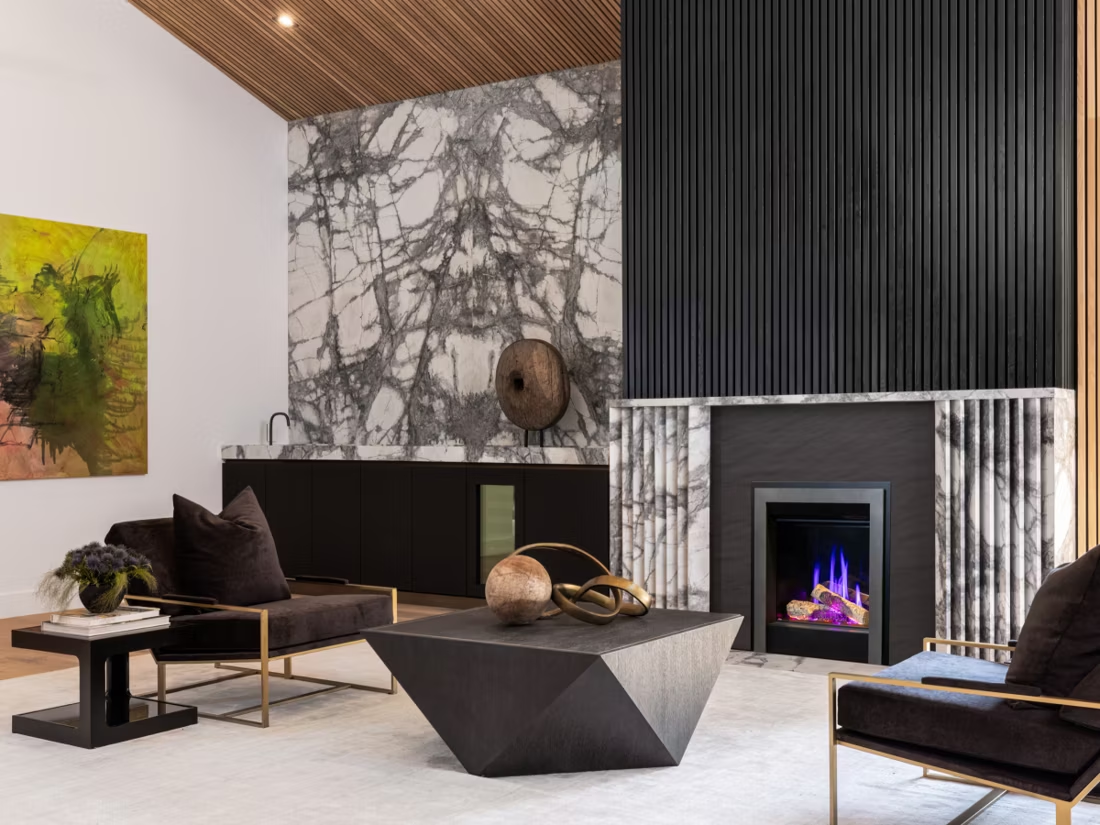
Winter lows here average -13.3°C and plenty of Venise-en-Québec properties are seasonal camps along Missisquoi Bay rather than fully winterized houses. An electric fireplace skips the chimney, the gas line, and the woodpile—I'll match you with a trusted local dealer who can size the right unit for your place.
Every Project Starts From One of These Five Situations
The cheapest power in the country makes electric an easy call.
Venise-en-Québec is a small resort municipality on Missisquoi Bay in Montérégie, population under 1,600, where a large share of the housing stock is camps and chalets used part of the year rather than full-time residences. At zone 6A with winter lows averaging -13.3°C, it's a real heating climate—not as punishing as Saguenay or Abitibi, but cold enough that a fireplace here needs to do actual work, not just sit decoratively. Énergir's gas network reaches parts of greater Montréal, the south shore, and a handful of urban corridors, but it doesn't extend out to Missisquoi Bay, so mains gas simply isn't an option for most addresses in town.
That's where electric earns its keep. A typical install runs $500 to $1,600 CAD—a fraction of the $6,000-$12,000 wood or $6,000-$15,000 gas ranges—because there's no venting, no chimney, and often no permit beyond a standard electrical hookup. Hydro-Québec's residential rate of roughly $0.078 per kWh is among the lowest in the country, which means running an electric insert for supplemental heat or evening ambiance costs very little compared to almost anywhere else in Canada. For a camp that's occupied on weekends or a home where you want zone heat in one room without touching the furnace, it's the least complicated fuel path available in Venise-en-Québec.
Three steps. No salesperson until you're ready.
Tell us about your project
Your postal code, your situation, and the fuel you're leaning toward—or let the answers point you to one.
See what's actually available
The brands dealers within 100 miles genuinely carry—real options, never a catalog mirage.
Get your dealer & Project Guide
A trusted local dealer, plus the free Project Guide & Parts List that names every component of the job.
Frequently Asked Questions
How much does an electric fireplace installation cost in Venise-en-Québec?
Most installs land between $500 and $1,600 CAD. A plug-in freestanding or wall-mount unit that runs off a standard outlet sits at the low end and can go in without any electrical work. A built-in insert that needs a dedicated 240V circuit run by a licensed electrician pushes toward the top of that range. Either way, it's a fraction of the $6,000-$12,000 wood or $6,000-$15,000 gas ranges local dealers quote, which is a big reason electric is popular for camps and secondary living spaces around Missisquoi Bay.
Will an electric fireplace keep a lake camp warm through a Montérégie winter?
It depends on the role it's playing. With winter lows averaging -13.3°C and a heating season that runs from November into March, zone 6A demands real heat, not just ambiance. In a well-insulated year-round home, a good electric insert works fine as zone heat for a bedroom, sunroom, or addition alongside your existing furnace or baseboards. In an older, lightly insulated camp without a full heating system, I'd pair it with baseboard heat or a heat pump rather than count on it as the sole heat source on the coldest nights of the season.
Do I need a permit for an electric fireplace in Venise-en-Québec?
A plug-in unit generally needs no permit at all—it's no different from adding another appliance to an outlet. A built-in unit that requires new wiring or a dedicated circuit should go through the municipal building department and be installed by a licensed electrician. Either way, you skip the CSA B365 code requirements and the WETT inspection that wood-burning installs need for insurance purposes—electric is by far the lighter regulatory lift of the fuels available here.
How much does it cost to run an electric fireplace on Hydro-Québec power?
Not much. Hydro-Québec's residential rate sits around $0.078 per kWh, among the lowest in Canada. A typical 1,500-watt electric insert run a few hours an evening costs only a couple of dollars a month in most homes here, which is a real advantage over provinces with double or triple that rate. It's one of the clearest financial arguments for electric in a town like Venise-en-Québec, where a lot of properties are used seasonally and owners want low-commitment heat and ambiance without a big utility bill.
Electric vs. wood—which makes more sense for my chalet?
Wood is the traditional choice around Montérégie, and species like sugar maple, yellow birch, American beech, and red oak are common in local woodlots, with cutting permits through the Ministère des Ressources naturelles et des Forêts running about $1.85 per cubic metre up to a 22.5 cubic metre cap, valid April through March. It's a good fit if you're at the property often and enjoy the process, but it comes with a $6,000-$12,000 install, chimney maintenance, and usually a WETT inspection for insurance. For a camp used mainly on weekends, a lot of owners find electric's $500-$1,600 install and zero upkeep a better match, saving wood burning for when they're actually there to enjoy it.
Is natural gas available in Venise-en-Québec, or should I just plan on electric?
Énergir's distribution network covers parts of greater Montréal, the south shore, and a few other urban corridors, but it doesn't reach out to Missisquoi Bay, so Venise-en-Québec addresses generally aren't on mains gas. Propane is technically an option but means tank delivery and a $6,000-$15,000 install with gas-fitter work. Electric avoids the fuel logistics entirely—no tank, no line, no gas permit—which is why it's the more practical no-hassle choice for most homes and camps in town.
What size electric fireplace or insert do I need for a typical Venise-en-Québec home?
It comes down to insulation and window exposure more than raw square footage. A 1,000 to 1,500-watt unit comfortably heats a single room or a small addition. For an open-concept camp with a lot of lake-facing glass on the bay, you'll want either a larger unit or a dealer's recommendation on zoning two smaller ones, since all that glazing loses heat faster than a typical interior wall. A local dealer can size it against your actual layout rather than guessing from floor area alone.
How much maintenance does an electric fireplace need?
Very little. There's no chimney to sweep, no venting to inspect, and no creosote to worry about the way there is with wood. Basic upkeep is wiping down the glass front and occasionally checking that the blower or heating element is running clean and dust-free. That's a meaningful difference from wood, which typically wants an annual inspection, or gas, which needs yearly burner and pilot service—electric is close to maintenance-free by comparison.
Can I install an electric fireplace in a seasonal, non-winterized camp?
Yes, and it's one of the easier upgrades for that kind of property. Since there's no venting or chimney involved, adding an electric unit doesn't require touching the building envelope, which matters if your camp isn't fully insulated for winter. Just keep in mind the fireplace itself doesn't need winterizing the way plumbing does, but if the camp sits unheated for stretches of the season, you'll still want a plan for freeze protection on water lines separate from the fireplace decision.
How much does an electric fireplace cost to run?
With the heater on, a typical unit draws about 1,500 watts—at average electric rates that's roughly 20 cents an hour. Run the flame effect alone and it costs pennies; the flames are LED-driven and use about as much power as a light bulb. There's no pilot light, no fuel delivery, and essentially no maintenance.
What fireplace styles should I know before shopping?
Four cover most of the market: screen-front traditional (mesh front, open feel, fits craftsman homes), traditional door set (the classic look you grew up with), modern linear (wide, low, the statement piece for entertaining), and clean face contemporary (no trim—your tile or stone runs right to the fire's edge). Walk in knowing those four terms and you're ahead of most buyers.
Can I put a TV above my fireplace?
Yes—with an asterisk. Fireplaces are hot and TVs don't like heat. Either put a mantel between them to deflect rising warmth, or choose a fireplace with heat-management technology that creates a cool zone on the wall above—the wall stays around 125 degrees, barely warm, while the room still gets full heat. If you like clean lines and don't want a mantel, heat management is the answer.
Do electric fireplaces actually produce heat?
Yes—most put out around 4,800–5,000 BTUs from a standard outlet, which comfortably warms a bedroom, office, or den as a comfort-zone heater. What they won't do is carry a whole house the way wood, gas, or pellet can. Think of electric as ambiance-first with honest supplemental heat: flames on with no heat in July, flames plus warmth in January.
Nearby Dealers
Hearth shops serving Venise-en-Québec and the surrounding area. Every listing shows whether it is a WhyFire partner, a dealer we have verified as authorized for the brands we recommend, or a local business carrying hearth products. No manufacturer pays for placement. How we verify dealers →
McCuin Fuels, Inc.
Chauffage Gadbois
Piscines Jacques-Cartier
Suroît Boutique (Cowansville)
Napert Signature
Thermopompes N & R Sol
Suroît Boutique (Sainte-Martine)
Perfecto Gaz Propane
Suroît Boutique (St-Hyacinthe)
Foyer-Gaz
Max Oxygene Pur
Electric Service in Venise-en-Québec
An electric fireplace's heater draws about 1,500 watts—pennies per hour at local rates.
Hydro-Québec
Get your free Project Guide & Parts List for your Venise-en-Québec electric fireplace.
Tell me about your home or camp on Missisquoi Bay, and I'll match you with a trusted local dealer and send a free Project Guide & Parts List—sized for your space, with the exact unit and parts your project needs.
Find Your Fireplace →