
Gas heat here starts with one question: is your street served?
Énergir's pipeline reaches parts of Laval but not all of it, and most Val-des-Arbres homes still heat with Hydro-Québec electricity or wood. If gas is right for your address, I'll match you with a trusted local dealer who can confirm it and quote the real work.
Every Project Starts From One of These Five Situations
Most Val-des-Arbres homes heat with electricity, not gas.
Val-des-Arbres sits in climate zone 6A with winter lows averaging -14°C and roughly five cold months a year at Laval's flat, 39-metre elevation—closer in feel to a Quebec City winter than anything mild. But the fuel mix here doesn't run on gas the way it might in Calgary or Winnipeg. Hydro-Québec's residential rate of about $0.078/kWh makes electric heat genuinely cheap, and plenty of households split sugar maple, yellow birch, American beech, or red oak for a wood stove or insert instead. Natural gas plays a smaller role in the region's home heating picture than either of those two.
Énergir does run distribution through parts of Laval, including sections near Val-des-Arbres, but service is partial rather than universal, and a lot of streets simply aren't on the network. That makes a gas fireplace here less a default choice and more a project that starts with confirming what's actually at the curb—Énergir service, a propane conversion, or neither. A local dealer who installs across Laval regularly can check your address and tell you straight whether gas, propane, or a different fuel path makes more sense for your house.
Three steps. No salesperson until you're ready.
Tell us about your project
Your postal code, your situation, and the fuel you're leaning toward—or let the answers point you to one.
See what's actually available
The brands dealers within 100 miles genuinely carry—real options, never a catalog mirage.
Get your dealer & Project Guide
A trusted local dealer, plus the free Project Guide & Parts List that names every component of the job.
Frequently Asked Questions
Is natural gas actually available in Val-des-Arbres?
Only in parts of it. Énergir's distribution network covers sections of Laval, but coverage across the region is partial, and Val-des-Arbres has streets on both sides of that line. Rather than assuming either way, a local hearth dealer or a call to Énergir can confirm whether your specific address has a main nearby. If it doesn't, propane is the standard fallback and runs the same fireplace equipment.
How much does a gas fireplace installation cost in Val-des-Arbres?
Typical installs run $6,000 to $15,000 CAD. A direct-vent insert going into an existing masonry firebox on a street with Énergir service, with a straightforward gas tie-in, lands toward the lower end. A new built-in unit for a renovation, or any project requiring a propane tank set and a longer line run because you're outside the Énergir footprint, pushes toward the top of that range.
What if my street isn't on the Énergir network—can I still get gas heat?
Yes, with propane. A propane tank, either buried or set on a pad, feeds the same fireplace, insert, or stove models that natural gas does, so you're not limited on equipment—just on where the fuel comes from. Budget extra for the tank installation itself on top of the fireplace project. It's a common setup in the parts of Val-des-Arbres and greater Laval that sit outside Énergir's distribution corridors.
Why don't more homes in Val-des-Arbres use gas fireplaces?
Two things crowd it out. Hydro-Québec's electricity rate, around $0.078/kWh, makes baseboard heat and electric fireplaces cheap to run, and a strong local wood-burning tradition means sugar maple, yellow birch, American beech, and red oak are all easy to source for a stove or insert. Gas also simply isn't on every street—Énergir's Laval coverage is partial. Where gas is available, homeowners usually choose it for the instant, thermostatic heat rather than cost savings over electricity.
Can I convert my existing wood fireplace to gas?
Often, yes, if your street has Énergir service or you're willing to add a propane tank. A gas insert typically slides into the existing masonry firebox, using a liner run through the chimney you already have from a fireplace originally built to burn maple or beech. It's a common upgrade for homeowners who want the ambiance without splitting and stacking wood, and it usually falls in the $6,000-$10,000 range depending on the gas source and venting.
Do I need a permit to install a gas fireplace in Val-des-Arbres?
Yes. Permits for hearth appliances go through the municipal building department, and gas connection work needs to be done by a licensed gas fitter regardless of whether you're tied into Énergir or running propane. A dealer who regularly installs in Laval will typically pull the permit and coordinate the gas-fitter sign-off as part of the project rather than leaving you to manage two separate trades.
Will a gas fireplace keep working if the power goes out?
Most will, which matters in a region that still remembers the 1998 ice storm and its weeks-long outages. Units with intermittent pilot ignition run their electronics on AA battery backup that kicks in automatically. Some models, including certain Valor fireplaces, skip batteries entirely because the pilot's thermocouple generates its own current. Worth asking your dealer which ignition system is on any unit you're considering, especially if you're choosing gas partly for outage resilience.
Gas fireplace vs. insert vs. stove—what's the difference for my home?
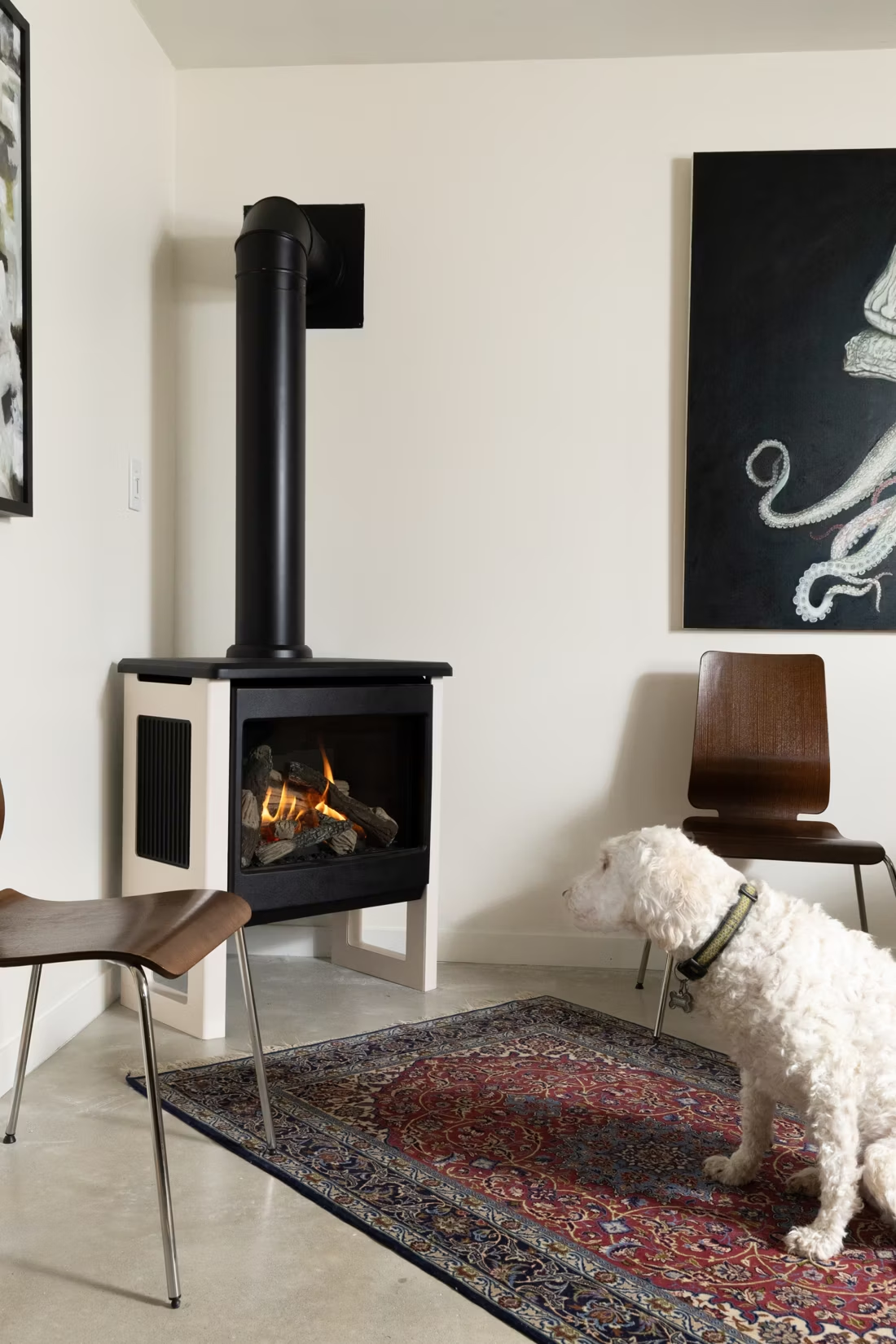
A gas fireplace is a built-in unit framed into a wall, common in new construction or a full renovation. A gas insert fits inside an existing masonry firebox, which suits older Val-des-Arbres homes that already have a chimney built for burning maple or oak. A gas stove is freestanding on a hearth pad, similar in footprint to a wood stove but running off a gas line or propane tank instead of cordwood. For most existing homes here, an insert is the least disruptive option since it reuses the chimney chase.
Gas vs. wood vs. electric—what's most practical in Val-des-Arbres?
Electric wins on simple economics, since Hydro-Québec's roughly $0.078/kWh rate keeps running costs low and installs for an electric fireplace typically land at just $500-$1,600. Wood, burning local sugar maple, yellow birch, or beech, remains popular for its ambiance and its independence from the grid during an outage, though wood-burning appliances on the island of Montréal and surrounding municipalities need to be registered, certified low-emission units—a normal step a good local dealer handles routinely. Gas is the right call mainly if your street already has Énergir service or you're fine adding propane, and you want instant flame without stacking wood or waiting for a room to warm.
Can a gas fireplace run on a thermostat?
Most modern gas fireplaces can—turn it on and off from the couch with a remote, or set a room temperature and let the fireplace hold the comfort zone for you. If low maintenance matters to your family, this is the feature set that makes gas the convenience pick over wood and pellet.
Why do fireplace quotes vary so much?
Because a fireplace is an iceberg—there's more behind the wall than in front of it. A low quote often covers only the unit; the full scope includes vent pipe, gas line or electrical, framing, and the tile or stone that has to come off and go back on. Make every bidder price the whole job. If a dealer can't speak to the full scope with confidence, that's your signal to keep looking.
Are new gas fireplaces really better than old ones?
Two ways, and they're both big. Looks: modern gas fireplaces are realistic enough that it's hard to believe they aren't burning wood. Cost: old units burn a standing pilot year-round (roughly $200 a year), while new ones use pilot-on-demand ignition and modern burners. Add remote controls and thermostat operation, and the day-to-day experience isn't close.
Does a gas fireplace work when the power is out?
Yes—modern gas fireplaces have a battery backup for the ignition system that lasts for weeks, so no power equals no problem. Your furnace can't say that: no electricity, no blower, no heat. It's one of the most common reasons families add a fireplace, and worth confirming on any model you're considering.
Nearby Dealers
Hearth shops serving Val-des-Arbres and the surrounding area. Every listing shows whether it is a WhyFire partner, a dealer we have verified as authorized for the brands we recommend, or a local business carrying hearth products. No manufacturer pays for placement. How we verify dealers →
Pro Du Foyer
Foyer Universel Montreal Inc. (A.m.f.)
Finition Belle-Flammes
Arta Boutik
Propane Plus Inc
Noeea Foyers Rive-Nord
Noréa Foyers Montréal
Nergiflex
Confort Elite
Les Foyer Mirabel A.m.f.
Boutique Poêles & Foyers Rive-Nord
Alternatives
Napert Signature
Décor Chaleur Châteauguay
Thermopompes N & R Sol
Natural Gas Service in Val-des-Arbres
Confirm service at your address before planning a gas fireplace—a quick call settles it.
énergir
Get your free Project Guide & Parts List for a Val-des-Arbres gas fireplace.
Tell me your address and whether you're near an Énergir line or looking at propane, and I'll match you with a trusted local dealer and send a free Project Guide & Parts List with the exact vent kit and parts your project needs.
Find Your Fireplace →