
Every fuel, every borough of the Laval Region.
Wood, pellet, electric, and gas fireplace resources for every borough of the Laval Region, from Chomedey to Sainte-Rose. Pick a fuel and we'll match you with a local dealer who can actually get it installed on your street.
Every Project Starts From One of These Five Situations
An island region of 553,850, winters down to -14°C, and a hardwood culture built on maple and birch.
Laval sits on Île Jésus, bounded by the Rivière des Mille Îles and the Rivière des Prairies, immediately north of Montréal and home to more than 553,850 people spread across boroughs like Chomedey, Duvernay, Sainte-Rose, and Fabreville. The climate here falls in zone 6A, with winter lows averaging around -14°C and a heating season that runs from October through April, noticeably milder than Québec City or Ottawa but still cold enough that a serious secondary heat source matters. Sugar maple, yellow birch, American beech, and red oak are the wood species most Laval households burn, much of it purchased from suppliers who harvest under Ministère des Ressources naturelles et des Forêts permits in the Laurentides and Outaouais forests to the north.
Laval's proximity to Montréal shapes what's actually practical to install. Wood-burning appliances here must be registered and certified to emit no more than 2.5 g/h of fine particles under the region's air-quality bylaw, a standard every modern EPA/CSA-certified wood stove or insert meets, and one a good local dealer handles as a matter of course. Natural gas is genuinely rare across most of the region: Énergir's distribution network reaches only specific streets and older neighbourhoods, so a gas fireplace here usually means either a home that happens to sit on a served line or a propane conversion instead. Electric fireplaces and pellet stoves fill the gap well, with regional pellet brands like Granules LG, Energex, and Trebio widely stocked. This hub rolls up hearth retailers, technicians, and fuel suppliers across every Laval borough—pick your fuel below for local dealers, install notes, and unit recommendations specific to your street.
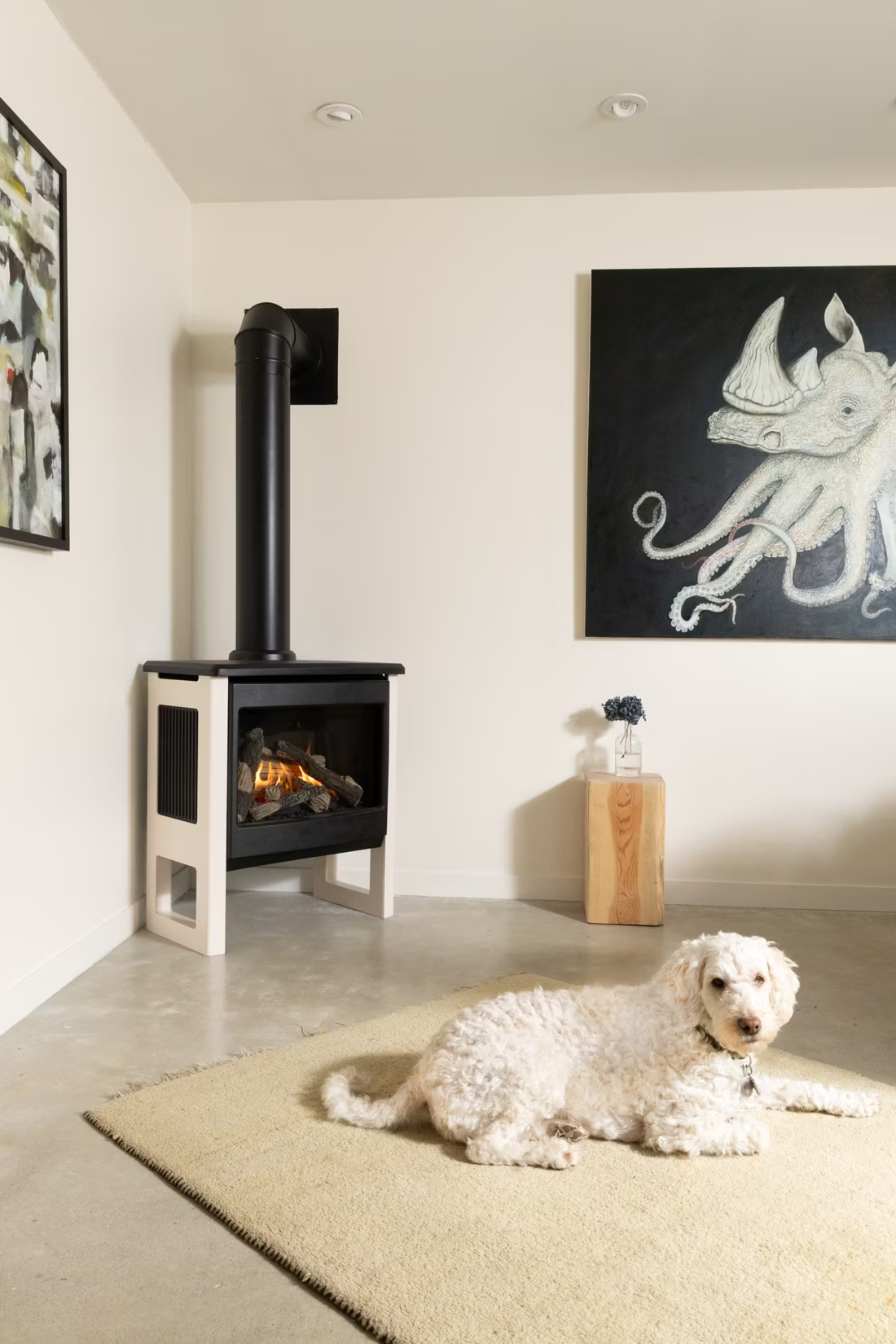
Four fuels. One honest answer for Laval Region.
Three steps. No salesperson until you're ready.
Tell us about your project
Your postal code, your situation, and the fuel you're leaning toward—or let the answers point you to one.
See what's actually available
The brands dealers within 100 miles genuinely carry—real options, never a catalog mirage.
Get your dealer & Project Guide
A trusted local dealer, plus the free Project Guide & Parts List that names every component of the job.
Frequently Asked Questions
Which fireplace fuel actually makes sense for a home in the Laval Region?
It depends on what's already running to your street. Wood remains a mainstream choice here—sugar maple, yellow birch, and red oak are the species most local suppliers stock, and a CSA-certified catalytic stove will hold a fire comfortably through a -14°C overnight low. Pellet stoves are just as common, especially in townhomes and condos where storing cordwood isn't practical; Granules LG, Energex, and Trebio are the regional brands you'll see at most Laval dealers. Electric fireplaces are a solid supplemental option nearly everywhere, since Hydro-Québec's rates make electric heat genuinely affordable. Gas is the outlier: Énergir's mains network only reaches specific corridors of Laval, so a gas fireplace usually means either your street happens to be served or you're looking at a propane setup instead. I'd check gas availability at your address before falling in love with a gas unit.
Do I need a permit or bylaw approval to install a wood stove or insert in Laval?
Yes. Because Laval sits inside the greater Montréal air-quality zone, any wood-burning appliance you install has to be registered with the borough and certified to emit no more than 2.5 g/h of fine particles, a bar every current EPA/CSA-certified stove or insert clears without issue. Beyond the emissions registration, the installation itself falls under CSA B365 and is permitted through your municipal building department. Most retailers we match homeowners with handle both the emissions registration and the building permit as part of the project, so it's rarely something you're filing yourself.
Is natural gas actually available where I live in Laval?
Only in parts. Énergir's distribution lines run through specific corridors of the region, some blocks in Chomedey or along older commercial streets, for instance, but plenty of Laval addresses simply don't have mains gas access. If your street isn't served, a gas fireplace typically means a propane tank and regulator instead of a line connection, which changes both the install and the ongoing fuel cost. It's worth confirming availability at your exact address before choosing a gas unit; we route gas inquiries to dealers who check this first rather than quoting a unit you can't actually connect.
Can I source or cut my own firewood near Laval, and are there rules around it?
Laval itself is fully built out, so personal wood-cutting happens outside the region, mostly in the Laurentides and Outaouais forests to the north, where the Ministère des Ressources naturelles et des Forêts (MRNF) issues cutting permits on public land. Most Laval households instead buy seasoned cordwood from local suppliers who source it that way, which is usually the more practical option given the drive involved. Whatever the source, sugar maple, yellow birch, and beech are the dense hardwoods to look for—they season well and burn longer than softer species.
What does my insurance company expect if I install a wood stove?
Most home insurers serving the Laval Region ask for a WETT inspection before they'll cover a wood-burning appliance, on top of the municipal emissions registration. A WETT inspector confirms the installation meets CSA B365 clearances and venting requirements, which matters for both your policy and resale, since an uninspected or uncertified stove can complicate a future sale here the same way it does in Montréal proper. Ask your dealer to arrange the WETT inspection as part of the install; most already work with an inspector regularly.
What does a fireplace installation typically cost in the Laval Region, and does timing matter?
Costs track pretty closely with the rest of greater Montréal. Wood stove or insert installs, including the CSA B365-compliant venting, generally run $4,000-$8,500 CAD; pellet stove installs are similar, around $3,800-$7,000 CAD. Electric fireplaces are the low end at $500-$3,000 CAD for unit and hookup, while a gas fireplace or insert, where Énergir service or a propane setup makes it possible, typically runs $5,000-$10,000 CAD depending on venting and line work. Booking in September or early October, before the first hard frost, gets you ahead of the rush; by December most dealers here are weeks out for anything beyond emergency service.
How many BTUs do I need in a fireplace?
Wrong question—and the industry's favorite way to confuse you. More BTUs isn't better if the fireplace cooks you out of the room you spent thousands to enjoy. Think in terms you can verify: how many square feet the unit heats, whether it's primary or backup heat, and whether you want it running overnight. Those three answers size a fireplace correctly every time.
Will we actually use a fireplace once we have one?
In my own home, the room with the fireplace has never been the same—it became the social hub. Game nights, holidays, date nights after the kids are down: the fire is where the house gathers. There's a reason people in this industry joke that we're really in the romance and entertainment business. You won't wonder whether you'll use it; you'll wonder how the room worked before.
What fireplace styles should I know before shopping?
Four cover most of the market: screen-front traditional (mesh front, open feel, fits craftsman homes), traditional door set (the classic look you grew up with), modern linear (wide, low, the statement piece for entertaining), and clean face contemporary (no trim—your tile or stone runs right to the fire's edge). Walk in knowing those four terms and you're ahead of most buyers.
What are the biggest mistakes people make buying a fireplace?
Five come up constantly: budgeting for the unit but not the full job (vent, gas line, electrical, finish work); drowning in options instead of starting from style and fuel; buying without an in-home preview; handing installation to a handyman instead of a pro; and giving up out of sheer indecision. Every one is avoidable with a clear plan—step one, step two, step three.
Stove and Fireplace Dealers in Laval Region
Listings include WhyFire partner dealers, dealers we have verified as authorized for the brands we recommend, and established local businesses that carry hearth products. Every listing shows which one it is. The ones marked Preferred run on WhyFire's software, so they can show you real pricing and book your appointment right here. No manufacturer pays for placement. How we verify dealers →
Pro Du Foyer
Foyer Universel Montreal Inc. (A.m.f.)
Finition Belle-Flammes
Arta Boutik
Propane Plus Inc
Noeea Foyers Rive-Nord
Noréa Foyers Montréal
Nergiflex
Confort Elite
Les Foyer Mirabel A.m.f.
Boutique Poêles & Foyers Rive-Nord
Alternatives
Napert Signature
Décor Chaleur Châteauguay
Le Ramoneur Du Foyer
Thermopompes N & R Sol
Get matched with a trusted dealer in the Laval Region.
Tell us your fuel and address, and we'll build a free Project Guide & Parts List: the right unit, the venting it needs, and the local Laval Region dealer we recommend for your project.
Find Your Fireplace →