
Gas fireplaces are the exception in Saint-Raphaël, not the rule.
At 153 metres in Chaudière-Appalaches, with winter lows averaging -17°C, this village of about 2,458 people sits well outside Énergir's mains gas footprint. A gas fireplace here almost always means propane. I'll help you confirm what's actually possible on your street and match you with a local dealer who handles it regularly.
Every Project Starts From One of These Five Situations
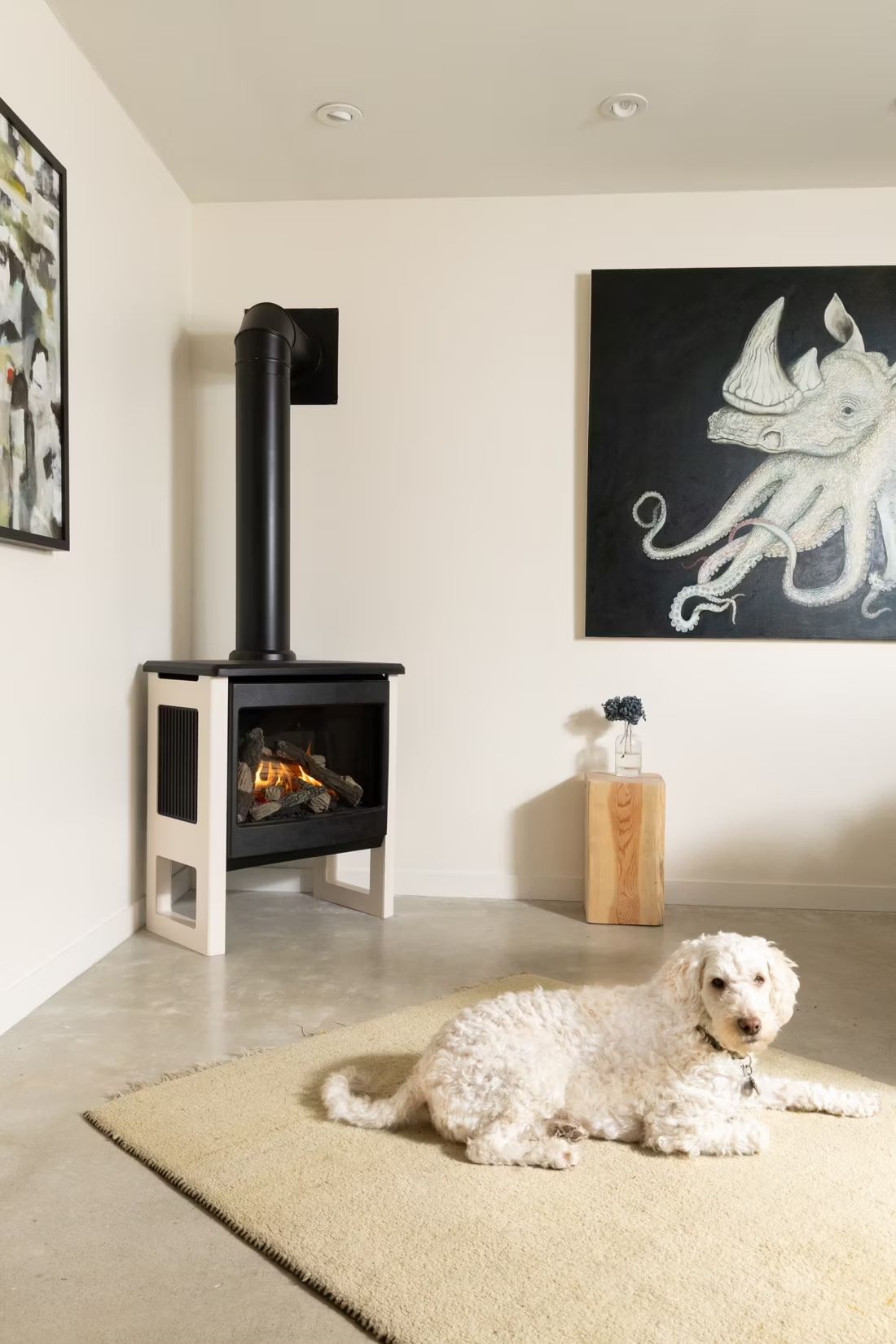
Here, gas usually means propane, not a mains line.
Saint-Raphaël is a small rural community in Chaudière-Appalaches, and its heating habits reflect that. Winters here run long and cold—climate zone 7A, average lows near -17°C—closer to what Québec City or Saguenay households deal with than anything coastal. Most homes lean on wood cut from local sugar maple, yellow birch, American beech, and red oak stands under Ministère des Ressources naturelles et des Forêts permits, or on electric heat, since Hydro-Québec's residential rate of roughly 7.8 cents per kWh is among the cheapest power in the country. Neither of those facts points toward mains gas as the default choice.
Énergir's distribution network is real, but it concentrates around greater Montréal, the south shore, and a handful of urban corridors—it does not reach most of Chaudière-Appalaches, and Saint-Raphaël is outside that service area in practice even though gas availability is flagged as partial provincewide. That means a gas fireplace project here is, almost without exception, a propane project: a tank, a line, and a direct-vent unit sized for the house. It's a workable, common path in rural Quebec, but it's worth confirming with a local dealer before you fall in love with a specific model, since the parts list and cost look different from a natural-gas hookup.
Three steps. No salesperson until you're ready.
Tell us about your project
Your postal code, your situation, and the fuel you're leaning toward—or let the answers point you to one.
See what's actually available
The brands dealers within 100 miles genuinely carry—real options, never a catalog mirage.
Get your dealer & Project Guide
A trusted local dealer, plus the free Project Guide & Parts List that names every component of the job.
Frequently Asked Questions
Is natural gas actually available in Saint-Raphaël?
Almost certainly not through a mains line. Énergir's network serves greater Montréal, the south shore, and a few other urban spines, and a village of under 2,500 people in Chaudière-Appalaches like Saint-Raphaël sits outside that footprint. A local dealer can double-check with Énergir if you're near a served corridor, but the safe planning assumption is that any gas fireplace project here runs on propane rather than a municipal gas tie-in.
What does a propane fireplace installation cost in Saint-Raphaël?
Typical installs run $6,000 to $15,000 CAD. The lower end covers a direct-vent insert going into an existing masonry firebox with a nearby propane tank already in place. The higher end covers a new built-in unit for a remodel or addition, including a fresh tank set, buried or above-ground line, and full venting through a wall or roof. Because propane requires its own tank and delivery arrangement out here, budget a bit more upfront planning time than a straightforward natural-gas hookup would need in a serviced area.
Why do so many homes here heat with wood or electricity instead of gas?
Mostly infrastructure and cost. Hydro-Québec's residential rate of about 7.8 cents per kWh makes electric heat genuinely affordable, and firewood is cheap and local—sugar maple, yellow birch, American beech, and red oak are all common on regional woodlots, and an MRNF cutting permit runs about $1.85 per cubic metre up to a 22.5 cubic metre maximum. Gas never built out the same infrastructure here that it did around Montréal, so wood and electricity became the default, with propane filling in for households that specifically want the flame and instant heat of a gas appliance.
What permits do I need for a gas or propane fireplace here?
You'll need a permit through the municipal building department, and the installation itself has to meet the CSA B365 code. For propane specifically, the tank placement and line work should be done by a licensed gas fitter, and most local dealers who install fireplaces in this area coordinate that trade directly rather than leaving it to the homeowner to arrange separately.
Vented or vent-free—what makes sense for a Saint-Raphaël winter?
Direct-vent is the practical choice given how cold and how long the heating season runs here, with average lows near -17°C. Direct-vent units pull combustion air from outside and exhaust it back outside through sealed venting, so they can run for hours on the coldest nights without affecting indoor air quality. Vent-free units are legal in Quebec but come with strict room-sizing limits, and most dealers serving rural Chaudière-Appalaches steer homeowners toward direct-vent for a primary or heavily used secondary heat source.
Will a propane fireplace still work if the power goes out?
Many models will. Rural power lines around Saint-Raphaël see their share of winter outages, and a unit with intermittent pilot ignition typically runs on AA battery backup that kicks in automatically. Some manufacturers, including Valor, skip the battery altogether because the pilot's thermocouple generates its own current. If outage resilience matters to you—and in a rural Chaudière-Appalaches winter it usually does—ask your dealer specifically about the ignition system on any model you're considering.
Gas, wood, pellet, or electric—which actually makes sense in Saint-Raphaël?
Given how far this village sits from Énergir's network, wood and electric heat carry the real cost advantage here—wood from local sugar maple or yellow birch cut under a cheap MRNF permit, or electric heat riding Hydro-Québec's roughly 7.8 cent rate. Pellet stoves using regional brands like Granules LG, Energex, or Trebio at $400 to $575 a ton offer a cleaner-burning middle ground with less daily labour than wood. Propane fireplaces, at $6,000 to $15,000 installed, make the most sense when what you actually want is the on-demand flame and convenience of gas and you're prepared to manage a tank rather than a mains line—it's a lifestyle choice here more than a cost-driven one.
How often does a propane fireplace need servicing?
Plan on an annual check, ideally in late summer or early fall before the first cold snap rather than mid-winter when technicians serving rural Chaudière-Appalaches tend to be booked solid. A technician checks the burner, pilot assembly, tank connections, and venting, and cleans the glass. Given how much use a propane fireplace tends to get through a long, cold Saint-Raphaël winter, skipping the yearly visit is how a small ignition issue turns into a no-heat night in January.
Can I convert an existing wood fireplace to gas or propane?
Yes, and it's a reasonable option for owners of older masonry fireplaces who want instant heat without splitting and hauling wood. A propane insert typically slides into the existing firebox with a liner run through the current chimney, generally landing in the $6,000 to $9,500 range depending on tank placement and line length. Since there's no Énergir main to tap into out here, the conversion is a propane project from the start—your local dealer can confirm whether your existing chimney and hearth clearances work with the insert you're considering.
Can a gas fireplace run on a thermostat?
Most modern gas fireplaces can—turn it on and off from the couch with a remote, or set a room temperature and let the fireplace hold the comfort zone for you. If low maintenance matters to your family, this is the feature set that makes gas the convenience pick over wood and pellet.
Why do fireplace quotes vary so much?
Because a fireplace is an iceberg—there's more behind the wall than in front of it. A low quote often covers only the unit; the full scope includes vent pipe, gas line or electrical, framing, and the tile or stone that has to come off and go back on. Make every bidder price the whole job. If a dealer can't speak to the full scope with confidence, that's your signal to keep looking.
Why is a fireplace insert so efficient?
An insert does two things: it seals the chimney completely, so you stop losing air you already paid to heat, and it radiates warmth into the room through the firebox and glass. Most add a heat-exchange fan that pulls cool room air underneath, wraps it around the hot firebox, and pushes it back out warm. Your home is more efficient before you've even lit the first fire.
Louvered or clean face—which fireplace front is better?
Louvered fronts have grill work above and below the glass for airflow, move heat a little better with a fan, and suit traditional mantels. Clean face designs drop the louvers entirely so finish work runs to the fire's edge—they fit both modern and traditional rooms. When we did our own home we chose clean face: a big viewing area beat a little extra airflow. It depends on your room, not on a rulebook.
Nearby Dealers
Hearth shops serving Saint-Raphaël and the surrounding area. Every listing shows whether it is a WhyFire partner, a dealer we have verified as authorized for the brands we recommend, or a local business carrying hearth products. No manufacturer pays for placement. How we verify dealers →
Magasin H. Letourneau Inc.
Propane Multi-Service Inc
Les Cheminées Gamelin
Hubert's Fireplace Consultation + Design
Nova Energie Inc
Maçonnex (Saint-Isidore)
Boutique Joli-Feu
Mission Ventilation K.g. Inc
Natural Gas Service in Saint-Raphaël
Confirm service at your address before planning a gas fireplace—a quick call settles it.
énergir
Get your free Project Guide & Parts List for a Saint-Raphaël gas or propane fireplace.
Tell me about your home and I'll help confirm whether Énergir reaches your street or you're looking at propane, then match you with a local dealer and send a free Project Guide & Parts List with the exact vent kit and parts your project needs.
Find Your Fireplace →