
Automated heat for winters that settle in at -18°C.
Saint-Marc-des-Carrières sits in the Portneuf lowlands of Capitale-Nationale, where climate zone 7A brings long stretches of hard cold with little warning. I'll match you with a local dealer who knows what actually fits your chimney and your electrical panel, then send a free plan for the project before you spend a dollar.
Every Project Starts From One of These Five Situations
A hardwood town where pellet heat keeps things simple.
At only 47 metres of elevation, Saint-Marc-des-Carrières isn't a mountain town, but the numbers still say climate zone 7A: winter lows averaging -18°C, a heating season that runs roughly six months, and cold snaps that push well past that average most winters. That's a serious heating load for a town of under 2,400 people, and it's why solid-fuel heat—wood or pellet—stays common here instead of fading out the way it has in milder parts of the province.
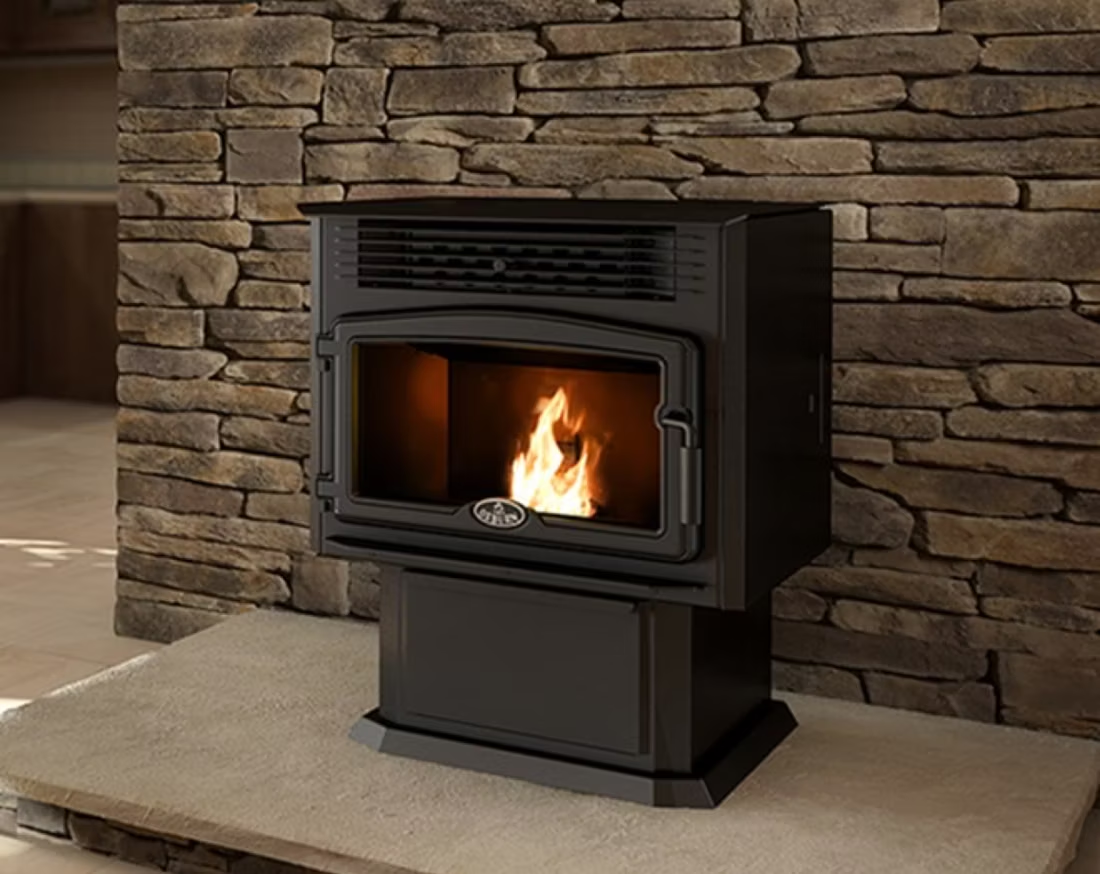
The forests around Portneuf are thick with sugar maple, yellow birch, American beech, and red oak, and a lot of local households already burn cordwood cut under a Ministère des Ressources naturelles et des Forêts permit. Pellet appliances give you the same solid-fuel heat output without the splitting, stacking, and creosote management—Quebec producers like Granules LG, Energex, and Trebio supply the bags, typically $400-$575 a ton, and most burn cleaner and more consistently than air-dried hardwood. With Hydro-Québec's residential rate sitting around 7.8 cents per kWh—among the cheapest power in the country—plenty of homes here lean on electric baseboards for daily heat and add a pellet stove for the rooms electric can't keep warm through a real cold snap, or for backup when an ice storm takes the grid down.
Three steps. No salesperson until you're ready.
Tell us about your project
Your postal code, your situation, and the fuel you're leaning toward—or let the answers point you to one.
See what's actually available
The brands dealers within 100 miles genuinely carry—real options, never a catalog mirage.
Get your dealer & Project Guide
A trusted local dealer, plus the free Project Guide & Parts List that names every component of the job.
Frequently Asked Questions
How much does a pellet stove installation cost in Saint-Marc-des-Carrières?
Most installs in the area run $6,000-$10,000 CAD, and where you land in that range depends mostly on venting. A pellet insert going into an existing masonry firebox with a liner run is usually toward the low end. A freestanding unit in a room without a chimney—common in the older farmhouses scattered around Portneuf—needs a full through-wall or through-roof pellet vent kit plus a dedicated electrical outlet for the hopper and auger, which pushes cost up. Your municipal building department permit is typically folded into a local dealer's quote.
What size pellet stove do I need for a house out here?
With winter lows averaging -18°C and stretches that go colder, a pellet stove rated for supplemental heat in a single room won't carry a whole house through January. Older, less-insulated farmhouses common around Saint-Marc-des-Carrières generally do better with a mid-to-large unit capable of covering 1,200-2,000 square feet, especially if it's meant to take pressure off electric baseboards during the coldest weeks. A local dealer will size it against your actual insulation and layout rather than square footage alone—oversizing a pellet stove wastes pellets fast.
Do I need a permit to install a pellet stove here?
Yes. New installations go through the municipal building department, and the appliance and venting need to meet CSA B365. Many insurers in Quebec also expect a WETT-style inspection or equivalent documentation for solid-fuel appliances before they'll write or renew a policy—that requirement is written with wood stoves in mind, but plenty of carriers extend it to pellet units too, so it's worth confirming with your insurer before you buy. Local dealers who install regularly in the region know which insurers ask for what.
Why choose pellet over cutting my own wood, given how much hardwood is around here?
Sugar maple, yellow birch, American beech, and red oak all grow well around Portneuf, and an MRNF cutting permit runs about $1.85 per cubic metre plus taxes, capped at 22.5 cubic metres, valid April 1 to March 31. That's genuinely cheap heat if you have the time, a truck, and somewhere dry to season wood for a year. Pellet appliances trade that low fuel cost for convenience: no splitting, no stacking, no green wood, and a thermostat that holds a steady temperature overnight without you tending the fire. Plenty of households here do both—wood in a stove for backup, pellet in another room for daily ease.
What pellet brands can a local dealer actually get me?
Granules LG, Energex, and Trebio are the pellet brands most commonly stocked by dealers serving this part of Capitale-Nationale, running roughly $400-$575 a ton depending on the season and whether you buy early or mid-winter. All three are Quebec producers, which keeps trucking distances short and supply fairly reliable compared to pellets shipped in from farther afield—worth asking your dealer which brand they see perform best in their own customers' stoves before you commit to a supplier.
Will my pellet stove still run if the power goes out?
Not on its own. Pellet stoves need electricity to run the auger and combustion blower, so a straight power outage stops the fire—something to weigh seriously in a region that has seen real ice storm damage to the grid. Some units accept a small battery backup or generator hookup that can bridge a short outage; ask your dealer which models support that. If outage resilience matters more to your household than convenience, a wood stove or insert that runs with zero electrical input is the more dependable backup, and quite a few homes here keep one of each.
Is a gas fireplace an option instead of pellet in Saint-Marc-des-Carrières?
Mostly not, and it's worth saying plainly. Énergir's natural gas network covers only parts of Quebec, mainly around greater Montréal and a few urban corridors, and it does not reach a small Portneuf-area town like this one. A gas fireplace here would mean a propane setup with a tank on the property, which is workable but a different cost structure than mains gas. For most homes in this area, pellet or wood is simply the more practical solid-fuel path, and electric handles the rest.
With Hydro-Québec rates this low, why bother with a pellet stove instead of an electric fireplace?
An electric fireplace or insert is cheap to run at roughly 7.8 cents per kWh and installs for as little as $500-$1,600, but most electric units are built for ambiance and modest supplemental warmth, not for carrying a room through a -18°C night. A pellet stove puts out real heat output—often 40,000+ BTU on the larger units—and can take real pressure off your baseboards in the coldest rooms of an older farmhouse. If you just want the look of a fire with minimal fuss, electric wins. If you want to meaningfully cut a heating bill during the worst of winter, pellet is the better tool.
How much maintenance does a pellet stove need through a Portneuf winter?
Plan on daily or every-other-day ash removal from the burn pot during heavy use, a full glass and hopper cleaning every couple of weeks, and a professional service visit—venting, auger, blower, gaskets—once a year, ideally before the season starts rather than mid-January when local technicians are busiest. Given that many households here run the stove for a genuine six-month season rather than occasional weekend use, skipping that annual service is the most common reason a stove starts jamming or smoking on the coldest week of the year.
Why do fireplace quotes vary so much?
Because a fireplace is an iceberg—there's more behind the wall than in front of it. A low quote often covers only the unit; the full scope includes vent pipe, gas line or electrical, framing, and the tile or stone that has to come off and go back on. Make every bidder price the whole job. If a dealer can't speak to the full scope with confidence, that's your signal to keep looking.
Is it worth replacing an old fireplace that still sort of works?
Ask three questions: Is it ugly? Is it drafty? Does it actually work? Most old fireplaces fail at least two. Beyond looks, an old unit leaks air around the damper year-round and—if it's gas with a standing pilot—quietly burns a couple hundred dollars a year. A modern replacement seals the wall, heats the room, and changes how the whole space gets used.
Why is my open fireplace making my house colder?
Open fireplaces suck—literally. As the fire burns, it consumes air your furnace already paid to heat and pulls it out through the chimney, so the house is actually colder after the fire goes out than before you lit it. An insert fixes this: it seals the chimney, puts fixed glass across the front, and turns that hole in your house into a real heat source.
What's the difference between an insert and a zero-clearance fireplace?
An insert is a fireplace that slides into a pre-existing wood-burning fireplace—if you don't have one, there's nothing to insert it into. A zero-clearance fireplace is built into a framed wall, which makes it the answer for remodels and new construction. Simple test: existing masonry fireplace means insert; blank or framed wall means zero-clearance.
Nearby Dealers
Hearth shops serving Saint-Marc-des-Carrières and the surrounding area. Every listing shows whether it is a WhyFire partner, a dealer we have verified as authorized for the brands we recommend, or a local business carrying hearth products. No manufacturer pays for placement. How we verify dealers →
Plomberie 1750
Services Propane Inc.
Chemine, Poeles Et Foyer Quebec
Foyer Québec
Maçonnex (Québec)
Gespro Poêles Et Foyers
Nova Energie Inc
Hubert's Fireplace Consultation + Design
Les Cheminées Gamelin
A. Tremblay Et Frères
Pellet Brands Stocked Around Saint-Marc-des-Carrières
Typical price runs $400-$575 per ton—buy early-season for the best rates. Manufacturers will point you to the nearest stocking dealer.
Granules Lg
Trebio
Get your free Project Guide & Parts List for a Saint-Marc-des-Carrières pellet project.
Tell me about your home and your electrical setup, and I'll match you with a local dealer who works with Granules LG, Energex, and Trebio, then send a free Project Guide & Parts List with the vent kit and parts your project actually needs.
Find Your Fireplace →