
Electric heat that makes sense at Hydro-Québec rates.
With winter lows averaging -14.2°C in the Laurentides Region and Hydro-Québec's residential rate sitting at just $0.078/kWh, an electric fireplace or insert is one of the cheapest ways to add real zone heat and ambiance to a Saint-Eustache home. I'll match you with a trusted local dealer and a free plan for the project.
Every Project Starts From One of These Five Situations
No chimney, no gas line, no bylaw headaches.
Saint-Eustache sits in climate zone 6A, and while a -14.2°C average winter low keeps the heating season running from late fall into April, most homes here rely on electric baseboards fed by Hydro-Québec, whose residential rate of $0.078/kWh is among the lowest in the country. That makes electric fireplaces a practical add-on rather than a novelty: running a typical 1,500-watt insert for an evening costs pennies, and it slots into whatever heating system a home already has without touching the furnace or panel capacity in a major way.
Wood is still common in the region, with sugar maple, yellow birch, American beech, and red oak the go-to species, and gas is genuinely rare here since Énergir's network only reaches part of the area and most homes would need propane instead. Electric sidesteps both complications entirely. There's no venting to size, no WETT inspection for insurance, and none of the registered, certified low-emission appliance rules that apply to wood-burning units closer to the island of Montréal. For condos, basement rec rooms, and older homes without an existing masonry fireplace, electric is often simply the fastest path to a working hearth.
Three steps. No salesperson until you're ready.
Tell us about your project
Your postal code, your situation, and the fuel you're leaning toward—or let the answers point you to one.
See what's actually available
The brands dealers within 100 miles genuinely carry—real options, never a catalog mirage.
Get your dealer & Project Guide
A trusted local dealer, plus the free Project Guide & Parts List that names every component of the job.
Frequently Asked Questions
How much does an electric fireplace installation cost in Saint-Eustache?
Most electric fireplace and insert installations here run $500 to $1,600 CAD, a fraction of the $6,000-$12,000 wood installs or $6,000-$15,000 gas installs typically cost. A plug-in unit on an existing 120V outlet sits at the low end; a hardwired 240V built-in or a insert replacing an old masonry firebox, which needs a dedicated circuit run by a licensed electrician, lands toward the top. There's no venting or gas line to price in, which is the main reason the range stays so much lower than the other fuels.
Do I need a permit to install an electric fireplace in Saint-Eustache?
Usually not for the appliance itself, since there's no chimney or gas line involved, but any new dedicated circuit or panel work still needs to meet code and should be done by a licensed electrician. If your project involves structural changes, like removing an old masonry firebox to fit a built-in unit, check with the municipal building department first. Most local dealers who handle installs here can tell you in a few minutes whether your specific project needs a permit.
How much does it actually cost to run an electric fireplace with Hydro-Québec rates?
At Hydro-Québec's residential rate of $0.078/kWh, a typical 1,500-watt electric fireplace running five hours an evening costs roughly 58 cents. Even running one most evenings through a long Laurentides winter adds only a modest amount to a monthly bill, which is part of why electric fireplaces are popular as supplemental heat in Saint-Eustache rather than something homeowners hesitate to use.
Is electric heat enough for a Saint-Eustache winter, or is it just for looks?
Most electric fireplaces here work as zone heaters, not whole-home furnaces, and that's the right expectation for a climate that sees -14.2°C nights. A 1,500-watt insert can meaningfully warm a living room or basement rec room and take some load off the baseboards, which is how most local homeowners actually use them. For a home's primary heat, Hydro-Québec-fed baseboards or a heat pump still do the heavy lifting; the fireplace adds comfort and a visual flame to the room where the family actually sits.
Why not just install a gas fireplace instead?
Gas is genuinely uncommon in Saint-Eustache. Énergir's distribution network only reaches part of the region, so a lot of addresses here would need a propane tank and line rather than a simple natural gas tie-in, which adds cost and complexity most homeowners skip. Electric avoids the fuel-availability question entirely—it works the same on any street, doesn't need a gas-fitter, and the $500-$1,600 install range is a fraction of the $6,000-$15,000 a gas project typically runs here.
What about wood—isn't that more traditional for this area?
Wood heat is standard in the Laurentides, and sugar maple, yellow birch, American beech, and red oak are all common local species, with cutting permits available through the Ministère des Ressources naturelles et des Forêts. But wood comes with real overhead: CSA B365 installation code, a WETT inspection most insurers require, and—for anyone closer to the island of Montréal—registration and certified low-emission appliance rules. Electric skips all of that paperwork, which is why a lot of Saint-Eustache condo owners and renters choose it even in a region where wood is otherwise popular.
What kind of electric fireplace works best for a condo or apartment here?
A wall-mounted or built-in electric insert is the most common choice for Saint-Eustache condos and apartments, since it needs no venting, no structural chimney, and typically just a standard outlet or a simple dedicated circuit. It's also the only fireplace option many condo boards will approve without a lengthy review, since it carries none of the fire-code or insurance questions that come with a wood-burning appliance in a shared building.
Can I put an electric insert into my existing masonry fireplace?
Yes, and it's a common retrofit in older Saint-Eustache homes built with a wood-burning masonry firebox that no longer gets used. An electric insert slides into the existing opening, usually needs just a nearby outlet or a short new circuit run, and gives you flame effect and supplemental heat without the WETT inspection or chimney maintenance a working wood fireplace requires. It's typically the fastest and least expensive of all the fireplace conversion options.
Are there rebates in Quebec for switching to electric heat?
Quebec's Chauffez vert program has offered incentives to homeowners converting from wood or oil heating to electric, and it's worth checking current program status before you buy since funding and eligibility shift over time. Combined with Hydro-Québec's low $0.078/kWh residential rate, the ongoing cost of running electric heat in Saint-Eustache is already low even without a rebate—the incentive programs mainly sweeten the upfront install.
How much does an electric fireplace cost to run?
With the heater on, a typical unit draws about 1,500 watts—at average electric rates that's roughly 20 cents an hour. Run the flame effect alone and it costs pennies; the flames are LED-driven and use about as much power as a light bulb. There's no pilot light, no fuel delivery, and essentially no maintenance.
What fireplace styles should I know before shopping?
Four cover most of the market: screen-front traditional (mesh front, open feel, fits craftsman homes), traditional door set (the classic look you grew up with), modern linear (wide, low, the statement piece for entertaining), and clean face contemporary (no trim—your tile or stone runs right to the fire's edge). Walk in knowing those four terms and you're ahead of most buyers.
Do electric fireplaces actually produce heat?
Yes—most put out around 4,800–5,000 BTUs from a standard outlet, which comfortably warms a bedroom, office, or den as a comfort-zone heater. What they won't do is carry a whole house the way wood, gas, or pellet can. Think of electric as ambiance-first with honest supplemental heat: flames on with no heat in July, flames plus warmth in January.
Does an electric fireplace need a vent or chimney?
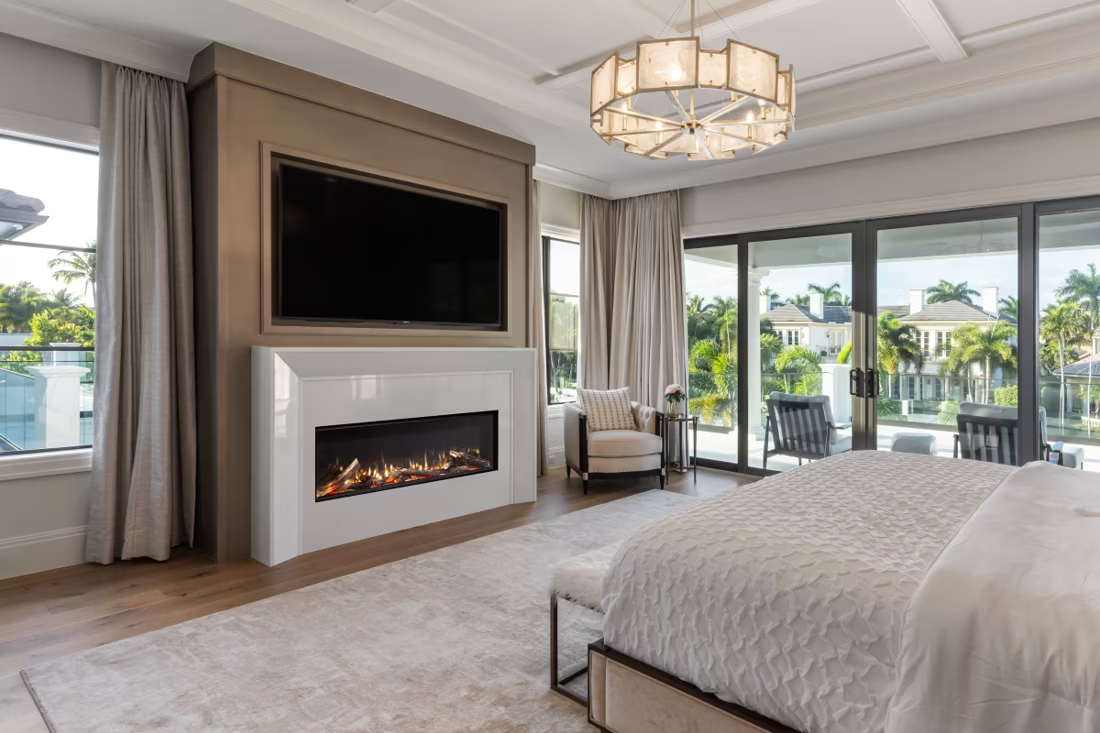
No—that's its superpower. An electric fireplace needs a wall and an outlet, period. No vent pipe, no gas line, no clearances to design around, which is why it works in bedrooms, offices, apartments, and walls where venting a gas or wood unit would be impractical or impossible. Installation is typically the simplest and least expensive of any fireplace type.
Nearby Dealers
Hearth shops serving Saint-Eustache and the surrounding area. Every listing shows whether it is a WhyFire partner, a dealer we have verified as authorized for the brands we recommend, or a local business carrying hearth products. No manufacturer pays for placement. How we verify dealers →
Les Foyer Mirabel A.m.f.
Finition Belle-Flammes
Alternatives
Boutique Poêles & Foyers Rive-Nord
Noréa Foyers Montréal
Nergiflex
Pro Du Foyer
Foyer Universel Montreal Inc. (A.m.f.)
Foyer-Gaz
Noeea Foyers Rive-Nord
Décor Chaleur Laurentides Inc
Décor Chaleur Châteauguay
Confort Elite
Arta Boutik
Propane Plus Inc
Thermopompes N & R Sol
Electric Service in Saint-Eustache
An electric fireplace's heater draws about 1,500 watts—pennies per hour at local rates.
Hydro-Québec
Get your free Saint-Eustache electric fireplace Project Guide & Parts List.
Tell me about your home and where you'd like the fireplace, and I'll match you with a trusted local dealer and send a free Project Guide & Parts List sized to your room, with the exact parts your project needs.
Find Your Fireplace →