
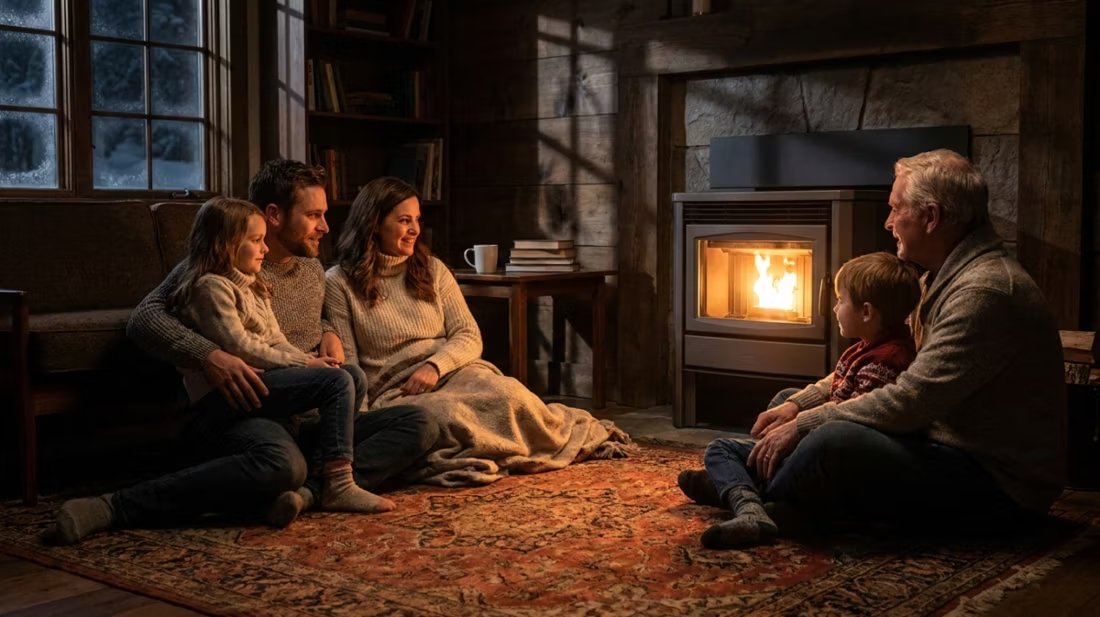
Pellet heat built for a Saguenay winter that hits -21°C.
Saguenay–Lac-Saint-Jean sits in climate zone 7A, where the average winter low runs around -21°C and the heating season stretches from October well into April. I'll match you with a trusted local dealer who knows the region's pellet supply and can size a stove that actually holds through a Lac-Saint-Jean cold snap.
Every Project Starts From One of These Five Situations
A pellet industry rooted in the same forest that heats the region.
Saguenay's winters run long and hard—climate zone 7A, an average low near -21°C, and a heating season that rivals Thunder Bay or Sudbury for sheer duration. Wood has always been the backbone fuel here, with sugar maple, yellow birch, American beech, and red oak coming off Lac-Saint-Jean woodlots under Ministère des Ressources naturelles et des Forêts permits (roughly $1.85 per cubic metre, capped at 22.5 cubic metres per household). Pellet stoves piggyback on that same forest economy, just processed a step further: instead of splitting and stacking, you're feeding a hopper from bags milled a short drive from most Saguenay addresses.
Granules LG is headquartered in Saint-Félicien, right in Lac-Saint-Jean, and Energex and Trebio both mill pellets elsewhere in Quebec—so the $400-$575 per tonne homeowners pay locally supports a genuinely regional supply chain rather than a shipped-in commodity. Natural gas barely factors into the picture; Énergir's network only reaches limited corridors of the province, and it's not a realistic option for most Saguenay addresses. Hydro-Québec's residential rate is famously cheap at 7.8 cents per kWh, which means pellet stoves here compete less on raw cost than on backup resilience and the ambiance electric baseboards can't match.
Three steps. No salesperson until you're ready.
Tell us about your project
Your postal code, your situation, and the fuel you're leaning toward—or let the answers point you to one.
See what's actually available
The brands dealers within 100 miles genuinely carry—real options, never a catalog mirage.
Get your dealer & Project Guide
A trusted local dealer, plus the free Project Guide & Parts List that names every component of the job.
Frequently Asked Questions
How much does a pellet stove installation cost in Saguenay?
Most installs land between $6,000 and $10,000 CAD. An insert going into an existing masonry firebox in one of Chicoutimi's or Jonquière's older homes tends to sit at the lower end, since the chimney chase is already there. A freestanding unit for a home without a fireplace—common in newer subdivisions around La Baie—needs a full vent run through the wall or roof, which pushes the project toward the top of that range. Your municipal building department will require a permit either way, and most dealers who work in the region fold that step into the quote.
Where do Saguenay homeowners actually buy pellets?
Regional supply is a real advantage here. Granules LG mills its pellets in Saint-Félicien, right in Lac-Saint-Jean, and Energex and Trebio both operate elsewhere in Quebec, so the $400-$575 per tonne you'll pay isn't paying for a long shipping haul. Most local dealers recommend buying a season's supply—typically 2 to 3 tonnes for an average Saguenay home—before the fall price bump, since demand climbs fast once the first hard frost hits.
Hydro-Québec electricity is so cheap—does a pellet stove still make sense?
It's a fair question in a region paying about 7.8 cents per kWh, among the lowest residential electricity rates in the country. Pellet stoves rarely win on a pure cost-per-heat-unit basis against Hydro-Québec baseboards. Where they earn their keep is resilience and comfort: a pellet stove with battery backup keeps running through the ice storms and grid interruptions that periodically hit Saguenay–Lac-Saint-Jean, and it delivers a real visible flame that electric heat simply doesn't. Most homeowners here run pellet as a supplemental or zone-heating choice in the main living space rather than a whole-house replacement for electric heat.
Do I need a permit for a pellet stove in Saguenay?
Yes. New installations go through your municipal building department, and the work has to meet the CSA B365 installation code. If you're planning to insure the appliance—and most home insurers in the region ask for this—expect to need a WETT inspection on file even though pellet appliances burn cleaner than cordwood, since insurers generally treat any solid-fuel appliance the same way. A dealer who regularly works in Saguenay–Lac-Saint-Jean will know exactly what your insurer wants to see.
What size pellet stove do I need for a Saguenay home?
With winter lows averaging around -21°C and cold snaps that push well past that, undersizing is the mistake to avoid. A stove rated under 1,200 square feet suits a smaller Lac-Saint-Jean cottage or a supplemental setup, but most main living areas in Chicoutimi, Jonquière, or La Baie do better with a unit in the 1,500 to 2,200 square foot range so the hopper doesn't need refilling every few hours during the coldest stretches. A local dealer will size against your actual insulation and ceiling height rather than square footage alone.
Pellet stove or wood stove—which fits Saguenay better?
Both have a place here. Cordwood—sugar maple, yellow birch, American beech, or red oak cut under an MRNF permit for about $1.85 a cubic metre, up to 22.5 cubic metres a year—is the cheaper fuel if you're willing to split, stack, and season it a year ahead. Pellet stoves trade that labour for convenience: a thermostat-controlled burn, easier venting, and pellets from Granules LG, Energex, or Trebio delivered or picked up in bags rather than truckloads. Households with wood already cut and land access tend to stick with wood; those without a woodlot connection generally find pellet the more practical route.
Is a gas fireplace an option in Saguenay?
Not really, for most addresses. Énergir's natural gas network reaches only limited corridors of Quebec, and Saguenay–Lac-Saint-Jean sits mostly outside it. A gas fireplace here usually means running on propane rather than piped gas, which adds tank and delivery costs most homeowners skip in favour of pellet or electric. If gas genuinely matters to you, it's worth confirming with your municipality whether your street has service before you plan around it—but pellet is the more realistic direct-flame option for the large majority of Saguenay homes.
How much maintenance does a pellet stove need in Saguenay?
Plan on daily or every-few-days ash removal during a heating season that runs from October into April, plus a deeper cleaning of the burn pot, hopper, and exhaust venting every few weeks of steady use. Most owners also book one professional service visit a year, ideally in September before the first real cold snap, to check the auger motor, gaskets, and venting—a lighter job than a wood chimney sweep, but skipping it is how an auger jam shows up on the coldest night of January.
Will my pellet stove still run during a power outage?
Not without help—the auger and combustion blower both need electricity, so a standard pellet stove goes cold the moment the grid does. That matters in a region that sees its share of winter storm outages. Most dealers working in Saguenay–Lac-Saint-Jean recommend a small battery backup or inverter generator sized to the stove's draw, which is a cheap way to keep the unit running through a multi-hour outage. If outage resilience without any backup power is the priority, a wood stove burning local maple or birch is the more failure-proof choice, and a number of Saguenay households run one alongside their pellet stove for exactly that reason.
Why do fireplace quotes vary so much?
Because a fireplace is an iceberg—there's more behind the wall than in front of it. A low quote often covers only the unit; the full scope includes vent pipe, gas line or electrical, framing, and the tile or stone that has to come off and go back on. Make every bidder price the whole job. If a dealer can't speak to the full scope with confidence, that's your signal to keep looking.
Is it worth replacing an old fireplace that still sort of works?
Ask three questions: Is it ugly? Is it drafty? Does it actually work? Most old fireplaces fail at least two. Beyond looks, an old unit leaks air around the damper year-round and—if it's gas with a standing pilot—quietly burns a couple hundred dollars a year. A modern replacement seals the wall, heats the room, and changes how the whole space gets used.
What do I measure to size a fireplace insert?
Four numbers tell you what fits: the front width, the front height, the back width, and the overall depth of your existing fireplace opening. Grab a tape measure, jot those down, and snap a photo of the wall—those two things do more to move your project forward than anything else you can do today.
Are pellet stoves loud?
They make some noise—there are two fans running plus an auger motor that turns as it feeds pellets. But there's a real range: premium models are engineered quiet, and the best offer a whisper-quiet mode you can comfortably watch TV next to. If noise matters in your room, ask to hear a stove running before you buy—it's a five-minute test that saves years of annoyance.
Nearby Dealers
Hearth shops serving Saguenay and the surrounding area. Every listing shows whether it is a WhyFire partner, a dealer we have verified as authorized for the brands we recommend, or a local business carrying hearth products. No manufacturer pays for placement. How we verify dealers →
Maçonnex (Saguenay)
Ventil-Air 2001 Inc
Bmr Saint-Bruno – Nutrinor Quincailleries
Bmr Saint-Cœur-de-Marie – Nutrinor Quincailleries
Bmr Saint-Prime – Nutrinor Quincailleries
Rénomax Mistassini
Bmr Normandin – Nutrinor Quincailleries
Pellet Brands Stocked Around Saguenay
Typical price runs $400-$575 per ton—buy early-season for the best rates. Manufacturers will point you to the nearest stocking dealer.
Granules Lg
Trebio
Get your free Project Guide & Parts List for a Saguenay pellet stove.
Tell me about your home and I'll match you with a trusted local dealer and send a free Project Guide & Parts List—sized for a Saguenay–Lac-Saint-Jean winter, with the vent kit and parts specified.
Find Your Fireplace →