
Steady heat through Estrie's long, cold winters.
Richmond sits at 126 metres in the Estrie region, where winter lows average -16.4°C and the heating season stretches from October well into April. I'll match you with a trusted local dealer who knows what actually vents and fits in a Richmond home, plus a free plan for the project.
Every Project Starts From One of These Five Situations
Reliable heat without the woodpile.
At 126 metres in the Eastern Townships, Richmond sees a winter about as demanding as Fredericton, New Brunswick's—long, damp cold rather than prairie dry, with average lows near -16.4°C and routine stretches colder than that once a January or February system settles over the Saint-François valley. For a town of just over 3,200 people spread across farms and older village lots, a heat source that runs for hours on a single load and doesn't need daily tending matters more than a decorative flame.
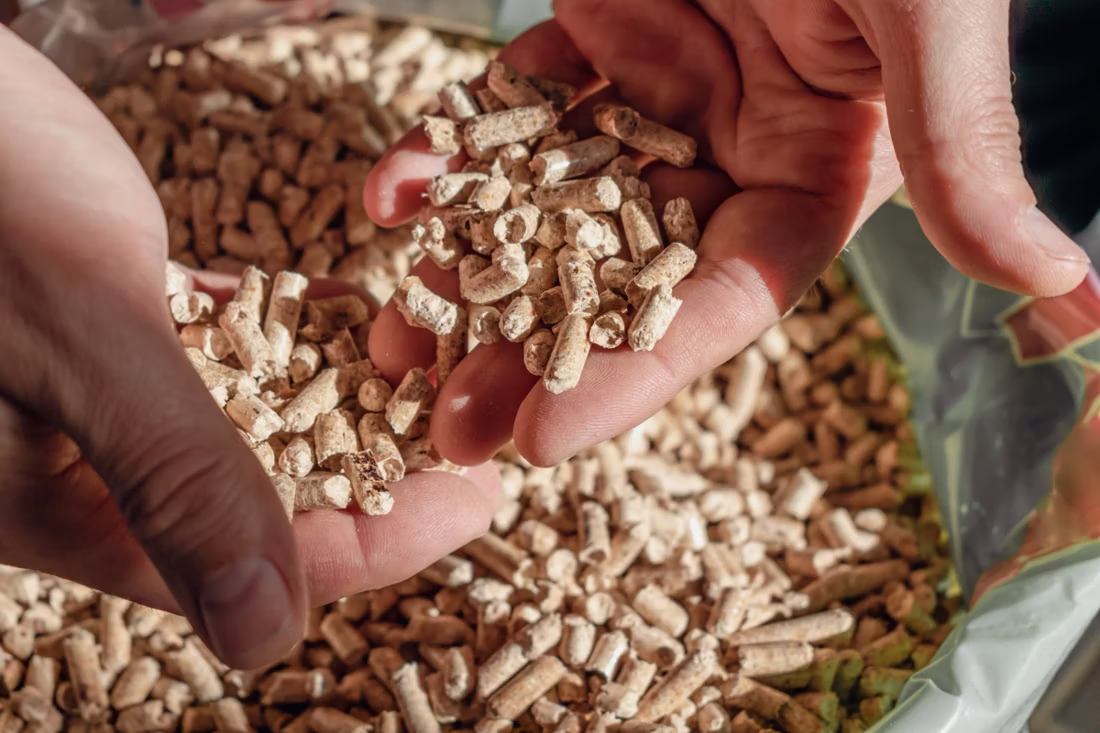
Pellet supply here is genuinely local: Granules LG is headquartered in Lac-Mégantic, right in the Estrie region, and Energex and Trebio both distribute through Quebec retailers, so a $400-$575-per-ton price holds steady without the freight premium some other fuels carry. Hydro-Québec's residential rate of roughly $0.078 per kWh already makes electric heat cheap in this province, but a pellet stove or insert still beats baseboard heat for a main living space that loses power to overhead lines during a February ice event, since most units run on a fraction of the current baseboards draw and many owners pair them with a small battery backup. And because pellet appliances already burn far cleaner than open wood fires, Richmond homeowners get ahead of the kind of emissions rules Montreal has adopted for wood-burning appliances without needing to think about it.
Three steps. No salesperson until you're ready.
Tell us about your project
Your postal code, your situation, and the fuel you're leaning toward—or let the answers point you to one.
See what's actually available
The brands dealers within 100 miles genuinely carry—real options, never a catalog mirage.
Get your dealer & Project Guide
A trusted local dealer, plus the free Project Guide & Parts List that names every component of the job.
Frequently Asked Questions
How much does a pellet stove installation cost in Richmond?
Most installs in and around Richmond run $6,000 to $10,000 CAD. An insert going into an existing masonry firebox in one of the village's older homes near rue Principale tends to land toward the low end, since the chimney chase is already there. A freestanding stove in a newer build without a chimney needs a full through-wall pellet vent kit, which pushes the job toward the top of that range. Either way, your municipal building department requires a permit, and most dealers who work this area fold that paperwork into the quote.
What size pellet stove do I need for a Richmond home?
With winter lows averaging -16.4°C and cold snaps that push well past that, most Richmond living areas do better with a stove rated for 1,200 to 2,000 square feet rather than a small supplemental unit. Older farmhouses along the Saint-François with less insulation often need the higher end of that range to hold comfortable heat through an overnight burn. A local dealer will size the unit against your actual floor plan and ceiling height, not just square footage, since open-concept homes and older compartmentalized ones heat very differently.
Do I need a permit and inspection for a pellet stove in Richmond?
Yes. New installations go through your municipal building department, and the installation itself has to meet the CSA B365 code that governs solid-fuel appliance venting and clearances in Quebec. Most insurers in the Estrie region also ask for a WETT inspection once the unit is in, even for pellet appliances, before they'll add it to a homeowner's policy—it's a routine step, not a red flag, and a dealer who regularly works Richmond installs will already know which insurers ask for it.
Where do I buy pellets near Richmond, and how should I store them?
Granules LG, Energex, and Trebio are the three brands most commonly stocked by hearth retailers serving the Sherbrooke and Estrie corridor, typically running $400 to $575 a ton depending on the season and whether you buy early or mid-winter. A season's supply for an average Richmond home runs two to three tons, so plan for pallet storage in a dry garage or basement corner—pellets that pick up moisture swell and jam the auger, which is the single most common service call dealers here get in a wet spring.
Pellet stove vs. wood stove—which makes more sense for a Richmond property?
Wood is genuinely abundant here—sugar maple, yellow birch, American beech, and red oak all grow through the Estrie sugar bush country, and a Ministère des Ressources naturelles et des Forêts permit runs about $1.85 per cubic metre up to a 22.5 cubic metre cap if you're cutting on Crown land. But that means splitting, stacking, and seasoning wood a full year ahead, plus a masonry chimney sized for it. A pellet stove skips all of that: you buy bagged fuel by the ton, load a hopper that runs 24 to 48 hours unattended, and the appliance itself is easier to certify for insurance. Many Richmond households with an existing woodlot still keep a wood stove as backup and run pellet as the daily driver.
Does a pellet stove still work if the power goes out?
Not on its own—the auger, igniter, and combustion blower all need electricity, so a straight power outage stops the stove along with everything else in the house. Given how often ice storms take down lines through the Saint-François valley in a bad winter, some Richmond owners pair their stove with a small inverter or battery backup sized to the unit's low draw, which is usually only 100 to 400 watts. It's a cheaper backup solution than most people expect, and worth asking your dealer about at install time rather than after the first outage.
Is natural gas available in Richmond, or should I plan around pellet and electric only?
Énergir's distribution network reaches parts of greater Montréal and a handful of other urban corridors in Quebec, but that service does not extend out to a town the size of Richmond. If a gas fireplace is on your radar, it would mean a propane tank and delivery contract rather than a mains hookup, and most local dealers will tell you that's a rare request out here compared to pellet or electric. Pellet appliances end up filling the role gas plays in cities—on-demand-feeling heat without cutting or stacking wood—without needing a fuel line that simply isn't run to this area.
How often does a pellet stove need servicing in Richmond?
Plan on a full cleaning and inspection every year, ideally in late summer before the six-month-plus heating season really gets going, rather than mid-winter when local technicians are booked solid. That visit covers the burn pot, ash pan, hopper, auger, and exhaust venting—a lighter job than a wood chimney sweep, but skipping it is how a clogged auger or a dirty igniter shows up as a dead stove on the coldest week of January. Owners running the stove as their main heat source through Richmond's full winter often benefit from a quick mid-season ash and glass cleaning too.
Are there rebates available for installing a pellet stove in Richmond?
Quebec's Chauffez vert program, run through the province's energy transition agency, has offered rebates for homeowners replacing an oil furnace with a lower-emission system, including pellet appliances, though funding cycles and eligibility change from year to year. It's worth checking current terms before you buy, since a pellet stove or insert may qualify depending on what it's replacing. A dealer who regularly installs in the Estrie region will typically know the current rebate status and can tell you what paperwork the program wants at time of purchase.
Why do fireplace quotes vary so much?
Because a fireplace is an iceberg—there's more behind the wall than in front of it. A low quote often covers only the unit; the full scope includes vent pipe, gas line or electrical, framing, and the tile or stone that has to come off and go back on. Make every bidder price the whole job. If a dealer can't speak to the full scope with confidence, that's your signal to keep looking.
Is it worth replacing an old fireplace that still sort of works?
Ask three questions: Is it ugly? Is it drafty? Does it actually work? Most old fireplaces fail at least two. Beyond looks, an old unit leaks air around the damper year-round and—if it's gas with a standing pilot—quietly burns a couple hundred dollars a year. A modern replacement seals the wall, heats the room, and changes how the whole space gets used.
Do I need a permit to install a fireplace?
In most jurisdictions, yes—fireplace and stove installations involve venting, clearances, and often gas or electrical work that gets permitted and inspected. That's a feature, not a hassle: the inspection protects your family and your homeowner's insurance. A professional installer pulls the permit, installs to code, and stands behind the inspection. If someone suggests skipping it, keep looking.
What do I measure to size a fireplace insert?
Four numbers tell you what fits: the front width, the front height, the back width, and the overall depth of your existing fireplace opening. Grab a tape measure, jot those down, and snap a photo of the wall—those two things do more to move your project forward than anything else you can do today.
Nearby Dealers
Hearth shops serving Richmond and the surrounding area. Every listing shows whether it is a WhyFire partner, a dealer we have verified as authorized for the brands we recommend, or a local business carrying hearth products. No manufacturer pays for placement. How we verify dealers →
Maconnex-Drummondville
L’as Du Propane Inc
Cheminee Techni-Pro
Actions Multi-Flammes Granby
Gaz Propane Rainville Inc.
Suroît Boutique (Cowansville)
Distribution M.f. Granit Inc.
Pellet Brands Stocked Around Richmond
Typical price runs $400-$575 per ton—buy early-season for the best rates. Manufacturers will point you to the nearest stocking dealer.
Granules Lg
Trebio
Get your free Project Guide & Parts List for a Richmond pellet project.
Tell me about your home and whether you've got an existing chimney or need full venting, and I'll match you with a trusted local dealer and send a free Project Guide & Parts List sized for Estrie's -16.4°C winters, with the vent kit and parts specified.
Find Your Fireplace →