
Steady heat for a Gaspé coastline that sees real winter.
Percé sits at the tip of the Gaspé Peninsula, exposed to Gulf winds and winter lows averaging -17.3°C. I'll match you with a local dealer who knows what's actually available this far from the province's supply hubs, and send a free plan for the parts and vent kit your project needs.
Every Project Starts From One of These Five Situations
A clean, automated option in a town gas can't reach.
Percé sits at just 75 metres of elevation on the exposed tip of the Gaspé Peninsula, facing the Gulf of St. Lawrence with almost no windbreak between the water and the village. Climate zone 7A here means real winter: an average low of -17.3°C, and a cold season long enough to put Percé in the same company as Sudbury, Ontario, rather than the mild fishing-village image outsiders sometimes bring to the Gaspé coast.
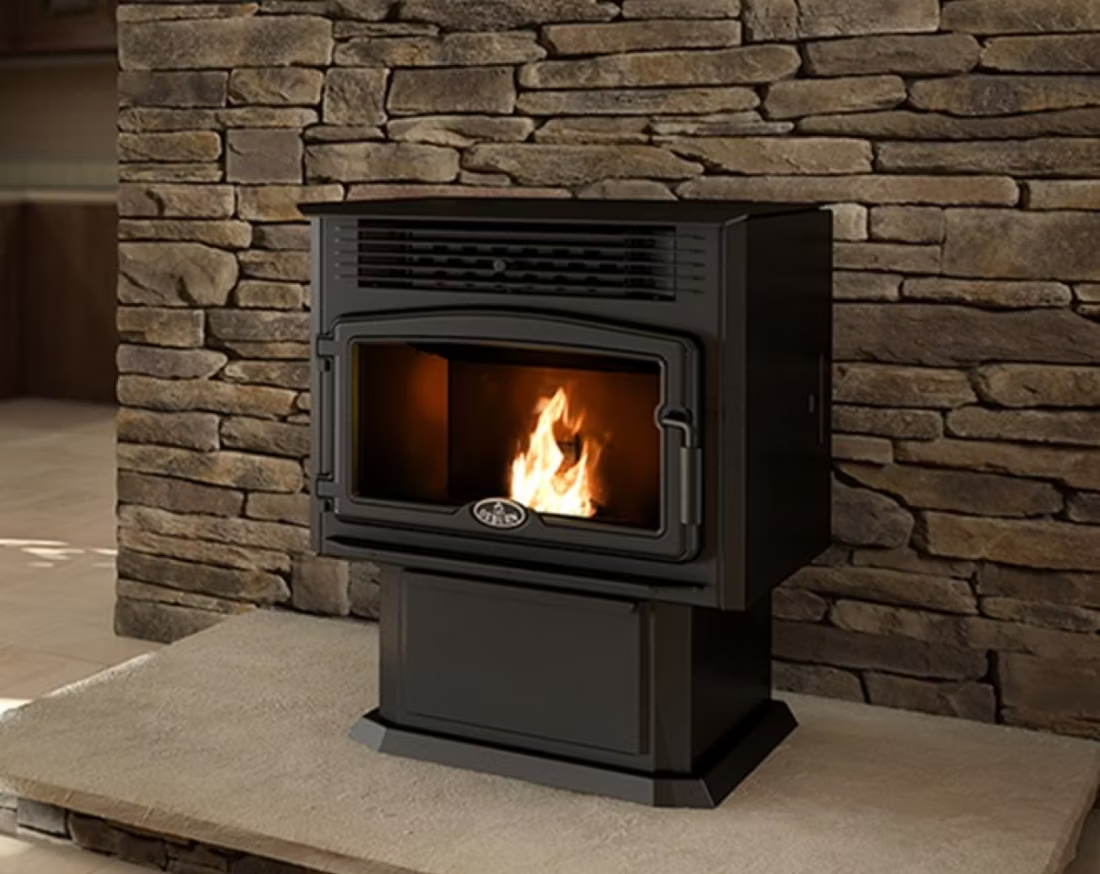
Natural gas is close to a non-factor this far from Énergir's service territory, which covers parts of greater Montréal and a few other corridors but nothing near Gaspésie, so gas fireplaces here almost always mean a propane conversion rather than a simple hookup. Wood remains standard—sugar maple, yellow birch, American beech, and red oak are all cut locally under Ministère des Ressources naturelles et des Forêts permits—but pellet stoves have carved out real ground as the automated, thermostat-controlled middle option, with Quebec-made pellets from Granules LG, Energex, and Trebio reaching the regional hearth suppliers that already serve this stretch of coast.
Three steps. No salesperson until you're ready.
Tell us about your project
Your postal code, your situation, and the fuel you're leaning toward—or let the answers point you to one.
See what's actually available
The brands dealers within 100 miles genuinely carry—real options, never a catalog mirage.
Get your dealer & Project Guide
A trusted local dealer, plus the free Project Guide & Parts List that names every component of the job.
Frequently Asked Questions
How much does a pellet stove installation cost in Percé?
Most pellet stove and insert installations in Percé run $6,000 to $10,000 CAD. A stove venting straight out through an exterior wall—the simpler route in many of the smaller homes near the wharf and downtown core—sits toward the low end. Retrofitting an insert into an existing masonry fireplace, or running vent through a rebuilt chimney chase in one of the older homes closer to Percé Rock, pushes the project toward the top of that range. Either way you'll need a permit through the municipal building department, and the installation has to meet the CSA B365 code.
What size pellet stove do I need for a home this exposed to the Gulf?
Percé sits right on the water at the tip of the Gaspé Peninsula, and that means wind-driven heat loss is a bigger factor than square footage alone. With winter lows averaging -17.3°C—cold enough to put the town in the same range as Sudbury, Ontario, most winters—a stove rated in the middle of its output range rather than the smallest model that technically fits your square footage is the safer call, especially in older wood-frame homes near the shoreline that see more infiltration than newer builds set back from the water. A local dealer can size it against your actual wall assembly and exposure rather than a square-footage chart.
Can I actually get pellets delivered out here?
Yes. Quebec is one of the largest pellet-producing provinces in the country, and brands like Granules LG, Energex, and Trebio move through the same regional hardware and hearth supply networks that already stock Gaspésie. Expect to pay in the $400 to $575 a ton range, and it's worth buying your season's supply early—say by September—rather than waiting, since a small town like Percé doesn't carry the same standing retail inventory a larger centre like Gaspé or Rimouski does once cold weather hits and demand picks up.
Do I need a permit, and does insurance require an inspection?
You'll need a building permit from the municipal building department, and the installation itself has to follow the CSA B365 code regardless of whether you're doing a pellet stove or insert. Many insurers serving the region also ask for a WETT inspection on solid-fuel appliances—pellet units included—before they'll bind or renew coverage, so it's worth confirming with your installer that they can provide that documentation rather than finding out at renewal time.
Why would I choose pellet over gas in Percé?
Mostly because gas isn't really an option here. Énergir's distribution network covers parts of greater Montréal and a handful of other urban corridors, but it doesn't reach the Gaspé Peninsula, so a gas fireplace in Percé would mean a full propane setup rather than a simple utility hookup. Pellet stoves give you the same push-button convenience and thermostat control gas offers, without needing a propane tank delivery schedule on top of everything else—which matters in a town this remote.
What happens to my pellet stove during a winter power outage?
It stops working until the power's back, since the auger and combustion blower both run on electricity. Gulf storms do knock out power along this stretch of coast some winters, so most local dealers recommend either a small battery backup sized for a pellet stove's modest draw, or keeping a wood-burning option—sugar maple or yellow birch, split and seasoned—as a backup heat source. A number of households in Percé run both: pellet for daily convenience, wood for the nights the lines go down.
Wood or pellet—which makes more sense for a Percé home?
Wood cut under a Ministère des Ressources naturelles et des Forêts permit runs about $1.85 per cubic metre plus taxes, up to a 22.5 cubic metre yearly maximum, which is hard to beat on raw fuel cost, and sugar maple, yellow birch, American beech, and red oak are all common species locally. Pellet stoves cost more per season in fuel but need far less labour—no splitting, stacking, or hauling—and hold a steady, programmable burn overnight, which suits a lot of the seasonal camps and part-time residences around Percé where nobody's home to reload a firebox. Many households here keep a wood stove or insert as backup and run pellet day to day.
How often does a pellet stove need servicing in a climate like this?
Plan on a full annual service, ideally before the season starts in September or October rather than mid-winter when installers around Percé and the rest of the region are booked solid. A technician will clean the burn pot, exhaust venting, and auger system and check the igniter—light maintenance compared to a wood chimney sweep, but skipping it on a stove running close to daily through Percé's five-plus-month cold season is how you end up with an auger jam or an ignition failure on the coldest night of January.
Are there any rebates for switching to pellet heat in Quebec?
Quebec's Chauffez vert program has offered rebates to homeowners converting from oil heating to a more efficient system, including pellet appliances, and it's worth checking current program funding before you buy since these provincial incentives run in cycles and eligibility can shift. Hydro-Québec's low residential rate—about 7.8 cents per kWh—also means some Percé households weigh pellet against straight electric baseboard heat for a secondary room, though pellet still wins for anyone worried about outages on the electric grid.
Why do fireplace quotes vary so much?
Because a fireplace is an iceberg—there's more behind the wall than in front of it. A low quote often covers only the unit; the full scope includes vent pipe, gas line or electrical, framing, and the tile or stone that has to come off and go back on. Make every bidder price the whole job. If a dealer can't speak to the full scope with confidence, that's your signal to keep looking.
Is it worth replacing an old fireplace that still sort of works?
Ask three questions: Is it ugly? Is it drafty? Does it actually work? Most old fireplaces fail at least two. Beyond looks, an old unit leaks air around the damper year-round and—if it's gas with a standing pilot—quietly burns a couple hundred dollars a year. A modern replacement seals the wall, heats the room, and changes how the whole space gets used.
How often does a pellet stove need cleaning?
A clean pellet stove is a happy pellet stove. Plan on cleaning the burn pot about once a week when you're burning regularly—ash and clinkers gum up the air holes just like a pellet barbecue. Most pellet stove problems trace back to skipped cleaning that nobody explained up front. Some designs make it easy with a trapdoor burn pot: pull a lever and the gunk drops into the ash pan.
Why is a fireplace insert so efficient?
An insert does two things: it seals the chimney completely, so you stop losing air you already paid to heat, and it radiates warmth into the room through the firebox and glass. Most add a heat-exchange fan that pulls cool room air underneath, wraps it around the hot firebox, and pushes it back out warm. Your home is more efficient before you've even lit the first fire.
Nearby Dealers
Hearth shops serving Perce and the surrounding area. Every listing shows whether it is a WhyFire partner, a dealer we have verified as authorized for the brands we recommend, or a local business carrying hearth products. No manufacturer pays for placement. How we verify dealers →
Propane M.c.a Inc
Pellet Brands Stocked Around Perce
Typical price runs $400-$575 per ton—buy early-season for the best rates. Manufacturers will point you to the nearest stocking dealer.
Granules Lg
Trebio
Get your free Project Guide & Parts List for a Percé pellet stove.
Tell me about your home and how it's currently heated, and I'll match you with a local dealer who works in Gaspésie and send a free Project Guide & Parts List with the exact vent kit and parts your project needs.
Find Your Fireplace →