
Built to outlast Nord-du-Québec's coldest nights.
Matagami sits at 259 metres with average winter lows near -24.9°C and a heating season that runs six months or more. I'll match you with a trusted local dealer who knows what a pellet appliance needs to hold up out here, and what it takes to keep it fed.
Every Project Starts From One of These Five Situations
Pellet heat sized for a subarctic mining town.
Matagami is one of the northernmost year-round communities in Nord-du-Québec, a forestry and mining gateway town where climate zone 7A winters rival what you'd see in Fort McMurray or Whitehorse on a hard night. With an average winter low of -24.9°C, a pellet stove or insert here isn't a design accent, it's a heat source that needs to run reliably for months at a stretch without babysitting.
Local firewood species like sugar maple, yellow birch, American beech, and red oak are all available under Ministère des Ressources naturelles et des Forêts permits, but cutting, splitting, and hauling isn't realistic for every household, especially seniors and residents without a truck and a forest lot nearby. Pellet appliances stocked with Quebec-made fuel from Granules LG, Energex, or Trebio, running $400-$575 a tonne, give Matagami residents a cleaner, hopper-fed alternative that still stands up to a subarctic winter, provided you plan your fuel deliveries around a remote supply chain rather than assuming next-day restocking.
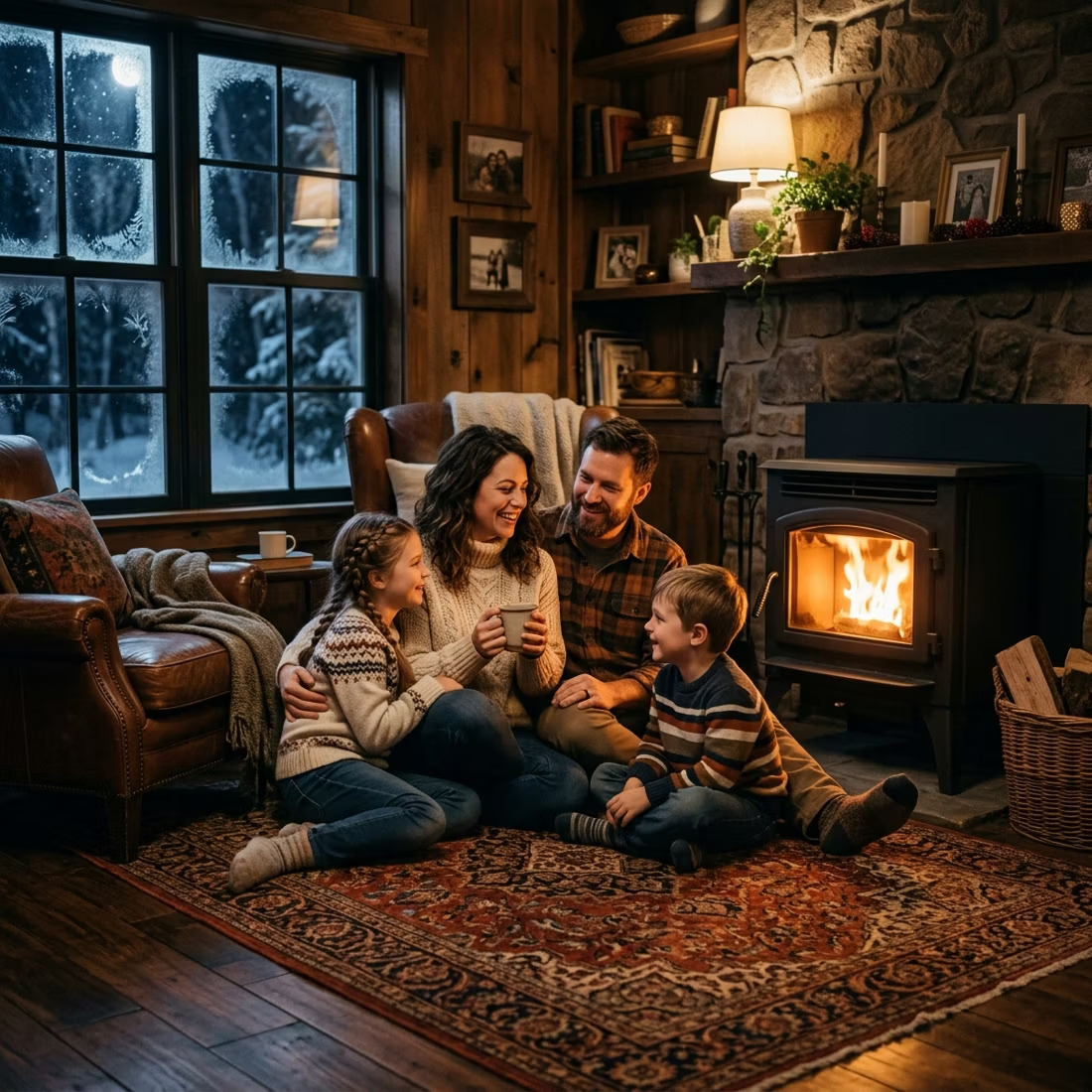
Three steps. No salesperson until you're ready.
Tell us about your project
Your postal code, your situation, and the fuel you're leaning toward—or let the answers point you to one.
See what's actually available
The brands dealers within 100 miles genuinely carry—real options, never a catalog mirage.
Get your dealer & Project Guide
A trusted local dealer, plus the free Project Guide & Parts List that names every component of the job.
Frequently Asked Questions
How much does a pellet stove installation cost in Matagami?
Typical pellet installs here run $6,000 to $10,000 CAD. The low end covers a straightforward freestanding stove venting through an exterior wall in a home that already has a reasonable spot for it; the high end covers a full insert retrofit into an existing masonry fireplace, or venting runs complicated by a manufactured home's floor plan, which isn't unusual in Matagami's housing stock. Your municipal building department permit and inspection are typically folded into a local dealer's quote.
What size pellet stove do I need for a Matagami home?
With winter lows averaging -24.9°C and routine stretches colder than that, undersizing is the real risk. A stove rated for 1,200 to 1,800 square feet suits most Matagami homes as a primary heat source, and a larger hopper matters more here than in milder regions since it lets you go longer between reloads during a multi-day cold snap. A local dealer should size the unit against your actual insulation and floor plan, not just square footage, since older housing stock in town can lose heat faster than the numbers suggest.
Do I need a permit to install a pellet stove in Matagami?
Yes. New installations go through the municipal building department, and the installation itself needs to follow the CSA B365 code. Insurers commonly ask for a WETT inspection on wood-burning and pellet appliances before they'll issue or renew a homeowner's policy, so it's worth booking that inspection as part of the install rather than after the fact. Most dealers who work in Nord-du-Québec are used to coordinating both steps.
Pellet stove vs. wood stove—which makes more sense in Matagami?
Wood is genuinely cheap here if you're willing to do the work: an MRNF cutting permit runs about $1.85 per cubic metre plus taxes for up to 22.5 cubic metres, and sugar maple, yellow birch, and red oak all split and burn well. But cutting, seasoning, and hauling that much wood through a Nord-du-Québec winter is a real commitment. Pellet stoves trade that labour for a fuel you buy by the tonne from Granules LG, Energex, or Trebio, with more consistent heat output and less daily maintenance, which is why many households here run pellet as their main appliance and keep wood as a backup.
How do I make sure I have enough pellets to get through winter?
Matagami's distance from major distribution centres means resupply isn't always same-week, so most local dealers recommend buying your season's pellets in one or two bulk orders rather than restocking as you go. A typical home burning pellets as a primary heat source through a six-month season can go through several tonnes, and running low in February when a delivery is delayed by weather isn't a position you want to be in. Plan for dry, covered storage for the full load and confirm delivery timing with your dealer before the season starts.
What happens to a pellet stove during a power outage?
Pellet stoves need electricity to run the auger and blower, so a Hydro-Québec outage will stop the unit even with a full hopper. Outages are relatively infrequent on the Nord-du-Québec grid, but they do happen during winter storms, and it's worth pairing a pellet stove with a small battery backup or generator if you're relying on it as your only heat source. Because Hydro-Québec's residential rate here is only about $0.078 per kWh, running that backup power or an auxiliary electric heater during a short outage costs relatively little compared to many other provinces.
Is a gas fireplace an option instead of pellet in Matagami?
Not really, at least not through the mains. Énergir's natural gas network reaches parts of southern Quebec but doesn't extend to Nord-du-Québec, so a gas fireplace here would mean a propane setup with tank delivery, which adds ongoing fuel logistics on top of the equipment cost. Given that constraint, most Matagami homeowners looking for a clean-burning, low-maintenance alternative to wood land on pellet rather than gas.
How often does a pellet stove need to be serviced in Matagami?
Plan on a full cleaning and inspection once a year, ideally in late summer before the heating season starts rather than mid-winter when a breakdown means scrambling for parts in a remote community. Given how many hours a pellet stove logs as primary heat through a Matagami winter, the burn pot, exhaust venting, and auger should also get a homeowner check every few weeks during heavy use, since ash buildup happens faster than it would on an appliance used only occasionally.
Pellet stove or electric fireplace—which is the better primary heat source here?
Electric units are cheaper to install, typically $500 to $1,600, and Hydro-Québec's low residential rate of about $0.078 per kWh makes them inexpensive to run for supplemental warmth. But electric fireplaces generally don't put out enough heat to carry a home through -24.9°C nights on their own. Pellet stoves cost more upfront, usually $6,000 to $10,000, but deliver the sustained BTU output that a Nord-du-Québec winter actually demands, which is why most homeowners here treat electric as a secondary or accent option rather than a primary heat source.
Why do fireplace quotes vary so much?
Because a fireplace is an iceberg—there's more behind the wall than in front of it. A low quote often covers only the unit; the full scope includes vent pipe, gas line or electrical, framing, and the tile or stone that has to come off and go back on. Make every bidder price the whole job. If a dealer can't speak to the full scope with confidence, that's your signal to keep looking.
Is it worth replacing an old fireplace that still sort of works?
Ask three questions: Is it ugly? Is it drafty? Does it actually work? Most old fireplaces fail at least two. Beyond looks, an old unit leaks air around the damper year-round and—if it's gas with a standing pilot—quietly burns a couple hundred dollars a year. A modern replacement seals the wall, heats the room, and changes how the whole space gets used.
What should I look for in pellet stove design?
Three things separate the field: how easy the burn pot is to clean (trapdoor designs let the ash drop straight into the pan), how the auger moves pellets (top-mounted augers that pull instead of push jam less and wear slower), and diagnostics (self-diagnosing control boards tell you exactly which part needs attention instead of leaving you guessing). Heat output is table stakes—livability is in these details.
Do I need a permit to install a fireplace?
In most jurisdictions, yes—fireplace and stove installations involve venting, clearances, and often gas or electrical work that gets permitted and inspected. That's a feature, not a hassle: the inspection protects your family and your homeowner's insurance. A professional installer pulls the permit, installs to code, and stands behind the inspection. If someone suggests skipping it, keep looking.
Nearby Dealers
Hearth shops serving Matagami and the surrounding area. Every listing shows whether it is a WhyFire partner, a dealer we have verified as authorized for the brands we recommend, or a local business carrying hearth products. No manufacturer pays for placement. How we verify dealers →
Pellet Brands Stocked Around Matagami
Typical price runs $400-$575 per ton—buy early-season for the best rates. Manufacturers will point you to the nearest stocking dealer.
Granules Lg
Trebio
Get your free Matagami pellet Project Guide & Parts List.
Tell me about your home and your current heat source, and I'll match you with a trusted local dealer and send a free Project Guide & Parts List sized for a subarctic winter, with the vent kit and parts specified.
Find Your Fireplace →