
Instant heat that barely touches your Hydro-Québec bill.
Linière sits at 416 metres in Chaudière-Appalaches, where winter lows average -18.2°C across a long, cold season. With Hydro-Québec's residential rate near 7.8 cents a kilowatt-hour, an electric insert or built-in adds real zone heat and ambiance without the venting, chimney, or fuel storage that wood and gas require. I'll match you with a local dealer who knows what's actually installable in your home.
Every Project Starts From One of These Five Situations
Cheap power changes the math on electric heat.
Linière is a small community in Chaudière-Appalaches near the Maine border, sitting at 416 metres in a genuinely cold climate zone with winter lows averaging -18.2°C across a heating season that stretches five months or more. Natural gas is essentially a non-option here: Énergir's distribution network reaches limited urban corridors around greater Montréal and a few other spines, and it doesn't extend to a town this size. That leaves wood, pellet, and electric as the real choices for local homeowners, and electric carries an advantage most of Quebec shares but few other provinces enjoy.
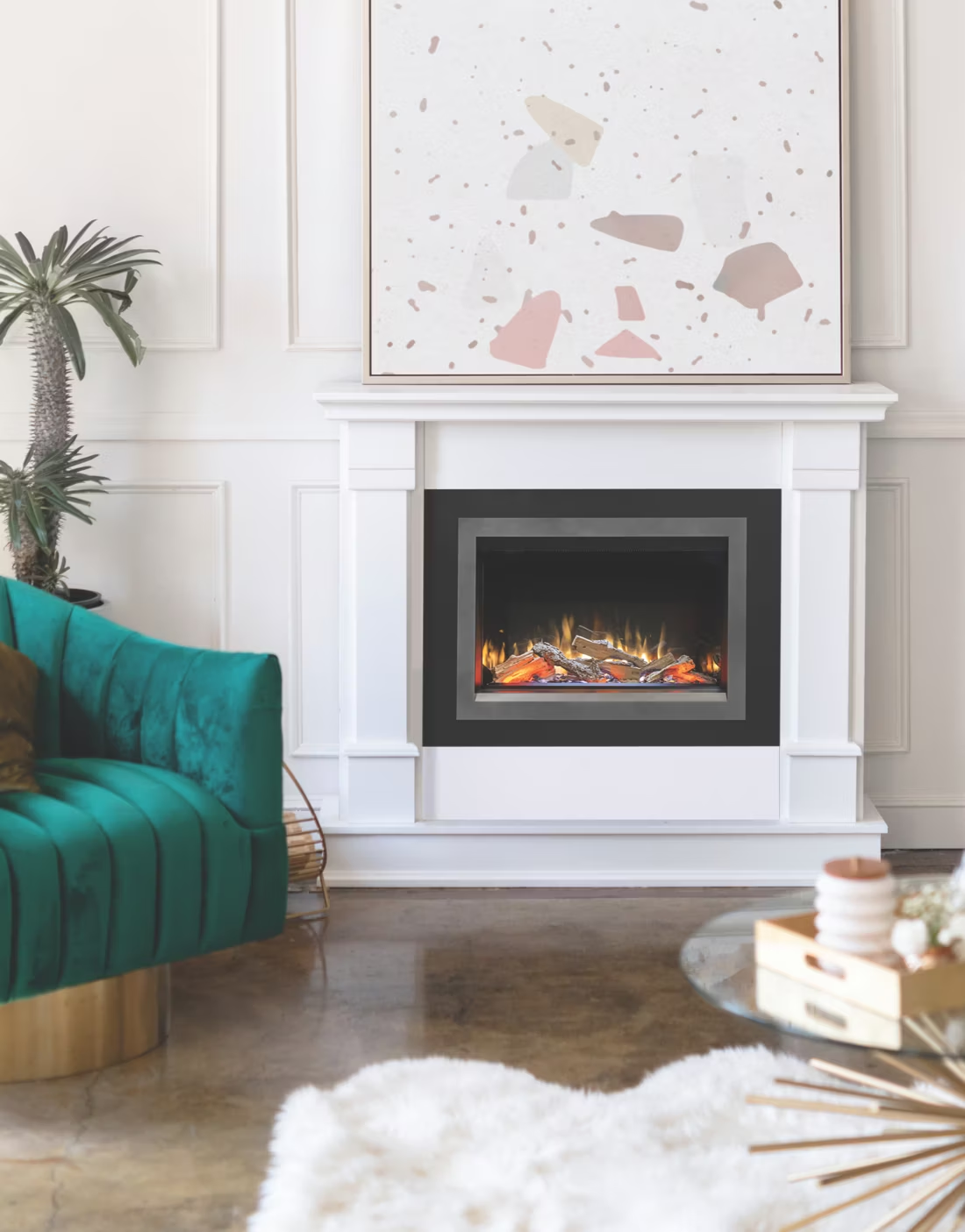
At roughly $0.078 per kilowatt-hour through Hydro-Québec, running an electric insert or built-in costs a fraction of what the same wattage would cost in Ontario or the Maritimes. Most electric installs here land between $500 and $1,600—a fireplace-shaped comfort upgrade, not a construction project on the order of the $6,000-$12,000 wood installs or $6,000-$15,000 gas retrofits also common in the area. Plenty of Linière households already burn sugar maple, yellow birch, American beech, or red oak split from local woodlots as their primary heat; an electric unit in the living room or a finished basement adds supplemental warmth and ambiance without asking anyone to load a stove at 6 a.m., and it works instantly during the coldest stretches of the year.
Three steps. No salesperson until you're ready.
Tell us about your project
Your postal code, your situation, and the fuel you're leaning toward—or let the answers point you to one.
See what's actually available
The brands dealers within 100 miles genuinely carry—real options, never a catalog mirage.
Get your dealer & Project Guide
A trusted local dealer, plus the free Project Guide & Parts List that names every component of the job.
Frequently Asked Questions
How much does an electric fireplace installation cost in Linière?
Most electric installs run $500 to $1,600, a much smaller range than the $6,000-$12,000 typical for a wood installation or the $6,000-$15,000 a gas retrofit can run once venting is factored in. A plug-in insert into an existing masonry opening sits at the low end; a built-in unit that needs a dedicated circuit run by an electrician, coordinated through the municipal building department, lands toward the top. There's no chimney, no gas line, and no combustion venting to price in, which is most of why the range is so narrow.
What size electric fireplace do I need for a Linière home?
Electric units are rated in watts, not the BTU math you'd use for wood or gas, and most residential inserts top out around 5,000 watts—roughly enough supplemental heat for a well-insulated living room or finished basement. Given winter lows averaging -18.2°C, most Linière households treat an electric fireplace as zone heat for the room they use most rather than the sole heat source for the house. A local dealer sizing your unit will look at ceiling height and insulation, not just square footage.
Can an electric fireplace actually heat a room through a Linière winter?
For the room it's in, yes—a 4,000 to 5,000-watt insert puts out real, usable heat, comparable to a good space heater. But on the harshest nights, when temperatures drop well past the -18.2°C average low, most homes here still lean on a primary system—baseboard electric, a wood stove burning local sugar maple or yellow birch, or a furnace—to carry the rest of the house. Electric fireplaces earn their keep as supplemental heat and ambiance in the room you actually live in, not as a replacement for whatever's already heating everything else.
Do I need a permit to install an electric fireplace in Linière?
A simple plug-in unit generally doesn't require a permit. A built-in electric fireplace wired to its own circuit needs an electrical permit through the municipal building department, and the wiring itself has to be done by a licensed electrician regardless of the model. Unlike wood installs, there's no CSA B365 inspection or WETT requirement to plan around, which keeps the paperwork considerably simpler.
Is electric heat cheaper than wood or pellet in Linière?
On day-to-day running cost, generally yes, largely because Hydro-Québec's residential rate of about $0.078 a kilowatt-hour is among the lowest in the country. Pellet fuel from regional brands like Granules LG, Energex, or Trebio runs $400-$575 a tonne, and a cord of hardwood comes with its own cutting or purchase cost plus the labour of hauling, splitting, and stacking. Electric has no fuel to buy, store, or season—you're paying only for the wattage you use. The tradeoff is that wood and pellet appliances can serve as a home's primary heat source and keep running during a power outage, while electric fireplaces need grid power to work at all.
Can I get a gas fireplace in Linière instead?
It's a hard sell logistically. Énergir's natural gas network is concentrated around greater Montréal, the south shore, and a handful of other urban corridors—it doesn't reach a community the size of Linière. A gas fireplace here would mean a propane conversion with its own tank and delivery schedule, which is workable but adds ongoing fuel logistics electric doesn't have. Most homeowners in this area who want instant, on-demand heat without dealing with wood end up choosing electric specifically because the gas infrastructure simply isn't here.
How much maintenance does an electric fireplace need?
Very little compared to wood or gas. There's no chimney to sweep, no gas line or pilot assembly to service, and no creosote to manage. Upkeep is mostly dusting the unit, occasionally checking the fan or blower, and replacing an LED module every several years if the flame effect uses one. It's a fraction of the seasonal work a household burning sugar maple or yellow birch through a five-month heating season has to plan for.
Where can an electric fireplace go in my house?
Almost anywhere with an outlet or a dedicated circuit, since there's no venting, chimney, or gas line to route. That flexibility matters in older Linière homes where adding a masonry chimney or running a new gas line would be disruptive and costly. Basements, bedrooms, and interior walls a wood stove or gas insert couldn't reach are all fair game for an electric unit, which is part of why it's a popular secondary heat source in homes that already run on wood or baseboard electric.
Are there any rebates for electric heating upgrades in Linière?
Hydro-Québec runs efficiency programs from time to time aimed at reducing peak winter demand, and while they're generally targeted at insulation, heat pumps, and thermostats rather than fireplaces specifically, it's worth checking current offers before you buy. The bigger practical incentive is the rate itself—at $0.078 a kilowatt-hour, running an electric fireplace costs little enough that most homeowners don't wait on a rebate to make the upgrade worthwhile.
How much does an electric fireplace cost to run?
With the heater on, a typical unit draws about 1,500 watts—at average electric rates that's roughly 20 cents an hour. Run the flame effect alone and it costs pennies; the flames are LED-driven and use about as much power as a light bulb. There's no pilot light, no fuel delivery, and essentially no maintenance.
What fireplace styles should I know before shopping?
Four cover most of the market: screen-front traditional (mesh front, open feel, fits craftsman homes), traditional door set (the classic look you grew up with), modern linear (wide, low, the statement piece for entertaining), and clean face contemporary (no trim—your tile or stone runs right to the fire's edge). Walk in knowing those four terms and you're ahead of most buyers.
Do electric fireplaces actually produce heat?
Yes—most put out around 4,800–5,000 BTUs from a standard outlet, which comfortably warms a bedroom, office, or den as a comfort-zone heater. What they won't do is carry a whole house the way wood, gas, or pellet can. Think of electric as ambiance-first with honest supplemental heat: flames on with no heat in July, flames plus warmth in January.
Does an electric fireplace need a vent or chimney?
No—that's its superpower. An electric fireplace needs a wall and an outlet, period. No vent pipe, no gas line, no clearances to design around, which is why it works in bedrooms, offices, apartments, and walls where venting a gas or wood unit would be impractical or impossible. Installation is typically the simplest and least expensive of any fireplace type.
Nearby Dealers
Hearth shops serving Linière and the surrounding area. Every listing shows whether it is a WhyFire partner, a dealer we have verified as authorized for the brands we recommend, or a local business carrying hearth products. No manufacturer pays for placement. How we verify dealers →
Boutique Joli-Feu
Mission Ventilation K.g. Inc
Magasin H. Letourneau Inc.
Maçonnex (Saint-Isidore)
Propane Multi-Service Inc
Electric Service in Linière
An electric fireplace's heater draws about 1,500 watts—pennies per hour at local rates.
Hydro-Québec
Get your free Project Guide & Parts List for a Linière electric fireplace.
Tell me about your home and where you'd place the unit, and I'll match you with a local dealer and send a free Project Guide & Parts List—sized for the room, with the exact parts your project needs.
Find Your Fireplace →