
The easiest fireplace upgrade in a region built on electric heat.
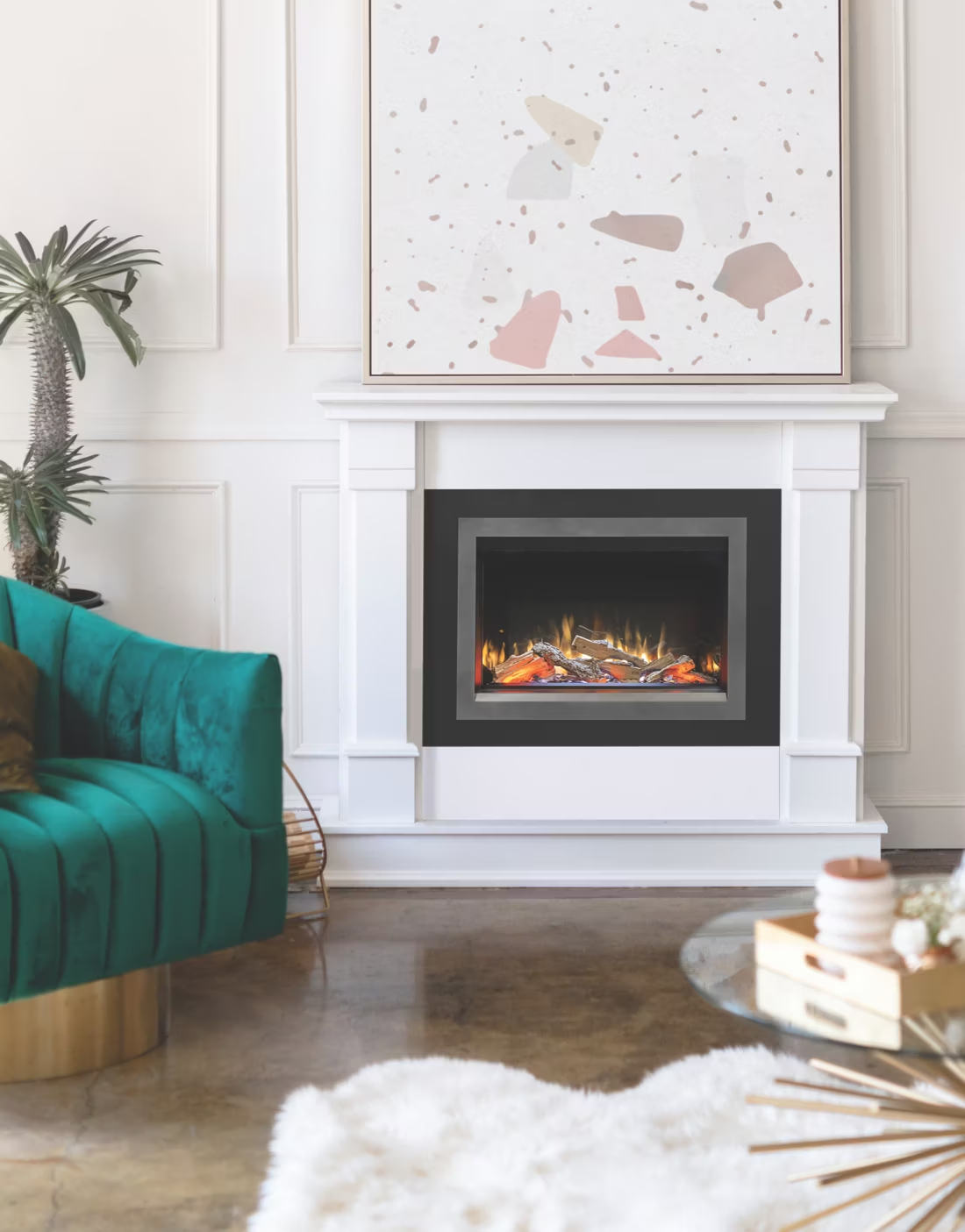
With winter lows near -14°C and most Laval homes already running on Hydro-Québec electric baseboards, an electric fireplace is the rare upgrade that adds zero venting, zero chimney work, and no new fuel account. I'll match you with a trusted local dealer who knows what your building's electrical panel and your municipality's permitting actually allow.
Every Project Starts From One of These Five Situations
Baseboards taught Laval how to live with electric heat.
The Laval Region sits on Île Jésus between the Rivière des Mille Îles and the Rivière des Prairies, a dense, mostly built-out suburban landscape of roughly 553,850 people just north of Montréal. Winters here bring five-plus months of sub-freezing nights and lows averaging around -14°C, a climate closer to Ottawa than to the deep cold of the Prairies, but still cold enough that heating isn't optional. Because Hydro-Québec electricity is among the least expensive power in the country, electric baseboard heat has long been the default in Laval homes, condos, and townhouses. An electric fireplace slots into that existing system rather than fighting it, which is a big reason it's a mainstream, not niche, choice across the region.
Laval's housing stock is heavy on multi-unit buildings and co-ownership towers, where a syndicate's rules often restrict solid fuel or open-flame appliances entirely, and where a gas line simply isn't run to the unit in the first place. Énergir's natural gas network reaches only parts of greater Montréal, and much of Laval sits outside it, which makes electric the practical fallback where gas availability is a coin flip. Wood remains popular for real ambiance and backup heat, and the Montréal-area rule requiring registered, certified low-emission appliances (2.5 g/h of fine particles or less) is one a good local dealer navigates routinely, but it doesn't apply to electric units at all. A plug-in or hardwired electric fireplace clears that entire conversation.
Three steps. No salesperson until you're ready.
Tell us about your project
Your postal code, your situation, and the fuel you're leaning toward—or let the answers point you to one.
See what's actually available
The brands dealers within 100 miles genuinely carry—real options, never a catalog mirage.
Get your dealer & Project Guide
A trusted local dealer, plus the free Project Guide & Parts List that names every component of the job.
Frequently Asked Questions
How much does an electric fireplace installation cost in the Laval Region?
Most electric fireplace projects here run $500 to $1,600 CAD. A simple wall-mount or mantel-style unit that plugs into an existing 120V outlet sits at the low end. A built-in electric insert or a linear wall unit that needs a dedicated 240V circuit run by a licensed electrician, common in older Laval triplexes originally wired for baseboard heat only, lands toward the top of that range. Condo installations can add a modest cost if the building's electrical panel needs a capacity check before a new circuit is approved.
Do I need a permit to install an electric fireplace in Laval?
It depends on the scope. A plug-in unit on an existing circuit typically doesn't trigger a permit through your municipal building department. A built-in or hardwired installation that requires a new dedicated circuit usually does need an electrical permit, and the work has to be done by a licensed electrician regardless. Unlike wood appliances, electric units aren't subject to CSA B365 or a WETT inspection, since there's no combustion, venting, or chimney involved. A trusted local dealer coordinating the install will know exactly which threshold your project crosses in your municipality.
Can I install an electric fireplace in a Laval condo or co-ownership building?
Yes, and it's often the only fireplace fuel a syndicate will approve. Many Laval copropriétés restrict or outright prohibit wood-burning appliances and gas lines in individual units, since neither is practical in a multi-unit building without shared venting or piping. An electric fireplace needs no chimney, no gas line, and produces no combustion byproducts, so it typically clears building rules that would stop a wood insert or a gas unit cold. Still, confirm your building's specific bylaw before ordering anything, since some syndicates cap the electrical load a unit can add.
Will an electric fireplace actually heat a room, or is it just for looks?
A quality electric fireplace with a resistance heater rated around 1,500 watts can meaningfully warm a single room, roughly 300 to 400 square feet, and many homeowners run one to take the edge off a living room without firing up the whole system. It won't replace your home's primary Hydro-Québec heating on a -14°C night, though, since that's a whole-house load an electric fireplace isn't built to carry. Think of it as targeted, on-demand supplemental heat with a real flame effect, not a furnace replacement.
How does electric heat compare to wood in the Laval Region?
Wood, typically sugar maple, yellow birch, American beech, or red oak cut under an MRNF permit, gives you real radiant heat and a fuel source that keeps working through a power outage, which matters given Quebec's occasional winter ice storms. But it also means a certified low-emission appliance registered under the Montréal-area bylaw, a WETT inspection for insurance, and $6,000 to $12,000 CAD installed for a proper system. Electric skips all of that: no permit registration, no chimney maintenance, no WETT inspection, and $500 to $1,600 CAD installed, though it goes dark the moment the power does. Many Laval households land on electric for daily convenience and keep wood or a generator as their outage backup.
Is gas a better option than electric in the Laval Region?
For most Laval addresses, no, simply because gas availability is inconsistent. Énergir's natural gas network covers only parts of greater Montréal and select corridors, and much of the Laval Region sits outside served streets entirely. Where gas is available, install costs run $6,000 to $15,000 CAD versus $500 to $1,600 CAD for electric, and gas still requires venting and annual servicing that electric doesn't. Unless your street is already on the Énergir network and you specifically want gas's higher heat output, electric is usually the simpler, more available choice here.
How much maintenance does an electric fireplace need?
Very little. There's no chimney to sweep and no venting to inspect, since there's no combustion involved. Plan on dusting or vacuuming the interior a couple of times a season and wiping down the glass front, and have the heating element and fan blower checked every few years if you run the unit daily through the Laval Region's long heating season. That's a fraction of the annual chimney sweep and creosote monitoring a wood-burning setup requires.
What size electric fireplace do I need for my Laval home?
Match the wattage to the room, not the whole house. A 1,000 to 1,500-watt unit comfortably supplements a bedroom or den in the 250 to 400 square foot range, while an open-concept living and dining area may call for a larger linear model or a secondary unit. Older Laval homes with less insulation or larger window walls facing the Rivière des Prairies may want to size up slightly, since electric fireplaces work best as supplemental heat rather than the primary source fighting a -14°C night on their own.
Are there rebates for installing an electric fireplace in the Laval Region?
Electric fireplaces are generally treated as supplemental appliances rather than primary heating upgrades, so they typically don't qualify for Hydro-Québec efficiency programs the way a heat pump conversion might. The real savings show up in your monthly bill instead: because Hydro-Québec electricity rates are among the lowest in the country, running an electric fireplace for supplemental heat costs noticeably less here than in most other Canadian regions. Ask your local dealer whether any current municipal or provincial program applies to your specific model, since incentive lists change year to year.
How much does an electric fireplace cost to run?
With the heater on, a typical unit draws about 1,500 watts—at average electric rates that's roughly 20 cents an hour. Run the flame effect alone and it costs pennies; the flames are LED-driven and use about as much power as a light bulb. There's no pilot light, no fuel delivery, and essentially no maintenance.
What fireplace styles should I know before shopping?
Four cover most of the market: screen-front traditional (mesh front, open feel, fits craftsman homes), traditional door set (the classic look you grew up with), modern linear (wide, low, the statement piece for entertaining), and clean face contemporary (no trim—your tile or stone runs right to the fire's edge). Walk in knowing those four terms and you're ahead of most buyers.
Can I put a TV above my fireplace?
Yes—with an asterisk. Fireplaces are hot and TVs don't like heat. Either put a mantel between them to deflect rising warmth, or choose a fireplace with heat-management technology that creates a cool zone on the wall above—the wall stays around 125 degrees, barely warm, while the room still gets full heat. If you like clean lines and don't want a mantel, heat management is the answer.
Do electric fireplaces actually produce heat?
Yes—most put out around 4,800–5,000 BTUs from a standard outlet, which comfortably warms a bedroom, office, or den as a comfort-zone heater. What they won't do is carry a whole house the way wood, gas, or pellet can. Think of electric as ambiance-first with honest supplemental heat: flames on with no heat in July, flames plus warmth in January.
Stove and Fireplace Dealers in Laval Region
Listings include WhyFire partner dealers, dealers we have verified as authorized for the brands we recommend, and established local businesses that carry hearth products. Every listing shows which one it is. The ones marked Preferred run on WhyFire's software, so they can show you real pricing and book your appointment right here. No manufacturer pays for placement. How we verify dealers →
Pro Du Foyer
Foyer Universel Montreal Inc. (A.m.f.)
Finition Belle-Flammes
Arta Boutik
Propane Plus Inc
Noeea Foyers Rive-Nord
Noréa Foyers Montréal
Nergiflex
Confort Elite
Les Foyer Mirabel A.m.f.
Boutique Poêles & Foyers Rive-Nord
Alternatives
Napert Signature
Décor Chaleur Châteauguay
Le Ramoneur Du Foyer
Thermopompes N & R Sol
Electric Service in Laval Region
An electric fireplace's heater draws about 1,500 watts—pennies per hour at local rates.
Hydro-Québec
Get your free Project Guide & Parts List for an electric fireplace in the Laval Region.
Tell me about your home, your building's electrical setup, and how you plan to use the fireplace, and I'll match you with a trusted local Laval Region dealer and send a free Project Guide & Parts List, covering the exact unit, mounting or circuit requirements, and your recommended installer contact.
Find Your Fireplace →