
Pellet heat that keeps burning through Nunavik winters that hit -29°C.
Kuujjuaq sits at the mouth of the Koksoak River, 58 degrees north, where winter lows average -29.3°C and the heating season stretches from October into May. I match homeowners here with a trusted dealer who understands what it takes to keep a pellet stove running through the longest, coldest season in the country—sourced pellets, sized venting, and a plan for the months between sealift deliveries.
Every Project Starts From One of These Five Situations
A fuel source that doesn't need a forest next door.
At 58°N, near where the Koksoak River empties into Ungava Bay, Kuujjuaq sits in climate zone 8—one of the harshest heating classifications in the country. Winter lows average -29.3°C, and the cold season here runs longer than in almost any other community Find My Fireplace serves, closer in length and severity to Whitehorse than to anywhere in southern Quebec. A heat source that can run unattended for hours at a stretch, night after night, from October through May, isn't a luxury in Kuujjuaq—it's the baseline.
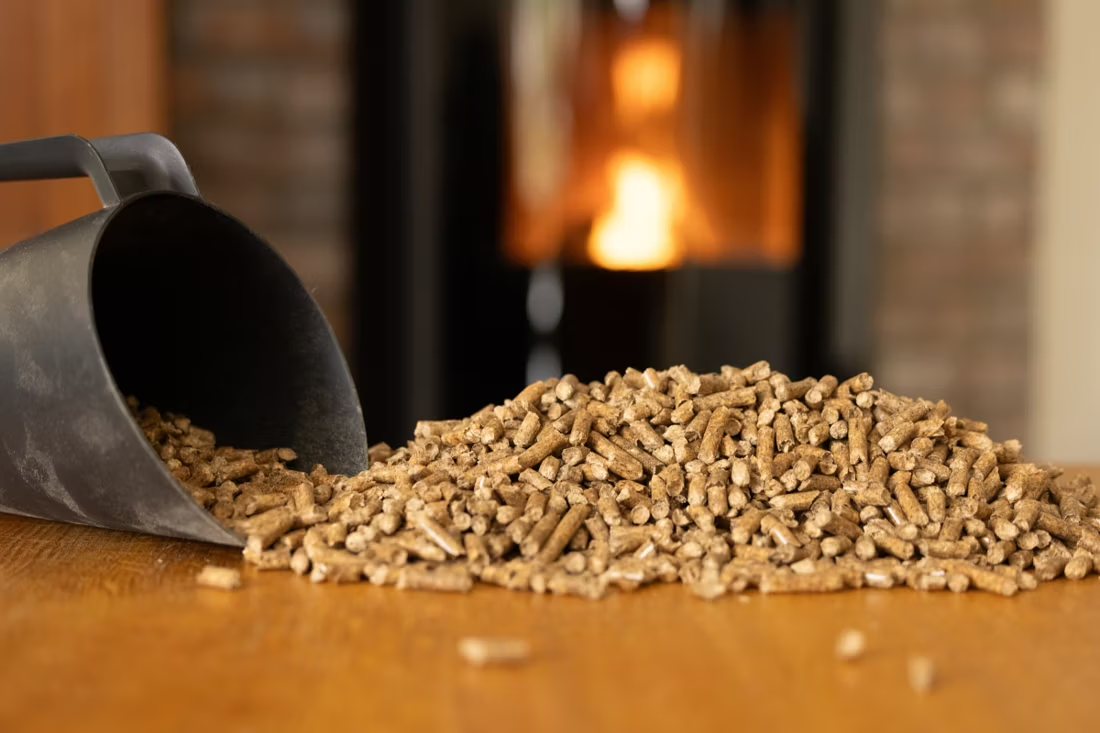
Hardwood species common further south in Quebec—sugar maple, yellow birch, American beech, red oak—don't grow this far north, and the boreal forest thins out well before it reaches Ungava Bay. That makes locally cut firewood impractical no matter what a Ministère des Ressources naturelles et des Forêts permit might cost elsewhere in the province. Bagged pellets from mills like Granules LG, Energex, and Trebio solve that problem: they arrive by the annual sealift or by air cargo, store cleanly through the winter, and feed a stove automatically without anyone splitting or hauling rounds. The tradeoff is price—typically $400-$575 a tonne here, well above what a home in Montréal or Québec City pays, because every bag makes a long trip north.
Three steps. No salesperson until you're ready.
Tell us about your project
Your postal code, your situation, and the fuel you're leaning toward—or let the answers point you to one.
See what's actually available
The brands dealers within 100 miles genuinely carry—real options, never a catalog mirage.
Get your dealer & Project Guide
A trusted local dealer, plus the free Project Guide & Parts List that names every component of the job.
Frequently Asked Questions
How much does a pellet stove installation cost in Kuujjuaq?
Installed pellet systems here typically run $6,000-$10,000 CAD, toward the higher end of that range more often than not because freight adds cost to every component that isn't sourced locally—the stove itself, the venting, even the hearth pad. A straightforward wall-vent installation into an insulated space costs less than a run that has to punch through thick exterior walls built for this climate. Your municipal building department permit is a separate, smaller cost, and most dealers who work in Nunavik build the paperwork into their quote rather than leaving it to you.
What size pellet stove do I need for a Kuujjuaq home?
With winter lows averaging -29.3°C and cold stretches that can run well past that, undersizing is the real risk. A stove rated for a home twice the size of yours in southern Quebec is often the right call here, since the appliance needs to hold a strong, steady output for months, not just take the edge off a cool evening. A dealer familiar with Nunavik installs will size against your actual wall construction and window exposure rather than square footage alone—a lot of Kuujjuaq housing stock was built to a specific northern insulation standard, and that changes the math.
Do I need a permit to install a pellet stove in Kuujjuaq?
Yes. New installations go through the municipal building department, and the installation itself needs to meet the CSA B365 code that governs solid-fuel appliances across the province. Insurers up here commonly ask for a WETT inspection before they'll write or renew a policy that covers a pellet or wood appliance, so it's worth booking one even if your dealer doesn't require it—it's a much smaller hassle now than a denied claim later.
Where do pellets in Kuujjuaq actually come from, and how do I keep a supply through the winter?
Nothing is milled locally—Granules LG, Energex, and Trebio pellets reach Kuujjuaq either on the summer sealift, which runs a limited number of trips between roughly July and October, or by air cargo the rest of the year at a real premium. That makes advance ordering the single most important habit for a pellet-stove owner here: most households buy their full winter tonnage during the sealift window rather than restocking bag by bag once the ground freezes. Expect to pay $400-$575 a tonne, and plan storage space for several tonnes if you're heating a whole house through to May.
Would a wood stove make more sense than pellets in Kuujjuaq?
For most homes here, no. The hardwood species that make wood heat cost-effective further south—sugar maple, yellow birch, American beech, red oak—don't grow near the Koksoak River, so there's no local cutting permit worth pursuing through the Ministère des Ressources naturelles et des Forêts; any cordwood would have to be shipped in at a cost that erases the usual savings of burning wood. Pellets, while not cheap themselves, arrive in a form that's easy to freight, store, and feed automatically, which is why pellet appliances are the standard solid-fuel choice this far north rather than wood.
What about gas—is that an option in Kuujjuaq?
Not really, and it's worth being upfront about that. Énergir's distribution network reaches parts of the Montréal area and a handful of urban corridors in southern Quebec, but it doesn't extend anywhere near Nunavik. A gas fireplace here would mean a propane setup with tanks resupplied the same way pellets are—by sealift or air—and that logistics chain, plus propane's own freight cost, makes gas a genuinely rare choice in Kuujjuaq rather than a mainstream one. Pellet and electric heat cover the vast majority of homes instead.
What happens to my pellet stove if the power goes out?
A pellet stove's auger and blower both run on electricity, so a hard outage stops the stove along with everything else. Hydro-Québec serves the community, and rates here are relatively low at roughly 7.8 cents per kWh, which makes a small electric space heater or baseboard heat a reasonable backup plan rather than an expensive one. Some Kuujjuaq households also keep a battery backup sized for the stove's control board and blower specifically, which is enough to ride out a short outage without losing the fire.
How often does a pellet stove need servicing in Kuujjuaq?
Plan on a full cleaning and inspection every year, ideally in late summer before the sealift-dependent parts and pellet supply are both locked in for the season. Given how many hours a Kuujjuaq stove logs between October and May, the burn pot, auger, and exhaust venting see far more wear than a stove running as backup heat elsewhere in the province, so a mid-winter glass and burn-pot cleaning is worth doing yourself even if the annual professional service happens once a year.
Does the extreme cold change how the pellet stove is vented?
Yes. Vent pipe run through an unheated space at -29.3°C average lows is more prone to condensation and creosote buildup than the same pipe in a milder climate, so installers here lean on insulated, code-compliant venting kits under CSA B365 rather than the minimum a milder region might get away with. A dealer who regularly works in Nunavik will also account for wind exposure off Ungava Bay when placing the exterior termination, since a poorly placed vent cap can ice over in a hard blow.
Why do fireplace quotes vary so much?
Because a fireplace is an iceberg—there's more behind the wall than in front of it. A low quote often covers only the unit; the full scope includes vent pipe, gas line or electrical, framing, and the tile or stone that has to come off and go back on. Make every bidder price the whole job. If a dealer can't speak to the full scope with confidence, that's your signal to keep looking.
Is it worth replacing an old fireplace that still sort of works?
Ask three questions: Is it ugly? Is it drafty? Does it actually work? Most old fireplaces fail at least two. Beyond looks, an old unit leaks air around the damper year-round and—if it's gas with a standing pilot—quietly burns a couple hundred dollars a year. A modern replacement seals the wall, heats the room, and changes how the whole space gets used.
Why is a fireplace insert so efficient?
An insert does two things: it seals the chimney completely, so you stop losing air you already paid to heat, and it radiates warmth into the room through the firebox and glass. Most add a heat-exchange fan that pulls cool room air underneath, wraps it around the hot firebox, and pushes it back out warm. Your home is more efficient before you've even lit the first fire.
What should I look for in pellet stove design?
Three things separate the field: how easy the burn pot is to clean (trapdoor designs let the ash drop straight into the pan), how the auger moves pellets (top-mounted augers that pull instead of push jam less and wear slower), and diagnostics (self-diagnosing control boards tell you exactly which part needs attention instead of leaving you guessing). Heat output is table stakes—livability is in these details.
Pellet Brands Stocked Around Kuujjuaq
Typical price runs $400-$575 per ton—buy early-season for the best rates. Manufacturers will point you to the nearest stocking dealer.
Granules Lg
Trebio
Get your free Project Guide & Parts List for a Kuujjuaq pellet stove.
Tell me about your home and I'll match you with a trusted dealer who works in Nunavik, then send a free Project Guide & Parts List—sized for a -29.3°C winter, with the vent kit specified and a plan for ordering pellets before the sealift window closes.
Find Your Fireplace →