
Steady heat for Montérégie winters, without splitting a cord of wood.
Coteau-du-Lac sits along the St. Lawrence with winter lows averaging -13.8°C, and most homes here already run on Hydro-Québec electricity. I'll match you with a trusted local dealer who knows where a pellet stove or insert actually earns its keep in this town.
Every Project Starts From One of These Five Situations
Built for reliable heat when the grid along the St. Lawrence goes down.
Coteau-du-Lac, population around 7,000, sits on the St. Lawrence near the old fort and canal site in Montérégie, and its winters carry real bite even if they're a touch milder than Québec City or Saguenay further north-average lows near -13.8°C, with a heating season that runs from October well into April. That's close to what Ottawa homeowners deal with most winters, and it's cold enough that a supplemental heat source earns its place in the house, not just the living room.
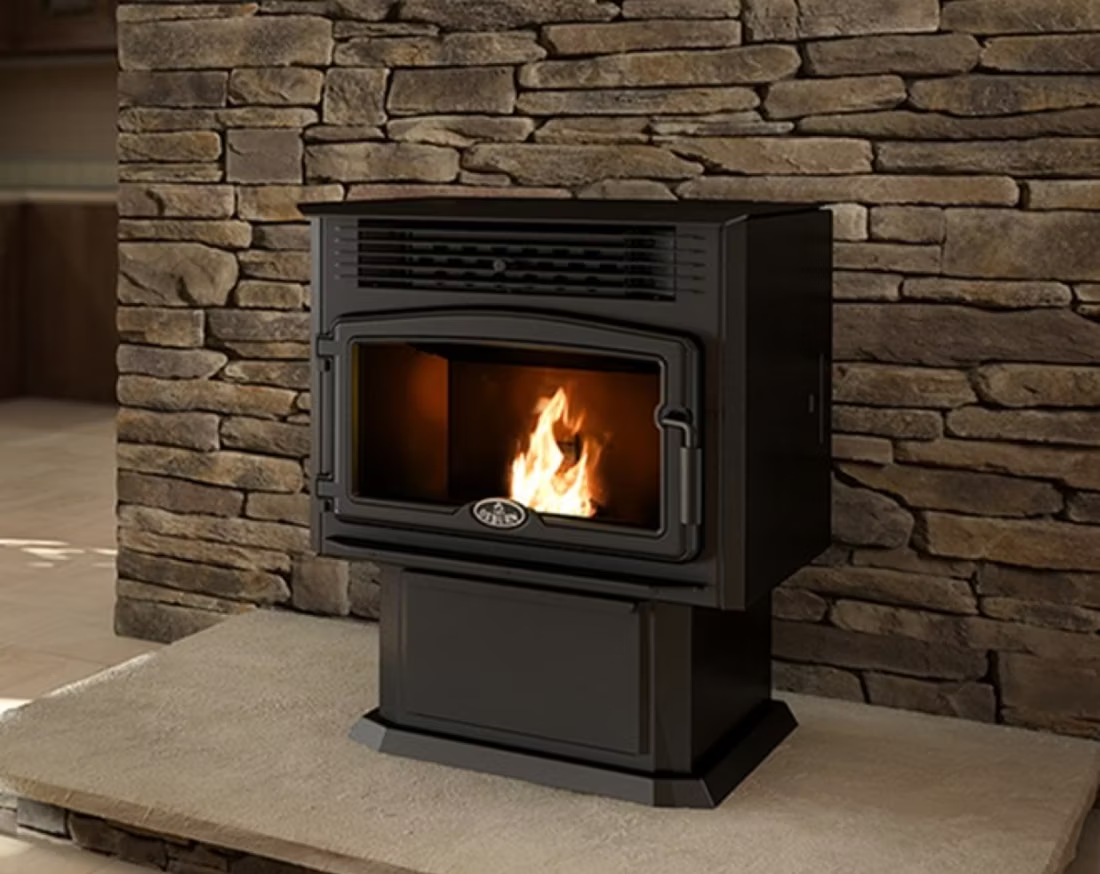
Hydro-Québec's residential rate of about $0.078/kWh is genuinely cheap, and it's why electric baseboard heat is the default in most Coteau-du-Lac homes rather than a novelty. That changes the calculus on pellet heat here: instead of replacing a furnace, most local buyers want a pellet stove or insert as backup during the ice storms and outages that periodically hit this stretch of the St. Lawrence, plus the appeal of a real flame without cordwood to split and stack. Quebec-based suppliers Granules LG, Energex, and Trebio mill local hardwood into pellets running $400-$575 per tonne, which is a simpler, more predictable supply chain than chasing a Énergir gas hookup that only partially reaches this area or setting up a propane tank instead.
Three steps. No salesperson until you're ready.
Tell us about your project
Your postal code, your situation, and the fuel you're leaning toward—or let the answers point you to one.
See what's actually available
The brands dealers within 100 miles genuinely carry—real options, never a catalog mirage.
Get your dealer & Project Guide
A trusted local dealer, plus the free Project Guide & Parts List that names every component of the job.
Frequently Asked Questions
How much does a pellet stove or insert cost to install in Coteau-du-Lac?
Typical installs run $6,000 to $10,000 CAD. An insert dropping into an existing masonry firebox-common in older homes near the historic fort and canal core-tends to land toward the lower end since the chimney chase is already there. A freestanding stove in a newer home without a masonry fireplace needs a fresh vent run through an exterior wall, which pushes the project toward the higher end of that range. Either way you'll need a permit through the municipal building department before work starts.
Why would I install a pellet stove when Hydro-Québec electricity is so cheap here?
Most Coteau-du-Lac homes already run electric baseboard heat because Hydro-Québec's rate, around $0.078/kWh, makes it hard to beat on cost. The real draw of a pellet stove here isn't replacing that baseline-it's backup. This stretch of the St. Lawrence sees its share of winter storms and outages, and a pellet unit gives you a real flame and real heat when the power drops. One caveat locals should know: pellet stoves still need electricity to run the auger and blower, so if outage resilience is your main goal, ask your dealer about pairing the stove with a small battery backup or generator.
Do I need a permit to install a pellet stove in Coteau-du-Lac?
Yes. New installations go through the municipal building department, and the work needs to meet the CSA B365 installation code. Most insurers in Quebec also expect a WETT inspection on solid-fuel appliances, including pellet units, before they'll add the stove to your homeowner's policy-it's worth confirming that requirement with your insurer early, since it can affect your install timeline.
What pellet brands can I actually get near Coteau-du-Lac?
Granules LG, Energex, and Trebio are the three brands most local dealers stock, and all three are milled from Quebec hardwood residue-species like sugar maple and yellow birch that are common in this region's forests. Pricing typically runs $400 to $575 per tonne depending on the season and whether you're buying bagged pallets or arranging bulk delivery. Ordering early in the fall, before the first cold snap, tends to get better pricing and avoids the scramble that hits suppliers once temperatures drop.
Pellet insert or freestanding pellet stove-which fits my Coteau-du-Lac home?
Homes near the older village core around the historic canal and fort often still have an open masonry fireplace, and a pellet insert is usually the cleaner retrofit there since it reuses the existing chimney chase and firebox opening. Newer construction further from the river, without a masonry fireplace to work with, is usually better suited to a freestanding stove vented directly through an exterior wall-simpler and often cheaper than building venting from scratch for an insert.
How much maintenance does a pellet stove need through a Coteau-du-Lac winter?
Plan on emptying the ash pot every few days and refilling the hopper every one to three days depending on burn rate and how cold it is outside. Beyond that, a professional service visit-checking the auger, igniter, and exhaust venting-once a year, ideally in September before the heating season starts, keeps the unit reliable through the coldest stretch. Skipping that visit is the most common reason a pellet stove quits mid-winter, right when you need it most.
Does the wood-burning bylaw on the island of Montréal apply to my pellet stove here?
Coteau-du-Lac isn't on the island of Montréal, so that specific bylaw-requiring registered, certified wood appliances under 2.5 g/h of fine particles-doesn't apply directly. That said, similar low-emission requirements are spreading to municipalities across Montérégie, so it's worth checking with Coteau-du-Lac's municipal building department before your install. The good news for pellet buyers: pellet appliances already burn well under most fine-particle thresholds set for wood stoves, so registration, where required, is usually a formality rather than a hurdle.
What size pellet stove do I need for winter lows around -13.8°C?
Most Coteau-du-Lac living areas, in the 1,500 to 2,000 square foot range typical of homes in this part of Montérégie, do well with a mid-size unit rated around 40,000 to 50,000 BTU. That's enough to carry a main living space through lows near -13.8°C without running flat-out constantly. A local dealer will size it against your actual insulation and layout rather than square footage alone, since older homes near the historic core often lose more heat than newer builds further from the river.
Pellet vs. wood vs. gas-what makes the most sense in Coteau-du-Lac?
Wood is the traditional standard here, with sugar maple, yellow birch, American beech, and red oak available through MRNF woodlot permits running about $1.85 per cubic metre up to a 22.5 cubic metre cap, but it means cutting, hauling, and storage, plus a $6,000-$12,000 install. Gas is genuinely rare in this part of Montérégie-Énergir's network only partially reaches the area, so a gas fireplace here often means a propane setup running $6,000-$15,000 rather than a simple mains hookup. Pellet splits the difference: cleaner and less hands-on than wood, no cutting permit needed, and a lower typical install cost than gas at $6,000-$10,000, though it does rely on bagged fuel supply and electricity to run the auger and blower.
Why do fireplace quotes vary so much?
Because a fireplace is an iceberg—there's more behind the wall than in front of it. A low quote often covers only the unit; the full scope includes vent pipe, gas line or electrical, framing, and the tile or stone that has to come off and go back on. Make every bidder price the whole job. If a dealer can't speak to the full scope with confidence, that's your signal to keep looking.
Is it worth replacing an old fireplace that still sort of works?
Ask three questions: Is it ugly? Is it drafty? Does it actually work? Most old fireplaces fail at least two. Beyond looks, an old unit leaks air around the damper year-round and—if it's gas with a standing pilot—quietly burns a couple hundred dollars a year. A modern replacement seals the wall, heats the room, and changes how the whole space gets used.
What's the difference between an insert and a zero-clearance fireplace?
An insert is a fireplace that slides into a pre-existing wood-burning fireplace—if you don't have one, there's nothing to insert it into. A zero-clearance fireplace is built into a framed wall, which makes it the answer for remodels and new construction. Simple test: existing masonry fireplace means insert; blank or framed wall means zero-clearance.
How often does a pellet stove need cleaning?
A clean pellet stove is a happy pellet stove. Plan on cleaning the burn pot about once a week when you're burning regularly—ash and clinkers gum up the air holes just like a pellet barbecue. Most pellet stove problems trace back to skipped cleaning that nobody explained up front. Some designs make it easy with a trapdoor burn pot: pull a lever and the gunk drops into the ash pan.
Nearby Dealers
Hearth shops serving Coteau-du-Lac and the surrounding area. Every listing shows whether it is a WhyFire partner, a dealer we have verified as authorized for the brands we recommend, or a local business carrying hearth products. No manufacturer pays for placement. How we verify dealers →
Foyer-Gaz
Suroît Boutique (Sainte-Martine)
Alternatives
Max Oxygene Pur
Les Foyer Mirabel A.m.f.
Décor Chaleur Châteauguay
Entretien Steve Clark Inc
Thermopompes N & R Sol
Napert Signature
Piscines Jacques-Cartier
Chauffage Gadbois
Perfecto Gaz Propane
Suroît Boutique (St-Hyacinthe)
Pellet Brands Stocked Around Coteau-du-Lac
Typical price runs $400-$575 per ton—buy early-season for the best rates. Manufacturers will point you to the nearest stocking dealer.
Granules Lg
Trebio
Get your free Project Guide & Parts List for a Coteau-du-Lac pellet project.
Tell me about your home and whether you're after backup heat for the next outage or daily supplemental warmth, and I'll match you with a trusted local dealer and send a free Project Guide & Parts List with the exact vent kit and parts sized for Montérégie winters.
Find Your Fireplace →