
Instant heat for Coteau-du-Lac, powered by the cheapest electricity in the country.
Coteau-du-Lac sits in Montérégie along the St. Lawrence, where winters average -13.8°C and Hydro-Québec bills run near 7.8 cents a kWh, among the lowest power rates in Canada. I'll match you with a trusted local dealer who can tell you exactly what fits your panel, your wall, and your budget.
Every Project Starts From One of These Five Situations
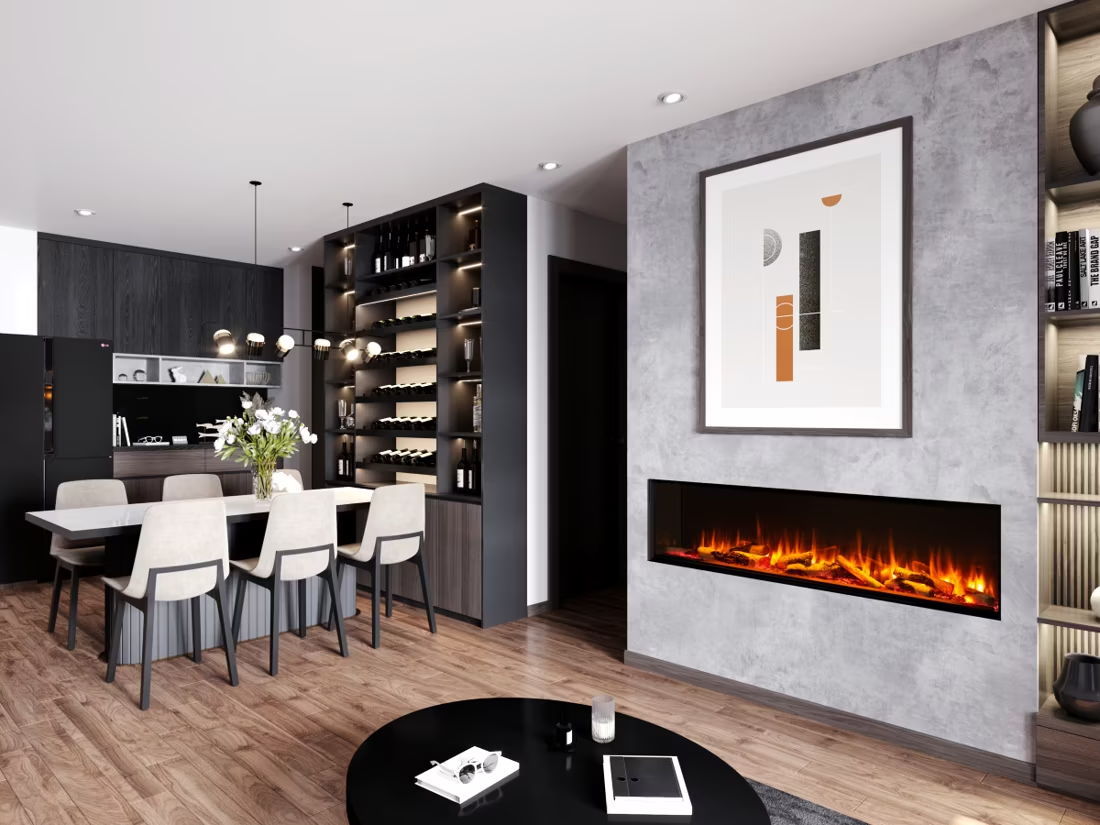
A fireplace that fits a home already wired for electric heat.
At 46 metres above the St. Lawrence in Montérégie, Coteau-du-Lac sits in climate zone 6A, with winter lows averaging -13.8°C and roughly five months of nights below freezing—cold, but nowhere near the extended deep-freeze that Winnipeg or Thunder Bay push through most winters. Most homes here already run electric baseboard or central heat through Hydro-Québec, and at roughly 7.8 cents a kWh, some of the cheapest residential power in the country, adding an electric fireplace is a low-friction upgrade rather than a big financial decision.
Compare that to the alternatives. Gas is genuinely rare out here—Énergir's mains network only reaches certain built-up corridors of Montérégie, so a gas fireplace on many Coteau-du-Lac streets means a propane conversion rather than a simple hookup. Wood is popular and the woodlots here carry sugar maple, yellow birch, American beech, and red oak, with cutting permits through the Ministère des Ressources naturelles et des Forêts running about $1.85 per cubic metre up to 22.5 cubic metres a year, but it comes with CSA B365 code requirements and a WETT inspection most insurers ask for, plus growing municipal attention to certified, low-emission appliances across Quebec. Electric sidesteps nearly all of it: no chimney, no wood storage, no combustion permit—just a CSA-certified unit and, for larger built-ins, a licensed electrician.
Three steps. No salesperson until you're ready.
Tell us about your project
Your postal code, your situation, and the fuel you're leaning toward—or let the answers point you to one.
See what's actually available
The brands dealers within 100 miles genuinely carry—real options, never a catalog mirage.
Get your dealer & Project Guide
A trusted local dealer, plus the free Project Guide & Parts List that names every component of the job.
Frequently Asked Questions
How much does an electric fireplace installation cost in Coteau-du-Lac?
Most electric fireplace projects here run $500 to $1,600 CAD, well under any combustion option. A plug-in insert that drops into an existing mantel or opening sits at the low end—no wiring changes needed beyond an existing outlet. A built-in unit set into a new wall or media surround costs more, mostly for a licensed electrician's time running a dedicated 240V circuit and any carpentry to frame the opening. Either way, it's the cheapest fuel path of the four we track for this area, well below the $6,000-$12,000 typical for wood installs or $6,000-$15,000 for gas installs around here.
Do I need a permit for an electric fireplace in Coteau-du-Lac?
Usually not for a simple plug-in insert—no permit required. If you're adding a built-in unit that calls for a new 240V circuit, the wiring itself needs to meet code and should be done by a licensed electrician, and any structural changes to a wall or mantel may need a look from Coteau-du-Lac's municipal building department. There's no CSA B365 wood-appliance code or WETT inspection to worry about here, since those apply to combustion appliances, not electric ones.
What does an electric fireplace cost to run on Hydro-Québec rates?
This is where electric pulls ahead locally. At Hydro-Québec's residential rate of about 7.8 cents per kWh—among the lowest in Canada—a typical 1,500-watt electric fireplace running four hours an evening costs roughly 47 cents a day, or about $14 a month through a Coteau-du-Lac winter. Most units also let you run the flame effect with the heater switched off, so you get the ambiance for pennies even outside the heating season.
Is an electric fireplace enough heat for a Coteau-du-Lac winter?
On its own, no—with winter lows averaging -13.8°C and roughly five months of sub-freezing nights, an electric fireplace is a supplemental heat source, not a replacement for the baseboard or central electric heat most homes here already run through Hydro-Québec. Where it earns its keep is zone heating: taking the chill off a family room or finished basement so you can turn the main system down a notch, plus the flame effect on the coldest evenings when you want the room to feel warmer than the thermostat says.
How does electric compare to wood heat in this area?
Wood is genuinely popular in Montérégie—sugar maple, yellow birch, American beech, and red oak are all common local species, and the Ministère des Ressources naturelles et des Forêts issues cutting permits for about $1.85 per cubic metre up to 22.5 cubic metres a year. But wood carries real overhead: CSA B365 installation code applies, insurers commonly want a WETT inspection, and Quebec municipalities are paying closer attention to certified, low-emission appliances, echoing the fine-particle limits Montréal enforces on the island. Electric skips that paperwork entirely, which is a big part of why it's such a common choice for a second fireplace out here.
Why isn't gas a bigger option in Coteau-du-Lac?
Gas is genuinely rare in this part of Montérégie. Énergir's mains network only reaches certain built-up corridors, and plenty of streets in Coteau-du-Lac simply aren't on it, which usually means a gas fireplace here is really a propane conversion rather than a simple hookup. Electric doesn't have that availability problem—if your panel has the capacity, you have a fireplace option, which is a large part of why electric and wood dominate fireplace conversations here rather than gas.
Electric vs. pellet stove—which makes more sense for my home?
Pellet stoves are a solid, standard option here, with regional brands like Granules LG, Energex, and Trebio running about $400 to $575 a ton, and they burn cleaner than an open wood fire. But they still need venting, a hopper to refill, power to run the auger and blower, and a $6,000-$10,000 installed budget. Electric skips venting and fuel deliveries entirely for a fraction of the cost, though it won't put out the same sustained heat through a real cold spell—it comes down to whether you want a heat source or an easy, low-cost ambiance upgrade.
Does an electric fireplace need special wiring or extra panel capacity?
A small plug-in insert usually runs on a standard household outlet with no changes needed. A larger built-in electric fireplace, especially a higher-output model, often calls for a dedicated 240V circuit, which means checking your panel has room and having a licensed electrician run the line—not a DIY job under Quebec's electrical code. A local dealer can tell you which category a given model falls into before you buy, so there are no surprises once it's time to hook it up.
What should I look for in an electric fireplace for a Coteau-du-Lac home?
Start with CSA-certified units—that's the baseline for anything a trusted local dealer will sell and stand behind in Quebec. From there, decide between a plug-in insert (simplest, cheapest, good for a mantel retrofit) or a built-in model with a media wall surround (better sightlines, but needs that dedicated circuit). Given how cheap Hydro-Québec power is here, most Coteau-du-Lac homeowners lean toward a strong flame-effect display and treat the heat output as a bonus rather than the main reason to buy.
How much does an electric fireplace cost to run?
With the heater on, a typical unit draws about 1,500 watts—at average electric rates that's roughly 20 cents an hour. Run the flame effect alone and it costs pennies; the flames are LED-driven and use about as much power as a light bulb. There's no pilot light, no fuel delivery, and essentially no maintenance.
What fireplace styles should I know before shopping?
Four cover most of the market: screen-front traditional (mesh front, open feel, fits craftsman homes), traditional door set (the classic look you grew up with), modern linear (wide, low, the statement piece for entertaining), and clean face contemporary (no trim—your tile or stone runs right to the fire's edge). Walk in knowing those four terms and you're ahead of most buyers.
Do electric fireplaces actually produce heat?
Yes—most put out around 4,800–5,000 BTUs from a standard outlet, which comfortably warms a bedroom, office, or den as a comfort-zone heater. What they won't do is carry a whole house the way wood, gas, or pellet can. Think of electric as ambiance-first with honest supplemental heat: flames on with no heat in July, flames plus warmth in January.
Does an electric fireplace need a vent or chimney?
No—that's its superpower. An electric fireplace needs a wall and an outlet, period. No vent pipe, no gas line, no clearances to design around, which is why it works in bedrooms, offices, apartments, and walls where venting a gas or wood unit would be impractical or impossible. Installation is typically the simplest and least expensive of any fireplace type.
Nearby Dealers
Hearth shops serving Coteau-du-Lac and the surrounding area. Every listing shows whether it is a WhyFire partner, a dealer we have verified as authorized for the brands we recommend, or a local business carrying hearth products. No manufacturer pays for placement. How we verify dealers →
Foyer-Gaz
Suroît Boutique (Sainte-Martine)
Alternatives
Max Oxygene Pur
Les Foyer Mirabel A.m.f.
Décor Chaleur Châteauguay
Entretien Steve Clark Inc
Thermopompes N & R Sol
Napert Signature
Piscines Jacques-Cartier
Chauffage Gadbois
Perfecto Gaz Propane
Suroît Boutique (St-Hyacinthe)
Electric Service in Coteau-du-Lac
An electric fireplace's heater draws about 1,500 watts—pennies per hour at local rates.
Hydro-Québec
Get your free Project Guide & Parts List for a Coteau-du-Lac electric fireplace.
Tell me about your home, your panel, and where you want the flame, and I'll match you with a trusted local dealer and send a free Project Guide & Parts List—sized to your room, priced for Hydro-Québec's low rates, with the right unit and circuit specified before you buy.
Find Your Fireplace →