
A cleaner path to real heat on the island of Montréal.
Winters in Côte-Saint-Luc settle into a reliable stretch of sub-zero nights—averaging around -14°C—and this enclave's mix of bungalows, semis, and low-rise duplexes make certified pellet stoves an easy fit. I connect you with a local dealer who knows Montréal's wood-burning bylaws inside out and can spec a unit, vent kit, and parts list for your actual house.
Every Project Starts From One of These Five Situations
Pellet stoves sidestep the wood bylaw paperwork entirely.
Côte-Saint-Luc sits in climate zone 6A on the island of Montréal, at just 47 metres of elevation, where winter lows average around -14°C and cold snaps below -20°C aren't unusual in January. It's a milder profile than Québec City or Sudbury see, but the season runs long—reliable sub-zero nights from November into March—so a stove that can hold a steady burn without daily babysitting matters more than the mercury alone suggests.
Montréal-area municipalities, Côte-Saint-Luc included, require wood-burning appliances to be registered and certified under a strict fine-particle limit—2.5 grams per hour on the island—before they can go in. Pellet appliances routinely burn well under that threshold already, which is a big part of why they've become the practical choice for homeowners here who want real wood-adjacent heat without the extra registration hurdle. Installation still runs through the municipal building department and follows the CSA B365 code, and most insurers ask for a WETT inspection on solid-fuel appliances before they'll write or renew a policy—steps a local dealer who works regularly in Côte-Saint-Luc will already have built into the quote.
Three steps. No salesperson until you're ready.
Tell us about your project
Your postal code, your situation, and the fuel you're leaning toward—or let the answers point you to one.
See what's actually available
The brands dealers within 100 miles genuinely carry—real options, never a catalog mirage.
Get your dealer & Project Guide
A trusted local dealer, plus the free Project Guide & Parts List that names every component of the job.
Frequently Asked Questions
How much does a pellet stove installation cost in Côte-Saint-Luc?
Most pellet installations here run $6,000 to $10,000 CAD, with the spread mostly coming down to venting. A freestanding pellet stove venting straight out a side wall—common in Côte-Saint-Luc's bungalows and semi-detached homes—sits toward the lower end. A pellet insert going into an existing masonry fireplace, or a run that has to clear a shared wall in a duplex, pushes the job toward the higher end once a liner and additional labour are factored in. Your dealer will also need to route the project through the municipal building department, and that permit cost is typically bundled into the estimate.
Where do I buy pellets and how much should I budget?
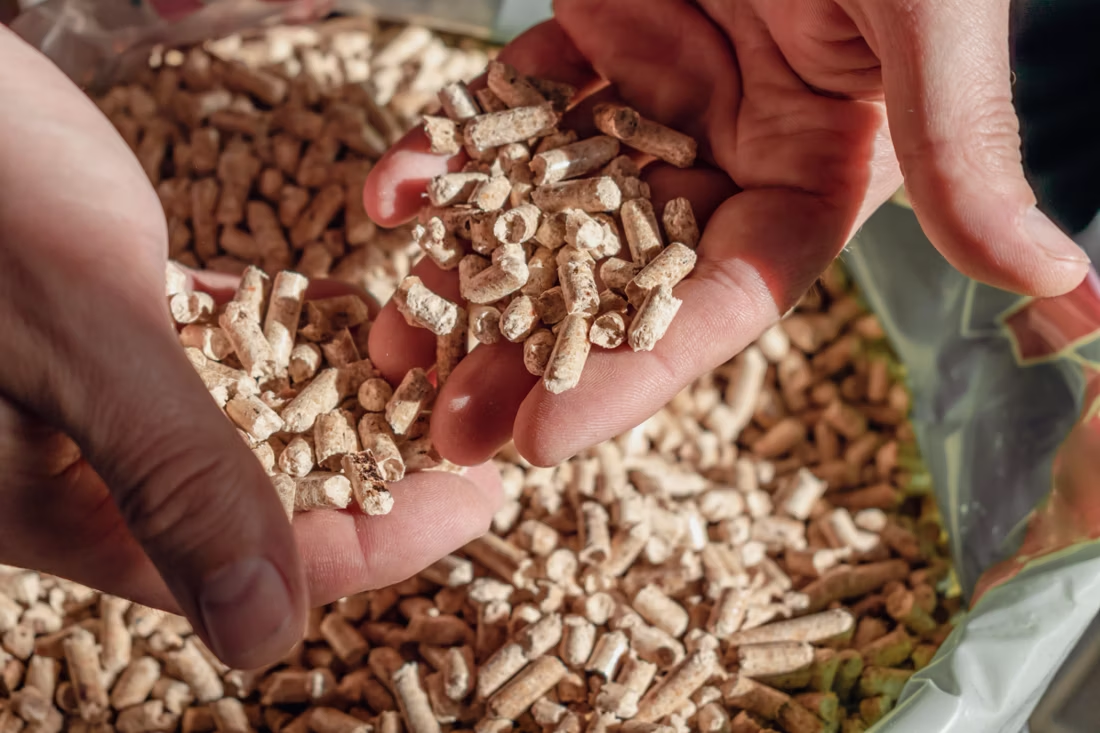
Granules LG, Energex, and Trebio are the three brands most Côte-Saint-Luc dealers stock, and Québec's own pellet mills mean supply stays steady even during a hard winter—unlike some U.S. border markets that see shortages. Expect to pay $400 to $575 a ton depending on brand and season, and a typical home burns 2 to 3 tons over a full heating season. Storage is the real planning question in a lot of CSL homes: with attached garages and smaller basements common in the semis and duplexes here, a dealer will usually help you figure out where a few pallets of bagged pellets can sit dry and accessible without eating your whole storage room.
Does the Montréal wood-burning bylaw apply to pellet stoves too?
It applies to solid-fuel appliances broadly, but pellet stoves have an easier time meeting it. The island's rule caps fine-particle emissions at 2.5 grams per hour, and most CSA-certified pellet units on the market today burn well under that on their own, so registration tends to be more of a formality than a hurdle. You'll still need a permit through Côte-Saint-Luc's municipal building department and an installation that follows the CSA B365 code—your dealer typically handles both as part of the job.
Will my home insurance require a WETT inspection for a pellet stove?
Many Québec insurers ask for a WETT inspection on any solid-fuel appliance, pellet stoves included, before they'll insure the home or renew a policy without an exclusion. It's a short visit—an inspector checks clearances, venting, and that the unit matches its certification label—and it's worth booking it right after installation rather than waiting for a renewal notice to force the issue. A local dealer who works regularly in Côte-Saint-Luc can usually recommend an inspector who already knows the area's housing stock.
Why do more Côte-Saint-Luc homeowners choose pellet over wood?
Sugar maple, yellow birch, American beech, and red oak are the classic Québec firewood species, and cutting your own on Crown land through the Ministère des Ressources naturelles et des Forêts runs about $1.85 per cubic metre up to a 22.5 cubic metre cap—cheap, if you have somewhere to haul, split, and season it. Most Côte-Saint-Luc lots don't have that kind of storage space, and the island's registration and certification requirements add another step for a straight wood-burning appliance. Pellet stoves sidestep both problems: bagged fuel stores in a fraction of the space cordwood needs, and the appliances themselves already burn clean enough to satisfy the bylaw with less paperwork.
Is a gas fireplace an option instead of pellet in Côte-Saint-Luc?
It's available in parts of the city, but coverage is partial—Énergir serves much of the island, though plenty of Côte-Saint-Luc streets fall outside its distribution footprint, and a gas install here often means confirming service at your specific address before anything else. Pellet doesn't have that dependency; it just needs an electrical outlet and clearance for the vent, which is one reason it's the more consistently available option for homeowners who want a set-and-forget heat source without first calling the utility to check the map.
How does a pellet stove compare to electric heat here, given Hydro-Québec's low rates?
Hydro-Québec's residential rate, around 7.8 cents a kilowatt-hour, is genuinely cheap by Canadian standards, and it's a fair question whether pellet is worth the fuel cost on top of that. The honest answer: pellet stoves earn their keep as a supplemental or zone-heat source rather than a full replacement for electric baseboards, especially in a home that already has electric heat throughout. Worth noting, too, that pellet stoves still need power for the auger and blower, so like electric heat they go down in an outage unless the unit has battery backup—wood is the one option that keeps burning with no power at all.
What size pellet stove fits a typical Côte-Saint-Luc home?
Côte-Saint-Luc's housing stock leans toward bungalows, side-by-side semis, and low-rise duplexes, most in the 1,000 to 1,800 square foot range per unit, and a mid-size pellet stove rated for roughly 1,200 to 2,000 square feet comfortably handles that as a supplemental heat source for a main living area. Bigger century-style homes near the border with NDG or Hampstead sometimes justify a larger unit if it's carrying more of the heating load. A dealer will still want your ceiling height and how open the floor plan is before finalizing a model, not just the square footage.
How much maintenance does a pellet stove need through a Côte-Saint-Luc winter?
Plan on emptying the ash pan every few days during steady use and a deeper clean of the burn pot and heat exchanger every one to two weeks, since Côte-Saint-Luc's long, consistent burning season—typically November through March—puts real hours on the unit. A full annual service, including the exhaust venting and auger motor, is worth booking in early fall before the season's first real cold snap, since local dealers get busy fast once temperatures drop toward that -14°C average low.
Why do fireplace quotes vary so much?
Because a fireplace is an iceberg—there's more behind the wall than in front of it. A low quote often covers only the unit; the full scope includes vent pipe, gas line or electrical, framing, and the tile or stone that has to come off and go back on. Make every bidder price the whole job. If a dealer can't speak to the full scope with confidence, that's your signal to keep looking.
Is it worth replacing an old fireplace that still sort of works?
Ask three questions: Is it ugly? Is it drafty? Does it actually work? Most old fireplaces fail at least two. Beyond looks, an old unit leaks air around the damper year-round and—if it's gas with a standing pilot—quietly burns a couple hundred dollars a year. A modern replacement seals the wall, heats the room, and changes how the whole space gets used.
What does it take to replace an existing fireplace?
Fireplaces are like icebergs—bigger behind the wall than in front of it. Replacement means removing the surrounding tile or stone (the finish material laps onto the fireplace face), pulling the old unit, setting the new one in the same enclosure, and re-finishing the wall. A hearth professional can determine what's behind your wall without demolition during an in-home preview.
Why is my open fireplace making my house colder?
Open fireplaces suck—literally. As the fire burns, it consumes air your furnace already paid to heat and pulls it out through the chimney, so the house is actually colder after the fire goes out than before you lit it. An insert fixes this: it seals the chimney, puts fixed glass across the front, and turns that hole in your house into a real heat source.
Nearby Dealers
Hearth shops serving Côte-Saint-Luc and the surrounding area. Every listing shows whether it is a WhyFire partner, a dealer we have verified as authorized for the brands we recommend, or a local business carrying hearth products. No manufacturer pays for placement. How we verify dealers →
Nergiflex
Noréa Foyers Montréal
Foyer Universel Montreal Inc. (A.m.f.)
Confort Elite
Décor Chaleur Châteauguay
Thermopompes N & R Sol
Alternatives
Pro Du Foyer
Finition Belle-Flammes
Propane Plus Inc
Arta Boutik
Les Foyer Mirabel A.m.f.
Napert Signature
Noeea Foyers Rive-Nord
Suroît Boutique (Sainte-Martine)
Pellet Brands Stocked Around Côte-Saint-Luc
Typical price runs $400-$575 per ton—buy early-season for the best rates. Manufacturers will point you to the nearest stocking dealer.
Granules Lg
Trebio
Get your free Project Guide & Parts List for Côte-Saint-Luc pellet heat.
Tell me about your home and I'll match you with a local dealer who works regularly in Côte-Saint-Luc, handles the municipal permit and bylaw registration, and sends a free Project Guide & Parts List—sized to your house, with the exact vent kit and parts specified.
Find Your Fireplace →