
Every fuel type, every corner of Centre-du-Québec.
Wood, gas, pellet, and electric fireplace resources for the whole region—from the maple bushes around Victoriaville to the lowlands near Bécancour and Nicolet. Pick a fuel and get matched with a local dealer who actually installs it here.
Every Project Starts From One of These Five Situations
Sugar maple winters, -14.9°C lows, and a region built on wood heat.
Centre-du-Québec sits on the south shore of the St. Lawrence between Montréal and Québec City, a farming and forestry region stitched together by Drummondville, Victoriaville, Bécancour, Nicolet, and dozens of smaller municipalities along the Rivière Saint-François. Climate zone 6A and average winter lows near -14.9°C put the region in similar heating territory to Québec City—long, dry cold that settles in by November and holds through March. Sugar maple, yellow birch, American beech, and red oak are the wood species most local households burn, much of it cut from private woodlots that double as sugar bushes come spring, with the Ministère des Ressources naturelles et des Forêts (MRNF) issuing permits for anyone cutting on public land.
Wood heat is genuinely mainstream here, but rules still apply: most municipalities require installations to follow the CSA B365 code, and insurers commonly ask for a WETT inspection before covering a new wood appliance—stricter than what a lot of homeowners expect, though nowhere near Montréal's tighter island-wide 2.5 g/h fine-particle bylaw. A modern EPA or CSA-certified stove or insert clears these requirements without issue, and any dealer we match you with handles that paperwork as a matter of course. Natural gas is the outlier fuel in Centre-du-Québec—Énergir's distribution lines reach only parts of the region along a few corridors near the larger towns, so a gas fireplace here often means checking street-level availability first or looking at a propane setup instead. This hub rolls up retailers, technicians, and suppliers across wood, gas, pellet, and electric for the whole region; pick your fuel below for local dealers, realistic costs, and unit recommendations specific to your town.
Four fuels. One honest answer for Centre-du-Québec.
Three steps. No salesperson until you're ready.
Tell us about your project
Your postal code, your situation, and the fuel you're leaning toward—or let the answers point you to one.
See what's actually available
The brands dealers within 100 miles genuinely carry—real options, never a catalog mirage.
Get your dealer & Project Guide
A trusted local dealer, plus the free Project Guide & Parts List that names every component of the job.
Frequently Asked Questions
Which fireplace fuel makes the most sense in Centre-du-Québec?
Wood is the backbone fuel across most of the region—sugar maple, yellow birch, American beech, and red oak all burn hot and long, and a lot of households already manage a woodlot or buy from a neighbour who does. Pellet stoves have a solid following too, helped by three Quebec-made brands sold widely here—Granules LG, Energex, and Trebio—which keeps fuel costs stable and local. Electric fireplaces show up as supplemental heat in bedrooms, basements, and renovated spaces almost everywhere, though at -14.9°C average lows they're not sized to carry a whole home through winter on their own. Gas is genuinely rare here—Énergir's network only reaches a few corridors in the region, so most gas interest ends up either confirming street-level availability or looking at a propane conversion instead.
Do I need a permit to install a wood stove or insert in Centre-du-Québec?
Yes, in almost every municipality. New wood stoves and inserts generally need to meet current emissions standards and follow the CSA B365 installation code, with the permit itself issued by your local municipal building department rather than a regional office. Most insurers also ask for a WETT inspection once the unit is in, especially if you're switching from an older uncertified stove or adding a wood appliance to a home that didn't have one before. If you're cutting your own firewood on public land rather than a private woodlot, that's a separate permit through the Ministère des Ressources naturelles et des Forêts (MRNF). Dealers we match homeowners with typically walk through both the municipal permit and the WETT step as part of the project rather than leaving it to you to sort out.
Is a gas fireplace realistic here, or should I plan around something else?
It depends heavily on your street. Énergir's mains gas network in Centre-du-Québec is limited to certain corridors near the larger towns rather than covering the region broadly, so the first real step for anyone wanting gas is confirming whether a line actually reaches the property—not picking a unit. Where gas isn't available, propane is the usual substitute and works with the same style of fireplace, just with a tank instead of a buried line. Given how uneven gas availability is here, most homeowners in the region end up choosing between wood and pellet as their primary heat source and treating gas or electric as the exception rather than the default.
Are there wood-burning bylaws I need to worry about in Centre-du-Québec?
Municipal bylaws here are real but generally more workable than what you'd find on the island of Montréal, where certified appliances are capped at 2.5 g/h of fine particles and registration is mandatory. Centre-du-Québec municipalities set their own rules, and most simply require that new installations follow the CSA B365 code and pass inspection, with a WETT certificate often required by insurers rather than by the municipality itself. Any EPA or CSA-certified stove or insert on the market today clears these bars without modification—it's really only very old, uncertified units that run into trouble, and those typically need to be swapped out anyway if you're refinancing or changing insurers.
What does a fireplace installation typically cost in Centre-du-Québec?
Costs track fairly closely with what you'd see elsewhere in Quebec, adjusted for venting and how much chimney work is involved. Wood stove or insert installs generally run $4,000-$8,500 CAD, with a full new chimney for a home that never had one pushing toward $12,000 CAD. Pellet stove or insert installs typically land at $3,800-$7,000 CAD. Electric fireplaces are the cheapest entry point—$300-$2,800 CAD for the unit, plus $400-$1,000 CAD in labour for anything beyond a simple plug-in placement. Gas installs vary the most because so much depends on whether a line reaches your property at all; where Énergir service is available, expect $4,500-$10,000 CAD, and propane conversions run somewhat higher once tank setup is included.
How does service and installation work if I'm not near Drummondville or Victoriaville?
Most retailers and service techs are based around the larger towns but run regular routes out toward Nicolet, Plessisville, Warwick, and the smaller municipalities along the Rivière Saint-François. Expect a modest travel charge for the farthest addresses, and expect booking windows to tighten considerably once the first hard frost hits and everyone wants their chimney swept or pellet stove serviced at once. Getting your annual WETT inspection or pellet cleaning done in late summer, before the region's cold really sets in, is the easiest way to avoid a multi-week wait once winter starts.
How many BTUs do I need in a fireplace?
Wrong question—and the industry's favorite way to confuse you. More BTUs isn't better if the fireplace cooks you out of the room you spent thousands to enjoy. Think in terms you can verify: how many square feet the unit heats, whether it's primary or backup heat, and whether you want it running overnight. Those three answers size a fireplace correctly every time.
Will we actually use a fireplace once we have one?
In my own home, the room with the fireplace has never been the same—it became the social hub. Game nights, holidays, date nights after the kids are down: the fire is where the house gathers. There's a reason people in this industry joke that we're really in the romance and entertainment business. You won't wonder whether you'll use it; you'll wonder how the room worked before.
What's the difference between an insert and a zero-clearance fireplace?
An insert is a fireplace that slides into a pre-existing wood-burning fireplace—if you don't have one, there's nothing to insert it into. A zero-clearance fireplace is built into a framed wall, which makes it the answer for remodels and new construction. Simple test: existing masonry fireplace means insert; blank or framed wall means zero-clearance.
Can I put a TV above my fireplace?
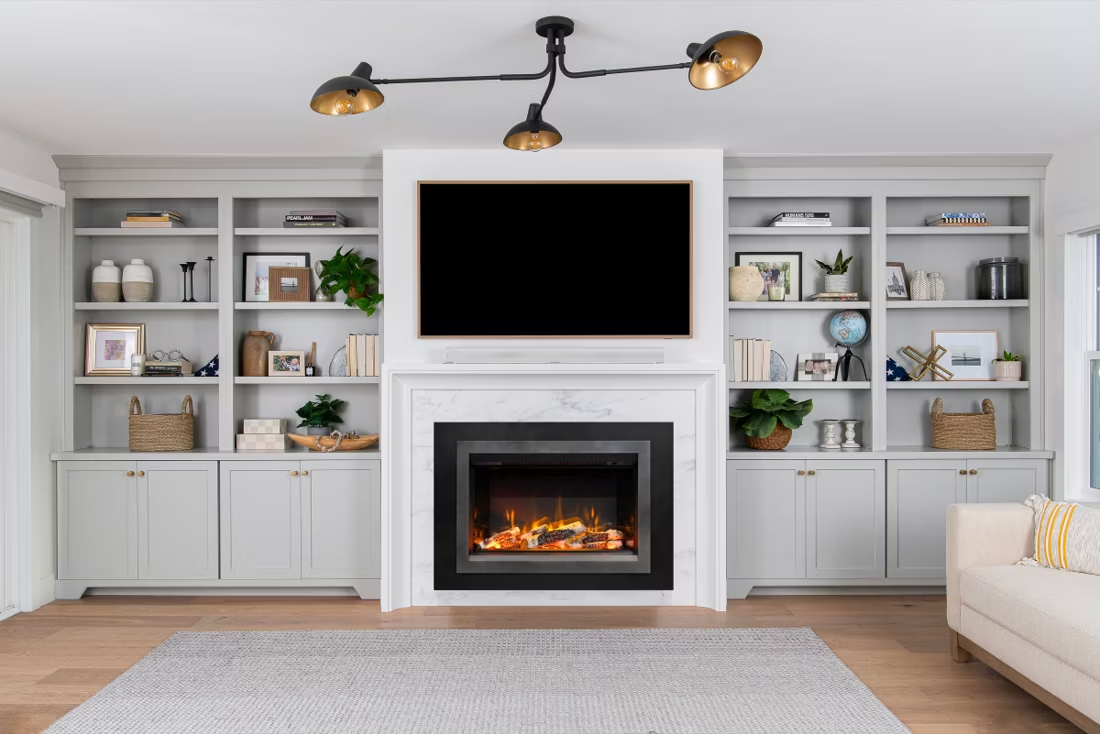
Yes—with an asterisk. Fireplaces are hot and TVs don't like heat. Either put a mantel between them to deflect rising warmth, or choose a fireplace with heat-management technology that creates a cool zone on the wall above—the wall stays around 125 degrees, barely warm, while the room still gets full heat. If you like clean lines and don't want a mantel, heat management is the answer.
Stove and Fireplace Dealers in Centre-du-Québec
Listings include WhyFire partner dealers, dealers we have verified as authorized for the brands we recommend, and established local businesses that carry hearth products. Every listing shows which one it is. The ones marked Preferred run on WhyFire's software, so they can show you real pricing and book your appointment right here. No manufacturer pays for placement. How we verify dealers →
Poêle Et Foyer De L'érable
Noréa Foyers Victoriaville
Cheminee Techni-Pro
L’as Du Propane Inc
Maconnex-Drummondville
Plomberie 1750
Get matched with a local Centre-du-Québec dealer.
Pick your fuel below and we'll put together a free Project Guide & Parts List—the right unit, the vent kit it needs, and the local dealer we recommend for your project.
Find Your Fireplace →