
Electric heat built for Centre-du-Québec's long winters, no chimney required.
With winter lows averaging -14.9°C and a heating season that runs from October well into April, Centre-du-Québec homeowners lean on Hydro-Québec's affordable power more than any other fuel. I match you with a trusted local dealer who can size the right electric fireplace or insert for your room and send you off with a free planning packet, no venting, no gas line, no guesswork.
Every Project Starts From One of These Five Situations
A region wired for Hydro-Québec's low-cost power.
Centre-du-Québec sits in the St. Lawrence lowlands between Drummondville, Victoriaville, and Bécancour, home to roughly 138,670 people in a climate zone 6A winter that rivals Québec City for length if not always for depth of cold. Nearly every home in the region is already wired for Hydro-Québec service, and that infrastructure is exactly why electric fireplaces fit so naturally here: no gas line to run, no chimney to maintain, and a power source that's among the cheapest in the country to run through a five-month heating stretch. A zero-clearance electric insert or built-in unit typically installs for $500 to $1,600, a fraction of the $6,000 to $12,000 a wood installation runs or the $6,000 to $15,000 a full gas installation can reach.
Gas is genuinely rare here. Énergir's distribution network reaches limited corridors near the highway spines and a few urban pockets, so most homes in Centre-du-Québec never see a natural gas main, and propane conversion is usually the only path to a gas appliance. Wood remains common as a supplemental heat source, with sugar maple, yellow birch, American beech, and red oak cut under a Ministère des Ressources naturelles et des Forêts permit, but it comes with CSA B365 code requirements and a WETT inspection most insurers ask for. Electric sidesteps all of that. It's the fuel a homeowner reaches for when they want real supplemental warmth in a bedroom, basement, or sunroom without touching the venting, permitting, or fuel-storage questions that come with wood or gas.
Three steps. No salesperson until you're ready.
Tell us about your project
Your postal code, your situation, and the fuel you're leaning toward—or let the answers point you to one.
See what's actually available
The brands dealers within 100 miles genuinely carry—real options, never a catalog mirage.
Get your dealer & Project Guide
A trusted local dealer, plus the free Project Guide & Parts List that names every component of the job.
Frequently Asked Questions
How much does an electric fireplace installation cost in Centre-du-Québec?
Most electric fireplace and insert projects in the region run $500 to $1,600 CAD. A plug-in zero-clearance insert dropped into an existing frame or an old masonry firebox sits at the low end, since it just needs a standard outlet. A built-in wall unit or a larger linear model that calls for a dedicated 240-volt circuit run by a licensed electrician lands toward the top of that range. Either way, the cost is well below what a wood or gas project runs in Centre-du-Québec, which is a big part of why electric is such a common choice for a secondary living space or a basement renovation.
Do I need a permit to install an electric fireplace?
Usually not for a simple plug-in insert, since there's no venting or gas line involved. If your project calls for a new dedicated circuit or a hardwired built-in unit, that electrical work needs to meet Quebec's electrical code and should be pulled through your municipal building department by a licensed electrician. It's a much lighter process than the permits and CSA B365 compliance a wood installation requires, which is one reason a lot of Centre-du-Québec homeowners renovating an older fireplace opening choose electric over a wood conversion.
Is electric heat actually affordable to run through a Centre-du-Québec winter?
Yes, more than most homeowners expect. Hydro-Québec's residential electricity rates are among the lowest in the country, so running a 1,500-watt electric fireplace for several hours a night through a winter with lows averaging -14.9°C adds a modest amount to a monthly bill rather than a dramatic one. That affordability is exactly why electric has become the default supplemental heat source in the region for rooms where a homeowner doesn't want to deal with a woodpile or a gas line, but still wants real, visible heat on a cold January evening.
Why isn't gas more common in Centre-du-Québec?
Most of the region simply isn't on the gas network. Énergir's distribution lines serve limited corridors around a few urban spines, and most homes in Centre-du-Québec, from rural Bécancour to the outskirts of Victoriaville, run on electricity or wood instead. A gas fireplace here almost always means either a home that happens to sit on a served street or a switch to propane, which adds tank and delivery costs on top of the $6,000 to $15,000 typical installation range. For most households, electric delivers similar convenience, instant on-off control and no venting, without needing to check whether gas even reaches the property.
What size electric fireplace do I need for my room?
Electric fireplaces are rated more for ambiance and supplemental warmth than whole-home heating, so sizing comes down to the room rather than the whole house. A compact 30 to 40-inch insert comfortably supplements a bedroom or den, while a wider linear unit in the 50 to 60-inch range suits an open living or dining area. Given how long Centre-du-Québec's heating season runs, a lot of homeowners size up slightly so the unit is doing real work on the coldest nights rather than just providing a glow. A local dealer can walk your space and match wattage and BTU output to the room before you buy.
How does electric compare to wood heat in Centre-du-Québec?
Wood is still a genuine option here, with sugar maple, yellow birch, American beech, and red oak available under Ministère des Ressources naturelles et des Forêts permits at roughly $1.85 per cubic metre plus taxes, up to 22.5 cubic metres a season. But wood comes with real overhead: CSA B365 installation requirements, a WETT inspection most insurers require, and an install cost of $6,000 to $12,000. Electric skips the woodpile, the chimney maintenance, and the insurance inspection entirely, trading some of wood's off-grid resilience for near-zero maintenance and a much lower upfront cost. Plenty of households here run both, wood in a main living space and electric in a bedroom or basement.
How does electric compare to pellet heat here?
Pellet stoves are a solid standard option in Centre-du-Québec, with regional brands like Granules LG, Energex, and Trebio priced around $400 to $575 a tonne and an install cost of $6,000 to $10,000. A pellet stove needs a hopper refilled regularly and an annual service, and it depends on electricity to run its auger and blower, so it isn't a fallback during a power outage either. Electric fireplaces need no fuel storage or feeding at all, just a wall outlet or circuit, which is why they're the lower-effort, lower-cost pick when a homeowner wants supplemental heat without an ongoing fuel routine.
Does an electric fireplace need a WETT inspection or affect my home insurance?
No, WETT inspections apply to wood-burning appliances, not electric ones, so that requirement doesn't come into play here. That said, if you're adding a built-in electric unit on a new dedicated circuit, it's worth confirming the electrical work was done to Quebec's electrical code by a licensed electrician and letting your insurer know about the addition, the same way you would for any new fixed appliance. It's a much shorter conversation with your insurer than the wood-stove inspection process, which is part of why electric appeals to homeowners who want to avoid extra paperwork.
What should I look for in an electric fireplace for a cold Quebec winter?
Look for a unit with real supplemental heat output, not just a decorative flame effect, since Centre-du-Québec's winters run long enough that you'll want the heater function working most evenings from October through April, similar to what a household in Québec City deals with. Models with a built-in thermostat and multiple heat settings let you dial in output room by room, which matters when you're supplementing a home that may already be heated with electric baseboards. A local dealer can also tell you whether a plug-in insert or a hardwired linear unit makes more sense for your electrical panel and room layout before you commit.
How much does an electric fireplace cost to run?
With the heater on, a typical unit draws about 1,500 watts—at average electric rates that's roughly 20 cents an hour. Run the flame effect alone and it costs pennies; the flames are LED-driven and use about as much power as a light bulb. There's no pilot light, no fuel delivery, and essentially no maintenance.
What fireplace styles should I know before shopping?
Four cover most of the market: screen-front traditional (mesh front, open feel, fits craftsman homes), traditional door set (the classic look you grew up with), modern linear (wide, low, the statement piece for entertaining), and clean face contemporary (no trim—your tile or stone runs right to the fire's edge). Walk in knowing those four terms and you're ahead of most buyers.
Does an electric fireplace need a vent or chimney?
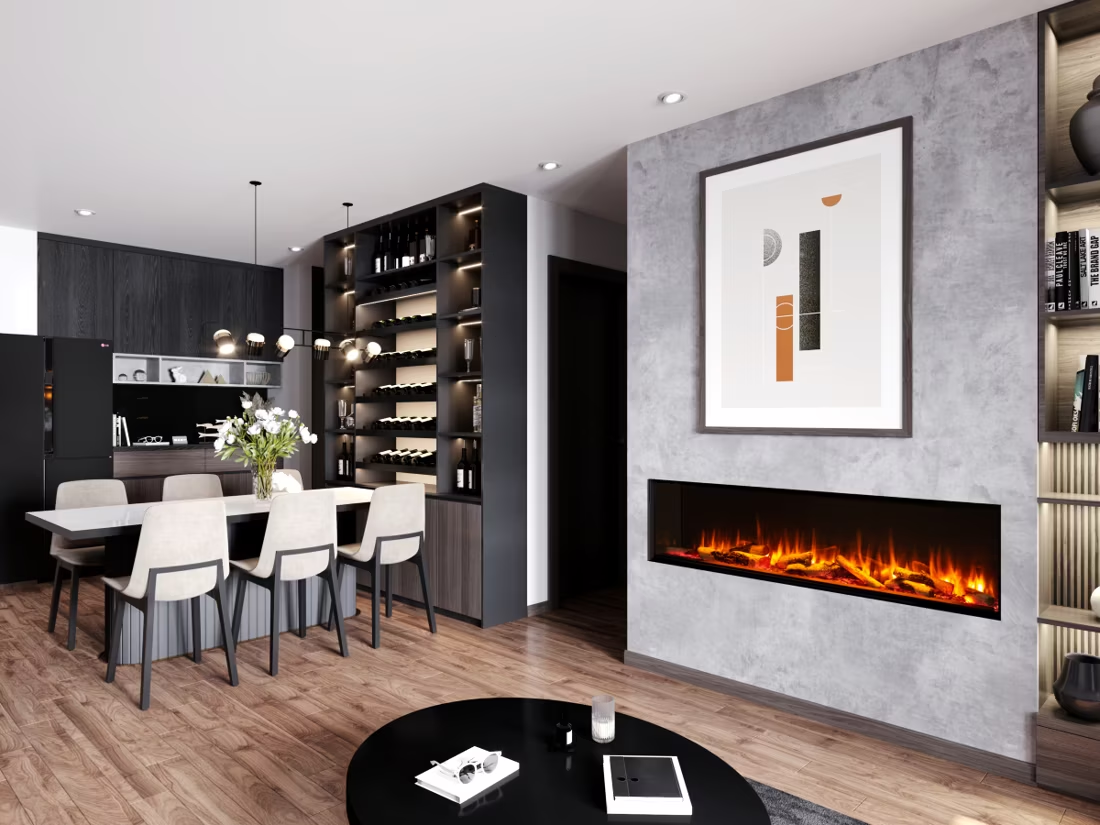
No—that's its superpower. An electric fireplace needs a wall and an outlet, period. No vent pipe, no gas line, no clearances to design around, which is why it works in bedrooms, offices, apartments, and walls where venting a gas or wood unit would be impractical or impossible. Installation is typically the simplest and least expensive of any fireplace type.
Can I put a TV above my fireplace?
Yes—with an asterisk. Fireplaces are hot and TVs don't like heat. Either put a mantel between them to deflect rising warmth, or choose a fireplace with heat-management technology that creates a cool zone on the wall above—the wall stays around 125 degrees, barely warm, while the room still gets full heat. If you like clean lines and don't want a mantel, heat management is the answer.
Stove and Fireplace Dealers in Centre-du-Québec
Listings include WhyFire partner dealers, dealers we have verified as authorized for the brands we recommend, and established local businesses that carry hearth products. Every listing shows which one it is. The ones marked Preferred run on WhyFire's software, so they can show you real pricing and book your appointment right here. No manufacturer pays for placement. How we verify dealers →
Poêle Et Foyer De L'érable
Noréa Foyers Victoriaville
Cheminee Techni-Pro
L’as Du Propane Inc
Maconnex-Drummondville
Plomberie 1750
Electric Service in Centre-du-Québec
An electric fireplace's heater draws about 1,500 watts—pennies per hour at local rates.
Hydro-Québec
Get your free Project Guide & Parts List for an electric fireplace in Centre-du-Québec.
Tell me about your room, your panel, and how you plan to use the fireplace, and I'll match you with a trusted local Centre-du-Québec dealer and send a free Project Guide & Parts List, the exact parts and a clear next step for your electric heat project.
Find Your Fireplace →