
Pellet heat built for Centre-du-Québec's five-month winters.
Bécancour sits at just 9 metres elevation on the south shore of the St. Lawrence, with winter lows averaging -17.1°C through a heating season that stretches well past four months. I'll match you with a local dealer who knows the venting, the permits, and what Quebec-milled pellet brands are actually stocked near you.
Every Project Starts From One of These Five Situations
Consistent heat without the woodpile.
Bécancour sits across the St. Lawrence from Trois-Rivières, in a climate zone (6A) that plans for real winter: an average low of -17.1°C and a heating season running from October well into April, not unlike a Québec City winter just up the river. At only 9 metres of elevation, the town doesn't deal with mountain snow loads, but the cold settles in for months, and a lot of households want a heat source that holds a steady output without daily reloading.
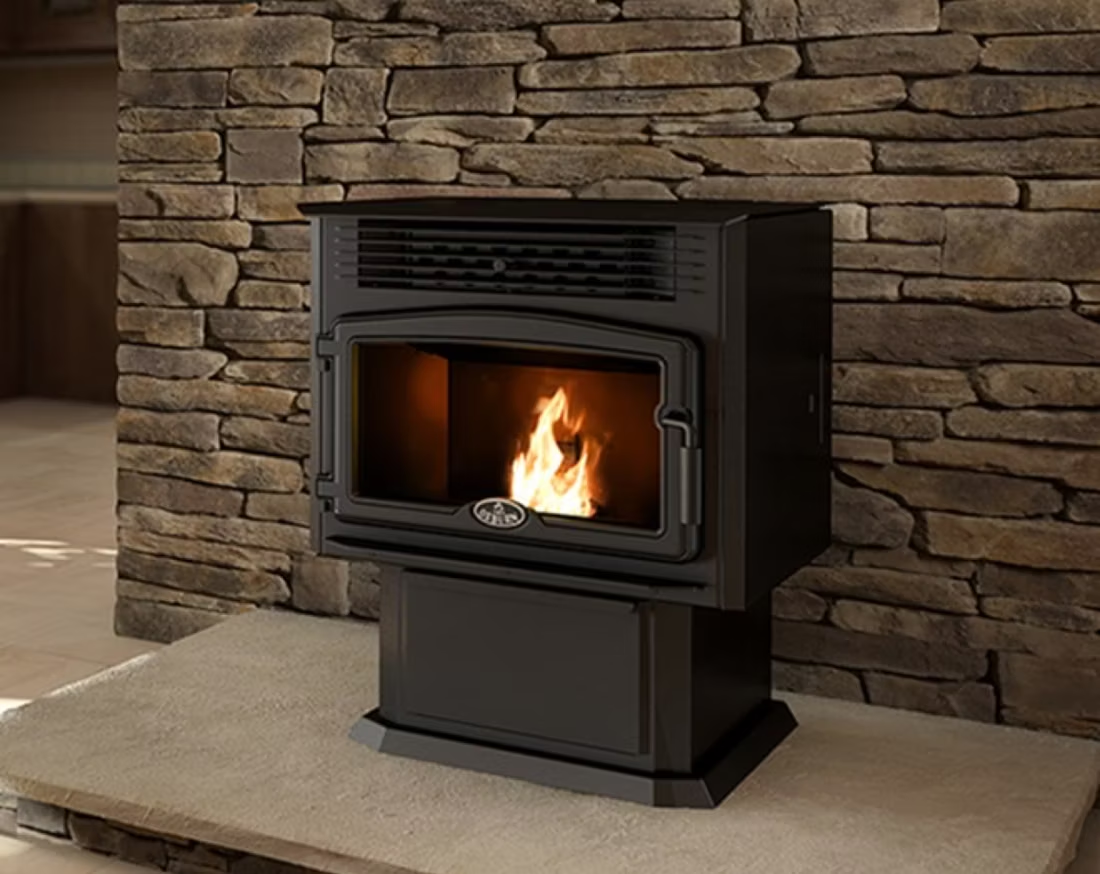
Pellet appliances fit that need well. Regional bag brands like Granules LG, Energex, and Trebio are all milled in Quebec, which keeps supply reliable even in a rough winter, and they run $400 to $575 CAD a tonne depending on brand and timing. Compared with the hardwood most Centre-du-Québec households still split for wood stoves—sugar maple, yellow birch, American beech, and red oak—pellets trade the axe and the wood stack for a hopper filled once a week and a thermostat-controlled burn through the coldest nights.
Three steps. No salesperson until you're ready.
Tell us about your project
Your postal code, your situation, and the fuel you're leaning toward—or let the answers point you to one.
See what's actually available
The brands dealers within 100 miles genuinely carry—real options, never a catalog mirage.
Get your dealer & Project Guide
A trusted local dealer, plus the free Project Guide & Parts List that names every component of the job.
Frequently Asked Questions
How much does a pellet stove installation cost in Bécancour?
Most pellet stove and insert installs here run $6,000 to $10,000 CAD, and where you land depends mostly on venting. A pellet insert going into an existing masonry firebox with a straightforward wall-through vent kit sits at the lower end. A new freestanding stove in a home without a chimney already in place—common in some of Bécancour's newer subdivisions near the industrial park—needs a full vent run and hearth pad, which pushes the estimate toward the top. Your municipal building department will want a permit either way, and a WETT inspection afterward is standard practice for insurance.
What size pellet stove do I need for a home in Bécancour?
With winter lows averaging -17.1°C and colder snaps during a hard Centre-du-Québec winter, most main living areas do well with a stove rated in the 40,000 to 60,000 BTU range, similar to what's specified in comparable homes around Québec City. Smaller units under 40,000 BTU work fine as supplemental heat in a well-insulated newer build, but if you're planning to run the pellet stove as your primary heat source, a local dealer will size it against your actual square footage, ceiling height, and insulation rather than a generic chart.
Do I need a permit to install a pellet stove in Bécancour?
Yes. Installations go through the municipal building department, and the appliance and venting need to meet the CSA B365 installation code. Most hearth retailers working in the region handle the permit application and inspection as part of the job. Afterward, expect your insurer to ask for a WETT inspection before adding the appliance to your policy—it's routine for solid-fuel-burning appliances in Quebec, pellet included, and a good local dealer will already know what your insurer wants to see.
With Hydro-Québec rates this low, why would I choose pellet over electric heat?
It's a fair question—at roughly $0.078 per kWh, Hydro-Québec electricity is some of the cheapest in the country, and plenty of Bécancour homes already lean on electric baseboard or an electric fireplace insert for supplemental heat. Pellet stoves earn their place as a hedge: they keep producing real heat during the ice-storm outages that occasionally hit Centre-du-Québec, they hold a steadier output than electric resistance heat, and many owners simply prefer a visible flame. If pure cost-per-degree is the priority, electric wins; if it's outage resilience and ambiance with low daily handling, pellet is the better fit.
Where do I buy pellets near Bécancour, and how much should I budget?
Granules LG, Energex, and Trebio are the three brands stocked most consistently through Centre-du-Québec dealers, and all three are milled in Quebec, so supply holds up even in a hard winter. Expect to pay $400 to $575 CAD a tonne depending on brand and whether you buy early-season or mid-winter. A typical Bécancour household running a pellet stove as primary heat through a full six-month season burns roughly 2 to 3 tonnes, so budgeting $800 to $1,700 CAD for the season is reasonable, plus dry, off-ground storage space in a garage or shed.
Will my pellet stove still work if the power goes out?
Not without backup power. Pellet stoves rely on an electric auger to feed fuel and a blower to circulate heat, so a standard unit shuts down the moment the power does—worth knowing since Centre-du-Québec sees its share of ice-storm-related outages some winters. A battery backup or a small inverter generator keeps a pellet stove running through most outages. If total independence from the grid is the top priority, a wood stove burning local sugar maple or yellow birch is the more self-sufficient option, and some households here keep both appliances.
Is a gas fireplace an option in Bécancour instead of pellet?
Only in limited spots. Énergir's natural gas network reaches parts of Centre-du-Québec, but coverage is partial, and a fair number of Bécancour addresses simply aren't on a served street—you'd be looking at a propane conversion instead, which adds tank and delivery logistics most homeowners here would rather skip. That's part of why pellet has stayed the more mainstream choice for a clean-burning, low-maintenance appliance in this area: it doesn't depend on a gas line ever reaching your house.
How often does a pellet stove need to be cleaned and serviced?
Plan on emptying the ash pan every few days during steady winter use and a full burn-pot and venting cleaning every one to two months, depending on daily run hours. A professional service and vent inspection once a year, ideally in September before the season starts, is the standard recommendation. Skipping that annual visit is the most common reason a pellet stove starts feeding unevenly or throwing an ignition fault midwinter, right when a Bécancour household needs it most.
Pellet stove or wood stove—which makes more sense for a Centre-du-Québec home?
Wood, split from local sugar maple, yellow birch, American beech, or red oak, still wins on raw fuel cost if you or a neighbour have access to a woodlot, and it keeps running with zero electricity. Pellet wins on convenience and cleaner burning—you're loading a hopper instead of splitting and stacking cords, with none of the creosote buildup wood venting needs watched. Both need a municipal building department permit and CSA B365-compliant installation, and both typically call for a WETT inspection for insurance. Households wanting controllable, thermostat-driven heat with minimal daily handling generally land on pellet; those prioritizing complete grid independence tend to stick with wood.
Why do fireplace quotes vary so much?
Because a fireplace is an iceberg—there's more behind the wall than in front of it. A low quote often covers only the unit; the full scope includes vent pipe, gas line or electrical, framing, and the tile or stone that has to come off and go back on. Make every bidder price the whole job. If a dealer can't speak to the full scope with confidence, that's your signal to keep looking.
Is it worth replacing an old fireplace that still sort of works?
Ask three questions: Is it ugly? Is it drafty? Does it actually work? Most old fireplaces fail at least two. Beyond looks, an old unit leaks air around the damper year-round and—if it's gas with a standing pilot—quietly burns a couple hundred dollars a year. A modern replacement seals the wall, heats the room, and changes how the whole space gets used.
Are pellet stoves loud?
They make some noise—there are two fans running plus an auger motor that turns as it feeds pellets. But there's a real range: premium models are engineered quiet, and the best offer a whisper-quiet mode you can comfortably watch TV next to. If noise matters in your room, ask to hear a stove running before you buy—it's a five-minute test that saves years of annoyance.
Can a pellet stove heat a whole house?
It genuinely can. I burned a pellet stove as my only heat source for years after a furnace died, and it kept the entire house warm. Pellets feed automatically from a hopper, so you get wood-heat economics with thermostat-style control. Two honest caveats: it needs weekly cleaning during the season, and most models need electricity to run—ask about battery backup if outages are a concern.
Nearby Dealers
Hearth shops serving Bécancour and the surrounding area. Every listing shows whether it is a WhyFire partner, a dealer we have verified as authorized for the brands we recommend, or a local business carrying hearth products. No manufacturer pays for placement. How we verify dealers →
Cheminee Techni-Pro
Poêle Et Foyer De L'érable
Noréa Foyers Victoriaville
Plomberie 1750
L’as Du Propane Inc
Maconnex-Drummondville
Pellet Brands Stocked Around Bécancour
Typical price runs $400-$575 per ton—buy early-season for the best rates. Manufacturers will point you to the nearest stocking dealer.
Granules Lg
Trebio
Get your free Project Guide & Parts List for a Bécancour pellet project.
Tell me about your home and I'll match you with a local dealer who knows Centre-du-Québec winters, and send a free Project Guide & Parts List with the vent kit and parts your pellet stove or insert actually needs.
Find Your Fireplace →