
The Fireplace Upgrade That Skips the Chimney.
No gas line, no masonry, no venting—just real heat and a real flame look for York's rowhomes, condos, and newer builds. Get matched with a local dealer who installs it right.
Every Project Starts From One of These Five Situations
No chimney, no vent, no problem for York's rowhomes.
York sits low in the Susquehanna valley at just 369 feet, and its climate—Zone 4A, with about 5,017 heating degree days and average winter lows around 21°F—is real mid-Atlantic cold, but nowhere near the sustained deep-freeze of a place like Duluth, MN or Burlington, VT. That matters for fireplace choice: York doesn't need a wood stove sized to carry a house through a week of subzero nights. It needs supplemental warmth that fits into rowhomes, downtown apartments, and the tight floor plans common across the city's older neighborhoods, including the Colonial Historic District around Olde York.
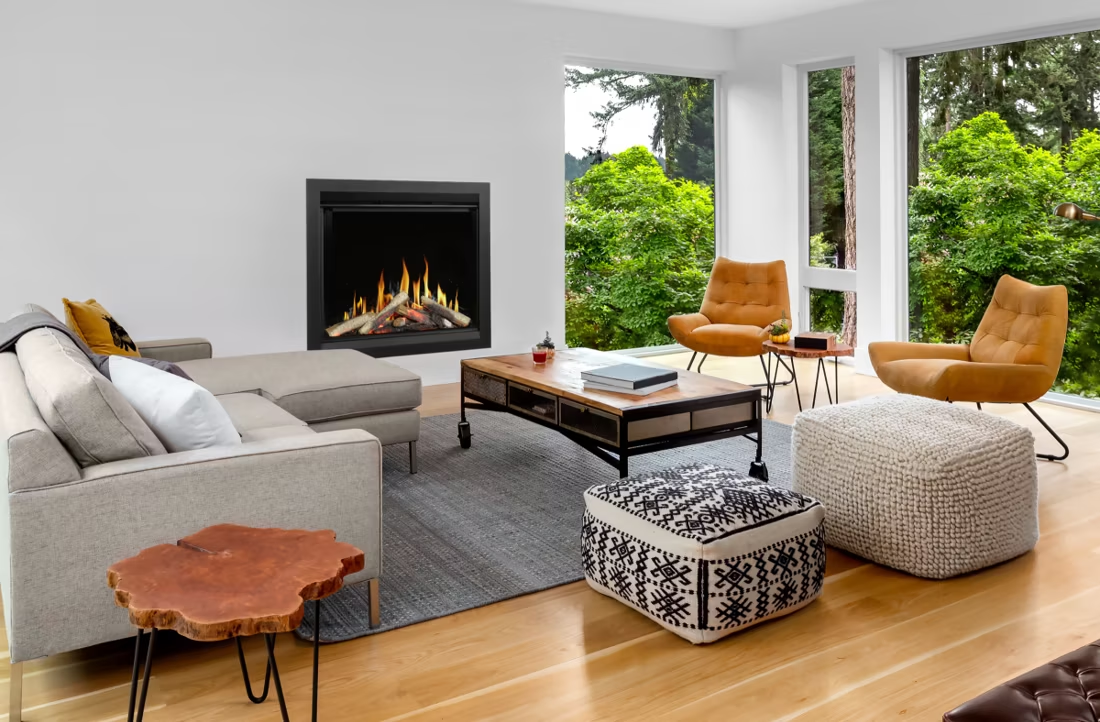
That's exactly the gap electric fireplaces fill. There's no chimney to build, no exterior venting to route through a shared rowhome wall, and no gas line to run—which also means no historic district review for masonry or venting changes. Metropolitan Edison (Met-Ed) serves York's electric customers at a residential rate around $0.1545 per kWh, and most electric fireplace inserts or wall units run on that circuit for pennies an hour. For zone heating a single room, converting a nonworking fireplace, or adding ambiance to a condo where an open flame isn't an option, electric is often the simplest project on this whole site.
Three steps. No salesperson until you're ready.
Tell us about your project
Your zip code, your situation, and the fuel you're leaning toward—or let the answers point you to one.
See what's actually available
The brands dealers within 100 miles genuinely carry—real options, never a catalog mirage.
Get your dealer & Project Guide
A trusted local dealer, plus the free Project Guide & Parts List that names every component of the job.
Frequently Asked Questions
How much does an electric fireplace installation cost in York?
A plug-in electric insert or freestanding unit that runs on a standard 120V outlet typically costs $150 to $1,200 installed, since there's no venting, gas line, or masonry work involved—often it's just placement and a cord. A built-in wall unit or a larger insert that requires a dedicated 240V circuit runs higher, generally $800 to $2,500, once an electrician is involved to run new wiring from the panel. Most York rowhomes and older downtown properties already have adequate panel capacity for a standard circuit, which keeps costs on the lower end compared to a gas or wood retrofit.
What size electric fireplace do I need for my York home?
Electric units are rated in heat output (typically 4,600–5,200 BTU/hr for a standard insert, roughly 400–600 square feet of supplemental heating) rather than sized to carry a whole house—that's appropriate for York's Zone 4A winters, where electric is usually a zone-heating or ambiance choice rather than the primary heat source. A single insert or wall unit comfortably heats a living room or den; larger wall-mounted linear units with higher wattage can stretch further but should still be treated as a supplement to your existing furnace, not a replacement for it. A local dealer can walk your space and confirm wattage against your room size.
Do I need a permit to install an electric fireplace in York?
If the unit plugs into an existing standard outlet, most York City and York County jurisdictions don't require a separate permit—it's treated like any other appliance. If your installer needs to run a new dedicated 240V circuit or add outlets near the unit, that electrical work does require a permit through the York City Bureau of Permits, Planning & Zoning or your local township building office, and should be pulled by a licensed electrician. Because electric units don't involve venting or masonry changes, homes in the Colonial Historic District avoid the exterior-alteration review that a wood or gas chimney project would trigger.
Electric vs. gas fireplace—which makes more sense in York?
Both are considered standard, mainstream choices for York homes, so the decision usually comes down to the building rather than the climate. Gas delivers higher heat output and a more traditional-looking flame, but it requires a gas line and venting—real construction if your rowhome or older downtown property doesn't already have gas plumbed in. Electric skips all of that: no venting, no gas line, and it can go almost anywhere there's an outlet or a simple circuit, which is why it's popular in condos, apartments, and historic rowhomes where altering the exterior wall isn't practical. If you already have a natural gas line to the house, gas is worth comparing; if you don't, electric is usually the faster and cheaper path.
What does it cost to run an electric fireplace in York?
At Met-Ed's residential rate of roughly $0.1545 per kWh, a typical 1,500-watt electric fireplace running on high costs about $0.23 per hour to operate—call it under $2 for a full evening of use. Most units let you run the flame effect alone, without the heater, for a fraction of that cost, which is common in shoulder-season months when York doesn't need extra heat but homeowners still want the ambiance. Compared to running a whole-house furnace, using an electric fireplace to zone-heat one room while keeping the thermostat lower elsewhere can meaningfully reduce a York winter heating bill.
What types of electric fireplaces are available for York homes?
The main categories are inserts (which slide into an existing but unused masonry fireplace opening—a common project in York's older housing stock), wall-mounted linear units (popular in newer construction and condo renovations for a low-profile, modern look), freestanding stoves (which mimic a wood stove's footprint without any venting), and mantel packages that bundle a unit with surround and shelving for a finished built-in look. Which one fits depends on whether you're converting an existing fireplace opening or adding heat to a room that's never had one—a local dealer can show you options for either scenario.
Does an electric fireplace need special wiring?
Smaller units (most inserts and freestanding stoves) run on a standard 120V, 15-amp household outlet—no special wiring needed if there's already an outlet nearby. Larger linear wall units and some higher-wattage inserts require a dedicated 240V circuit, which means an electrician will need to run new wire from your panel. In York's older rowhomes with original knob-and-tube or early-20th-century wiring, it's worth having an electrician confirm panel capacity before ordering a larger unit—this is a quick check most local dealers coordinate as part of the installation.
Is electric a good fit for York's rowhomes and historic downtown properties?
It's often the best fit. Many rowhomes in central York share walls with neighbors, which rules out venting-heavy options, and properties inside the Colonial Historic District face review for exterior changes like new chimneys or vent terminations. An electric insert dropped into an existing, unused fireplace opening—or a wall-mounted unit hung on an interior wall—avoids both problems entirely while still giving the room a real flame look and usable heat. It's also the most landlord- and condo-association-friendly option in York's rental-heavy downtown blocks.
How much maintenance does an electric fireplace need?
Very little compared to wood or gas. There's no chimney to sweep, no gas lines to inspect, and no combustion byproducts to vent. Maintenance is mostly dusting the unit, occasionally cleaning the glass front, and replacing LED lights every several years if the flame effect dims—most manufacturers rate the LED engines for 20,000+ hours of use. This low-maintenance profile is a big part of why electric appeals to York landlords and condo owners who don't want an annual service call.
Does an electric fireplace need a vent or chimney?
No—that's its superpower. An electric fireplace needs a wall and an outlet, period. No vent pipe, no gas line, no clearances to design around, which is why it works in bedrooms, offices, apartments, and walls where venting a gas or wood unit would be impractical or impossible. Installation is typically the simplest and least expensive of any fireplace type.
Can I put a TV above my fireplace?
Yes—with an asterisk. Fireplaces are hot and TVs don't like heat. Either put a mantel between them to deflect rising warmth, or choose a fireplace with heat-management technology that creates a cool zone on the wall above—the wall stays around 125 degrees, barely warm, while the room still gets full heat. If you like clean lines and don't want a mantel, heat management is the answer.
Can I install a fireplace myself?
If you're putting a fire in your house on purpose, it's best to work with an expert. Unless you're genuinely experienced in framing, gas line, vent pipe, and the national code on clearances to combustibles, have a professional do it—and ideally the same company that sells you the fireplace, so warranty, service, and liability all live under one roof.
What is an in-home preview and do I need one?
It's a visit where a hearth professional measures your space, confirms the model you picked actually works in your home, and walks the specs—framing, gas line, venting, finish work—before anything is ordered. Some details you just can't know until you see the house. Never make a down payment without one; it's the single most-skipped step that burns buyers.
Nearby Dealers
Hearth shops serving York and the surrounding area. Every listing shows whether it is a WhyFire partner, a dealer we have verified as authorized for the brands we recommend, or a local business carrying hearth products. No manufacturer pays for placement. How we verify dealers →
Se Outdoor & Design
Firestarters Custom Fireplace & Stove
Country Comfort Inc.
Bulls Supply Co, Inc
Todays Home And Leisure
Aes Hearthplace, Inc.
Aes Hearth & Patio - Camp Hill
Penn Stone
Kring's Hearth & Home - Lancaster
Electric Service in York
An electric fireplace's heater draws about 1,500 watts—pennies per hour at local rates.
Metropolitan Edison Co
Find your electric fireplace in York.
Tell us about your York home and we'll put together a free Project Guide & Parts List—the right unit, the wiring needs, and a trusted local dealer to install it.
Find Your Fireplace →