
Zone heat for Windber's long Somerset County winters.
With over 6,300 heating degree days a year, an electric fireplace gives Windber homes clean, no-maintenance supplemental warmth. Find the right unit and connect with a trusted local dealer.
Every Project Starts From One of These Five Situations
A practical add to whatever's already heating your home.
Windber sits at 1,685 feet in the Alleghenies of Somerset County, in climate zone 5A, where winter lows average 19°F and the region racks up more than 6,300 heating degree days a season—comparable to Madison, WI. That's a long, cold heating season, and most Windber homes are already running a primary furnace or boiler through it. Electric fireplaces don't compete with that system; they supplement it, adding zone heat and ambiance to a den, bedroom, or finished basement without touching the ductwork or venting.
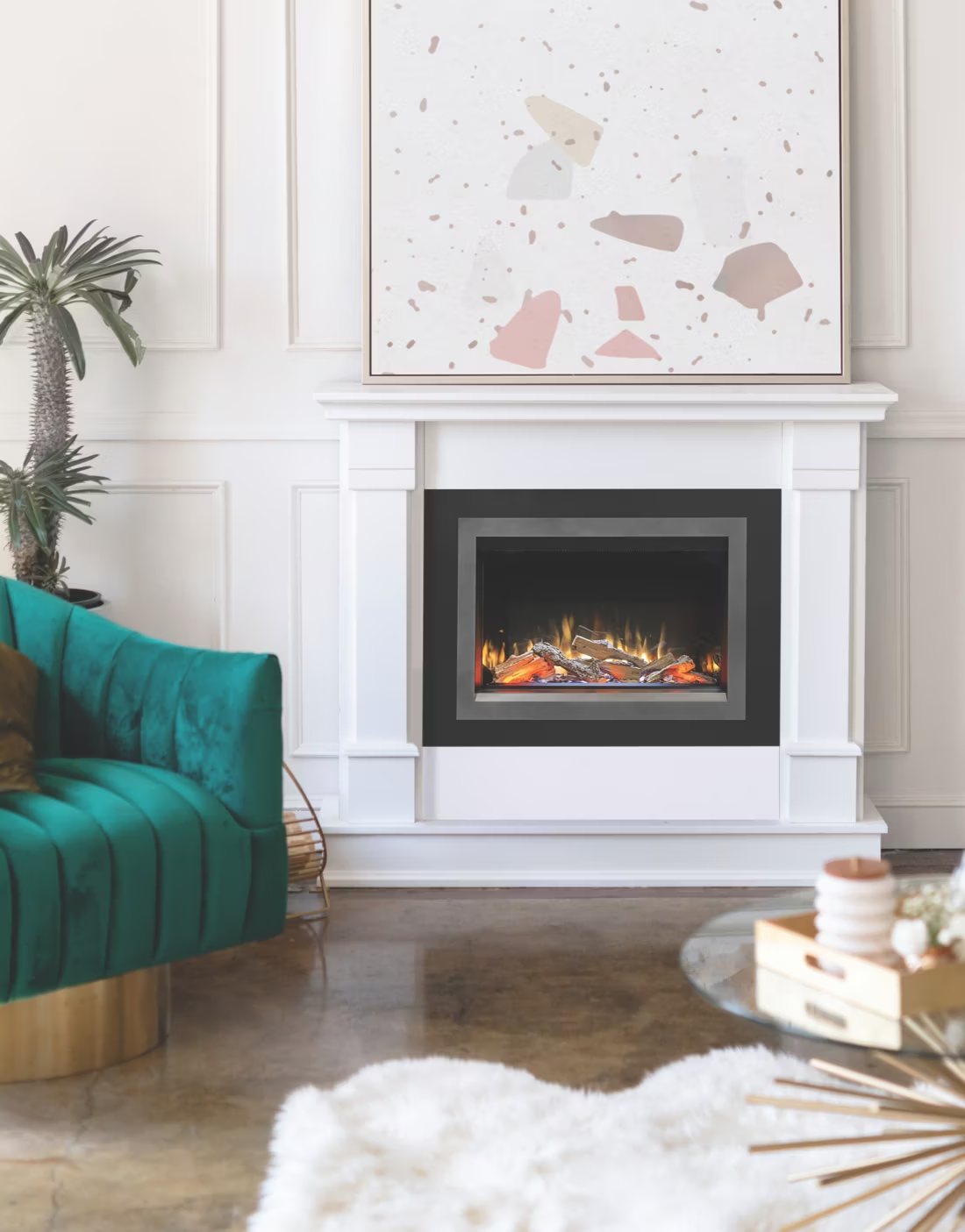
With no chimney, no gas line, and no combustion byproducts, an electric fireplace is the simplest hearth project available to Windber homeowners—most installs are essentially a 120V outlet and a mounting bracket. Electricity here comes from Pennsylvania Electric Co. in town or Somerset Rural Electric Cooperative in the surrounding townships, at a residential rate around 13.96 cents per kWh, which keeps day-to-day running costs modest for a unit used a few hours at a time rather than around the clock.
Three steps. No salesperson until you're ready.
Tell us about your project
Your zip code, your situation, and the fuel you're leaning toward—or let the answers point you to one.
See what's actually available
The brands dealers within 100 miles genuinely carry—real options, never a catalog mirage.
Get your dealer & Project Guide
A trusted local dealer, plus the free Project Guide & Parts List that names every component of the job.
Frequently Asked Questions
How much does an electric fireplace installation cost in Windber?
Most electric fireplace installs in Windber run $400 to $1,200. A plug-in freestanding unit or a wall-mounted model on an existing outlet sits at the low end—often a same-day job. Recessed or built-in units that require a new dedicated circuit, or a media-wall conversion with carpentry, land at the higher end. Because there's no venting or gas line involved, electric is consistently the least expensive hearth project in Somerset County, and most local dealers can install one in an afternoon.
Will an electric fireplace actually lower my heating bill in Windber?
It can, but the savings come from zone heating, not from replacing your furnace. If you use an electric fireplace to heat the room you're actually sitting in—a bedroom or den—while turning your furnace thermostat down a few degrees elsewhere in the house, you can see a real reduction on your Penn Electric or Somerset Rural Electric Co-op bill. At Windber's roughly $0.14/kWh rate, a typical 1,500-watt unit costs about 20 cents an hour to run. Used as a whole-home primary heat source through a 6,300-HDD winter, though, it won't compete with a furnace or heat pump on cost.
Do I need an electrician to install an electric fireplace in Windber?
Plug-in models don't require an electrician—any standard 120V outlet works, and many homeowners install them without help. Built-in or recessed units, especially larger ones drawing close to 1,500 watts continuously, often need a dedicated circuit, which does call for a licensed electrician. Somerset County doesn't typically require a building permit for a simple plug-in unit, but adding a new circuit or doing wall framing for a built-in installation may require an electrical permit—a local dealer can tell you which applies to your project.
What's the difference between an electric insert, a wall-mount, and a media wall unit?
An electric insert is sized to slide into an existing masonry fireplace opening, giving an old wood-burning fireplace a clean, maintenance-free replacement without touching the chimney. A wall-mount unit hangs flat against a wall like a large television, popular in newer or renovated Windber homes without an existing fireplace. A media wall or built-in unit is framed into a wall or cabinetry, often paired with a TV mount above it, and is the closest electric gets to a true fireplace centerpiece. For Windber's older housing stock with existing fireplace openings, an insert is usually the simplest retrofit.
Can an electric fireplace keep my house warm if the power goes out?
No—and this is worth planning around in Somerset County, where winter storms occasionally knock out power for hours or longer. Electric fireplaces are entirely dependent on the grid, so they offer zero backup heat during an outage. If backup heat during storms matters to you, many Windber homeowners pair an electric fireplace for everyday ambiance and zone heat with a wood or pellet stove elsewhere in the house—oak, hickory, maple, and cherry are all common regionally and burn well—for the nights when Penn Electric or Somerset Rural Electric Co-op lines actually go down.
Are electric fireplaces safe to leave running overnight or unattended?
Yes, more so than any combustion appliance. Electric fireplaces have no open flame, no carbon monoxide output, and no creosote buildup, and most modern units include automatic shut-off timers and overheat protection. That said, standard electrical safety rules still apply: don't run a unit on a damaged cord or overloaded outlet, and don't cover the heating vents. For a household with kids or pets, electric is generally the lowest-risk hearth option available.
Do electric fireplaces produce real heat, or just a flame effect?
Most models sold by local dealers do produce real, usable heat—typically 4,600 to 5,000 BTU from a standard 1,500-watt heating element, enough to comfortably warm a single room in the 300-400 square foot range. Nearly all units also let you run the flame visual with the heater switched off, useful in Windber's shoulder-season months (October, April) when you want the look of a fire without adding heat to a room that doesn't need it.
How long do electric fireplaces last, and what maintenance do they need?
A quality electric fireplace typically lasts 10 to 15 years with minimal maintenance—periodic dusting of the vents and an occasional LED light replacement on the flame effect are about the extent of it. There's no annual chimney sweep, no gas line inspection, and no combustion byproducts to worry about, which is part of why electric is popular as a low-commitment secondary heat source in Windber homes that already have a primary wood or gas system doing the heavy lifting.
Electric vs. pellet stove—which makes more sense for supplemental heat in Windber?
Electric fireplaces install in an afternoon with no venting, run on any outlet, and are the cheapest option up front, but they provide zero heat during a power outage and cost more per BTU to run at Windber's roughly $0.14/kWh rate. Pellet stoves, fed by regional brands like Energex, Hamer, or Greene Team pellet fuel, burn hotter and cheaper per BTU and can be paired with a battery backup for outages, but they need venting, a hopper to load, and periodic ash cleanout. For a low-effort accent in a bedroom or den, electric wins. For real supplemental heat through a Somerset County winter, pellet is worth the extra installation complexity.
Can I put a TV above my fireplace?
Yes—with an asterisk. Fireplaces are hot and TVs don't like heat. Either put a mantel between them to deflect rising warmth, or choose a fireplace with heat-management technology that creates a cool zone on the wall above—the wall stays around 125 degrees, barely warm, while the room still gets full heat. If you like clean lines and don't want a mantel, heat management is the answer.
Do electric fireplaces actually produce heat?
Yes—most put out around 4,800–5,000 BTUs from a standard outlet, which comfortably warms a bedroom, office, or den as a comfort-zone heater. What they won't do is carry a whole house the way wood, gas, or pellet can. Think of electric as ambiance-first with honest supplemental heat: flames on with no heat in July, flames plus warmth in January.
Can I install a fireplace myself?
If you're putting a fire in your house on purpose, it's best to work with an expert. Unless you're genuinely experienced in framing, gas line, vent pipe, and the national code on clearances to combustibles, have a professional do it—and ideally the same company that sells you the fireplace, so warranty, service, and liability all live under one roof.
Does a fireplace add value to my home?
On average, a fireplace adds back to the home about the same amount you spent installing it. Add the monthly savings from heating the rooms you actually use instead of the whole house—often hundreds of dollars a year—and the value case is strong before you even count what a fire does for how your family uses the room.
Nearby Dealers
Hearth shops serving Windber and the surrounding area. Every listing shows whether it is a WhyFire partner, a dealer we have verified as authorized for the brands we recommend, or a local business carrying hearth products. No manufacturer pays for placement. How we verify dealers →
Bantly Hardware
Heating World
Terrascape Supply
C.t.r. Supply
New Centerville Stove Works
Chimney Wizard Woodstoves
Electric Service in Windber
An electric fireplace's heater draws about 1,500 watts—pennies per hour at local rates.
Pennsylvania Electric Co
Somerset Rural Elec Coop, Inc
Find your electric fireplace in Windber.
Tell us a bit about your home and we'll match you with a local Windber-area dealer and send over your free Project Guide & Parts List—a plan for your electric fireplace project with the exact parts and your recommended installer.
Find Your Fireplace →