
Warm up your West Reading home—no chimney needed.
For West Reading's tightly-packed rowhomes and converted Victorians, an electric fireplace is often the only realistic upgrade path. Find the right unit and connect with a trusted local dealer.
Every Project Starts From One of These Five Situations
A borough of rowhomes built before central heat was standard.
West Reading is a half-square-mile borough of roughly 4,500 residents, packed with early-1900s brick rowhomes and Queen Anne and Victorian singles clustered around the Penn Avenue historic commercial district. Most of that housing stock predates central heating as we know it—many rowhomes never had a masonry fireplace built for solid fuel, and cutting a new chimney or vent pipe through a shared party wall or a historic facade is often impractical, if not restricted outright. That's a big part of why wood stoves and pellet stoves are essentially nonexistent here: there's no practical, code-compliant way to add venting to a mid-block rowhome without major structural work.
Electric fireplaces sidestep all of that. A plug-in or hardwired unit needs no chimney, no gas line, no combustion air, and no exterior penetration—which makes it one of the only true retrofit options for a narrow rowhome or a condo-converted Victorian. At West Reading's average winter low of 23°F and about 5,127 heating degree days a year, the climate here calls for solid supplemental heat during shoulder-season chill and occasional cold snaps—nowhere near what a place like Duluth, MN sees, but enough that a 1,500-watt electric insert earns its keep in a living room or den. Metropolitan Edison serves electric accounts in the borough at roughly $0.1545 per kWh, a number worth factoring in before you settle on a specific unit's wattage.
Three steps. No salesperson until you're ready.
Tell us about your project
Your zip code, your situation, and the fuel you're leaning toward—or let the answers point you to one.
See what's actually available
The brands dealers within 100 miles genuinely carry—real options, never a catalog mirage.
Get your dealer & Project Guide
A trusted local dealer, plus the free Project Guide & Parts List that names every component of the job.
Frequently Asked Questions
How much does it cost to install an electric fireplace in West Reading?
It depends heavily on the type. A freestanding plug-in unit runs $150-$600 and needs no installation beyond plugging it into a standard 120V outlet—a common choice for renters in West Reading's rowhome stock. A wall-mounted unit with hidden wiring typically runs $800-$1,800 once you factor in a licensed electrician. A built-in or recessed unit set into an existing rowhome wall or mantel surround, with carpentry and dedicated circuit work, generally lands between $1,500 and $3,500. None of these require the chimney, gas line, or venting work that drives up costs for wood or gas installs elsewhere in Berks County.
What's the difference between a plug-in electric fireplace and a hardwired built-in?
A plug-in unit is a self-contained cassette or freestanding stove that runs off a standard outlet—no electrician needed, and it moves with you if you rent. A hardwired built-in is recessed into a wall or media console with concealed wiring, often on its own dedicated circuit, and needs a licensed electrician to install safely and up to code. For West Reading's rental-heavy rowhome blocks, plug-in units are popular precisely because they don't touch the wall or wiring. For owner-occupied homes doing a mantel or media wall project, hardwired built-ins give a cleaner, more permanent look.
Do I need a permit for an electric fireplace in West Reading?
A plug-in, freestanding electric fireplace needs no permit at all—it's treated the same as any other appliance you plug into an outlet. A hardwired built-in unit, especially one that requires a new circuit or breaker, generally needs an electrical permit through West Reading Borough's code enforcement office. A licensed electrician handling the wiring will typically pull that permit as part of the job. Because there's no combustion involved, you won't deal with the venting or chimney permitting that comes with wood or gas installs.
How much will it cost to run an electric fireplace in West Reading?
At Metropolitan Edison's residential rate of about $0.1545 per kWh, a typical 1,500-watt electric fireplace running on its heat setting for 4 hours an evening uses about 6 kWh a day—roughly $0.93 daily, or around $28 a month if you run it nightly through a Berks County winter. Most units also have a flame-only mode that uses only a few watts, so you can enjoy the ambiance without the heating cost when you don't need extra warmth.
Why don't more West Reading homes have wood or pellet stoves?
West Reading's housing stock works against solid-fuel appliances. The borough is built almost entirely of attached and semi-attached rowhomes and narrow-lot Victorians with shared walls, and there's no nearby woodlot or rural acreage—this is a dense, walkable borough inside the Reading urban area, not a wood-cutting community. A handful of standalone older homes may still have a legacy masonry fireplace suitable for an occasional cordwood fire, but new wood stove or pellet stove installations are rare here simply because there's rarely a practical place to run the venting.
What electric fireplace styles work best in a West Reading rowhome?
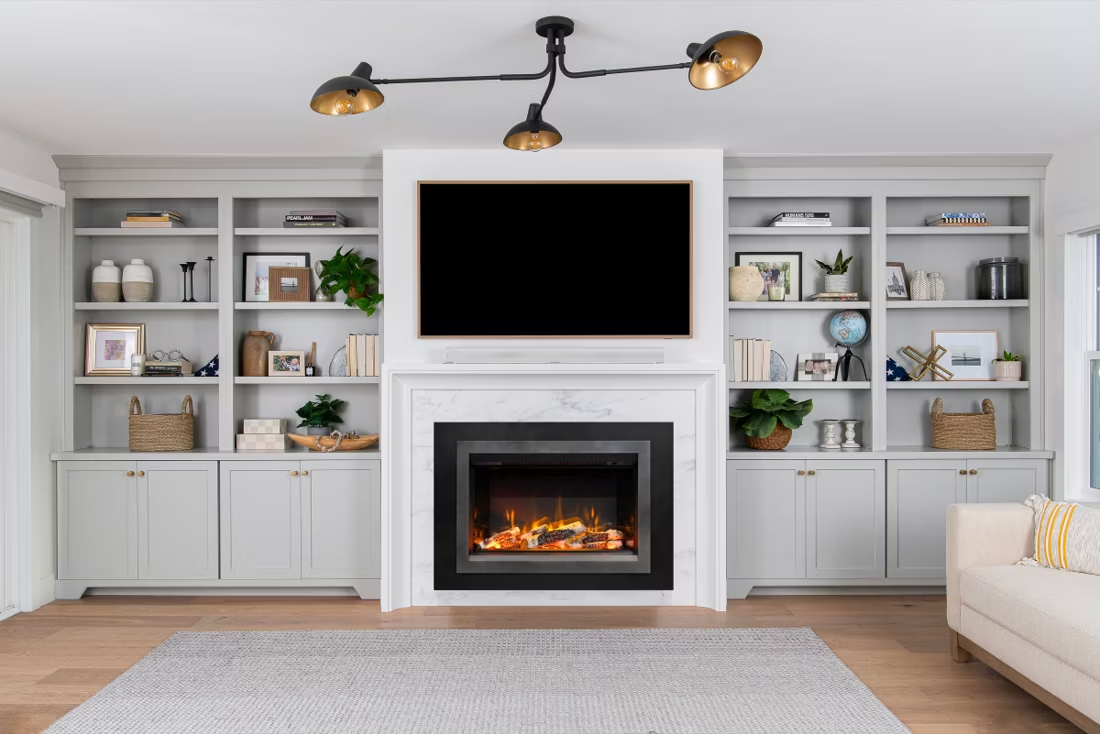
Linear wall-mounted units from brands like Dimplex, Napoleon, and Touchstone fit well against the narrow living room walls typical of West Reading's 16-to-18-foot-wide rowhomes, and they read as a modern focal point without eating up floor space. For front parlors with more traditional detailing, a mantel package with an electric insert can echo the room's original Victorian trim. For renters or anyone who can't modify a wall, a freestanding stove-style unit gives you real heat and flame effect with zero installation.
Will an electric fireplace heat my whole home?
No—and it's not designed to. With winter lows averaging 23°F and about 5,127 heating degree days a year, West Reading gets cold enough to need real heat, but electric resistance heat is expensive to run at whole-house scale compared to a furnace or heat pump. Think of an electric fireplace as zone heat for the room you actually live in—a den, front parlor, or main living room—paired with whatever central heating system your home already has.
Will my electric fireplace work during a power outage?
No. Unlike a gas fireplace with battery-backed ignition, an electric fireplace is entirely dependent on grid power and will shut off completely the moment the power drops. Berks County sees occasional ice storms and downed lines that knock out Metropolitan Edison service for a day or more, so if backup heat during an outage matters to you, an electric fireplace shouldn't be your only plan—talk to a local dealer about pairing it with a battery-backup gas option or a generator setup.
Electric vs. gas fireplace—which is right for my West Reading home?
Gas delivers more heat output and, with the right ignition system, can keep running during a power outage—but it requires a vent path and often a gas line extension, which is a real constraint in a mid-block rowhome with shared walls and limited exterior access. Electric needs neither, which is why it's the more common retrofit choice in West Reading's historic housing stock, particularly for rentals and condo-converted Victorians. If your home already has gas service and a workable vent route, it's worth comparing both with a local dealer; if you're in a tight rowhome without easy venting access, electric is usually the simpler, faster path.
Can I put a TV above my fireplace?
Yes—with an asterisk. Fireplaces are hot and TVs don't like heat. Either put a mantel between them to deflect rising warmth, or choose a fireplace with heat-management technology that creates a cool zone on the wall above—the wall stays around 125 degrees, barely warm, while the room still gets full heat. If you like clean lines and don't want a mantel, heat management is the answer.
Does an electric fireplace need a vent or chimney?
No—that's its superpower. An electric fireplace needs a wall and an outlet, period. No vent pipe, no gas line, no clearances to design around, which is why it works in bedrooms, offices, apartments, and walls where venting a gas or wood unit would be impractical or impossible. Installation is typically the simplest and least expensive of any fireplace type.
Can a fireplace actually lower my heating bill?
Yes—by creating a comfort zone. A furnace heats every square foot of the house just to warm the one room you're in; a gas fireplace on low burns roughly a sixth of the gas a typical furnace does. Set the furnace around 55–60 degrees as a baseline, then heat the rooms your family actually uses. Families who heat this way commonly save $20–$60 a month.
Does a fireplace add value to my home?
On average, a fireplace adds back to the home about the same amount you spent installing it. Add the monthly savings from heating the rooms you actually use instead of the whole house—often hundreds of dollars a year—and the value case is strong before you even count what a fire does for how your family uses the room.
Nearby Dealers
Hearth shops serving West Reading and the surrounding area. Every listing shows whether it is a WhyFire partner, a dealer we have verified as authorized for the brands we recommend, or a local business carrying hearth products. No manufacturer pays for placement. How we verify dealers →
A Chimney King
Keystone Custom Decks
Sauder's Hardscape Supply
Scandia Stoves Of Pa Inc.
Krings Hearth & Home - Bechtelsville
Peak Distribution
Pennsburg Ace Hardware
Ds Stoves
Dewald & Lengle Hardware Inc.
Cressona Agway Store
Electric Service in West Reading
An electric fireplace's heater draws about 1,500 watts—pennies per hour at local rates.
Metropolitan Edison Co
Find your electric fireplace in West Reading.
Tell us a bit about your rowhome or condo and we'll match you with the right electric fireplace or insert, plus a free Project Guide & Parts List with your recommended local dealer.g
Find Your Fireplace →