
Electric Warmth for Every Room in Waynesburg.
No chimney, no gas line, no permit hassle—just plug in a fireplace and add real supplemental heat to a Waynesburg home. Find the right unit and connect with a trusted local dealer.
Every Project Starts From One of These Five Situations
The no-chimney option for Greene County homes.
Waynesburg sits in the hills of Greene County at just over 1,000 feet, where winters bring average lows around 19°F and nearly 5,750 heating degree days each season—enough cold to matter, but not the kind of Bozeman, MT or Duluth, MN extreme that demands a whole-house wood-burning solution. A lot of the housing stock here is older: century-old homes near the courthouse square, farmhouses scattered through the county, and ranch-style homes built without a chimney or a gas stub. For those houses, an electric fireplace is often the most realistic upgrade.
West Penn Power Company serves the electric grid here at a residential rate around 15.45 cents per kWh, which makes an electric fireplace a genuinely useful zone-heating tool: run a 1,500-watt insert in a family room or finished basement to take the edge off while the thermostat stays lower elsewhere in the house. There's no venting to install, no gas line to run, and no wood to split or haul—just a unit that mounts on a wall, drops into an existing fireplace opening, or sits as a freestanding cabinet. It won't replace a furnace on the coldest January nights, but it solves a real problem for rooms that are otherwise hard or expensive to heat.
Three steps. No salesperson until you're ready.
Tell us about your project
Your zip code, your situation, and the fuel you're leaning toward—or let the answers point you to one.
See what's actually available
The brands dealers within 100 miles genuinely carry—real options, never a catalog mirage.
Get your dealer & Project Guide
A trusted local dealer, plus the free Project Guide & Parts List that names every component of the job.
Frequently Asked Questions
How much does an electric fireplace installation cost in Waynesburg?
Plug-in electric fireplaces and freestanding units generally run $300 to $1,200 installed, since most just need an existing 15- or 20-amp outlet and no electrician. Built-in wall units or larger inserts that draw close to 1,500 watts often need a dedicated circuit, which is common work for older Waynesburg homes with original panels near the downtown core—expect to add $200 to $600 for an electrician to run that circuit. Local hearth dealers can tell you quickly which category your chosen unit falls into during a walkthrough.
Will an electric fireplace actually lower my heating bill in Waynesburg?
It can, if you use it the way it's designed to be used—as zone heat, not a furnace replacement. At West Penn Power's residential rate of about 15.45 cents per kWh, a 1,500-watt heater costs roughly 23 cents an hour to run. Heating just the room you're in and setting the thermostat back a few degrees elsewhere in the house is where the savings show up, especially during Waynesburg's long stretch of near-5,750 heating-degree-day winters. Running an electric fireplace as the sole heat source for an entire home, on the other hand, usually costs more than a furnace or wood stove would over a full season.
Do I need a dedicated electrical circuit for an electric fireplace?
Most full-size electric fireplaces and inserts draw close to 1,500 watts on the heater setting, which is enough to trip a shared circuit if you're also running other appliances on it. Manufacturers typically recommend a dedicated 15- or 20-amp circuit for these units. Many of Waynesburg's older homes—particularly farmhouses and houses built before the 1960s near the historic district—have panels that are already near capacity, so it's worth having a local electrician confirm available capacity before you buy. Smaller plug-in units under 1,000 watts are more forgiving and usually work fine on a standard household circuit.
Electric vs. wood—which makes more sense for my Waynesburg home?
Wood remains a strong option in Greene County, where oak, hickory, maple, and cherry are all common locally and cutting permits through the Monongahela National Forest run about $20 per cord during the May-to-October season. Wood also keeps working during a winter power outage, which matters in a rural county where outages can stretch for hours after an ice storm. Electric fireplaces trade that off for convenience: no splitting, hauling, or ash cleanup, no chimney to maintain, and installation in literally any room with an outlet—including condos, apartments, and manufactured homes where a wood stove isn't practical or permitted. Plenty of Waynesburg households end up with both: wood for backup heat and ambiance, electric for a low-maintenance living room or bedroom.
Can I install an electric fireplace in a home without a chimney?
Yes—that's the main reason electric fireplaces work so well in this area. A number of homes in Greene County, especially ranch-style houses and manufactured homes outside Waynesburg's older downtown blocks, were built without a masonry chimney or fireplace opening. Wall-mounted electric units, freestanding electric stoves, and mantel-package electric fireplaces all install with zero clearance to combustibles and no venting whatsoever, since they produce heat electrically rather than by combustion. That makes them one of the only realistic fireplace options for a home that was never built with a flue.
What size electric fireplace do I need for my room?
Most electric fireplace heaters are rated for roughly 400 to 1,000 square feet of supplemental heating, depending on wattage and the room's insulation and ceiling height. A 1,500-watt unit is standard for a typical living room or finished basement in a Waynesburg home; smaller 750- to 1,000-watt units suit bedrooms or bonus rooms. Keep in mind the wattage rating governs heat output—the flame effect and cabinet size are a separate, purely visual choice, so you can pick a larger-looking unit without necessarily paying for more heating capacity than the room needs.
Will my electric fireplace still work during a power outage?
No—this is the honest tradeoff. Electric fireplaces require grid power to run the heater, blower, and flame effect, so they go dark the moment the power does. In rural Greene County, winter ice storms can knock out West Penn Power service for hours at a stretch, so a household relying on electric heat as its only backup plan is exposed during exactly the kind of weather when heat matters most. If backup heat during outages is a priority, pairing an electric fireplace for daily convenience with a wood stove or fireplace insert elsewhere in the house covers both bases.
Are there rebates or utility programs for electric fireplaces in Waynesburg?
West Penn Power doesn't currently offer a rebate specific to electric fireplaces, since they're classified as supplemental heaters rather than whole-home HVAC equipment. It's still worth checking West Penn Power's residential energy-efficiency programs directly, as offerings change year to year and sometimes include incentives for smart thermostats or electrical panel upgrades that would support a larger built-in unit. Local hearth dealers can also flag any state-level Pennsylvania energy programs that happen to apply at the time you're buying.
Electric vs. propane—which is right for my home?
Since natural gas service is limited outside Waynesburg's core, propane is the common alternative fuel for households here, and a propane fireplace puts out significantly more heat than an electric unit—enough to serve as real supplemental or even primary heat in a cold room. Electric fireplaces can't match that output, but they skip the tank, gas line, and annual servicing that propane requires, and they install in about an hour versus a multi-trade propane hookup. For a room that just needs ambiance and light supplemental warmth, electric is simpler; for a room that needs to carry real heating load on a 19-degree Greene County night, propane usually performs better.
Can I put a TV above my fireplace?
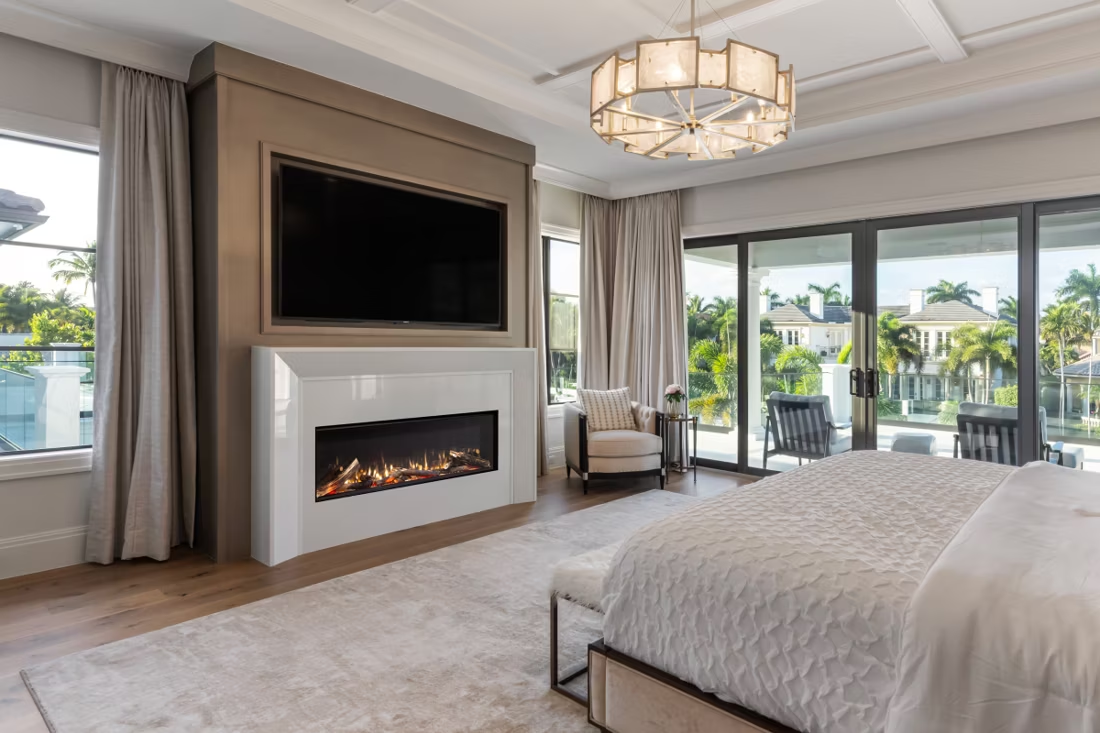
Yes—with an asterisk. Fireplaces are hot and TVs don't like heat. Either put a mantel between them to deflect rising warmth, or choose a fireplace with heat-management technology that creates a cool zone on the wall above—the wall stays around 125 degrees, barely warm, while the room still gets full heat. If you like clean lines and don't want a mantel, heat management is the answer.
What fireplace styles should I know before shopping?
Four cover most of the market: screen-front traditional (mesh front, open feel, fits craftsman homes), traditional door set (the classic look you grew up with), modern linear (wide, low, the statement piece for entertaining), and clean face contemporary (no trim—your tile or stone runs right to the fire's edge). Walk in knowing those four terms and you're ahead of most buyers.
Does a fireplace add value to my home?
On average, a fireplace adds back to the home about the same amount you spent installing it. Add the monthly savings from heating the rooms you actually use instead of the whole house—often hundreds of dollars a year—and the value case is strong before you even count what a fire does for how your family uses the room.
Can a fireplace actually lower my heating bill?
Yes—by creating a comfort zone. A furnace heats every square foot of the house just to warm the one room you're in; a gas fireplace on low burns roughly a sixth of the gas a typical furnace does. Set the furnace around 55–60 degrees as a baseline, then heat the rooms your family actually uses. Families who heat this way commonly save $20–$60 a month.
Nearby Dealers
Hearth shops serving Waynesburg and the surrounding area. Every listing shows whether it is a WhyFire partner, a dealer we have verified as authorized for the brands we recommend, or a local business carrying hearth products. No manufacturer pays for placement. How we verify dealers →
Bottled Gas Service
Scenery Hill Hardware
Samson Glass And Mirror
Clear Water Pools LLC
The Chimney Guy LLC
Koval Building Supply-Uniontown
Cam-Rock
Electric Service in Waynesburg
An electric fireplace's heater draws about 1,500 watts—pennies per hour at local rates.
West Penn Power Company
Find your electric fireplace in Waynesburg.
Tell us a bit about your home and we'll put together a free Project Guide & Parts List—the right unit, the electrical requirements, and your recommended local dealer in the Waynesburg area.
Find Your Fireplace →