
Reliable gas heat for Wayne County's long, cold winters.
Winter lows averaging 14°F and a long, hard heating season mean Wayne County homes—from Honesdale to the camps around Lake Wallenpaupack—need heat that doesn't quit. Find the right gas unit and get matched with a trusted local dealer.
Every Project Starts From One of These Five Situations
Propane does the heavy lifting where natural gas mains don't reach.
Wayne County sits in the far northeastern corner of Pennsylvania on the Pocono Plateau, bordering New York State, with Honesdale as the county seat and Lake Wallenpaupack drawing a heavy mix of year-round residents and seasonal lake homes. At roughly 12,900 people spread across a mostly rural landscape, this is a county of long driveways and township roads rather than dense gas-line infrastructure. Winters here run cold—a 14°F average winter low and a long, hard heating season put Wayne County in the same cold-climate territory as Burlington, Vermont, not the mild Mid-Atlantic image many picture for Pennsylvania.
Most of Wayne County has little to no natural gas main service outside pockets of Honesdale Borough, which means propane—delivered and stored in an above-ground or buried tank—is the standard fuel for gas fireplaces, inserts, and stoves throughout the county. That's not a downside: modern propane-fired direct-vent units perform identically to natural gas equivalents, and for lake properties around Wallenpaupack that sit empty for stretches in winter, a propane fireplace with reliable ignition can serve as both ambiance and legitimate backup heat when a place is closed up for weeks at a time.
Three steps. No salesperson until you're ready.
Tell us about your project
Your zip code, your situation, and the fuel you're leaning toward—or let the answers point you to one.
See what's actually available
The brands dealers within 100 miles genuinely carry—real options, never a catalog mirage.
Get your dealer & Project Guide
A trusted local dealer, plus the free Project Guide & Parts List that names every component of the job.
Frequently Asked Questions
How much does a gas fireplace installation cost in Wayne County?
Most gas fireplace and insert installations in Wayne County run roughly $3,500 to $9,000, with the spread driven mainly by whether you already have a propane tank and regulator in place. Converting an existing masonry fireplace to a direct-vent propane insert with tank and line already sized for the house sits at the lower end. New construction, a fresh propane tank installation, or a build-out where the unit sits away from an existing chimney and needs new venting run through a wall or roof pushes toward the higher end. Lake Wallenpaupack camps and seasonal properties sometimes carry a modest travel or scheduling premium given the distance from Honesdale-based dealers.
Can I convert my existing wood fireplace to gas?
Yes—it's a common project for older farmhouses and lake cottages throughout Wayne County that still have a working masonry chimney but want to retire the wood-hauling and ash cleanup. A propane insert goes into the existing firebox, usually with a stainless liner run up the flue for proper direct venting. Because most of the county runs on propane rather than natural gas, the conversion also typically means adding or connecting to a propane tank if the home doesn't already have one for a furnace, water heater, or range. Expect this to land in the same $3,500-$9,000 range as a standard install, depending on tank work.
Do I need natural gas, or is propane the standard here?
For nearly all of Wayne County, propane is the standard—natural gas mains only reach limited pockets within Honesdale Borough, and even there, coverage is far from universal. If you're outside town or anywhere near Lake Wallenpaupack, Hawley, or the rural townships, plan on propane from the start. The good news is that nearly every gas fireplace, insert, and stove on the market today can be configured for propane with the correct orifice and regulator, so fuel type doesn't limit your options—it just determines whether you're coordinating with a propane supplier or, in the rare case you're in a natural gas pocket, the local utility.
Will my gas fireplace work during a power outage?
Most direct-vent gas fireplaces with intermittent pilot ignition (IPI) include a battery backup that keeps the fireplace operational when the power drops—which matters in Wayne County, where ice storms and downed lines during the Pocono Plateau's harsher winter systems can knock out power for a day or more in outlying townships. Valor fireplaces take it a step further: their pilot assembly generates its own electricity through the thermocouple, so there's no battery to remember or replace. For a lake home that sits unattended for stretches of winter, that self-powering design is worth asking your local dealer about specifically.
What's the difference between a gas fireplace, gas insert, and gas stove?
A gas fireplace is a fully built-in unit framed into a wall—the right choice for new construction or a remodel without an existing masonry opening. A gas insert slides into an existing masonry fireplace and uses a liner run through your existing chimney, turning an old wood-burning hearth into a sealed, efficient heat source. A gas stove is freestanding, sitting on its own hearth pad like a wood stove but burning propane or natural gas. Wayne County's older farmhouses and lake cottages, many built with a masonry fireplace already in place, are frequently better candidates for an insert than a full fireplace rebuild.
Do I need a permit to install a gas fireplace in Wayne County?
Yes, in most cases—a building permit and, if new gas line or propane piping is involved, a separate mechanical permit. Wayne County itself doesn't run a single unified building department for every property; permitting is typically handled at the township or borough level, so a job in Honesdale Borough goes through the borough office while a job in one of the county's rural townships goes through that township's zoning or code officer. If you're adding a new propane tank, NFPA 58 sets minimum clearance distances from the house, property lines, and any ignition sources, and your propane supplier will usually help confirm tank placement meets code before delivery.
What's the difference between vented and vent-free gas fireplaces?
Vented (direct-vent) gas fireplaces draw combustion air from outside and exhaust it back outside through a sealed pipe—they run cleaner, produce real usable heat, and are code-compliant everywhere, including Pennsylvania. Vent-free units burn fuel directly into the room without external venting; they're legal in Pennsylvania but come with strict room-size minimums, required oxygen depletion sensors, and ventilation rules, and they add moisture and trace combustion byproducts to indoor air. For Wayne County's well-sealed, cold-climate homes—where indoor air quality already gets less turnover in a tightly closed-up winter house—direct-vent units are the more common and generally recommended choice. Local dealers can walk through both if you're weighing a smaller installation.
How often should my gas fireplace be serviced?
Plan on an annual inspection, ideally before the coldest stretch of the season sets in. A certified technician checks the burner, pilot assembly, gas connections, and venting, and cleans the glass and interior—a much lighter job than a wood chimney sweep but just as important for safe, efficient operation. Expect to pay somewhere in the $150-$250 range for a standard annual service call. For seasonal Lake Wallenpaupack properties that sit closed for part of the year, it's worth scheduling service in fall before opening the place up for winter use, rather than discovering an issue mid-visit.
Gas vs. wood—which is right for my Wayne County home?
Wayne County has no air quality restrictions on wood burning, and the county's oak, hickory, maple, and cherry hardwoods make for a strong, long-burning fire—wood remains a genuinely practical primary or backup heat source here, especially for year-round residents who want heat that works with the power out. Gas, run on propane for nearly everyone outside a small Honesdale pocket, offers instant on-off convenience with no wood handling, which suits busy households and lake properties that aren't visited every week. A fair number of local homes run both: gas in the main living space for daily convenience, wood or a pellet stove elsewhere as backup—pellet fuel from regional suppliers like Energex, Hamer Pellet Fuel, or Greene Team Pellet Fuel is widely available in the area if you're weighing that option too.
What's the difference between an insert and a zero-clearance fireplace?
An insert is a fireplace that slides into a pre-existing wood-burning fireplace—if you don't have one, there's nothing to insert it into. A zero-clearance fireplace is built into a framed wall, which makes it the answer for remodels and new construction. Simple test: existing masonry fireplace means insert; blank or framed wall means zero-clearance.
Can I put a TV above my fireplace?
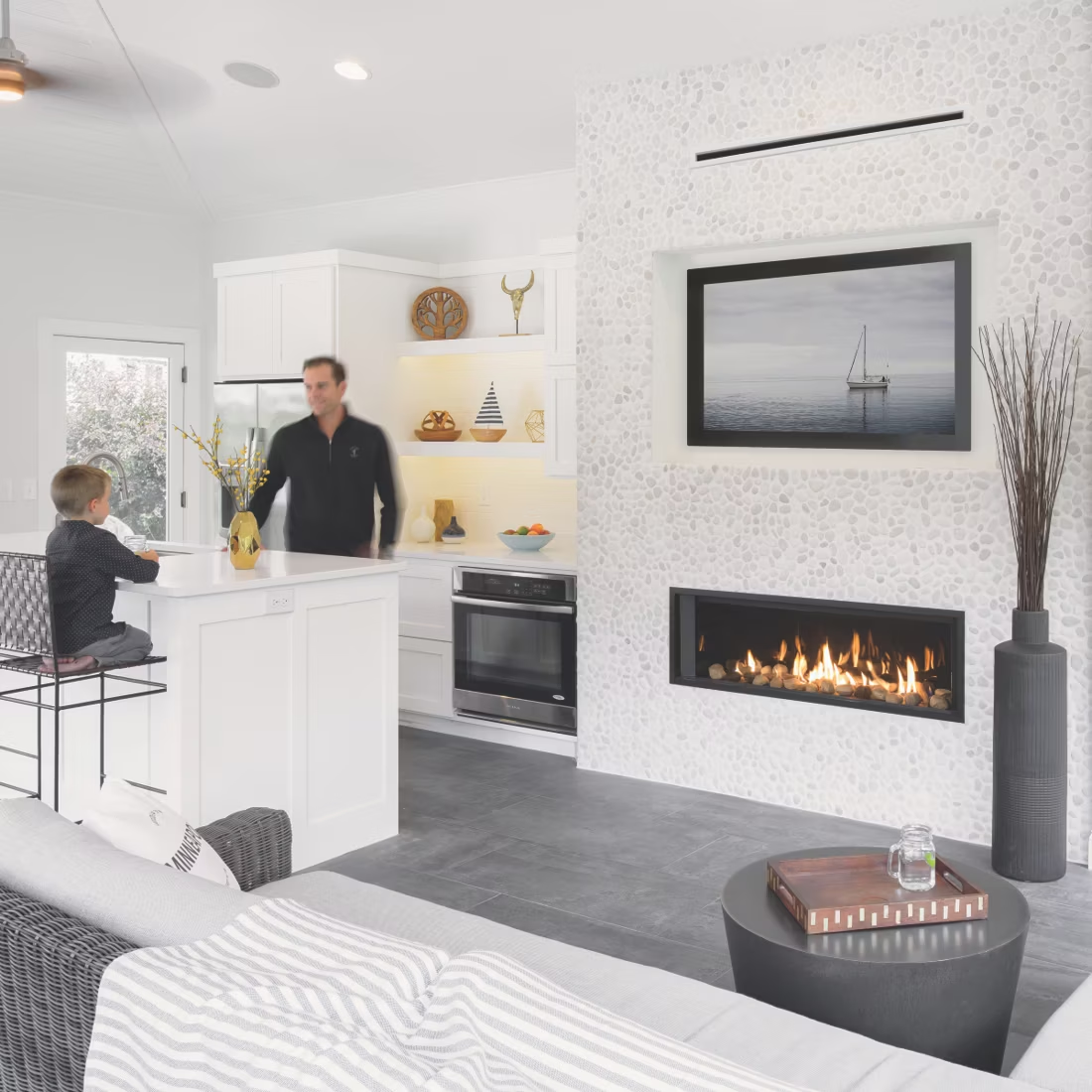
Yes—with an asterisk. Fireplaces are hot and TVs don't like heat. Either put a mantel between them to deflect rising warmth, or choose a fireplace with heat-management technology that creates a cool zone on the wall above—the wall stays around 125 degrees, barely warm, while the room still gets full heat. If you like clean lines and don't want a mantel, heat management is the answer.
Does a fireplace add value to my home?
On average, a fireplace adds back to the home about the same amount you spent installing it. Add the monthly savings from heating the rooms you actually use instead of the whole house—often hundreds of dollars a year—and the value case is strong before you even count what a fire does for how your family uses the room.
Can a fireplace actually lower my heating bill?
Yes—by creating a comfort zone. A furnace heats every square foot of the house just to warm the one room you're in; a gas fireplace on low burns roughly a sixth of the gas a typical furnace does. Set the furnace around 55–60 degrees as a baseline, then heat the rooms your family actually uses. Families who heat this way commonly save $20–$60 a month.
Stove and Fireplace Dealers in Wayne County
Listings include WhyFire partner dealers, dealers we have verified as authorized for the brands we recommend, and established local businesses that carry hearth products. Every listing shows which one it is. The ones marked Preferred run on WhyFire's software, so they can show you real pricing and book your appointment right here. No manufacturer pays for placement. How we verify dealers →
Integrity Chimney Service
Spring Hill Services
Find your gas fireplace in Wayne County.
Tell us a bit about your home and we'll match you with the right gas fireplace, insert, or stove, and hand you a free Project Guide & Parts List with the exact parts—including the vent kit—and a recommended local dealer.
Find Your Fireplace →