
Add real warmth to any room in Venango County, without the venting.
From the Victorian storefronts of Oil City to the newer builds around Cranberry Township, electric fireplaces bring instant zone heat and real flame-effect ambiance to homes across Venango County. Find the right unit and connect with a trusted local dealer.
Every Project Starts From One of These Five Situations
Instant warmth, no chimney required.
Venango County sits in climate zone 5A with a heating season that runs long and cold, with average winter lows around 18°F—a heating season not far off from what Buffalo, NY sees each winter. Franklin and Oil City are full of pre-1940 housing stock, much of it built when coal or oil furnaces were the norm and masonry chimneys were shared between multiple flues. Retrofitting one of those chimneys for a new wood-burning appliance can mean a full liner replacement; an electric fireplace insert sidesteps that entirely, dropping into an existing fireplace opening or a bare wall with no venting, no gas line, and no masonry work.
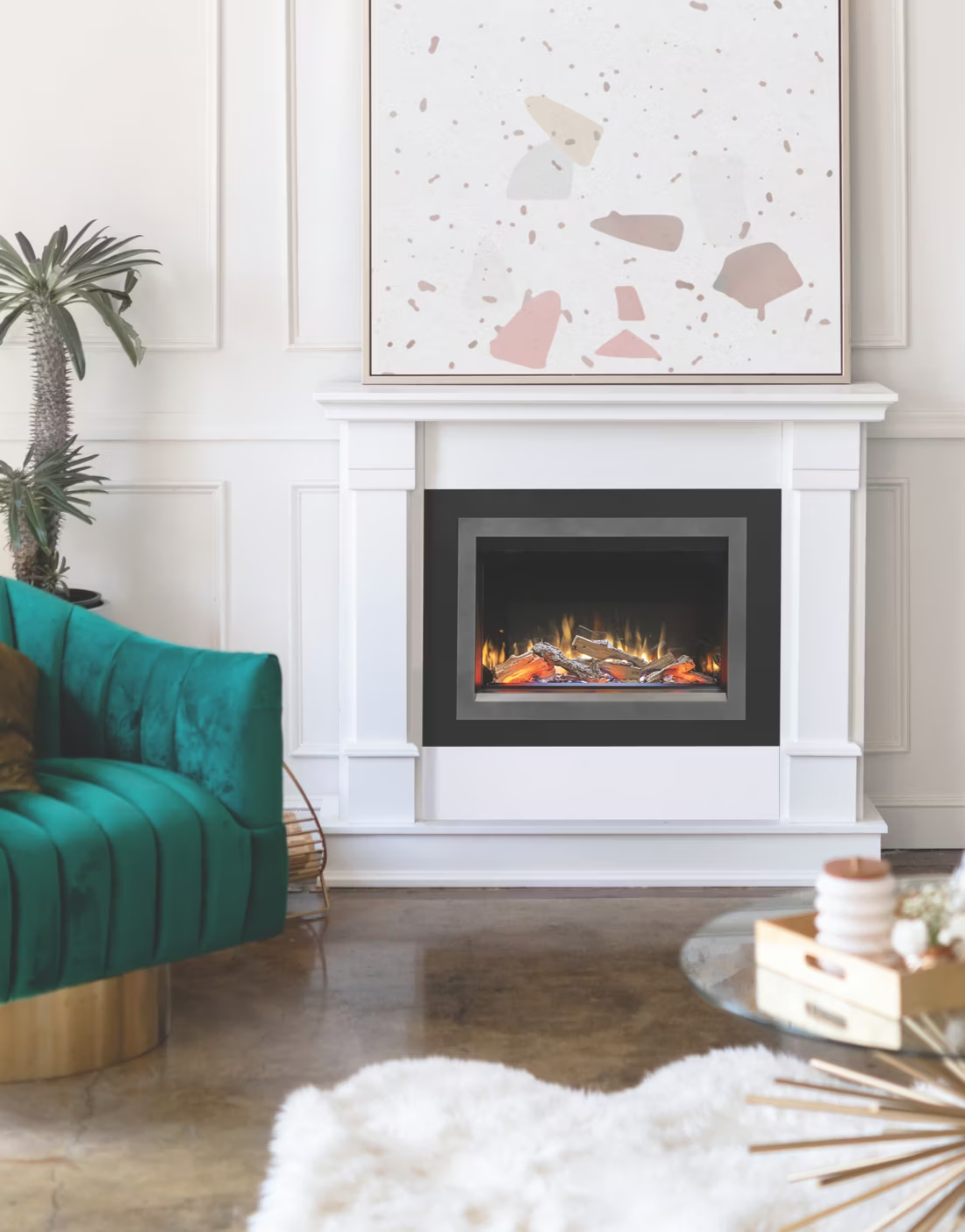
Electric fireplaces in Venango County are almost always a supplemental heat story rather than a whole-house one. Most homes here are heated primarily by fuel oil, propane, or an electric furnace, with power delivered through Penelec (FirstEnergy)—and resistance heat costs more per BTU than heating oil or wood. Where an electric unit earns its place is zone heating: warming up a finished basement in Seneca, a converted sunroom in Cranberry Township, or a living room in an older Oil City rowhouse without running the whole furnace harder. It's also the only fireplace option in this county that typically needs zero permitting for the unit itself and can be installed in an afternoon.
Three steps. No salesperson until you're ready.
Tell us about your project
Your zip code, your situation, and the fuel you're leaning toward—or let the answers point you to one.
See what's actually available
The brands dealers within 100 miles genuinely carry—real options, never a catalog mirage.
Get your dealer & Project Guide
A trusted local dealer, plus the free Project Guide & Parts List that names every component of the job.
Frequently Asked Questions
How much does an electric fireplace installation cost in Venango County?
A plug-in electric insert or wall-mount unit runs $300 to $900 installed, since most plug into a standard 15-amp outlet with no electrical work required. A built-in electric fireplace set into a custom mantel or wall, which usually needs a dedicated 20-amp circuit run by a licensed electrician, runs $1,200 to $2,500 depending on how far the wiring has to travel and whether drywall or trim carpentry is involved. Homes in older Franklin or Oil City housing stock with knob-and-tube or aging panels sometimes need panel work first, which adds to the electrician's portion of the bid.
How much room can an electric fireplace actually heat?
Most electric fireplaces are rated to supplement heat in roughly 400 to 1,000 square feet—enough for a living room, bedroom, or finished basement, but not a whole Venango County farmhouse in January. Given the county's average winter lows around 18°F and a heating season that runs from October into April, think of an electric unit as taking the edge off one room while your oil, propane, or electric furnace still carries the rest of the house. If you're trying to heat a larger open floor plan, local dealers can help you compare a larger built-in unit against other fuel types that actually scale to whole-home heating.
Do I need a permit to install an electric fireplace in Venango County?
A simple plug-in electric fireplace or insert generally doesn't require a permit since no new wiring or gas work is involved. If you're installing a built-in unit that needs a new dedicated circuit, the electrical work itself typically requires a permit through your local municipality (Franklin, Oil City, and Cranberry Township each handle their own) or through Venango County for unincorporated areas, and the wiring should be done by a licensed electrician regardless of paperwork. Unlike wood or gas installs, there's no chimney inspection, no venting sign-off, and no EPA compliance step to worry about.
What's the difference between an electric fireplace, insert, and stove?
An electric fireplace is typically a built-in unit set into a wall or mantel surround, an electric insert is sized to drop into an existing masonry fireplace opening (a common retrofit for the older brick fireplaces found in Franklin and Oil City homes), and an electric stove is a freestanding cabinet-style unit that mimics a wood stove's footprint without any venting. All three plug into standard household power or a dedicated circuit, produce the same flame-effect visuals, and can be moved or replaced far more easily than a wood or gas appliance since there's no chimney or gas line tied to them.
Will an electric fireplace lower my heating bill?
Probably not on its own. Electricity delivered through Penelec runs on Pennsylvania's standard residential rate structure, and resistance heat is one of the more expensive ways to generate BTUs compared to fuel oil, propane, or wood. Where homeowners in Venango County do see savings is by using an electric fireplace to zone-heat one occupied room and turning the thermostat down elsewhere in the house during the evening—the fireplace becomes a supplement to, not a replacement for, your existing heating system.
Is an electric fireplace a good fit for an older Oil City or Franklin home?
Often, yes. Many of the Victorian and early-1900s homes in Oil City and downtown Franklin have original brick fireplaces that were long ago capped off or converted to gas without ever being properly relined. An electric insert can drop into that existing opening with no venting, no liner work, and no masonry inspection, restoring the visual focal point of the room while sidestepping the cost of bringing an old chimney up to current code. It's one of the fastest, least invasive upgrades available for a historic house in the county.
Will my electric fireplace still work during a power outage?
No—and this matters in a county where ice storms and downed lines can knock out Penelec service for hours at a stretch during the coldest stretches of winter. An electric fireplace, unlike a wood stove, goes dark the moment the power does. If backup heat during an outage is a real concern for your household, a wood stove or a battery-backed gas unit is worth discussing alongside an electric fireplace rather than instead of it—many Venango County homes end up with an electric unit for daily convenience and a wood or gas appliance elsewhere in the house for true outage resilience.
Electric vs. pellet stove—which makes more sense for my home?
Pellet stoves burning regional brands like Energex, Hamer Pellet Fuel, or Greene Team Pellet Fuel put out real heat—enough to serve as a primary or near-primary heat source in a Venango County home—but they still need electricity to run the hopper auger and combustion blower, so they're not truly off-grid either. Electric fireplaces cost less to install, need no fuel storage or venting, and are simpler to operate, but they produce far less usable heat per dollar and offer none of the outage independence people sometimes assume. If ambiance and easy zone heat are the goal, electric wins on simplicity. If you want a real dent in your winter heating bill, a pellet stove is the stronger option—just plan for a generator if outages are a concern.
Electric vs. wood fireplace—which is right for my home?
Wood—burned from oak, hickory, maple, or cherry cut locally, including through Allegheny National Forest permits at $20 per cord during the May-to-October season—delivers real primary heat and keeps working when the power is out, which is a genuine consideration given how exposed rural parts of Venango County are to winter storm outages. Electric fireplaces can't touch that heat output or independence, but they win on installation simplicity, cost, and flexibility—no chimney, no wood storage, no ash cleanup, and the ability to put a fireplace almost anywhere in the house. Many homeowners here end up with both: wood for backup heat and the ritual of a real fire, electric for the rooms where a chimney simply isn't practical.
Can I put a TV above my fireplace?
Yes—with an asterisk. Fireplaces are hot and TVs don't like heat. Either put a mantel between them to deflect rising warmth, or choose a fireplace with heat-management technology that creates a cool zone on the wall above—the wall stays around 125 degrees, barely warm, while the room still gets full heat. If you like clean lines and don't want a mantel, heat management is the answer.
Do electric fireplaces actually produce heat?
Yes—most put out around 4,800–5,000 BTUs from a standard outlet, which comfortably warms a bedroom, office, or den as a comfort-zone heater. What they won't do is carry a whole house the way wood, gas, or pellet can. Think of electric as ambiance-first with honest supplemental heat: flames on with no heat in July, flames plus warmth in January.
Can a fireplace actually lower my heating bill?
Yes—by creating a comfort zone. A furnace heats every square foot of the house just to warm the one room you're in; a gas fireplace on low burns roughly a sixth of the gas a typical furnace does. Set the furnace around 55–60 degrees as a baseline, then heat the rooms your family actually uses. Families who heat this way commonly save $20–$60 a month.
Does a fireplace add value to my home?
On average, a fireplace adds back to the home about the same amount you spent installing it. Add the monthly savings from heating the rooms you actually use instead of the whole house—often hundreds of dollars a year—and the value case is strong before you even count what a fire does for how your family uses the room.
Stove and Fireplace Dealers in Venango County
Listings include WhyFire partner dealers, dealers we have verified as authorized for the brands we recommend, and established local businesses that carry hearth products. Every listing shows which one it is. The ones marked Preferred run on WhyFire's software, so they can show you real pricing and book your appointment right here. No manufacturer pays for placement. How we verify dealers →
Penn Ohio Chimney
Susi Builders Supply
Find your electric fireplace in Venango County.
Tell us a bit about your home and we'll match you with the right electric fireplace, insert, or stove, plus a free Project Guide & Parts List—a plan for your project with the exact parts and a recommended local Venango County dealer.
Find Your Fireplace →