
Zone heat and ambiance for Buffalo Valley homes, no chimney needed.
With a heating season as long and cold as Buffalo, NY's and winter lows averaging 19°F, Union County sees a real heating season—but not every home here has a chimney or wants one. I match you with a vetted local dealer who can size an electric fireplace or insert for a Lewisburg Victorian, a Mifflinburg farmhouse, or a Bucknell-area rental, with a permit path that doesn't touch your existing heating system.
Every Project Starts From One of These Five Situations
A practical fit for historic farmhouses and college rentals alike.
Union County sits in the Buffalo Valley of central Pennsylvania, anchored by Lewisburg and Bucknell University to the east and Mifflinburg to the west, with roughly 13,750 residents spread across a mostly agricultural landscape of limestone farmhouses and small boroughs. Climate zone 5A and a heating season comparable to Buffalo, NY put the county in a stretch of cold long enough that homeowners need real supplemental heat, not just seasonal ambiance. Many of the county's older homes, especially in the Lewisburg Historic District and outlying farmsteads built with oak, hickory, maple, and cherry framing, have masonry fireboxes that haven't seen a wood fire in decades, or additions and rental conversions near campus that never had a chimney to begin with.
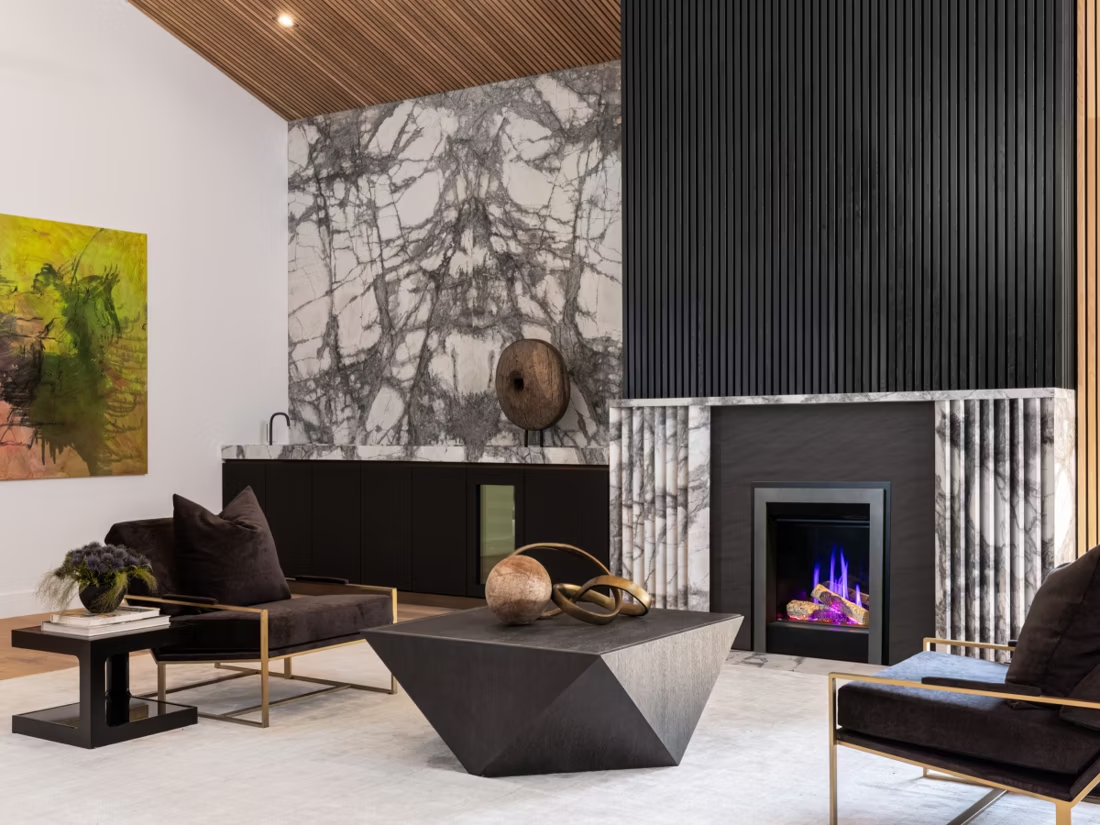
That's where electric fireplaces earn their keep here. There's no flue to run, no gas line to trench, and no wood permits to track—a plug-in unit or a hardwired built-in linear fireplace can go into an existing masonry opening or a stud wall in an afternoon. That matters in a county where much of the housing outside Lewisburg and Mifflinburg boroughs runs on propane or fuel oil for primary heat: an electric insert lets a homeowner add focused, thermostat-controlled warmth to a den, sunroom, or bedroom without touching the furnace, and it lets a landlord near Bucknell offer fireplace ambiance in a rental unit without the insurance and maintenance questions a real chimney raises.
Three steps. No salesperson until you're ready.
Tell us about your project
Your zip code, your situation, and the fuel you're leaning toward—or let the answers point you to one.
See what's actually available
The brands dealers within 100 miles genuinely carry—real options, never a catalog mirage.
Get your dealer & Project Guide
A trusted local dealer, plus the free Project Guide & Parts List that names every component of the job.
Frequently Asked Questions
How much does an electric fireplace installation cost in Union County?
Plug-in electric fireplace inserts and mantels typically run $300 to $1,500 installed, since most just need an existing 120-volt outlet and no structural work. A built-in linear electric fireplace set into a new wall or an existing masonry opening, with a dedicated 240-volt circuit run by an electrician, generally lands between $2,000 and $5,000 depending on the size of the unit and how much finish carpentry is involved. Either way, that's well below what a wood or gas project runs in this county, since there's no chimney, liner, or gas line to add to the job.
Do I need a permit to install an electric fireplace in Union County?
A simple plug-in unit generally doesn't require a permit at all. If you're installing a built-in electric fireplace on its own dedicated circuit, an electrical permit is typically required through your local municipality—Lewisburg Borough, Mifflinburg Borough, or the relevant township, since Union County doesn't administer a single countywide building code. Most local dealers work with a licensed electrician who pulls that permit and handles the inspection as part of the installation, so you're not left coordinating it yourself.
Will an electric fireplace actually heat a room in a Union County winter?
A quality electric fireplace with a built-in heater can comfortably warm a single room—typically 400 to 1,000 square feet, depending on the unit and your home's insulation—which makes it a solid zone-heat option during a winter as long and cold as Buffalo, NY's. It's not designed to replace your furnace or boiler as whole-home heat, but it's an effective way to warm the room you actually spend evenings in, whether that's a den in a Mifflinburg farmhouse or a converted sunroom in Lewisburg, without running the whole-house system harder than it needs to.
Can I put an electric insert into my home's existing fireplace?
Yes, and it's one of the more common projects local dealers see in Union County's older housing stock. Many Lewisburg Historic District homes and outlying farmhouses have an original masonry firebox that no longer gets used for wood burning. An electric insert slides into that opening, uses the existing mantel and surround, and needs no venting change—which also means the project typically doesn't trigger the borough's historic architectural review the way modifying a chimney for gas venting would. It's a straightforward way to bring a dormant fireplace back to daily use.
What does it cost to run an electric fireplace day to day?
Most electric fireplace heaters draw around 1,500 watts on the heat setting, which works out to roughly 15-20 cents per hour at typical PPL Electric Utilities residential rates—a few dollars for an evening's use. Running the flame effect alone, without the heater on, costs only a fraction of that. For a household using an electric fireplace as supplemental zone heat in one room rather than as a whole-house solution, that's a modest add to the electric bill compared to running propane or fuel oil harder through a long Buffalo Valley winter.
What happens to my electric fireplace during a winter power outage?
It won't run—no flame, no heat, since the unit depends entirely on electricity, unlike a wood stove or a battery-backed gas fireplace. That's worth weighing in rural Union County, where ice storms and downed lines on the outskirts of Mifflinburg or New Berlin can knock out power for a day or more. Homeowners in exposed rural areas sometimes pair an electric fireplace for everyday convenience and ambiance with a wood stove or fireplace insert elsewhere in the house as a true storm-outage backup.
What features matter most in an electric fireplace for this climate?
For a room you actually want warm through a heating season as long and cold as Buffalo, NY's, prioritize a unit with a built-in thermostat and a heater rated for the room's square footage rather than one built purely for the flame effect. In milder spaces like a three-season sunroom, a lower-wattage model or one with the heater left off most of the season is fine. A local dealer can walk your specific room and tell you whether you need a full heater-equipped unit or a flame-effect-only model, since the two are priced and sized very differently.
Should I choose electric, gas, or wood for my Union County home?
It comes down to what's already at your house and what you want out of it. Wood remains practical for households with access to oak, hickory, maple, or cherry cordwood and a working chimney, especially on the county's farm properties. Gas fireplaces, where propane or a gas line is already run, give instant heat without tending a fire. Electric is the fastest and least invasive option—no venting, no fuel storage, no combustion byproducts—which makes it the default choice for rentals near Bucknell, additions without a chimney, and any homeowner who wants fireplace ambiance without adding a new fuel source to manage.
Are there rebates or efficiency incentives for electric fireplaces here?
Electric fireplaces don't typically qualify for the federal biomass stove tax credit that applies to EPA-certified wood and pellet stoves, so don't expect that incentive here. It's still worth checking with PPL Electric Utilities directly, since utilities periodically run rebate or demand-management programs for efficient electric heating equipment, and a local dealer will usually know if any current program applies to a specific model before you buy.
Can I put a TV above my fireplace?
Yes—with an asterisk. Fireplaces are hot and TVs don't like heat. Either put a mantel between them to deflect rising warmth, or choose a fireplace with heat-management technology that creates a cool zone on the wall above—the wall stays around 125 degrees, barely warm, while the room still gets full heat. If you like clean lines and don't want a mantel, heat management is the answer.
Does an electric fireplace need a vent or chimney?
No—that's its superpower. An electric fireplace needs a wall and an outlet, period. No vent pipe, no gas line, no clearances to design around, which is why it works in bedrooms, offices, apartments, and walls where venting a gas or wood unit would be impractical or impossible. Installation is typically the simplest and least expensive of any fireplace type.
Can I install a fireplace myself?
If you're putting a fire in your house on purpose, it's best to work with an expert. Unless you're genuinely experienced in framing, gas line, vent pipe, and the national code on clearances to combustibles, have a professional do it—and ideally the same company that sells you the fireplace, so warranty, service, and liability all live under one roof.
What is an in-home preview and do I need one?
It's a visit where a hearth professional measures your space, confirms the model you picked actually works in your home, and walks the specs—framing, gas line, venting, finish work—before anything is ordered. Some details you just can't know until you see the house. Never make a down payment without one; it's the single most-skipped step that burns buyers.
Stove and Fireplace Dealers in Union County
Listings include WhyFire partner dealers, dealers we have verified as authorized for the brands we recommend, and established local businesses that carry hearth products. Every listing shows which one it is. The ones marked Preferred run on WhyFire's software, so they can show you real pricing and book your appointment right here. No manufacturer pays for placement. How we verify dealers →
Fired Up Fireplaces
Passonetti's Mechanical
Glick Inc.
Sensenig Gas Appliance
The Warm Up Shop Inc.
Ace Fireplace, Stoves & Outdoor Living
Jerry The Fix It Guy
Terry's Coal-Wood Stoves
Get your free Project Guide & Parts List for an electric fireplace in Union County.
Tell me about your home—whether it's a historic Lewisburg firebox, a Mifflinburg farmhouse den, or a rental near Bucknell—and I'll match you with a trusted local dealer and send a free Project Guide & Parts List with the exact unit, circuit requirements, and recommended installer for your project.
Find Your Fireplace →