
Electric heat for every Sullivan County cabin, camp, and farmhouse.
No chimney, no gas line, no permit hassle—just plug-in warmth for the hunting camps, seasonal cottages, and year-round homes scattered across Sullivan County's Endless Mountains. Find the right unit and connect with a trusted local dealer.
Every Project Starts From One of These Five Situations
Heat without the chimney, wherever you are in the county.
Sullivan County is one of Pennsylvania's least populated counties, tucked into the Endless Mountains and largely covered by the Loyalsock State Forest, where oak, hickory, maple, and cherry stands run up the ridgelines around Dushore, Laporte, Forksville, and the historic resort community of Eagles Mere. Climate zone 5A means real winters here—the kind that pile snow against camp doors from November through March—and a lot of the county's structures are seasonal: hunting camps, family cottages, and lake houses that sit closed up for weeks at a time between visits.
For that mix of property types, electric fireplaces solve a problem that wood and gas can't: they go anywhere. No venting to plan, no chimney to maintain, no gas line to run out to a camp that's a half-mile off a dirt road. Power comes through Sullivan County Rural Electric Cooperative in most of the county's rural reaches, and a electric insert or wall unit gives camp owners thermostatic freeze protection between visits and instant ambiance when they're there—while year-round homes often add one for supplemental zone heat in a room the woodstove doesn't quite reach.
Three steps. No salesperson until you're ready.
Tell us about your project
Your zip code, your situation, and the fuel you're leaning toward—or let the answers point you to one.
See what's actually available
The brands dealers within 100 miles genuinely carry—real options, never a catalog mirage.
Get your dealer & Project Guide
A trusted local dealer, plus the free Project Guide & Parts List that names every component of the job.
Frequently Asked Questions
How much does an electric fireplace cost to install in Sullivan County?
Electric fireplaces are generally the least expensive hearth option to add to a Sullivan County home or camp. A basic plug-in insert or wall-mount unit can run a few hundred dollars installed, since there's no venting or gas line involved—most of the labor is a simple electrical hookup, and some units just plug into an existing outlet. Built-in electric fireplaces set into a custom mantel or wall surround cost more once carpentry is factored in, but even those installs are dramatically cheaper than a wood or gas project because there's no chimney, liner, or gas-fitter involved. A local dealer can give you a firm number once they know the model and whether a dedicated circuit is needed.
What size electric fireplace do I need for a Sullivan County camp or home?
Sizing an electric unit is really about wattage and the room it's heating, not square footage of the whole house. A standard 1,500-watt insert or stove will comfortably supplement heat in a single room—a camp's main living area, a farmhouse den, a bedroom that runs cold. For a seasonal camp near Eagles Mere or out toward the Loyalsock, most owners size for the main room they actually occupy rather than trying to heat the whole structure, since electric resistance heat isn't meant to replace a furnace or a woodstove as the county's primary heat source through a full zone 5A winter. A local retailer can walk through your layout and recommend wattage accordingly.
Will an electric fireplace actually keep a Sullivan County home warm in winter?
It depends on the role you need it to play. Zone 5A winters in the Endless Mountains are genuinely cold, and a 1,500-watt electric fireplace tops out at roughly 5,000 BTU—enough to noticeably warm a single room but not enough to replace a furnace or a wood or pellet stove as primary heat across a whole house. Where electric shines locally is supplemental zone heating (taking the chill off a sunroom or addition), ambiance in a main living area, and freeze protection or comfort heat at camps that aren't occupied full-time. Most Sullivan County homeowners who want electric as their only heat source are working with a small, well-insulated cabin footprint rather than a full farmhouse.
What's the difference between an electric insert, a freestanding electric stove, and a wall-mount unit?
An electric insert slides into an existing masonry fireplace opening—a common retrofit for older Sullivan County farmhouses that have a fireplace but no interest in maintaining a chimney for wood burning. A freestanding electric stove looks like a traditional woodstove and sits on the floor, which works well in camps and cabins without an existing firebox. A wall-mount or built-in electric fireplace is the flattest option, often set into a mantel wall in newer construction or a remodel. For camps specifically, freestanding stoves and wall units are the most common choice since most don't have an existing masonry opening to retrofit.
Do I need a permit to install an electric fireplace in Sullivan County?
Generally no—because electric fireplaces don't involve combustion, venting, or a chimney, most installations fall outside the permitting that applies to wood and gas units. If your install requires a new dedicated electrical circuit, that work should be done by a licensed electrician and may require an electrical permit through the applicable township or the Sullivan County Courthouse in Laporte, depending on where the property sits. Simple plug-in units typically need no permit at all. Confirm with your local installer or township office if you're unsure, especially for camps in unincorporated parts of the county.
Will my electric fireplace still work during a power outage?
No—and this matters more in Sullivan County than in a lot of places, since rural stretches served by Sullivan County Rural Electric Cooperative can see extended outages during heavy snow or ice events in the Endless Mountains. An electric fireplace goes dark the moment the power does, unlike a wood stove that keeps burning regardless. For that reason, most year-round homes and occupied camps here that rely on electric for daily comfort also keep a wood stove, generator, or both as backup, particularly for properties out along the more remote forest roads where response and restoration times run longer.
Are electric fireplaces a good fit for a hunting camp or seasonal cabin?
Yes, and it's one of the most common uses in Sullivan County. Camps around the Loyalsock State Forest and the county's back roads sit closed up for stretches at a time, and electric units let owners set a thermostat for freeze protection on pipes without worrying about a chimney, a damper, or fuel storage while the place is empty. When you arrive for a weekend, flip it on and get instant heat with no ash, no wood to haul, and no flue to inspect after months of disuse. The tradeoff is the same as anywhere else—no heat if the power's out—so plenty of camp owners pair an electric unit with a backup woodstove for cold-weather hunting trips.
Electric vs. wood—which is right for my Sullivan County property?
Wood is the traditional answer in a county this forested—oak, hickory, maple, and cherry are all common locally, and plenty of Sullivan County residents cut and split their own firewood, which keeps fuel costs low and provides real heat output through the coldest zone 5A stretches, plus it works without power during an outage. Electric can't match that heat output or storm-day reliability, but it wins on convenience: no wood handling, no chimney maintenance, no ash, and instant on-off operation—which is exactly why it's popular for supplemental heat in a main living room or for camps where nobody wants to manage a woodpile between visits. Many local properties run both: wood as the workhorse, electric for convenience and ambiance.
Electric vs. pellet stove—which makes more sense here?
Pellet stoves burn compressed wood pellets—regional brands like Energex, Hamer Pellet Fuel, and Greene Team Pellet Fuel are all available in the area—and deliver meaningfully more heat output than electric resistance units, making them a better fit for a primary or near-primary heat source in a Sullivan County home through a full winter. But pellet stoves need electricity to run their auger and blower, so they're not a power-outage backup either, and they require pellet storage and periodic hopper loading. Electric fireplaces need no fuel storage at all and install almost anywhere with a plug, which makes them the simpler choice for supplemental heat, ambiance, or a low-maintenance camp setup rather than whole-home heating.
Can I put a TV above my fireplace?
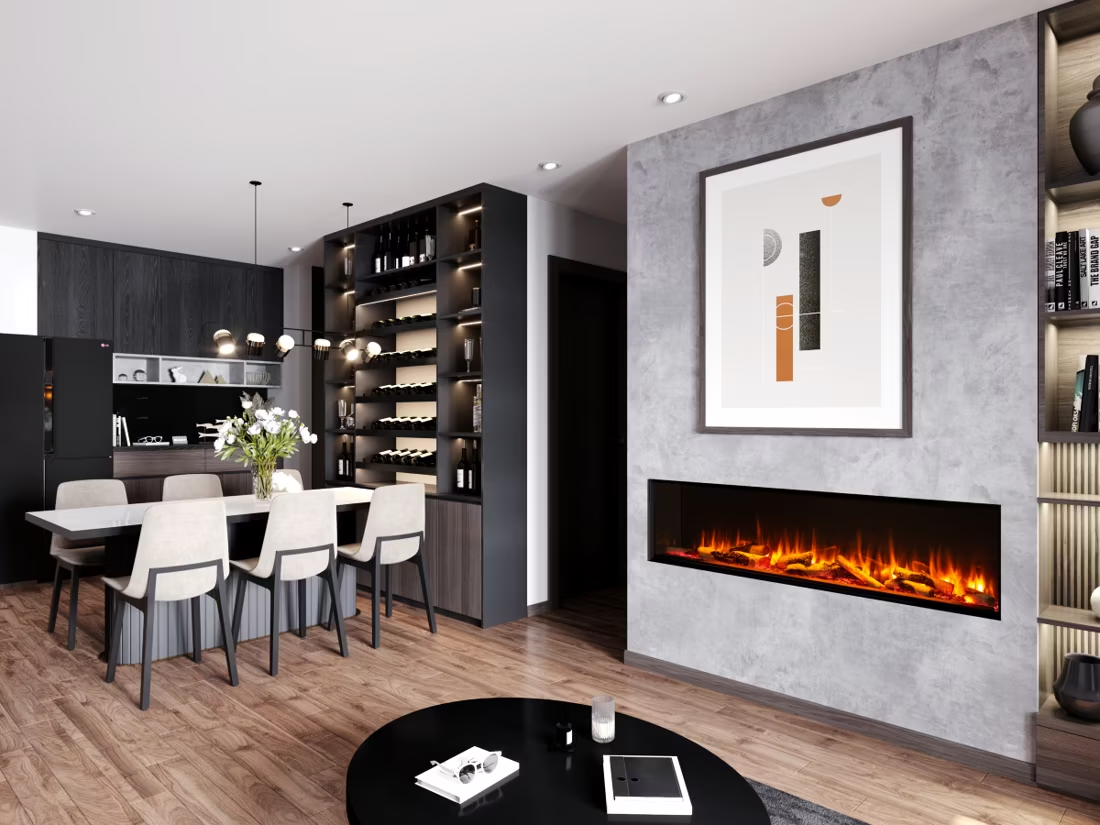
Yes—with an asterisk. Fireplaces are hot and TVs don't like heat. Either put a mantel between them to deflect rising warmth, or choose a fireplace with heat-management technology that creates a cool zone on the wall above—the wall stays around 125 degrees, barely warm, while the room still gets full heat. If you like clean lines and don't want a mantel, heat management is the answer.
Does an electric fireplace need a vent or chimney?
No—that's its superpower. An electric fireplace needs a wall and an outlet, period. No vent pipe, no gas line, no clearances to design around, which is why it works in bedrooms, offices, apartments, and walls where venting a gas or wood unit would be impractical or impossible. Installation is typically the simplest and least expensive of any fireplace type.
What is an in-home preview and do I need one?
It's a visit where a hearth professional measures your space, confirms the model you picked actually works in your home, and walks the specs—framing, gas line, venting, finish work—before anything is ordered. Some details you just can't know until you see the house. Never make a down payment without one; it's the single most-skipped step that burns buyers.
Does a fireplace add value to my home?
On average, a fireplace adds back to the home about the same amount you spent installing it. Add the monthly savings from heating the rooms you actually use instead of the whole house—often hundreds of dollars a year—and the value case is strong before you even count what a fire does for how your family uses the room.
Stove and Fireplace Dealers in Sullivan County
Listings include WhyFire partner dealers, dealers we have verified as authorized for the brands we recommend, and established local businesses that carry hearth products. Every listing shows which one it is. The ones marked Preferred run on WhyFire's software, so they can show you real pricing and book your appointment right here. No manufacturer pays for placement. How we verify dealers →
Terry's Chimney
Ace Fireplace, Stoves & Outdoor Living
Kennedys Country Heating
Stolz Stove Sales
The Warm Up Shop Inc.
Passonetti's Mechanical
Fired Up Fireplaces
Calhoun's Hearth & Home
Jerry The Fix It Guy
Glowing Embers
Find your electric fireplace in Sullivan County.
Tell us a bit about your camp, cabin, or home, and we'll put together a free Project Guide & Parts List—the right electric fireplace or insert for your space, plus a trusted local dealer to install it.
Find Your Fireplace →