
Add Real Warmth to Your Shippensburg Home—Without a Chimney.
No gas line, no chimney, no permit headaches—just plug-in or simple-wire zone heat for Shippensburg's older homes and rental units. Find the right unit and connect with a trusted local dealer.
Every Project Starts From One of These Five Situations
The easiest fireplace upgrade in Cumberland County.
Shippensburg sits in the Cumberland Valley at about 646 feet elevation, with a climate milder than the ridge country farther west—average winter lows near 22 degrees F and a winter heating load well short of what a place like Fargo, ND or Duluth, MN sees, but still cold enough that a drafty bedroom, finished basement, or borough rowhouse room needs real supplemental heat most winters. Plenty of the borough's housing stock predates modern zoned central heat, which leaves gaps an electric fireplace is built to fill.
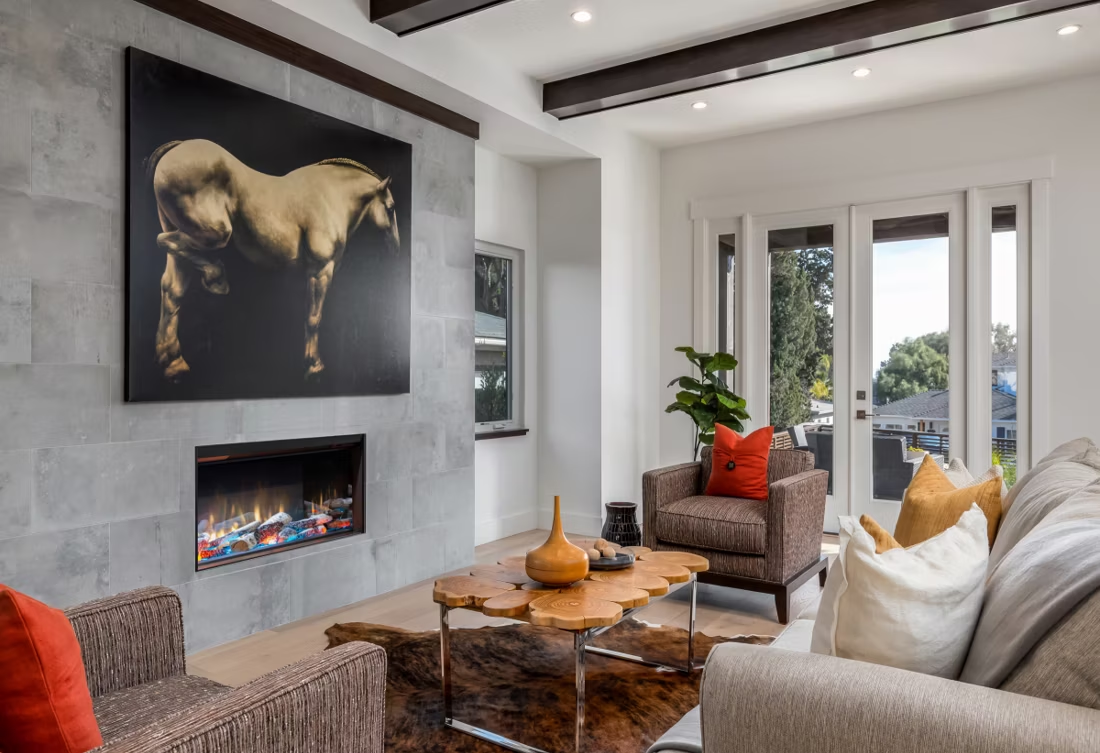
Electric fireplaces have caught on in Shippensburg for a specific reason: a large share of the borough's housing is rental property tied to Shippensburg University, where lease terms and small lots rule out wood-burning or gas installations outright. An electric unit plugs into a standard outlet or wires into a single dedicated circuit, needs no chimney, no gas line, and no combustion permit, and runs on power from whichever utility serves the address—Pennsylvania Electric Co. or Adams Electric Cooperative. At the local residential rate of about 14.4 cents per kWh, it's inexpensive zone heat for the one room that actually needs it.
Three steps. No salesperson until you're ready.
Tell us about your project
Your zip code, your situation, and the fuel you're leaning toward—or let the answers point you to one.
See what's actually available
The brands dealers within 100 miles genuinely carry—real options, never a catalog mirage.
Get your dealer & Project Guide
A trusted local dealer, plus the free Project Guide & Parts List that names every component of the job.
Frequently Asked Questions
How much does an electric fireplace installation cost in Shippensburg?
Plug-in freestanding or wall-mount electric fireplaces are the cheapest path—the unit itself typically runs $300 to $1,200 and there's no electrician needed, just placement. Built-in linear units or in-wall inserts that require a dedicated 120V or 240V circuit run $1,500 to $4,000 once you factor in electrician labor and any trim or drywall work. Hardwired installations fall under Cumberland County's Uniform Construction Code process, so an electrical permit is typically required; plug-in units are not.
Do I need an electrician to install an electric fireplace?
It depends on the model. Most plug-in electric fireplaces and inserts run on a standard 120V, 15-20 amp household outlet—no electrician required, just clear wall space and a nearby outlet. Wider built-in linear units, especially anything over 50 inches, often need their own dedicated circuit, particularly in older Shippensburg homes where existing circuits are already carrying other loads. Any hardwired addition should go through your local building department since it's technically an electrical modification to the home.
What's the difference between an electric fireplace, insert, and stove?
An electric fireplace is a mantel or wall-mounted unit built for a specific opening. An electric insert is sized to slide into an existing masonry firebox—a good fit for older Shippensburg homes near the borough's historic core that still have a brick fireplace opening that hasn't burned wood in years. An electric stove is a freestanding, cabinet-style unit that mimics the look of a wood stove, which works well in a room that never had a fireplace opening to begin with.
Will my electric fireplace work during a power outage?
No—this is the real tradeoff versus gas or wood. Both the heater element and any flame-effect lighting need power, so if Pennsylvania Electric Co. or Adams Electric Cooperative lines go down during an ice storm, which Cumberland County sees most winters, the unit goes dark with everything else. If backup heat during outages matters to your household, pair an electric fireplace used for daily zone heating with a gas or wood option elsewhere in the house.
What size electric fireplace do I need for my room?
Most electric fireplace heaters are rated for roughly 400 to 1,000 square feet depending on ceiling height and insulation, and nearly all top out around 5,000 BTU (1,500 watts) no matter how large the firebox looks—heat output doesn't scale with visual size the way it does with gas or wood. In Shippensburg's older, less-insulated housing stock, don't expect an electric fireplace to heat much past the room it's installed in; it's built as supplemental zone heat, not a whole-house solution.
Do I need a permit for an electric fireplace in Shippensburg?
Plug-in units generally don't require any permit at all. If you're adding a dedicated circuit or a built-in unit that means opening a wall, Cumberland County's Uniform Construction Code process, administered through the county or the borough's code office, requires an electrical permit and licensed-electrician work. It's a much lighter process than gas line or chimney permitting—most electric projects clear inspection in a single visit.
How much does it cost to run an electric fireplace in Shippensburg?
At the local blended residential rate of about 14.4 cents per kWh from Pennsylvania Electric Co. or Adams Electric Cooperative, a typical 1,500-watt electric fireplace running on high heat for 8 hours costs roughly $1.70 a day, or about $50 a month used as evening zone heat in one room. Most owners run the flame effect without the heater for ambiance the rest of the time, which draws only 30 to 50 watts—pennies a day.
Electric vs. gas fireplace—which is right for my Shippensburg home?
Gas delivers real heat output that can warm a whole room or more, and many models include battery-backup ignition that keeps working during an outage. Electric fireplaces install with far less disruption—no gas line, no venting, often no permit—and cost less upfront, but they're capped around 5,000 BTU and go dark with the power. For a primary living space that needs to carry real heat, gas is usually the better call. For a bedroom, sunroom, or a rental unit near Shippensburg University where installing gas isn't practical or allowed, electric is the clear fit.
Why don't more homes in Shippensburg use wood or pellet stoves?
Wood and pellet heat is uncommon inside Shippensburg's borough limits, where lots are small, a large share of the housing stock is rental property tied to Shippensburg University, and many homes don't have an existing chimney or the storage space for cordwood or pellet bags. Homeowners in the surrounding rural stretches of Cumberland County still burn wood, but within town, electric fireplaces have become the practical way to add supplemental heat and ambiance without a woodpile, chimney upkeep, or landlord objections. Outside the borough with more room to work with, a wood or pellet stove is worth a separate look.
Can I put a TV above my fireplace?
Yes—with an asterisk. Fireplaces are hot and TVs don't like heat. Either put a mantel between them to deflect rising warmth, or choose a fireplace with heat-management technology that creates a cool zone on the wall above—the wall stays around 125 degrees, barely warm, while the room still gets full heat. If you like clean lines and don't want a mantel, heat management is the answer.
Do electric fireplaces actually produce heat?
Yes—most put out around 4,800–5,000 BTUs from a standard outlet, which comfortably warms a bedroom, office, or den as a comfort-zone heater. What they won't do is carry a whole house the way wood, gas, or pellet can. Think of electric as ambiance-first with honest supplemental heat: flames on with no heat in July, flames plus warmth in January.
Does a fireplace add value to my home?
On average, a fireplace adds back to the home about the same amount you spent installing it. Add the monthly savings from heating the rooms you actually use instead of the whole house—often hundreds of dollars a year—and the value case is strong before you even count what a fire does for how your family uses the room.
How much should I budget for a fireplace?
For an average home—covering the fireplace, the vent pipe, and basic installation—a budget between $3,900 and $5,500 gives you a lot of options across wood, gas, and pellet. By the time you add finish work, gas line, and electrical, the average complete installation lands between $5,000 and $12,000 all-in. In a remodel or new build, a good rule is to put about 2.5% of the total project cost toward the fireplace.
Nearby Dealers
Hearth shops serving Shippensburg and the surrounding area. Every listing shows whether it is a WhyFire partner, a dealer we have verified as authorized for the brands we recommend, or a local business carrying hearth products. No manufacturer pays for placement. How we verify dealers →
Aes Hearth & Patio - Chambersburg
Aes Hearthplace, Inc.
Aes Hearthplace, Inc.
Aes Hearth & Patio - Newville
Bunting’s Fireplace & Stove
Blain Supply
H & D Service & Stove Inc
L.t. Rush Stone Inc
McLaughlin Home Heating
Mace Energy Supply Inc.
Todays Home And Leisure
Aes Hearthplace, Inc.
Aes Hearth & Patio - Camp Hill
Electric Service in Shippensburg
An electric fireplace's heater draws about 1,500 watts—pennies per hour at local rates.
Pennsylvania Electric Co
Adams Electric Cooperative Inc
Find your electric fireplace in Shippensburg.
Tell us about your room and we'll match you with the right electric fireplace, insert, or stove—and connect you with a trusted local dealer who can send over a free Project Guide & Parts List, including exact parts and wiring specs for your project.
Find Your Fireplace →