
A clean, simple upgrade for a borough that sees true Potter County cold.
Shinglehouse sits in climate zone 6A with winters as long and cold as Burlington, Vermont's and winter lows averaging 13°F—closer to Vermont's climate than most of Pennsylvania. An electric fireplace won't carry the whole house through that, but it's a near-zero-hassle way to add warmth and ambiance to a room, and we can help you find a trusted local dealer who knows the wiring and the two utilities serving this part of Potter County.
Every Project Starts From One of These Five Situations
Electric heat, sized for backup—not the only plan.
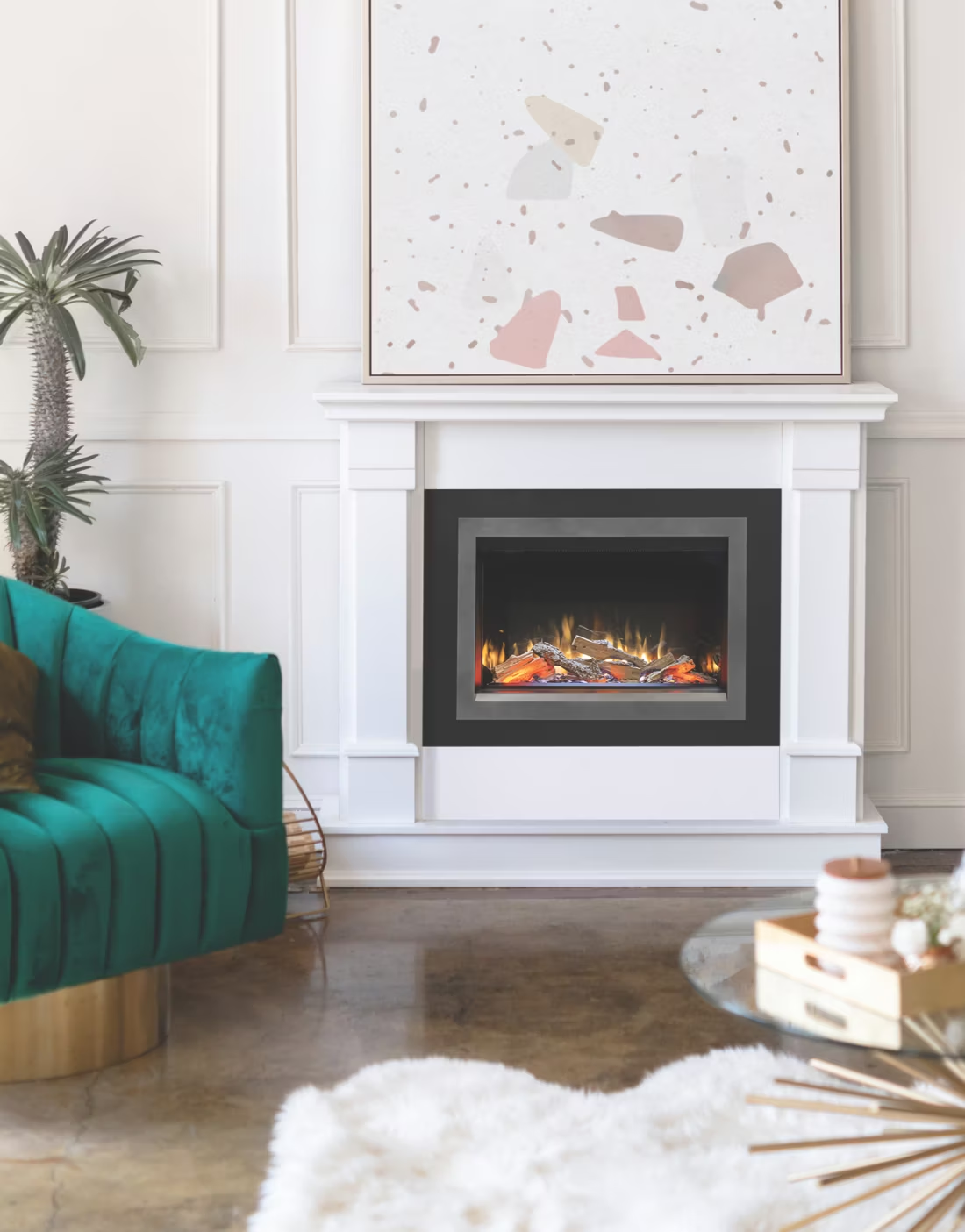
With winters that run about as cold as Burlington, Vermont most years, Shinglehouse's 1,070 residents mostly heat with wood or propane as a primary source—oak, hickory, maple, and cherry are the species split locally, much of it cut under Allegheny National Forest permits running about $20 a cord between May and October. An electric fireplace fits into that picture as a supplemental or ambiance unit—a sunroom, bedroom, or finished basement that doesn't need full-house BTUs—rather than as the thing standing between your family and a January cold snap.
Two utilities split service here: West Penn Power Company covers in-town meters, while Tri-County Rural Electric Cooperative serves the farms and outlying roads around Shinglehouse. That matters for two reasons. First, the residential rate of roughly 20.1 cents per kWh is higher than a lot of Pennsylvania, so running a 1,500-watt electric unit as a whole-room heater costs more here than the sticker price suggests. Second, co-op lines through rural Potter County tend to take longer to restore after an ice storm than in-town circuits—and an electric fireplace, unlike a wood stove, goes dark the moment the power does. Most local buyers treat it as a convenience upgrade, not a storm-season backup.
Three steps. No salesperson until you're ready.
Tell us about your project
Your zip code, your situation, and the fuel you're leaning toward—or let the answers point you to one.
See what's actually available
The brands dealers within 100 miles genuinely carry—real options, never a catalog mirage.
Get your dealer & Project Guide
A trusted local dealer, plus the free Project Guide & Parts List that names every component of the job.
Frequently Asked Questions
How much does an electric fireplace installation cost in Shinglehouse?
A plug-in insert or wall-mount unit that uses an existing outlet typically runs $300 to $800 installed, including a mantel or surround if you want one. Built-in units set into a new wall opening, or ones that need a dedicated 20-amp circuit run by an electrician—common in some of Shinglehouse's older farmhouse wiring—land closer to $1,200 to $2,500. Unlike a wood or gas project, there's no chimney or venting to budget for, which is the main reason electric comes in well under the other fuels here.
Do I need a permit for an electric fireplace in Shinglehouse?
Usually not for a plug-in model—it's treated like any other appliance. If your installer is adding a new dedicated circuit or cutting into a wall for a built-in unit, that electrical work may need a permit through Potter County's codes office, and the electrician handling it will typically pull it as part of the job. It's a lighter lift than the building permits required for a wood stove or gas line, which is part of why electric appeals to homeowners doing a quick addition or rental upgrade.
Will an electric fireplace still work if the power goes out?
No—and that's worth weighing seriously here. Tri-County Rural Electric Cooperative lines running out to the farms and back roads around Shinglehouse can take a while to come back after the kind of ice storm that regularly hits Potter County winters, and West Penn Power's in-town service isn't immune either. An electric fireplace goes fully dark in an outage, unlike a wood stove burning local oak or hickory. Most households here that rely on wood or propane as primary heat add electric purely for convenience in a secondary room, not as outage insurance.
What size electric fireplace do I need for a Shinglehouse home?
Most electric units top out around 5,000 to 10,000 BTU-equivalent heat output, enough to comfortably warm 400 to 1,000 square feet depending on insulation and ceiling height. Given that Shinglehouse winters run about as cold as Burlington, Vermont's, that's realistic for a bedroom, den, or finished basement, but it's not enough to carry a whole farmhouse through a stretch of 13°F lows. A local dealer can help you decide whether one well-placed unit covers your main living space or whether you need it paired with your existing wood or propane heat.
What will it cost to run an electric fireplace through a Potter County winter?
At the local residential rate of about 20.1 cents per kWh, a typical 1,500-watt unit costs roughly 30 cents an hour to run on high. Used for a few hours most evenings through a six-month heating season, that lands somewhere around $40 to $70 a month—more than you'd pay in parts of Pennsylvania with cheaper power, since both West Penn Power and Tri-County Rural Electric Cooperative rates run a bit above the state average. It's still far cheaper than heating the same space with baseboard electric resistance heat full-time, which is why most owners use these units for zone heat rather than whole-room reliance.
Does my utility—West Penn Power or Tri-County Co-op—offer any rebates for electric fireplaces?
West Penn Power, as a FirstEnergy subsidiary, periodically runs energy-efficiency rebate programs, though they're more often aimed at insulation, heat pumps, and smart thermostats than decorative electric fireplace inserts specifically. Tri-County Rural Electric Cooperative members should check with the co-op directly, since member-owned utilities sometimes offer different efficiency incentives than investor-owned ones. A local dealer who installs regularly in Potter County will usually know what's currently active on both sides before you buy.
Electric vs. wood—which makes more sense for a Shinglehouse home?
Wood, often oak or hickory cut under a $20-per-cord Allegheny National Forest permit, remains the lower-cost and more outage-resilient choice for anyone trying to actually heat through a Potter County winter—this area's winters run colder and longer than most of Pennsylvania's. Electric wins on convenience: no splitting, no chimney, no ash, and it switches on instantly for a bedroom or sunroom that doesn't need serious BTUs. Most homeowners here aren't choosing one over the other—they're running wood or propane as the real heat source and adding electric for ambiance or a room the main heat doesn't reach well.
How much maintenance does an electric fireplace need?
Very little, which is part of the appeal in a town where most other heating equipment demands real upkeep—chimney sweeps for wood stoves, annual burner checks for propane units. An electric fireplace mainly needs occasional dusting of the heating element and vents, and the LED flame bulbs or light strips typically last several years before needing replacement. There's no venting to inspect and no creosote to manage, so it's a low-maintenance option for a second home, rental, or room you don't want to think about all winter.
Is an electric fireplace a good fit for an addition or sunroom without a chimney?
Yes—this is one of the strongest cases for electric in a town like Shinglehouse, where plenty of homes are older farmhouses with additions, enclosed porches, or finished basements that were never built with a flue. A plug-in or built-in electric unit needs no venting and no masonry work, so it drops into a room with just an outlet or a short electrical run. It won't replace whole-house wood or propane heat given how cold this area runs, but for a room that's otherwise unheated or under-heated, it's often the simplest fix available.
Does an electric fireplace need a vent or chimney?
No—that's its superpower. An electric fireplace needs a wall and an outlet, period. No vent pipe, no gas line, no clearances to design around, which is why it works in bedrooms, offices, apartments, and walls where venting a gas or wood unit would be impractical or impossible. Installation is typically the simplest and least expensive of any fireplace type.
Can I put a TV above my fireplace?
Yes—with an asterisk. Fireplaces are hot and TVs don't like heat. Either put a mantel between them to deflect rising warmth, or choose a fireplace with heat-management technology that creates a cool zone on the wall above—the wall stays around 125 degrees, barely warm, while the room still gets full heat. If you like clean lines and don't want a mantel, heat management is the answer.
Can I install a fireplace myself?
If you're putting a fire in your house on purpose, it's best to work with an expert. Unless you're genuinely experienced in framing, gas line, vent pipe, and the national code on clearances to combustibles, have a professional do it—and ideally the same company that sells you the fireplace, so warranty, service, and liability all live under one roof.
Does a fireplace add value to my home?
On average, a fireplace adds back to the home about the same amount you spent installing it. Add the monthly savings from heating the rooms you actually use instead of the whole house—often hundreds of dollars a year—and the value case is strong before you even count what a fire does for how your family uses the room.
Nearby Dealers
Hearth shops serving Shinglehouse and the surrounding area. Every listing shows whether it is a WhyFire partner, a dealer we have verified as authorized for the brands we recommend, or a local business carrying hearth products. No manufacturer pays for placement. How we verify dealers →
We’ve paused dealer listings for this connection today. Enter your zip or postal code above to find dealers near you, or come back tomorrow.
Popular Electric Brands
Where each brand came from, what's inside it today, and every current model. No brand pays to be here. Not every dealer carries every brand, so enter your zip code to see what's sold near Shinglehouse.
Fireplace Xtrordinair
Fireplace Xtrordinair, now often called FireplaceX, is the fireplace brand of Travis Industries, Inc., of Mukilteo, Washington.
5 electric models →DaVinci
DaVinci Custom Fireplaces is a brand of Travis Industries, Inc., of Mukilteo, Washington, the company behind Lopi and Fireplace Xtrordinair.
5 electric models →Kozy Heat
Kozy Heat was founded in 1976 by Dudley Hussong in Lakefield, Minnesota, and incorporated as Hussong Manufacturing Co., Inc. in 1978.
3 electric models →Forge & Flame
Forge & Flame is the stove brand Hearth & Home Technologies introduced in August 2023 to bring Vermont Castings, Harman, and Quadra-Fire under one name.
1 electric model →Electric Service in Shinglehouse
An electric fireplace's heater draws about 1,500 watts—pennies per hour at local rates.
West Penn Power Company
Tri-County Rural Elec Coop Inc (Pa)
Get your free Project Guide & Parts List for a Shinglehouse electric fireplace.
Tell us about your home, which room you're heating, and whether you're on West Penn Power or Tri-County Rural Electric Cooperative, and we'll help you find a trusted local dealer and send a free Project Guide & Parts List with the exact unit and circuit details your project needs.
Find Your Fireplace →