
Clean gas heat built for Sayre's long, cold winters.
Instant, reliable warmth for Twin Tiers homes along the Susquehanna—find the right gas fireplace or insert and connect with a trusted local dealer.
Every Project Starts From One of These Five Situations
The practical choice for Bradford County winters.
Sayre sits along the Susquehanna River in Bradford County, part of the Twin Tiers region straddling the Pennsylvania–New York border. At 773 feet in elevation, the borough logs a long, cold heating season with average winter lows near 16°F—a season closer to Buffalo, NY, a few hours west, than to most of central Pennsylvania. Wood heat has never been the default here the way it is in surrounding rural townships: Sayre's compact, railroad-era lots leave little room for stacking cordwood, and few homeowners in the borough proper cut or store their own wood. Gas fireplaces and inserts fill that gap, delivering real, dependable heat without the storage, hauling, or ash.
Natural gas mains don't reach every block in a borough this size, and a number of Sayre homes still heat with oil or propane rather than piped gas. For those houses, a propane-fed gas fireplace or insert is the realistic path—regional propane suppliers already serve much of rural Bradford County, and most gas hearth equipment runs on propane just as well as natural gas with the correct orifice kit. Either way, a gas fireplace delivers instant, thermostat-controlled zone heat in the room you actually live in, which matters when Pennsylvania Electric Co. and Claverack Rural Electric Cooperative territory runs close to 18 cents per kWh—offsetting whole-house electric heat with a gas fireplace can add up fast during the coldest stretch of winter.
Three steps. No salesperson until you're ready.
Tell us about your project
Your zip code, your situation, and the fuel you're leaning toward—or let the answers point you to one.
See what's actually available
The brands dealers within 100 miles genuinely carry—real options, never a catalog mirage.
Get your dealer & Project Guide
A trusted local dealer, plus the free Project Guide & Parts List that names every component of the job.
Frequently Asked Questions
How much does a gas fireplace installation cost in Sayre?
Most gas fireplace and insert installations in Sayre run in the $3,500 to $9,500 range, with the spread driven mostly by whether gas or propane service is already run to the house and what kind of venting the job needs. A propane-fed direct-vent insert going into an existing masonry fireplace, with a line already at the house, sits toward the low end. A new built-in gas fireplace for a remodel or addition—with framing, a fresh gas or propane line, and full venting—lands in the middle to upper end. Homes needing a new propane tank set and buried line will see the higher end. A local dealer will walk your specific chimney or wall cavity before quoting a firm number.
Can I convert my existing wood-burning fireplace to gas?
Yes, and it's a common project in Sayre's older housing stock—plenty of the borough's early-1900s railroad-era homes have a masonry fireplace that hasn't seen a real wood fire in years. A gas insert slides into that existing firebox and vents through a stainless liner run up the chimney you already have, so you keep the mantel and surround as-is. Wood-burning itself is uncommon in Sayre proper—the borough's small, close-together lots don't leave room for stacking cords the way outlying Bradford County townships do—so most homeowners doing this conversion have no interest in ever burning wood again; they just want the fireplace to actually produce useful heat.
Does my Sayre home need natural gas, or can I use propane?
Either can work, but check first—natural gas mains don't run to every part of the borough, and a fair number of Sayre homes, particularly on the edges of town, already heat with propane or oil rather than piped gas. If your house isn't on a gas main, propane is a straightforward substitute: nearly every gas fireplace and insert on the market can be configured for propane with the correct orifice, and regional propane suppliers already deliver throughout rural Bradford County for furnace and water heater service. Your installer will confirm what's actually run to your house before recommending a specific unit.
Will a gas fireplace still work if the power goes out?
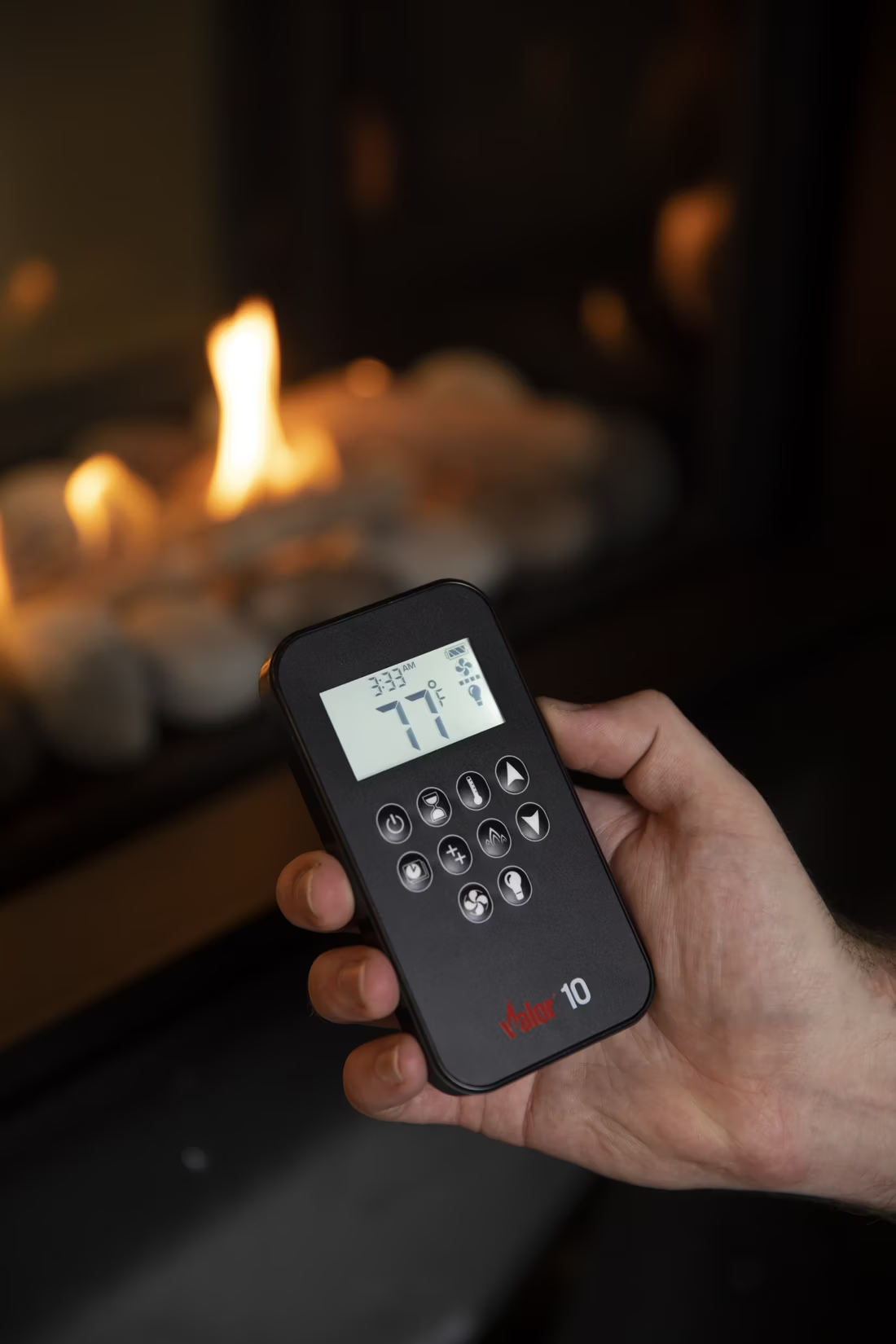
Most will, which matters here—Bradford County sees its share of winter ice storms that knock out power along both Pennsylvania Electric Co. and Claverack Rural Electric Cooperative lines. Gas fireplaces with an IPI (intermittent pilot ignition) system typically run on a small battery backup that kicks in automatically when line power drops, so the fireplace still lights and operates from the wall switch or remote. A few brands, notably Valor, generate their own electricity from the pilot's thermocouple and never need a battery at all. If backup heat during outages is a priority, ask your local dealer about the specific ignition system before you buy.
What's the difference between a gas fireplace, insert, and stove?
A gas fireplace is a fully built-in unit framed into a wall—the right choice for new construction or a remodel with no existing chimney. A gas insert is sized to slide into an existing masonry firebox, which fits a lot of Sayre's older homes that already have a fireplace opening but want real heat instead of a drafty, decorative hearth. A gas stove is a freestanding cabinet unit that sits out in the room like a classic wood stove but runs on gas or propane—a good fit for a den or addition with no fireplace at all. For most Sayre homeowners working with an existing chimney, an insert is the simplest and most cost-effective path.
Do I need a permit to install a gas fireplace in Sayre?
Yes. Pennsylvania's Uniform Construction Code applies statewide, and Sayre Borough enforces it through a third-party UCC inspection agency that reviews both the mechanical installation and the gas or propane line work. Most local hearth dealers pull the permit and schedule the inspection as part of the job, so you're not coordinating it yourself. The gas line connection needs to be run by a licensed gas-fitter or plumber—one more reason it pays to use a dealer who manages the whole project rather than piecing it together across separate trades.
Should I choose a vented or vent-free gas fireplace?
Vented (direct-vent) units draw combustion air from outside and exhaust it back outside through sealed venting—they're the standard recommendation almost everywhere, Sayre included, because they don't release any combustion byproducts indoors. Vent-free units burn gas directly into the room and are legal in Pennsylvania under specific room-size and oxygen-depletion-sensor requirements, but they add water vapor and trace combustion gas to the air, which can be a real concern in a tightly sealed, well-insulated older Sayre home built to hold heat through a long, cold winter. For most homes here, direct-vent is the safer, more broadly recommended choice—ask your local dealer to walk you through both if you're weighing the tradeoff.
How often does a gas fireplace need to be serviced?
Plan on an annual inspection, ideally in early fall before the heating season starts. A qualified technician checks the burner, pilot assembly, gas connections, and venting, and cleans the glass and interior. It's a lighter lift than wood-stove chimney sweeping—most gas service calls in this area run $150 to $250—but skipping it is the most common reason pilot and ignition problems show up on the first cold night of the season.
Why do most Sayre homeowners choose gas over wood or pellet?
Mostly practicality. Sayre's borough lots are small and close together, which makes stacking and storing cordwood impractical in a way it isn't in the surrounding Bradford County townships, where oak, hickory, maple, and cherry are cut and split locally. Pellet stoves run into a similar hurdle—regional pellet brands like Energex and Greene Team Pellet Fuel are produced not far from here, but few local dealers stock pellet hearth equipment, so parts and service are harder to line up. Gas sidesteps both problems: no fuel storage, no ash, and technicians who service gas equipment are easy to find in this part of the Twin Tiers. A wood-burning setup is still possible for homeowners who specifically want it, but it's the exception in Sayre rather than the norm.
Why is my open fireplace making my house colder?
Open fireplaces suck—literally. As the fire burns, it consumes air your furnace already paid to heat and pulls it out through the chimney, so the house is actually colder after the fire goes out than before you lit it. An insert fixes this: it seals the chimney, puts fixed glass across the front, and turns that hole in your house into a real heat source.
Is my gas fireplace wasting gas?
If it was installed more than 15 years ago, probably. Older gas fireplaces keep a standing pilot light burning all the time, and that little flame can cost a couple hundred dollars a year. Newer models use pilot-on-demand ignition—the pilot lights only when you use the fireplace and goes out when you turn it off.
Does a fireplace add value to my home?
On average, a fireplace adds back to the home about the same amount you spent installing it. Add the monthly savings from heating the rooms you actually use instead of the whole house—often hundreds of dollars a year—and the value case is strong before you even count what a fire does for how your family uses the room.
Can I install a fireplace myself?
If you're putting a fire in your house on purpose, it's best to work with an expert. Unless you're genuinely experienced in framing, gas line, vent pipe, and the national code on clearances to combustibles, have a professional do it—and ideally the same company that sells you the fireplace, so warranty, service, and liability all live under one roof.
Nearby Dealers
Hearth shops serving Sayre and the surrounding area. Every listing shows whether it is a WhyFire partner, a dealer we have verified as authorized for the brands we recommend, or a local business carrying hearth products. No manufacturer pays for placement. How we verify dealers →
Calhoun's Hearth & Home
Kennedys Country Heating
Johnson's Pools & Spas, LLC
Find your gas fireplace in Sayre.
Tell us about your home and heating setup, and we'll match you with a trusted local dealer and send over a free Project Guide & Parts List—the exact parts, including the vent kit, for your Sayre gas fireplace project.
Find Your Fireplace →