
Warm Up York County Winters Without the Wood Pile.
Direct, reliable heat for Red Lion's older rowhomes and tight borough lots—find the right gas fireplace or insert and connect with a trusted local dealer.
Every Project Starts From One of These Five Situations
Instant heat that fits a small-lot borough.
Red Lion is a compact York County borough of about 6,500 people, built up in the late 1800s and early 1900s around brick rowhomes and narrow lots. At 988 feet elevation in climate zone 4A, winters here average lows around 21°F with a heating season on the milder side of moderate—noticeably milder than the deep-freeze winters of a place like Fargo, ND, but still cold enough that six months of reliable heat matters. Many of Red Lion's older homes have small footprints, shared walls, and little room for firewood storage or a wood shed, which is a big part of why wood stoves and pellet appliances are rare here—most homeowners looking to upgrade their fireplace are looking at gas.
Natural gas service reaches most of the borough through UGI Utilities, while homes just outside Red Lion's limits—often served by Adams Electric Cooperative or Metropolitan Edison for electricity—more commonly rely on propane or fuel oil rather than piped gas. Either way, a gas fireplace or insert delivers instant heat at the flip of a switch or remote, no chimney sweeping, and the kind of zone heating that takes pressure off an older home's furnace during the coldest stretches of a York County winter.
Three steps. No salesperson until you're ready.
Tell us about your project
Your zip code, your situation, and the fuel you're leaning toward—or let the answers point you to one.
See what's actually available
The brands dealers within 100 miles genuinely carry—real options, never a catalog mirage.
Get your dealer & Project Guide
A trusted local dealer, plus the free Project Guide & Parts List that names every component of the job.
Frequently Asked Questions
How much does a gas fireplace installation cost in Red Lion?
Most gas fireplace and insert installations in Red Lion run $4,500 to $10,000, depending on whether you're converting an existing masonry fireplace, running a new gas line from a UGI Utilities meter, or building out venting for a direct-vent unit in a room without a chimney. Red Lion's older rowhomes often already have a usable chimney chase, which keeps costs toward the lower end—new gas line runs from the street or a longer venting path through a shared wall push costs higher. A local hearth dealer will give you a firm number after seeing your home.
Can I convert my existing wood-burning fireplace to gas?
Yes, and it's one of the most common projects for homes in Red Lion's older neighborhoods. Many of the borough's brick rowhomes built in the early 1900s have a masonry fireplace and chimney that's rarely used for wood anymore—a gas insert with a stainless liner run up that existing chimney is usually the most cost-effective path, typically landing in the $4,500 to $8,500 range depending on the insert model and whether a new gas line is needed from your UGI Utilities service.
Do I need natural gas service, or can I use propane?
Either works, but it depends on where in the York County area your home sits. Homes inside Red Lion Borough are generally within UGI Utilities' natural gas service territory, which is the simpler and usually cheaper hookup if you already have gas appliances. Homes further out in rural York County—where Adams Electric Cooperative provides electric service instead of a municipal utility—often don't have piped gas access and use propane tanks instead. Most gas fireplace models can be set up for either fuel; your installer just configures the correct orifice and regulator.
Will my gas fireplace still work if the power goes out?
Most direct-vent gas fireplaces with intermittent pilot ignition (IPI) include a battery backup that keeps the unit running during a power outage—useful during the ice storms and downed lines that occasionally hit Met-Ed's service territory here in York County. Valor fireplaces take a different approach: their pilot assembly generates its own electricity through the thermocouple, so there are no batteries to remember or replace. Ask your local dealer which ignition system is on any unit you're considering.
What's the difference between a gas fireplace, insert, and stove?
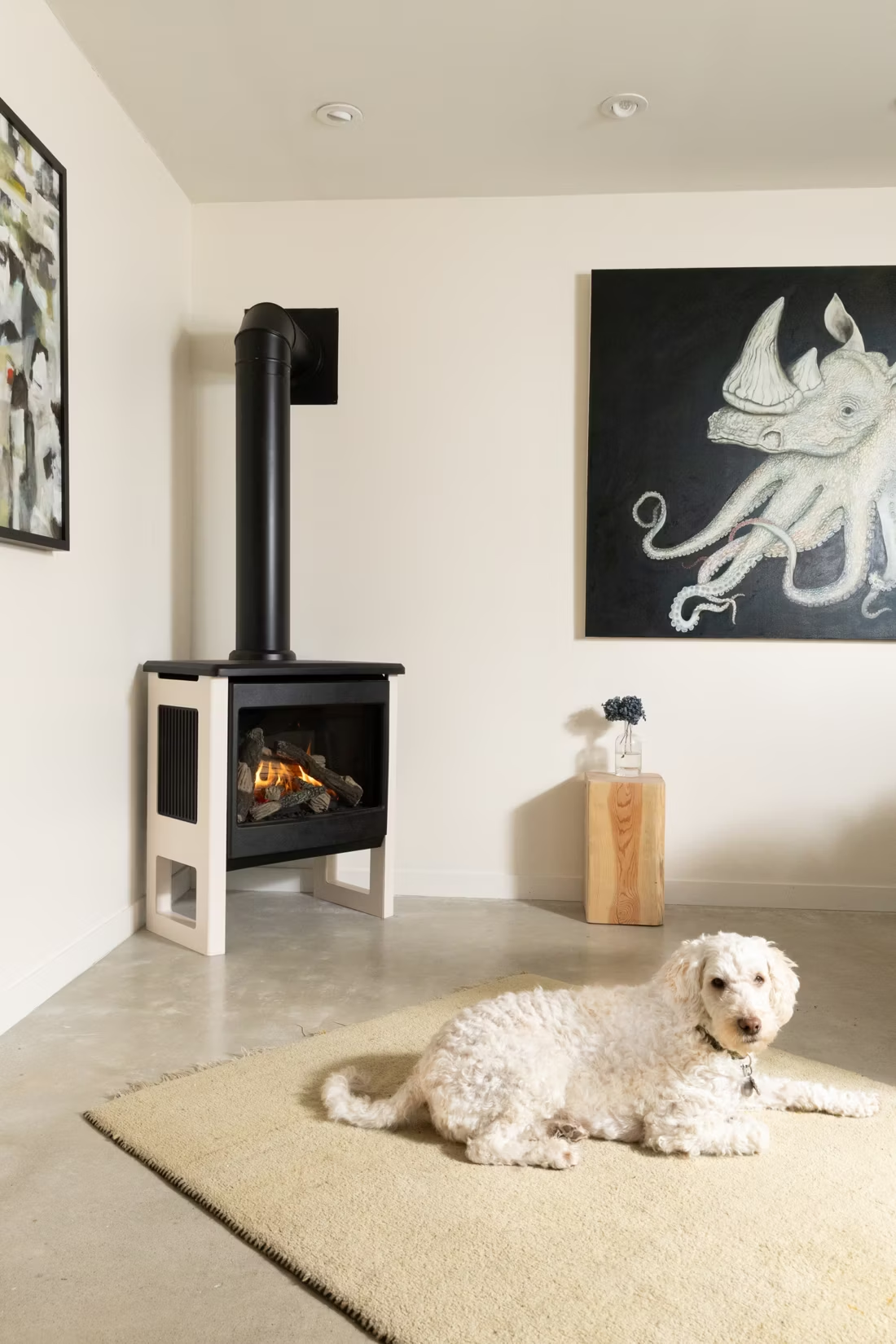
A gas fireplace is a built-in unit framed into a wall—the right choice for a remodel or an addition without an existing chimney. A gas insert slides into an existing masonry firebox and uses your current chimney as the vent path, which fits a lot of Red Lion's older housing stock. A gas stove is a freestanding cabinet-style unit that vents through a wall or existing chimney and can go almost anywhere a wood stove could. For most Red Lion homeowners with an existing fireplace, an insert is the simplest and most cost-effective upgrade.
Do I need a permit to install a gas fireplace in Red Lion?
Yes. Red Lion Borough enforces the Pennsylvania Uniform Construction Code (UCC), and a new gas fireplace or insert installation requires both a mechanical/building permit and licensed gas-fitter work for any new gas line. Most local hearth dealers coordinate the permit and inspection with the borough's code office as part of the installation, so you're not left managing separate contractors for the gas line, venting, and framing.
Should I choose a vented or vent-free gas fireplace?
Vented (direct-vent) units draw combustion air from outside and exhaust it back outside through sealed pipe—they're the standard recommendation and work in any room size. Vent-free gas fireplaces burn without external venting and are legal in Pennsylvania, but they come with strict square-footage requirements and an oxygen depletion sensor, and they release some moisture and combustion byproducts into the room. Given how tight some of Red Lion's rowhome floor plans are, a vent-free unit can noticeably raise indoor humidity—most local dealers will walk you through both options, but direct-vent is the more common install here.
How often does a gas fireplace need to be serviced?
Plan on an annual inspection, usually before heating season starts in the fall. A technician checks the burner, pilot assembly, venting, and gas connections, and cleans the glass—most gas service calls in the Red Lion area run $125 to $225. It's a lighter lift than sweeping a wood chimney, but skipping it is still the most common cause of pilot and ignition problems homeowners run into mid-winter.
Why don't more homes in Red Lion use wood or pellet stoves?
It's mostly a matter of space and practicality. Red Lion's housing stock is dominated by brick rowhomes and small-lot single-family homes with little room for a wood shed or pellet storage, and with UGI natural gas readily available through most of the borough, gas has become the default upgrade path even in homes with existing masonry fireplaces. Wood stoves aren't prohibited here—you'll still find them in a handful of homes, especially on larger lots at the edge of town, and local oak, hickory, and cherry are plentiful in the surrounding county—but they're the exception rather than the rule, which is why most Red Lion homeowners calling around end up comparing gas inserts rather than wood stoves.
What's the difference between an insert and a zero-clearance fireplace?
An insert is a fireplace that slides into a pre-existing wood-burning fireplace—if you don't have one, there's nothing to insert it into. A zero-clearance fireplace is built into a framed wall, which makes it the answer for remodels and new construction. Simple test: existing masonry fireplace means insert; blank or framed wall means zero-clearance.
Why is a fireplace insert so efficient?
An insert does two things: it seals the chimney completely, so you stop losing air you already paid to heat, and it radiates warmth into the room through the firebox and glass. Most add a heat-exchange fan that pulls cool room air underneath, wraps it around the hot firebox, and pushes it back out warm. Your home is more efficient before you've even lit the first fire.
Can a fireplace actually lower my heating bill?
Yes—by creating a comfort zone. A furnace heats every square foot of the house just to warm the one room you're in; a gas fireplace on low burns roughly a sixth of the gas a typical furnace does. Set the furnace around 55–60 degrees as a baseline, then heat the rooms your family actually uses. Families who heat this way commonly save $20–$60 a month.
Does a fireplace add value to my home?
On average, a fireplace adds back to the home about the same amount you spent installing it. Add the monthly savings from heating the rooms you actually use instead of the whole house—often hundreds of dollars a year—and the value case is strong before you even count what a fire does for how your family uses the room.
Nearby Dealers
Hearth shops serving Red Lion and the surrounding area. Every listing shows whether it is a WhyFire partner, a dealer we have verified as authorized for the brands we recommend, or a local business carrying hearth products. No manufacturer pays for placement. How we verify dealers →
Se Outdoor & Design
Firestarters Custom Fireplace & Stove
Country Comfort Inc.
Bulls Supply Co, Inc
Penn Stone
Hillside Acres Stoves
Kring's Hearth & Home - Lancaster
Find your gas fireplace in Red Lion.
Tell us about your home and we'll match you with the right gas fireplace, insert, or stove, plus a free Project Guide & Parts List with the exact parts—including the vent kit—and our recommended local dealer.
Find Your Fireplace →