
Electric Heat Built for Reading's Historic Rowhomes.
No chimney, no gas line, no venting—just plug in or wire up and go. Find the right electric fireplace for your Berks County home and connect with a trusted local dealer.
Every Project Starts From One of These Five Situations
The cleanest way to add heat to a Berks County rowhome.
Reading's core neighborhoods are built out in dense blocks of 19th-century brick rowhomes—shared walls, narrow lots, and in most cases no working chimney. That construction reality is a big part of why wood and pellet stoves barely register here; there's rarely a safe place to run a flue or store cordwood, and clearance requirements are hard to meet in a 16-foot-wide rowhouse. Winters are real—average lows around 23°F and roughly 5,127 heating degree days put Reading solidly in Climate Zone 5A, cold enough to need supplemental heat but nowhere near the brutal stretch of a place like Duluth, MN. That's exactly the profile where electric fireplaces earn their keep."
An electric fireplace or insert needs nothing more than an outlet or a dedicated 240V circuit—no masonry work, no gas line from UGI or Met-Ed's gas side, no annual chimney sweep. That makes it a natural fit for finished basements, converted rowhome parlors, additions, and rental units across Reading's 19601–19612 zip codes. Metropolitan Edison serves electric here at roughly 15.45 cents per kWh, a moderate Pennsylvania rate that keeps day-to-day operating costs predictable. Whether you're dropping an insert into an old decorative masonry fireplace or mounting a built-in unit in a new addition, a local dealer can size the unit and the electrical work correctly the first time.
Three steps. No salesperson until you're ready.
Tell us about your project
Your zip code, your situation, and the fuel you're leaning toward—or let the answers point you to one.
See what's actually available
The brands dealers within 100 miles genuinely carry—real options, never a catalog mirage.
Get your dealer & Project Guide
A trusted local dealer, plus the free Project Guide & Parts List that names every component of the job.
Frequently Asked Questions
How much does an electric fireplace installation cost in Reading?
Costs in Reading run from roughly $300 for a plug-in insert or freestanding unit that needs no electrical work, up to $2,500–$3,500 for a built-in wall unit that requires a licensed electrician to run a new 240V circuit and a carpenter to frame a surround. Many Reading rowhome owners fall in the middle—a insert-style unit dropped into an existing masonry firebox, which typically runs $800–$1,800 including a standard outlet installation behind the unit. A local dealer will quote the exact number after seeing your electrical panel and the space.
Can I put an electric insert into my old masonry fireplace?
Yes, and it's one of the most common projects in Reading's older housing stock. Many rowhomes in neighborhoods like Centre Park and the Callowhill Historic District still have decorative brick fireboxes that haven't burned wood in decades. An electric insert slides into that opening, uses a standard 120V outlet in most cases, and gives you real heat and a flame effect without touching the flue or chimney. It's a straightforward retrofit that preserves the historic mantel and surround while updating the heat source underneath.
Will an electric fireplace actually heat my home in a Reading winter?
Most electric fireplaces are rated for zone heating, not whole-house heating—a typical 1,500-watt unit puts out about 5,000 BTUs, enough to comfortably heat a 400- to 600-square-foot room. With Reading's winter lows averaging 23°F and around 5,127 heating degree days per season, that's plenty for supplemental warmth in a den, bedroom, or finished basement, but it won't replace your furnace on the coldest January nights. Homeowners looking to offset gas or oil heating bills in one or two main rooms get the most value; those hoping to heat an entire rowhouse should pair electric with their existing central system rather than relying on it alone.
What will an electric fireplace cost to run with Met-Ed rates?
Metropolitan Edison's residential rate runs about 15.45 cents per kWh in the Reading area. A typical 1,500-watt electric fireplace running on high for 8 hours costs roughly $1.85 per day, or about $13 a week of steady evening use. Most units also run in flame-only mode without the heater engaged, which draws only 30–50 watts—essentially pennies a day—so you can run the ambiance without the heating cost during shoulder-season months.
Do I need a permit to install an electric fireplace in Reading?
A plug-in insert or freestanding unit that uses an existing outlet typically doesn't require a permit. If your installation needs a new dedicated circuit—common with larger built-in wall units—the electrical work itself requires a permit through the City of Reading's Bureau of Codes Administration, and the work needs to be done by a licensed electrician. Most local dealers coordinate this as part of the installation, so you're not left tracking down the paperwork yourself.
Why don't more homes in Reading use wood or pellet stoves?
Reading's building stock is the main reason. Much of the city is dense, attached brick rowhomes built in the late 1800s and early 1900s—narrow lots, shared party walls, and in most cases no intact chimney suitable for a modern wood-burning appliance. Clearance requirements for wood stoves are difficult to meet in a rowhouse footprint, and running new venting through a shared wall structure is expensive and often impractical. That's why wood and pellet appliances are genuinely uncommon here, even though oak, hickory, maple, and cherry are all readily available species in the surrounding Berks County countryside. Electric and gas fill that gap instead.
What type of electric fireplace works best for an older Reading home?
For rowhomes with an existing decorative firebox, an insert is usually the right call—it fits the opening you already have and keeps the historic mantel intact. For additions, finished basements, or rooms without a fireplace opening, a built-in wall unit or a mantel package (a freestanding surround with the electric unit built in) works better and can be placed anywhere near an outlet or new circuit. Wall-mounted linear units are popular in modernized rowhome interiors and condo conversions downtown, where a low-profile, TV-adjacent unit fits the aesthetic better than a traditional mantel.
Electric vs. gas fireplace—which makes more sense in Reading?
Gas is a strong option in Reading too, since natural gas service is widely available through UGI and Met-Ed's territory reaches deep into Berks County—a gas insert delivers more heat output and works during power outages if it's a standing-pilot model. Electric wins on installation simplicity and cost: no gas line, no venting, and a fraction of the install price, which matters in a rowhouse where running new gas piping through finished walls gets expensive fast. For a rental property, a room without existing gas service, or a homeowner who wants ambiance without a permit process, electric is usually the more practical answer. For a primary heat source in a main living area, gas typically has the edge.
How do I find someone in Reading to install my electric fireplace?
For units that need new circuit work, you want a licensed electrician familiar with Berks County permitting—not a general handyman. For insert installations into existing masonry, a hearth dealer who carries electric product lines can handle the fit and finish work along with basic electrical coordination. Tell us about your home through Find My Fireplace and we'll match you with a trusted local dealer who knows Reading's rowhome layouts and Met-Ed's service requirements, and send over a free Project Guide & Parts List so you know exactly what the job involves before anyone shows up.
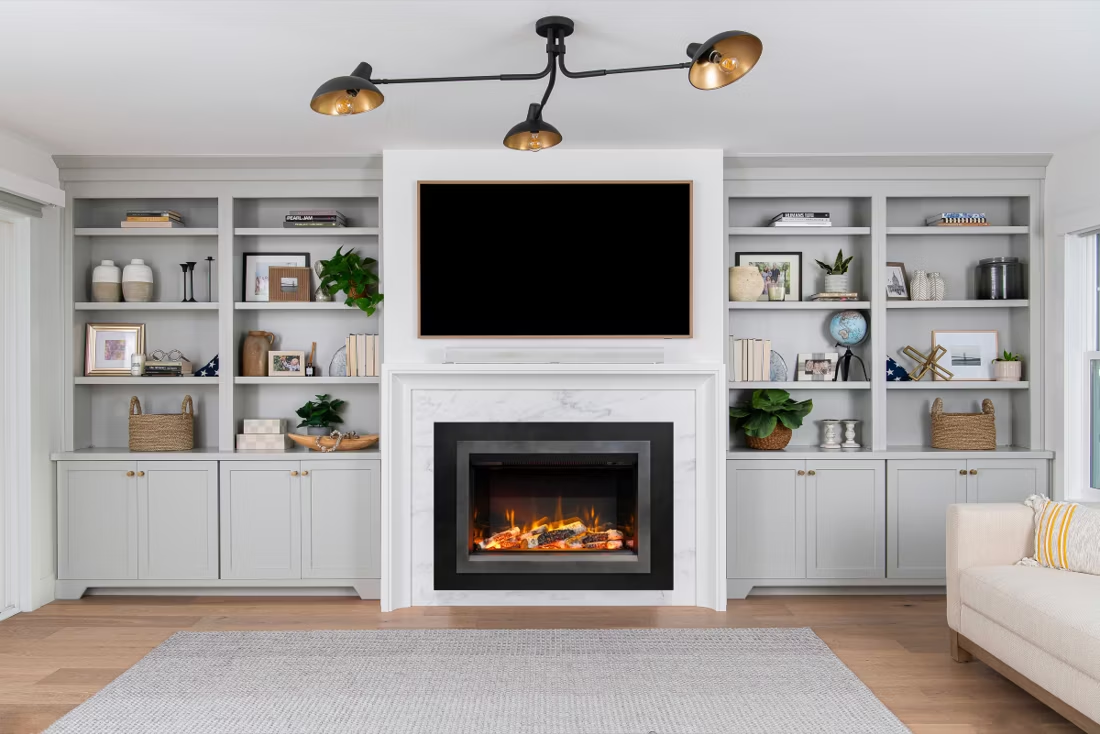
Can I put a TV above my fireplace?
Yes—with an asterisk. Fireplaces are hot and TVs don't like heat. Either put a mantel between them to deflect rising warmth, or choose a fireplace with heat-management technology that creates a cool zone on the wall above—the wall stays around 125 degrees, barely warm, while the room still gets full heat. If you like clean lines and don't want a mantel, heat management is the answer.
What fireplace styles should I know before shopping?
Four cover most of the market: screen-front traditional (mesh front, open feel, fits craftsman homes), traditional door set (the classic look you grew up with), modern linear (wide, low, the statement piece for entertaining), and clean face contemporary (no trim—your tile or stone runs right to the fire's edge). Walk in knowing those four terms and you're ahead of most buyers.
Can a fireplace actually lower my heating bill?
Yes—by creating a comfort zone. A furnace heats every square foot of the house just to warm the one room you're in; a gas fireplace on low burns roughly a sixth of the gas a typical furnace does. Set the furnace around 55–60 degrees as a baseline, then heat the rooms your family actually uses. Families who heat this way commonly save $20–$60 a month.
What is an in-home preview and do I need one?
It's a visit where a hearth professional measures your space, confirms the model you picked actually works in your home, and walks the specs—framing, gas line, venting, finish work—before anything is ordered. Some details you just can't know until you see the house. Never make a down payment without one; it's the single most-skipped step that burns buyers.
Nearby Dealers
Hearth shops serving Reading and the surrounding area. Every listing shows whether it is a WhyFire partner, a dealer we have verified as authorized for the brands we recommend, or a local business carrying hearth products. No manufacturer pays for placement. How we verify dealers →
A Chimney King
Scandia Stoves Of Pa Inc.
Krings Hearth & Home - Bechtelsville
Keystone Custom Decks
Sauder's Hardscape Supply
Pennsburg Ace Hardware
Peak Distribution
Independence Propane
Dewald & Lengle Hardware Inc.
Cressona Agway Store
Ds Stoves
Electric Service in Reading
An electric fireplace's heater draws about 1,500 watts—pennies per hour at local rates.
Metropolitan Edison Co
Find your electric fireplace in Reading.
Tell us a bit about your home and we'll match you with a trusted local dealer and send a free Project Guide & Parts List—the exact unit, parts, and recommended installer for your Reading project.
Find Your Fireplace →