
Find dependable gas heat for Potter County's coldest nights.
With average winter lows near 13°F and a reputation as the Icebox of Pennsylvania, Potter County homes need heat that won't quit. Find the right gas fireplace, insert, or stove and connect with a trusted local dealer.
Every Project Starts From One of These Five Situations
Instant heat built for the Icebox of Pennsylvania.
Potter County sits on the northern Allegheny Plateau, a heavily forested corner of Pennsylvania with a climate closer to Burlington, Vermont than to Philadelphia—Climate Zone 6A, roughly 7,472 heating degree days a year, and stretches of winter where temperatures near Coudersport and the surrounding valleys drop well below the county's 13°F average low. With a population under 5,000 spread across small townships and a county seat of a couple thousand people, most homes here have relied on oak, hickory, maple, and cherry cut from the Allegheny National Forest to get through winter. Gas has earned a place alongside that wood heritage for the simple reason that flipping a switch beats hauling wood at 20 below.
Because Potter County is so sparsely populated, natural gas mains reach only a handful of boroughs, and many homes—even in town—run on propane instead. That makes gas fireplace installs here a little different than in a piped-gas suburb: your installer will usually be sizing the unit around a propane tank rather than a municipal line. Either way, a properly installed direct-vent gas fireplace or insert gives you heat on demand, a real option for keeping a room warm during a winter power outage, and a lower-maintenance complement to a primary wood stove that's already doing the heavy lifting through a 7,472-HDD winter.
Three steps. No salesperson until you're ready.
Tell us about your project
Your zip code, your situation, and the fuel you're leaning toward—or let the answers point you to one.
See what's actually available
The brands dealers within 100 miles genuinely carry—real options, never a catalog mirage.
Get your dealer & Project Guide
A trusted local dealer, plus the free Project Guide & Parts List that names every component of the job.
Frequently Asked Questions
How much does a gas fireplace installation cost in Potter County?
A typical gas fireplace or insert installation in a Potter County home runs roughly $4,000 to $9,500, depending on the unit, the venting path, and whether propane tank work is involved. Converting an existing masonry fireplace to a direct-vent gas insert tends to land on the lower end if a chimney liner can be reused. New propane tank installation, longer gas line runs to reach the unit, or venting through masonry rather than a simple wall penetration will push costs toward the higher end. A local dealer can give you a firm number after seeing your home and your existing fuel setup.
Can I convert my existing wood fireplace to gas?
Yes, and it's a common project for older Potter County farmhouses and cabins built around a masonry hearth. A gas insert typically slides into the existing firebox and vents up through the chimney with a stainless liner, while a propane line is run to the unit from an above-ground or buried tank. The conversion keeps the look of the original fireplace but trades wood handling and chimney creosote for instant, thermostat-controlled heat—useful for the many second homes and hunting camps scattered through the county that sit empty for stretches of the coldest months.
Do I need natural gas, or is propane the right choice in Potter County?
For most of Potter County, propane is the practical answer. Natural gas mains are limited to a small number of built-up areas, and outside of those, homes run on propane delivered by regional suppliers and stored in an above-ground or buried tank. If you already heat with propane, adding a gas fireplace is usually a straightforward tie-in to your existing tank and line. If you're starting from scratch, your dealer will help size a tank appropriate for both your furnace and the new fireplace's BTU draw.
Will my gas fireplace work during a power outage?
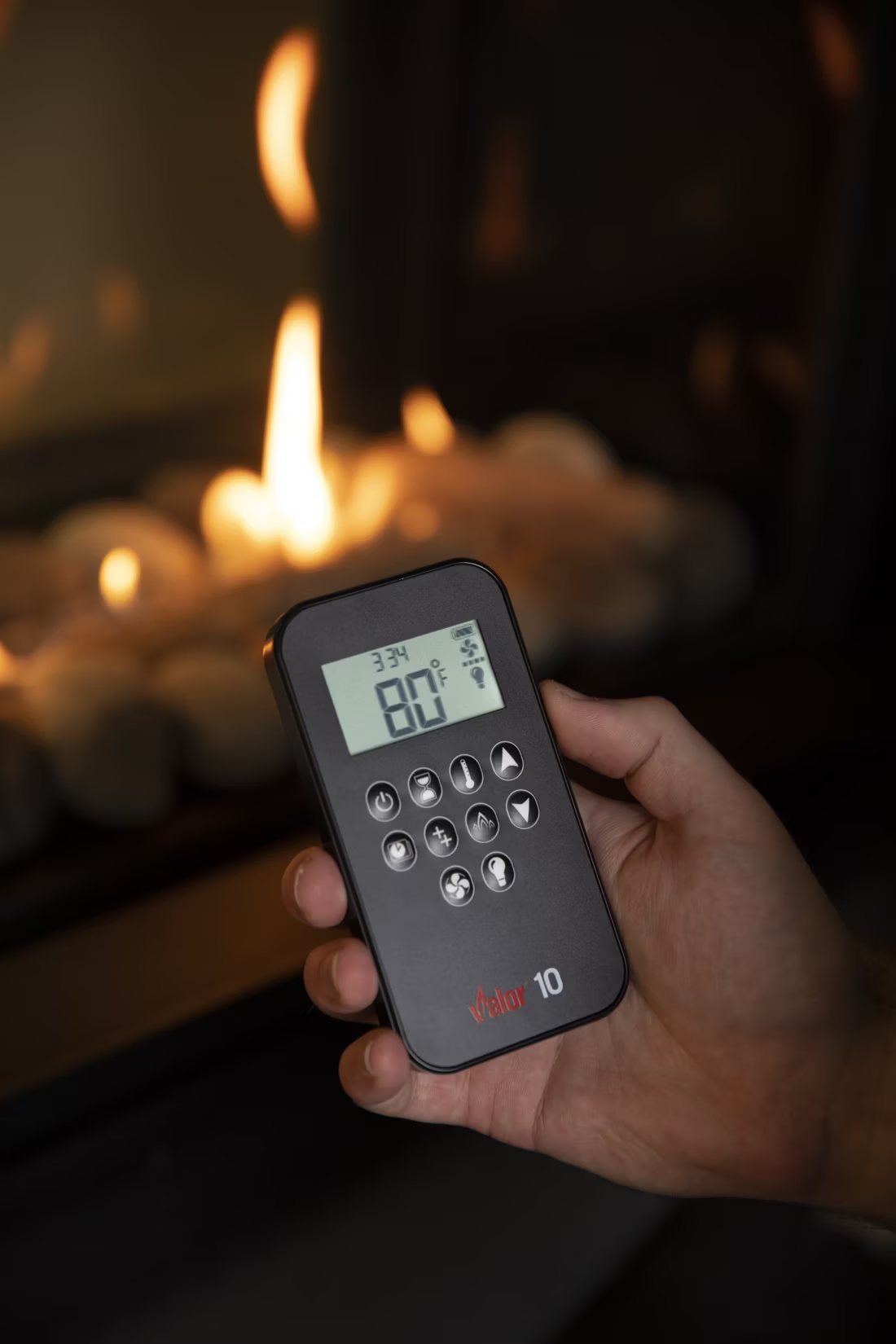
Most direct-vent gas fireplaces with intermittent pilot ignition (IPI) include a battery backup that keeps the unit running when the power drops—which matters in a county where winter storms on the Allegheny Plateau can knock out lines for a day or more. Valor fireplaces take a different approach: the pilot's thermocouple generates its own electricity, so there's no battery to remember to replace. For a Potter County home where a gas fireplace is meant to be a real backup heat source alongside a wood stove, ask your local dealer specifically about the ignition system before you buy.
What's the difference between a gas fireplace, gas insert, and gas stove?
A gas fireplace is a fully built-in unit framed into a wall, typically used in new construction or a remodel. A gas insert is built to slide into an existing masonry firebox and use the existing chimney as its vent path—the common choice for the older stone and brick fireplaces found in many Potter County homes. A gas stove is a freestanding cabinet-style unit that sits on the floor like a wood stove but burns propane or natural gas, which works well in a home that doesn't have an existing fireplace to convert.
Do I need a permit to install a gas fireplace in Potter County?
Yes—new gas fireplace and insert installations require a building permit under the Pennsylvania Uniform Construction Code, issued through your local township or borough building office, and any propane line work must be done by a licensed gas-fitter or plumber. Most established hearth dealers handle the permitting as part of the installation, which is one reason to work with a dealer rather than a handyman install, especially given how spread out code enforcement offices are across the county's small townships.
What's the difference between vented and vent-free gas fireplaces?
Vented (direct-vent) gas fireplaces draw combustion air from outside and exhaust it back outside through a sealed pipe—they're the most common choice and the safest bet for indoor air quality. Vent-free units burn fuel directly into the room without external venting; they're legal in Pennsylvania but come with strict room-size and ventilation requirements, and they add moisture and combustion byproducts to indoor air. In a Zone 6A county like Potter, where homes are sealed tight against the cold and windows stay shut for months, a direct-vent unit is generally the better call—you get real heat output without trading away indoor air quality during the long heating season.
How often should my gas fireplace be serviced?
Plan on an annual inspection, ideally before the heating season starts in the fall. A technician will check the burner, pilot assembly, venting, and gas connections and clean the glass and interior—a quick visit compared to a wood chimney sweep, but just as important given how much use a gas unit sees through a Potter County winter. Expect to pay in the neighborhood of $150 to $250 for a standard annual service call.
Gas vs. wood—which is right for my Potter County home?
Wood remains deeply practical here: Allegheny National Forest cutting permits run about $20 per cord from May through October, and the county's oak, hickory, maple, and cherry are excellent, dense-burning species that keep a stove producing heat through a night at 13°F or colder without relying on electricity or a propane delivery truck reaching your road. Gas offers the tradeoff of instant, no-mess heat with none of the splitting and stacking, plus a battery-backed unit that can still run in an outage. Many homes in the county end up with both—wood as the primary or backup heat source, gas in a main living space for daily convenience.
Why is a fireplace insert so efficient?
An insert does two things: it seals the chimney completely, so you stop losing air you already paid to heat, and it radiates warmth into the room through the firebox and glass. Most add a heat-exchange fan that pulls cool room air underneath, wraps it around the hot firebox, and pushes it back out warm. Your home is more efficient before you've even lit the first fire.
Is my gas fireplace wasting gas?
If it was installed more than 15 years ago, probably. Older gas fireplaces keep a standing pilot light burning all the time, and that little flame can cost a couple hundred dollars a year. Newer models use pilot-on-demand ignition—the pilot lights only when you use the fireplace and goes out when you turn it off.
What is an in-home preview and do I need one?
It's a visit where a hearth professional measures your space, confirms the model you picked actually works in your home, and walks the specs—framing, gas line, venting, finish work—before anything is ordered. Some details you just can't know until you see the house. Never make a down payment without one; it's the single most-skipped step that burns buyers.
Does a fireplace add value to my home?
On average, a fireplace adds back to the home about the same amount you spent installing it. Add the monthly savings from heating the rooms you actually use instead of the whole house—often hundreds of dollars a year—and the value case is strong before you even count what a fire does for how your family uses the room.
Stove and Fireplace Dealers in Potter County
Listings include WhyFire partner dealers, dealers we have verified as authorized for the brands we recommend, and established local businesses that carry hearth products. Every listing shows which one it is. The ones marked Preferred run on WhyFire's software, so they can show you real pricing and book your appointment right here. No manufacturer pays for placement. How we verify dealers →
Sisson's Chainsaws & Stoves
Troups Creek Heating
Country View Furniture
Find your gas fireplace in Potter County.
Tell us a bit about your home and heating needs, and we'll match you with a trusted local Potter County dealer and put together your free Project Guide & Parts List—the exact parts, including the vent kit, for your gas fireplace project.aught
Find Your Fireplace →