
Warmth and ambiance, no chimney required.
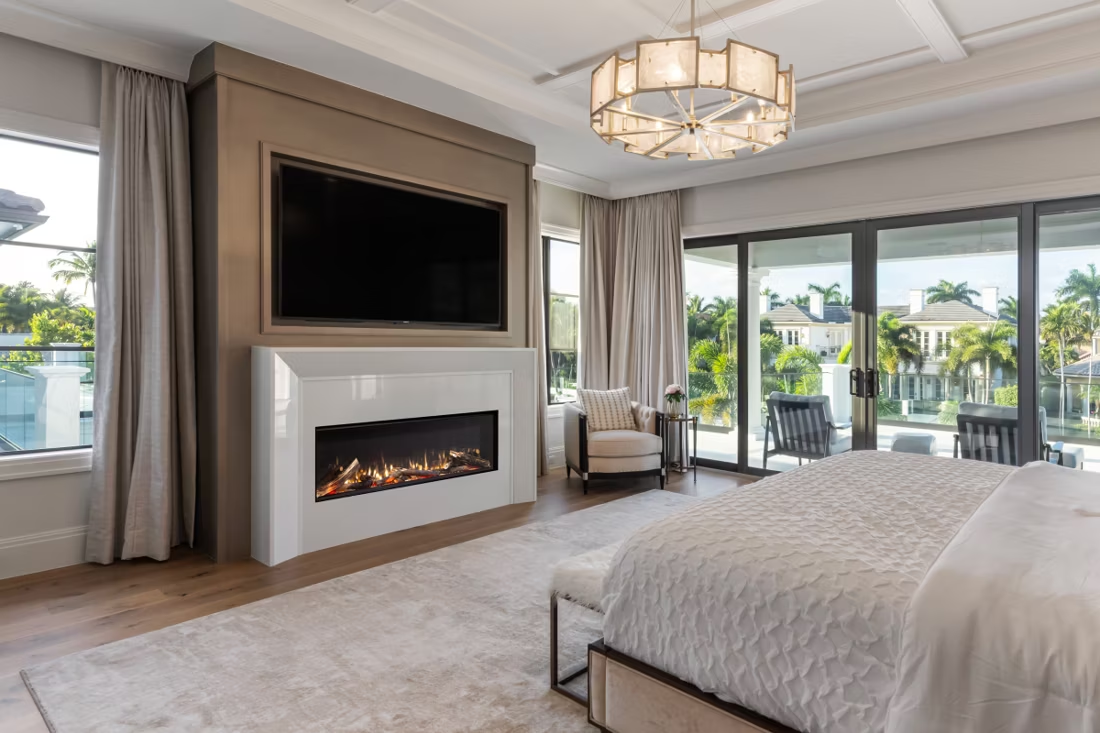
Plymouth's rowhomes and twins along the Susquehanna rarely have a masonry chimney rated for solid fuel. An electric fireplace or insert delivers real heat and flame-look ambiance without venting, gas lines, or tearing into century-old walls.
Every Project Starts From One of These Five Situations
Built for Plymouth's rowhomes, twins, and coal-era housing stock.
Plymouth is a small Luzerne County borough of about 5,800 people tucked into the Wyoming Valley along the Susquehanna River, just southwest of Wilkes-Barre. Winters here sit in climate zone 5A, with a solidly cold heating season and average lows around 20°F—cold, but nowhere near the severity of a place like Duluth, MN or Burlington, VT. Most of the borough's housing dates to the early 1900s coal-mining boom: narrow-lot rowhomes and twin houses with small footprints, many with either no working masonry chimney or a chimney flue that was never rated for solid fuel.
That housing pattern is exactly why wood and pellet appliances see little demand in Plymouth, while gas and electric handle nearly all local heating needs. Electric fireplaces fit neatly into that gap: no venting, no gas line, no annual chimney sweep, and—for plug-in units—no permit. UGI Utilities serves electric accounts here at a residential rate around $0.1882/kWh, which is on the higher side, so most Plymouth homeowners run electric units as supplemental zone heat in a den or living room rather than as their only heat source, paired with a gas or oil furnace for the rest of the house.
Three steps. No salesperson until you're ready.
Tell us about your project
Your zip code, your situation, and the fuel you're leaning toward—or let the answers point you to one.
See what's actually available
The brands dealers within 100 miles genuinely carry—real options, never a catalog mirage.
Get your dealer & Project Guide
A trusted local dealer, plus the free Project Guide & Parts List that names every component of the job.
Frequently Asked Questions
How much does an electric fireplace cost to install in Plymouth?
A freestanding or wall-mounted plug-in electric fireplace runs $200 to $600 for the unit itself and typically plugs into an existing outlet—no electrician or permit needed. A built-in wall unit or mantel package that requires a dedicated 120V or 240V circuit usually runs $1,000 to $3,000 once you factor in the electrician's time to run a new circuit and any wall or trim work. Given how many Plymouth rowhomes have finished plaster walls and older knob-and-tube or early romex wiring, it's worth having an electrician check the panel before committing to a hardwired unit.
Will an electric fireplace actually heat my room?
Most electric fireplace inserts produce around 4,000–5,000 BTU/hr of supplemental heat—enough to comfortably warm a single room, which fits the scale of Plymouth's older floor plans (many rowhomes run 1,000–1,400 square feet total). With average winter lows around 20°F and a solidly cold heating season, an electric unit works well as zone heat for a living room or den while your furnace handles the rest of the house—it isn't sized to replace whole-home heat on its own.
Can I put an electric insert into my existing fireplace opening?
Yes, and it's one of the more common projects for Plymouth's older housing stock. A lot of the borough's early-1900s twins and rowhomes have a decorative masonry fireplace that hasn't burned wood in decades—the flue was never rated for solid fuel, or it's simply been capped. An electric insert slides into that existing firebox opening, plugs in or wires to a nearby circuit, and gives the fireplace real flame-look ambiance and heat again without touching the masonry or the flue.
What does an electric fireplace cost to run in Plymouth?
At UGI's residential rate of roughly $0.1882 per kWh, a typical 1,500-watt electric fireplace running on high costs about 28 cents an hour to operate. Most owners run these units a few hours an evening rather than continuously, so the monthly cost usually lands in the $10–$30 range for regular winter use. That's a meaningfully lower operating cost than most people expect, since the flame effect itself uses almost no power—nearly all the draw comes from the heater element.
Do I need a permit to install an electric fireplace in Plymouth?
A plug-in freestanding or insert unit that uses an existing outlet doesn't require a permit. If your installer needs to run a new dedicated circuit—common for larger built-in wall units—that electrical work needs to be pulled through Plymouth Borough's building department and inspected once complete. Most licensed electricians handle that paperwork as part of the job, so it's rarely something the homeowner has to manage directly.
Electric vs. gas fireplace—which makes more sense for my Plymouth home?
Gas is common in Plymouth too—UGI serves both gas and electric accounts in the borough, and a lot of older homes already have gas service for the furnace or water heater. A gas insert or fireplace produces real, substantial heat and can run during a power outage on models with battery-backup ignition, but it requires venting and gas line work, which gets more complicated in a rowhome with shared walls. Electric skips the gas line and venting entirely, installs in an afternoon, and costs far less upfront—the tradeoff is lower total heat output and no operation if the power goes out. For occasional ambiance and zone heat in a rowhome or twin, electric is usually the simpler answer; for a primary heat source in a larger space, gas has the edge.
What type of electric fireplace fits Plymouth's older homes best?
For a rowhome or twin with an existing but unused masonry fireplace, an electric insert that slides into the firebox opening is the cleanest option—it uses the opening you already have and needs no structural changes. For homes without an existing fireplace, a slim linear wall-mounted unit fits narrow living rooms common to this housing stock without eating up floor space. Mantel package units (insert plus a surround) are a good middle ground for homes that want the traditional look without an existing masonry opening to work with.
Will my electric fireplace still work if the power goes out?
No—electric fireplaces need power to run both the heater and the flame effect, so they shut off in an outage just like the rest of your home's electrical system. This is worth factoring in if you're comparing options for backup heat during winter storms in the Wyoming Valley, when outages can stretch for a day or more. If backup heat during outages matters to you, a gas unit with battery-backup ignition or a wood-burning appliance is a better fit than electric—though electric remains the simpler, lower-cost choice for everyday ambiance and supplemental warmth.
Why don't more Plymouth homes use wood heat if oak and hickory are common locally?
Oak, hickory, maple, and cherry are all common species in the surrounding Luzerne County woodlands, but Plymouth's dense, narrow-lot rowhome and twin-house construction from the coal-mining era doesn't lend itself well to wood burning—many homes either lack a masonry chimney entirely or have one that was never built or maintained for solid-fuel use. Retrofitting a Class A chimney system into a shared-wall rowhome is expensive and structurally involved, which is why gas and electric have become the standard heating fuels in town instead. Electric fireplaces fill the ambiance-and-supplemental-heat role that a wood stove would fill in a freestanding home, without requiring any of that chimney work.
Does an electric fireplace need a vent or chimney?
No—that's its superpower. An electric fireplace needs a wall and an outlet, period. No vent pipe, no gas line, no clearances to design around, which is why it works in bedrooms, offices, apartments, and walls where venting a gas or wood unit would be impractical or impossible. Installation is typically the simplest and least expensive of any fireplace type.
Do electric fireplaces actually produce heat?
Yes—most put out around 4,800–5,000 BTUs from a standard outlet, which comfortably warms a bedroom, office, or den as a comfort-zone heater. What they won't do is carry a whole house the way wood, gas, or pellet can. Think of electric as ambiance-first with honest supplemental heat: flames on with no heat in July, flames plus warmth in January.
How much should I budget for a fireplace?
For an average home—covering the fireplace, the vent pipe, and basic installation—a budget between $3,900 and $5,500 gives you a lot of options across wood, gas, and pellet. By the time you add finish work, gas line, and electrical, the average complete installation lands between $5,000 and $12,000 all-in. In a remodel or new build, a good rule is to put about 2.5% of the total project cost toward the fireplace.
Does a fireplace add value to my home?
On average, a fireplace adds back to the home about the same amount you spent installing it. Add the monthly savings from heating the rooms you actually use instead of the whole house—often hundreds of dollars a year—and the value case is strong before you even count what a fire does for how your family uses the room.
Nearby Dealers
Hearth shops serving Plymouth and the surrounding area. Every listing shows whether it is a WhyFire partner, a dealer we have verified as authorized for the brands we recommend, or a local business carrying hearth products. No manufacturer pays for placement. How we verify dealers →
Harry's Lawn & Garden Center
S & T Coombe
Glowing Embers
Electric Service in Plymouth
An electric fireplace's heater draws about 1,500 watts—pennies per hour at local rates.
Ugi Utilities, Inc
Find your electric fireplace in Plymouth.
Tell us a bit about your Plymouth home and we'll match you with the right electric fireplace or insert—and hand you a free Project Guide & Parts List with your recommended local dealer.
Find Your Fireplace →