
Instant Warmth, Without the Woodpile.
Plymouth Meeting homes run on natural gas from PECO, and gas fireplaces fit the way this Montgomery County suburb actually lives. Find the right unit and get matched with a trusted local dealer.
Every Project Starts From One of These Five Situations
A dense Philadelphia suburb built for gas, not woodsheds.
Plymouth Meeting sits just off the I-476/I-276 interchange in Montgomery County, at a modest 147 feet of elevation with average winter lows around 23°F and roughly 4,869 heating degree days a year. That's a real but moderate cold-climate load—nowhere near what a place like Burlington, VT or Minneapolis, MN sees, but enough that a well-placed zone-heating source pays off during January and February cold snaps, especially when a Nor'easter knocks out power for a day or two.
This is a built-out, close-in suburb of split-levels, colonials, and townhome communities on relatively small lots, and firewood storage or cutting simply isn't part of the local infrastructure the way it is in rural Pennsylvania—that's why wood and pellet fuel rarely make sense here. Natural gas, on the other hand, is well established through PECO's service territory covering Plymouth Township. A gas fireplace or insert gives Plymouth Meeting homeowners instant, thermostatically controlled heat, a clean look with no ash or creosote, and—with the right ignition system—a reliable backup during outages, all without needing a cord of firewood in a two-car-garage suburb.
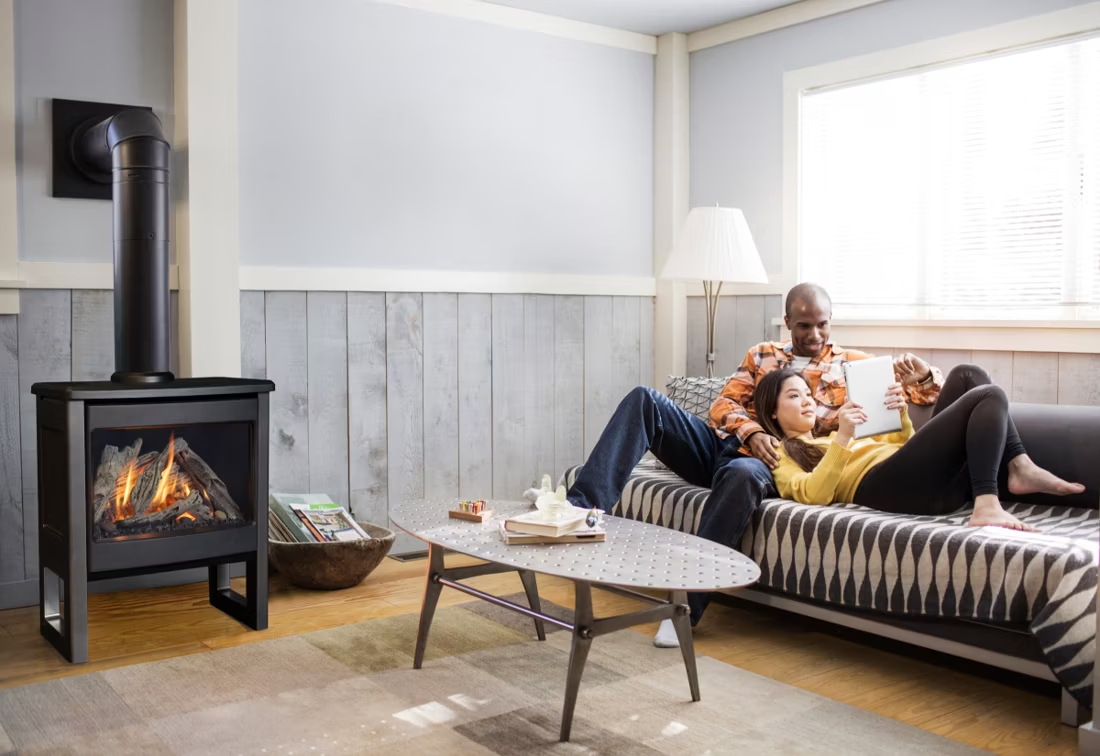
Three steps. No salesperson until you're ready.
Tell us about your project
Your zip code, your situation, and the fuel you're leaning toward—or let the answers point you to one.
See what's actually available
The brands dealers within 100 miles genuinely carry—real options, never a catalog mirage.
Get your dealer & Project Guide
A trusted local dealer, plus the free Project Guide & Parts List that names every component of the job.
Frequently Asked Questions
How much does a gas fireplace installation cost in Plymouth Meeting?
Most Plymouth Meeting installations run between $4,800 and $11,500. A direct-vent gas insert dropped into an existing masonry fireplace with a gas line already nearby sits toward the lower end. A new built-in gas fireplace for a great-room addition or finished basement—where framing, venting through an exterior wall, and a new gas line run from the meter are all needed—lands in the middle to upper range. Homes on the far edge of PECO's gas footprint that need a longer service line extension can run higher. A local dealer will give you a firm number after seeing the space in person.
Can I convert my existing wood fireplace to gas?
Yes, and it's one of the most common projects for the older colonials and split-levels around Plymouth Meeting that still have a working masonry fireplace and chimney. A gas insert goes into the existing firebox, and a stainless steel liner runs up the original chimney to vent it—no new roof penetration needed. Typical cost is $4,800 to $9,500 depending on the insert and how far the gas line has to travel from an existing appliance. Because true wood burning is uncommon in this area, converting the old fireplace to gas is usually the most practical way to keep the mantel and hearth while getting heat you'll actually use.
Do I need natural gas, or can I use propane?
Almost all of Plymouth Meeting falls within PECO's natural gas service territory, so if your home already has gas service for a furnace, water heater, or range, adding a fireplace is a straightforward tap into the existing line. Propane is rarely used here—it's mainly a fallback for the handful of properties at the township's edge that fall outside PECO's gas mains. Nearly every gas fireplace model on the market can be configured for either fuel, so the choice mostly comes down to what's already running to your house.
Will my gas fireplace work during a power outage?
Most modern gas fireplaces will, which matters here given how often PECO customers see multi-hour outages after a summer thunderstorm or winter Nor'easter. Units with IPI (intermittent pilot ignition) include a battery backup—usually AA batteries inside the unit—that keeps the fireplace lighting on demand even with no household power. Valor fireplaces take a different approach: the pilot's thermocouple generates its own electricity, so there's no battery to remember at all. If backup heat during outages is a priority for your Montgomery County home, ask your local dealer about the ignition system before you buy.
What's the difference between a gas fireplace, gas insert, and gas stove?
A gas fireplace is a fully built-in unit framed into a wall—common in newer Plymouth Meeting townhomes and additions. A gas insert slides into an existing masonry firebox and uses the chimney you already have, which fits the many 1960s-and-later colonials in the area with an original wood-burning fireplace that's rarely, if ever, used for actual wood. A gas stove is a freestanding cast-iron or steel unit that sits on the floor and vents through a wall or existing flue—a good option in a finished basement or converted den where there's no fireplace opening at all. A local dealer can walk your specific room and tell you which format actually fits.
Do I need a permit to install a gas fireplace in Plymouth Meeting?
Yes. Plymouth Township's Building and Zoning Department requires a building permit for the fireplace installation itself, and any new or extended gas line requires a licensed gas fitter and a separate mechanical permit. Most reputable local hearth dealers handle this paperwork as part of the job and schedule the inspection, so you're not coordinating the HVAC contractor, the gas fitter, and the township inspector yourself.
Are vent-free gas fireplaces allowed in Montgomery County?
Vent-free (unvented) gas fireplaces are legal in Pennsylvania and are installed in some Plymouth Meeting homes, but they burn directly into the room and are restricted to a minimum room size with an oxygen depletion sensor required. Direct-vent units—which draw combustion air from outside and exhaust sealed to the outdoors—are far more common locally and are what most dealers recommend by default, since they don't affect indoor air quality and work in any room size. If you're set on a vent-free unit for a specific space, ask your dealer to confirm the room qualifies before you commit.
How often should my gas fireplace be serviced?
Plan on an annual inspection, ideally before the first cold snap in October or November. A technician checks the burner, pilot assembly, venting, and gas connections, and cleans the glass and interior—a much lighter job than a wood chimney sweep, but still important, since a dirty pilot or degraded connection is the most common cause of a fireplace that won't light reliably. Local gas appliance service providers typically charge $150 to $250 for this visit.
Why doesn't anyone burn wood in Plymouth Meeting?
It's mostly a function of geography and lot size. Plymouth Meeting is a dense, built-out Philadelphia suburb of townhomes and modest-lot colonials with no nearby forest land, no local firewood permit system, and little practical space to season and store cordwood. Where oak, hickory, maple, and cherry firewood are genuinely part of the heating picture, it's usually farther out in rural Montgomery or Bucks County. Locally, a handful of older homes keep their original masonry fireplace for looks but almost always pair it with gas logs or a gas insert rather than actually burning wood—which is exactly why gas, not wood, is the fuel local dealers stock and install here.
What's the difference between an insert and a zero-clearance fireplace?
An insert is a fireplace that slides into a pre-existing wood-burning fireplace—if you don't have one, there's nothing to insert it into. A zero-clearance fireplace is built into a framed wall, which makes it the answer for remodels and new construction. Simple test: existing masonry fireplace means insert; blank or framed wall means zero-clearance.
Why is a fireplace insert so efficient?
An insert does two things: it seals the chimney completely, so you stop losing air you already paid to heat, and it radiates warmth into the room through the firebox and glass. Most add a heat-exchange fan that pulls cool room air underneath, wraps it around the hot firebox, and pushes it back out warm. Your home is more efficient before you've even lit the first fire.
How much should I budget for a fireplace?
For an average home—covering the fireplace, the vent pipe, and basic installation—a budget between $3,900 and $5,500 gives you a lot of options across wood, gas, and pellet. By the time you add finish work, gas line, and electrical, the average complete installation lands between $5,000 and $12,000 all-in. In a remodel or new build, a good rule is to put about 2.5% of the total project cost toward the fireplace.
Can I install a fireplace myself?
If you're putting a fire in your house on purpose, it's best to work with an expert. Unless you're genuinely experienced in framing, gas line, vent pipe, and the national code on clearances to combustibles, have a professional do it—and ideally the same company that sells you the fireplace, so warranty, service, and liability all live under one roof.
Nearby Dealers
Hearth shops serving Plymouth Meeting and the surrounding area. Every listing shows whether it is a WhyFire partner, a dealer we have verified as authorized for the brands we recommend, or a local business carrying hearth products. No manufacturer pays for placement. How we verify dealers →
Norristown Chimney
Ambler Fireplace And Patio
Maple Glen Mechanical
Kester Fireplace
Ambler Fireplace & Patio - Chalfont
Estates Chimney Sweep
Sequoia Supply Hatfield Showroom
Halligan's Hearth And Home
Estates Chimney & Fireplace
Hearth & Stove LLC
Halco Grills And Fireplaces
Independence Propane
Tor Chimney & Fireplace
Find your gas fireplace in Plymouth Meeting.
Tell us about your home and we'll match you with a trusted local dealer and a free Project Guide & Parts List—the exact parts, vent kit, and recommended installer for your Plymouth Meeting gas fireplace project.
Find Your Fireplace →