
Electric heat that keeps up with Nittany Valley winters.
No chimney, no gas line, no permit hassle—just plug in and warm up. Find the right electric fireplace or insert for your Pleasant Gap home and connect with a trusted local dealer.
Every Project Starts From One of These Five Situations
No chimney, no permit, no problem.
Pleasant Gap sits at about 1,000 feet in Centre County's Nittany Valley, tucked near the base of Nittany Mountain a few miles from Bellefonte and State College. Winters here bring lows around 20°F and a heating season about as demanding as a full six-month winter—a climate on par with Madison, Wisconsin, more than most people expect from central Pennsylvania. With a housing stock that leans toward newer construction and manufactured homes rather than old masonry farmhouses, electric fireplaces have become one of the simplest ways for Pleasant Gap homeowners to add supplemental heat and ambiance without chimney work.
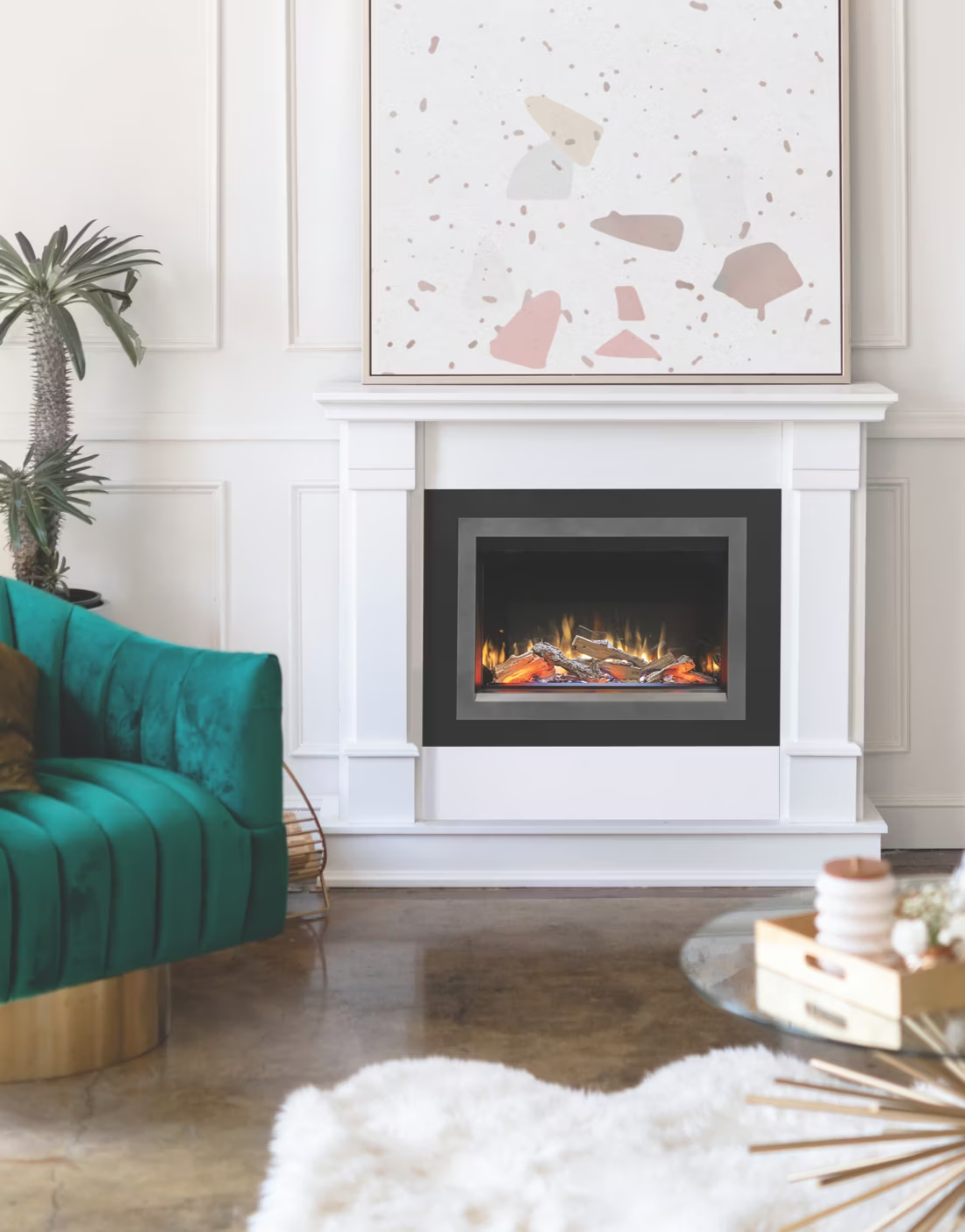
West Penn Power Company serves the borough and surrounding Spring Township at a residential rate of roughly $0.1545 per kWh, which keeps the cost of running an electric fireplace for a few hours each evening down to pocket change. Because there's no venting, no gas line, and often no permit required, an electric insert or wall-mount unit can go from delivery to lit in an afternoon—a real advantage for renters, manufactured-home owners, and anyone converting an old, unused wood-burning fireplace into something they'll actually use.
Three steps. No salesperson until you're ready.
Tell us about your project
Your zip code, your situation, and the fuel you're leaning toward—or let the answers point you to one.
See what's actually available
The brands dealers within 100 miles genuinely carry—real options, never a catalog mirage.
Get your dealer & Project Guide
A trusted local dealer, plus the free Project Guide & Parts List that names every component of the job.
Frequently Asked Questions
How much does it cost to install an electric fireplace in Pleasant Gap?
Plug-in electric fireplace inserts and freestanding units typically run $300 to $900 installed in Pleasant Gap homes, since most units simply need a standard 120V outlet and no venting or gas line. Built-in wall units or larger mantel packages that need a dedicated 20-amp circuit run higher, usually $800 to $2,200, once an electrician is brought in to run new wiring—common in the older farmhouses and split-levels scattered through Spring Township. Because there's no chimney, gas line, or flue to size, electric installs are consistently the fastest and least expensive hearth project in Centre County.
Do I need a permit to install an electric fireplace in Pleasant Gap?
In most cases, no. A plug-in electric fireplace or insert that uses an existing outlet doesn't require a building permit under Spring Township or Centre County code. If you're having a built-in unit hardwired on a new dedicated circuit, your electrician will typically need to pull an electrical permit—standard practice anywhere in Pennsylvania when new circuits are added, not something specific to electric fireplaces. Your local dealer or electrician can confirm requirements with the township office before work starts.
What size electric fireplace do I need for my home?
Most electric fireplaces are rated to supplement heat in a single room of 400 to 1,000 square feet, putting out around 4,700 to 5,000 BTU (roughly 1,500 watts) on high. In a Pleasant Gap home built before double-pane windows and modern insulation were standard, that's usually enough to take the edge off a living room or bonus room on a 20-degree night, but it won't replace your furnace on its own. For larger open floor plans, look at models with dual-zone blowers or plan on running two smaller units rather than one oversized unit—oversizing doesn't gain you much with electric resistance heat the way it does with wood or gas.
What does it cost to run an electric fireplace with West Penn Power rates?
At West Penn Power Company's residential rate of about $0.1545 per kWh, a standard 1,500-watt electric fireplace running on high costs roughly 23 cents an hour to operate—about $5.50 for a full day of continuous use. Most homeowners run theirs a few hours an evening for ambiance and supplemental warmth rather than around the clock, which keeps the added cost to a few dollars a month. Compared to propane, which many homes off the natural gas line rely on in rural Centre County, electric heat is often the cheaper way to warm a single room.
Electric fireplace vs. gas—which makes more sense in Pleasant Gap?
Natural gas service reaches parts of Centre County, but a lot of Pleasant Gap and the surrounding Spring Township countryside relies on propane or fuel oil for whole-home heat, which makes a gas fireplace install more involved—a new gas line or propane tank tie-in adds cost and coordination. Electric fireplaces skip that step entirely: any 120V outlet or basic circuit gets you running the same day. Gas still wins on raw heat output for a room that needs real BTUs on the coldest nights, but electric wins on install simplicity, upfront cost, and flexibility if you're renting, in a manufactured home, or just want supplemental warmth without touching gas lines.
What's the difference between an electric insert, a built-in unit, and a wall-mount?
An electric insert slides into an existing masonry or wood-burning fireplace opening, giving you real heat and flame effect out of a fireplace that's been sitting unused—a common upgrade in Pleasant Gap's older homes with fireplaces nobody wants to keep sweeping or feeding wood into. A built-in unit is framed into a wall during a remodel or new construction, like a linear fireplace under a TV. A wall-mount is the simplest option—it hangs on the wall like a piece of art and plugs into a standard outlet, no framing or electrician required in most cases. All three run on the same basic electric-resistance heating element; the difference is really about how they fit your space.
Will my electric fireplace still work if the power goes out?
No—and this is the one honest limitation of electric heat. If West Penn Power lines go down during an ice storm or a heavy Nittany Valley snow event, an electric fireplace goes dark along with everything else in the house. If backup heat during outages matters to you, an electric fireplace should be considered ambiance and supplemental warmth, not your emergency plan—some Pleasant Gap homeowners pair one with a propane heater or a generator for true outage coverage.
What brands and features should I look for in an electric fireplace?
Dimplex, Napoleon, and Amantii all make electric inserts and linear units with realistic flame technology—worth the difference over a big-box space heater with a plastic log taped in front of it. Look for a model with a separate heater and flame-effect switch, so you can run the flame year-round without the heat in summer, and check the BTU rating against the room you're heating rather than the size of the unit's screen. A local hearth dealer can show you the flame effect in person before you buy, which matters more with electric units than with any other fuel—the visual quality varies a lot between manufacturers.
Why don't more homes in Pleasant Gap use wood or pellet stoves?
Wood and pellet heat are less common in Pleasant Gap's current housing mix than you'd expect for central Pennsylvania—a combination of manufactured and newer-construction homes without existing masonry chimneys, plus the simplicity of electric and propane options, has made wood-burning appliances a smaller share of the market here than in more rural parts of Centre County. Homeowners with existing wood-burning fireplaces sometimes convert to an electric insert specifically to skip the chimney maintenance and wood handling. If you're set on a wood or pellet appliance despite the local trend, a hearth dealer can still spec one—it's just a less traveled path in this particular market.
Can I put a TV above my fireplace?
Yes—with an asterisk. Fireplaces are hot and TVs don't like heat. Either put a mantel between them to deflect rising warmth, or choose a fireplace with heat-management technology that creates a cool zone on the wall above—the wall stays around 125 degrees, barely warm, while the room still gets full heat. If you like clean lines and don't want a mantel, heat management is the answer.
Do electric fireplaces actually produce heat?
Yes—most put out around 4,800–5,000 BTUs from a standard outlet, which comfortably warms a bedroom, office, or den as a comfort-zone heater. What they won't do is carry a whole house the way wood, gas, or pellet can. Think of electric as ambiance-first with honest supplemental heat: flames on with no heat in July, flames plus warmth in January.
Can a fireplace actually lower my heating bill?
Yes—by creating a comfort zone. A furnace heats every square foot of the house just to warm the one room you're in; a gas fireplace on low burns roughly a sixth of the gas a typical furnace does. Set the furnace around 55–60 degrees as a baseline, then heat the rooms your family actually uses. Families who heat this way commonly save $20–$60 a month.
Does a fireplace add value to my home?
On average, a fireplace adds back to the home about the same amount you spent installing it. Add the monthly savings from heating the rooms you actually use instead of the whole house—often hundreds of dollars a year—and the value case is strong before you even count what a fire does for how your family uses the room.
Nearby Dealers
Hearth shops serving Pleasant Gap and the surrounding area. Every listing shows whether it is a WhyFire partner, a dealer we have verified as authorized for the brands we recommend, or a local business carrying hearth products. No manufacturer pays for placement. How we verify dealers →
Port's Sports Emporium
Peachey Chimney, Hearth & HVAC Service
Electric Service in Pleasant Gap
An electric fireplace's heater draws about 1,500 watts—pennies per hour at local rates.
West Penn Power Company
Find your electric fireplace in Pleasant Gap.
Tell us about your home and we'll match you with a trusted local dealer and send over a free Project Guide & Parts List—the exact electric fireplace, mounting hardware, and wiring plan recommended for your Pleasant Gap home.
Find Your Fireplace →