
Find out if a pellet stove really fits your Philadelphia home.
Pellet heat is a niche choice in a city of attached rowhomes and citywide gas service—but for the right basement, garage, or second home, it can still make sense. We'll help you figure out which one you are.
Every Project Starts From One of These Five Situations
Philadelphia's rowhomes weren't built for pellet hoppers.
Philadelphia sits in climate zone 4A with about 4,212 heating degree days and an average winter low near 28°F—a real but moderate heating season, nowhere close to the deep cold of a place like Burlington, VT, where pellet and wood stoves are a primary heat source in tens of thousands of homes. Most Philadelphia housing stock is attached rowhomes built before 1930, with shared party walls, no side-yard clearance for exterior venting, and basements that are often finished living space rather than mechanical rooms. Philadelphia Gas Works, the city's own gas utility, already reaches the vast majority of these homes, which is why gas fireplaces and inserts dominate the local hearth market instead.
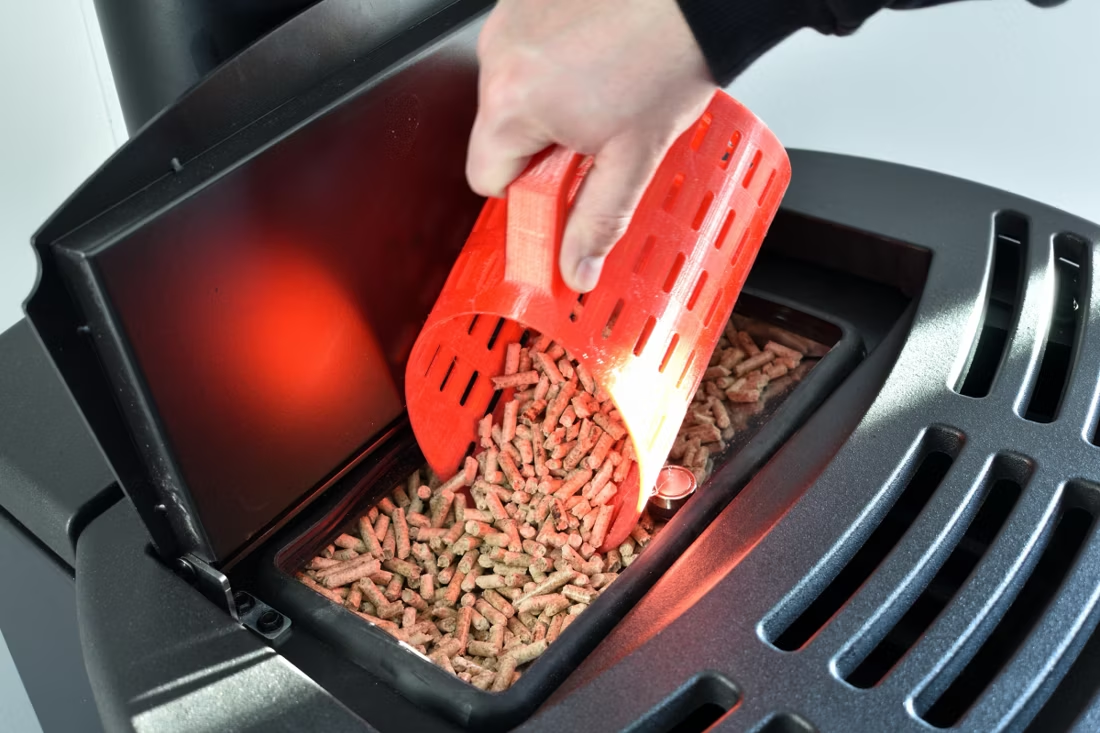
That said, pellet stoves aren't unheard of here. Homeowners in Northeast and Northwest Philadelphia neighborhoods with detached or semi-detached houses, owners of freestanding garages and workshops, and Philadelphians with a second home in the Poconos or Lehigh Valley sometimes choose a pellet stove specifically for its thermostat-like convenience and access to regional pellet brands like Energex, Hamer Pellet Fuel, and Greene Team Pellet Fuel. If that sounds like your situation, a local dealer can tell you honestly whether your space, venting path, and electrical setup actually support one—and if not, point you toward a gas or electric option that will serve you better.
Three steps. No salesperson until you're ready.
Tell us about your project
Your zip code, your situation, and the fuel you're leaning toward—or let the answers point you to one.
See what's actually available
The brands dealers within 100 miles genuinely carry—real options, never a catalog mirage.
Get your dealer & Project Guide
A trusted local dealer, plus the free Project Guide & Parts List that names every component of the job.
Frequently Asked Questions
Are pellet stoves actually common in Philadelphia?
Not really, and we'd rather tell you that up front than sell you on something that doesn't fit. Philadelphia's housing stock is dominated by attached rowhomes with shared walls and tight side yards, which makes the exterior wall venting a pellet stove needs harder to place than in a detached suburban or rural home. Philadelphia Gas Works already serves most of the city, so gas fireplaces and inserts are the far more common upgrade. Pellet stoves show up more often in detached homes in Northeast and Northwest Philadelphia, freestanding garages, or basements with an exterior wall clear enough for a 3-inch or 4-inch pellet vent.
What does a pellet stove installation typically cost?
A pellet stove and its direct-vent installation typically runs in the $3,000 to $6,500 range nationally, with the low end covering a straightforward stove install where the vent path is short and simple, and the higher end covering longer vent runs, electrical work for the auger and blower circuit, or a hearth pad upgrade for code clearance. Because pellet installs are relatively rare in Philadelphia, it's worth getting a firm in-home quote from a dealer who's actually done one in a rowhome or Northeast Philly detached home before assuming a number applies to your property.
Where in a Philadelphia home does a pellet stove actually make sense?
The best candidates are homes with an accessible exterior wall for venting and a dedicated spot for a bag or two of pellets—think a finished basement with a walkout or window well, a converted garage, or a first-floor family room on a detached or semi-detached house in Northeast or Roxborough-area neighborhoods. Center City condos, high-rises, and interior rowhomes without exterior wall access on the ground floor are generally poor fits; a direct-vent gas fireplace or an electric unit will get you real heat and ambiance without the venting problem.
Do I need a permit to install a pellet stove in Philadelphia?
Yes. Solid-fuel and pellet appliance installations require a building permit through the Philadelphia Department of Licenses and Inspections (L&I), and the venting has to meet code clearances to combustibles and property lines—which is often the trickiest part in a rowhome with a narrow side yard. A dealer who has pulled L&I permits before will know how the department wants the vent termination documented and can save you a rejected inspection.
What pellet brands are available near Philadelphia?
Regional suppliers carry Energex, Hamer Pellet Fuel, and Greene Team Pellet Fuel, all of which distribute into the Mid-Atlantic. Because pellet stoves are a smaller market here than in the wood-heavy Northeast or Upper Midwest, you'll find fewer big-box pallets on hand and more reliance on hardware stores and hearth dealers who special-order by the ton ahead of winter—it's worth locking in your season's pellets in September or October rather than waiting for a cold snap in January.
Will a pellet stove work during a power outage?
Not without a backup power plan. Pellet stoves rely on an electric auger to feed fuel and a blower to distribute heat, so a PECO outage—which does happen during Nor'easters and summer thunderstorms with downed lines—shuts the stove down along with everything else. Some homeowners pair a pellet stove with a small battery backup or generator sized for the auger and control board draw, which is a modest load. If outage-proof heat is your main goal, a wood-burning appliance or a battery-backed gas fireplace with an on-demand pilot is a more reliable choice than pellet in this climate.
Pellet vs. gas fireplace—which makes more sense for a Philadelphia rowhome?
For the typical Philadelphia rowhome, gas usually wins. Philadelphia Gas Works already reaches most of the city, direct-vent gas fireplaces and inserts vent easily through an existing masonry chimney or a short horizontal run, and there's no fuel storage, hopper loading, or ash removal to manage in a home with limited basement or utility space. Pellet makes more sense if you specifically want the visual and smell of a real flame with self-contained, thermostatically controlled heat and you have a detached or semi-detached property with the venting and storage space to support it.
Is an electric fireplace a better fit for a Center City condo?
Often, yes. Electric fireplaces need no venting at all, which matters in high-rises and interior condo units where running a flue or pellet vent to an exterior wall isn't possible or isn't allowed by the building. PECO's residential rate runs about 14.7 cents per kWh, so an electric unit costs more per BTU to run than gas or pellet, but for supplemental ambiance and zone heat in a condo, that trade-off is usually worth the simplicity—install costs are typically in the hundreds of dollars rather than thousands, since there's no venting or gas line work involved.
If pellet isn't a great fit, what should I actually consider instead?
Given Philadelphia's rowhome-heavy housing stock, wide natural gas coverage through Philadelphia Gas Works, and moderate 4,212-heating-degree-day climate, most homeowners here end up happiest with a direct-vent gas fireplace or insert for primary living spaces, and an electric unit for condos, apartments, or rooms without any venting option. Pellet remains a legitimate choice for the smaller slice of Philadelphians with detached homes, garages, or second properties outside the city where the venting and storage requirements are easy to meet. A local dealer can walk your specific property and tell you which category you're in before you commit to anything.
What's the difference between an insert and a zero-clearance fireplace?
An insert is a fireplace that slides into a pre-existing wood-burning fireplace—if you don't have one, there's nothing to insert it into. A zero-clearance fireplace is built into a framed wall, which makes it the answer for remodels and new construction. Simple test: existing masonry fireplace means insert; blank or framed wall means zero-clearance.
Why is my open fireplace making my house colder?
Open fireplaces suck—literally. As the fire burns, it consumes air your furnace already paid to heat and pulls it out through the chimney, so the house is actually colder after the fire goes out than before you lit it. An insert fixes this: it seals the chimney, puts fixed glass across the front, and turns that hole in your house into a real heat source.
How much should I budget for a fireplace?
For an average home—covering the fireplace, the vent pipe, and basic installation—a budget between $3,900 and $5,500 gives you a lot of options across wood, gas, and pellet. By the time you add finish work, gas line, and electrical, the average complete installation lands between $5,000 and $12,000 all-in. In a remodel or new build, a good rule is to put about 2.5% of the total project cost toward the fireplace.
Can I install a fireplace myself?
If you're putting a fire in your house on purpose, it's best to work with an expert. Unless you're genuinely experienced in framing, gas line, vent pipe, and the national code on clearances to combustibles, have a professional do it—and ideally the same company that sells you the fireplace, so warranty, service, and liability all live under one roof.
Nearby Dealers
Hearth shops serving Philadelphia and the surrounding area. Every listing shows whether it is a WhyFire partner, a dealer we have verified as authorized for the brands we recommend, or a local business carrying hearth products. No manufacturer pays for placement. How we verify dealers →
Rettinger Fireplace Systems Inc
Kester Fireplace
Maple Glen Mechanical
Ambler Fireplace And Patio
Plumbarama Co. Inc.
Norristown Chimney
Estates Chimney & Fireplace
South Jersey Hearthside LLC Dba Modern Gas Products
Rattan Patio & Fireplace Shoppe
E & E Stoves & Fireplaces
Hearth & Stove LLC
Pellet Brands Stocked Around Philadelphia
Manufacturers will point you to the nearest stocking dealer.
Get your free Philadelphia pellet Project Guide & Parts List.
Tell us about your home and we'll tell you honestly whether pellet fits—then match you with a trusted local dealer and a free Project Guide & Parts List covering the exact vent kit and hardware your Philadelphia property needs.
Find Your Fireplace →