
Real Heat, Zero Chimney Required.
For the thousands of Philadelphia rowhomes without a flue or a place to run one, electric delivers real supplemental warmth without touching the brick. Find the right unit and connect with a trusted local dealer.
Every Project Starts From One of These Five Situations
Built for rowhomes without a flue.
Walk through Fishtown, Kensington, or South Philly and you'll find block after block of narrow brick rowhomes built shoulder to shoulder, many with party walls on both sides and no masonry chimney anywhere in the structure. Philadelphia sits in climate zone 4A with roughly 4,212 heating degree days and an average winter low around 28°F—cold enough to want supplemental heat in a chilly front parlor, but nowhere near the sub-zero stretches that push homeowners in Buffalo or Minneapolis toward a wood-burning primary heat source. That combination—dense housing without chimneys, and winters that call for zone heat rather than a full heating system—is exactly where electric fireplaces fit.
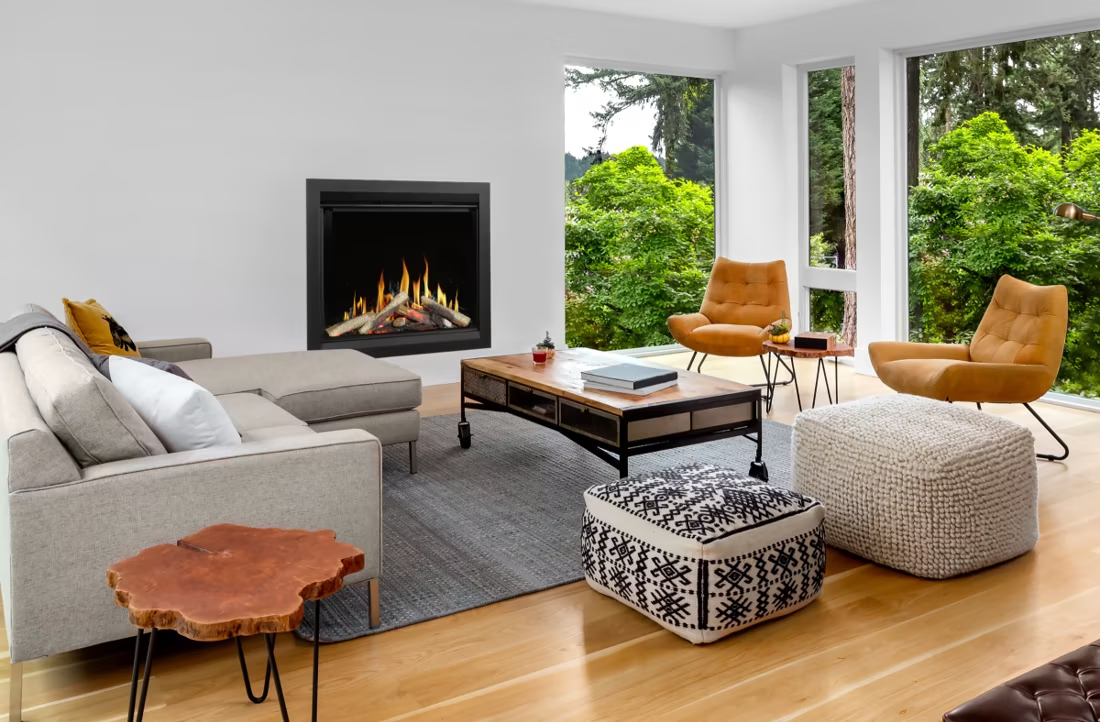
That's also why wood stoves and pellet stoves are genuinely uncommon here: most rowhome blocks have no chimney to vent through, shared party walls complicate clearance requirements, and the tight urban lots common across zip codes like 19147 or 19125 leave little room for cutting or storing cordwood. Electric solves the problem cleanly. A plug-in insert or mantel unit runs on a standard 120V outlet with no permit and no venting, while a hardwired built-in draws on PECO Energy service already run to the house. Either way, you get real radiant or fan-forced heat in the room that needs it—a corner of a parlor, a finished basement, a condo unit where an open flame isn't an option—without opening a wall for ductwork or a chimney for venting.
Three steps. No salesperson until you're ready.
Tell us about your project
Your zip code, your situation, and the fuel you're leaning toward—or let the answers point you to one.
See what's actually available
The brands dealers within 100 miles genuinely carry—real options, never a catalog mirage.
Get your dealer & Project Guide
A trusted local dealer, plus the free Project Guide & Parts List that names every component of the job.
Frequently Asked Questions
How much does an electric fireplace installation cost in Philadelphia?
A plug-in electric insert or freestanding stove that drops into an existing mantel opening typically runs $300 to $1,500 installed, since no electrical or venting work is needed beyond an existing outlet. A built-in wall unit or a linear electric fireplace set into new millwork runs higher—usually $1,500 to $4,000—once you factor in a licensed electrician running a dedicated circuit, which many rowhomes with older knob-and-tube or undersized panels require. Local dealers who work in Philadelphia's older housing stock will typically flag panel or wiring issues during the in-home visit rather than after the unit arrives.
Do I need a permit for an electric fireplace in Philadelphia?
A plug-in unit that uses an existing outlet generally doesn't require a permit. If your installer needs to add a new dedicated circuit or breaker for a hardwired built-in, that electrical work falls under the City of Philadelphia's Department of Licenses and Inspections (L&I), and a licensed electrician pulls the permit as part of the job. Because there's no combustion and no venting involved, electric fireplace installs skip the building and mechanical permit steps that a gas or wood project in Philadelphia would require.
How much does it cost to run an electric fireplace in Philadelphia?
At PECO's residential rate of roughly $0.1474 per kWh, a typical 1,500-watt heater setting costs about $0.22 an hour to run—around $1.75 for an 8-hour evening of use. Most units let you run the flame effect alone (a few watts, essentially free) or the flame plus heat (the 1,500-watt draw), so you can get the ambiance without the electric bill on milder days and dial in real heat when a Philadelphia cold snap hits.
Electric vs. gas—which is right for my Philadelphia home?
Philadelphia Gas Works serves most of the city, so gas fireplaces are a real option for homes with existing service, and they put out more heat per unit—useful for a primary living space with high ceilings. But gas installs require venting, a gas line, and typically a building permit through L&I. Electric skips all of that: no gas line, no venting, no combustion byproducts, and a much lower installed cost. For a rowhome without existing gas fireplace infrastructure, or a condo where venting isn't feasible, electric is usually the faster and cheaper path. For a home already plumbed for gas that wants stronger heat output, gas is worth comparing.
Why don't more Philadelphia homes have wood-burning fireplaces?
Plenty of older Philadelphia rowhomes were built with a fireplace, but many of those chimneys were bricked over, capped, or shared between adjoining units decades ago as heating systems modernized—common wood species like oak, hickory, and cherry are available regionally, but there's often nowhere left to safely vent a wood-burning appliance in a dense rowhome block. New wood stove installations are rare in the city for this reason: without an existing, code-compliant chimney, running new venting through a party-wall rowhome is expensive and often not physically possible. That's the gap electric fills—real supplemental heat with zero venting required.
What's the best type of electric fireplace for a Philadelphia rowhome?
For a typical rowhome parlor or living room facing the street, a linear wall-mounted or built-in unit set into existing millwork gives a clean, modern look without eating into the narrow floor plan. For homes with an existing but non-functional masonry fireplace, an electric insert sized to the firebox opening is often the simplest fix—it drops in, plugs into an outlet routed to the mantel, and instantly makes a dead fireplace usable again. Condo owners and renters generally do best with a freestanding electric stove or mantel package that requires no modification to the unit at all.
Will an electric fireplace actually heat a room in Philadelphia's winters?
For zone heating, yes. A 1,500-watt electric fireplace can comfortably take the edge off a 300-400 square foot room even when outdoor temps sit near the city's average winter low of 28°F, which is why they work well as a supplement to a rowhome's existing steam or hot water radiator system rather than a replacement for it. They're not designed to heat an entire home the way a furnace does—think of them as the reason you can turn the thermostat down two degrees and still keep the front room comfortable on a January evening.
Electric vs. pellet stove—which is right for me?
Pellet stoves are genuinely rare in Philadelphia proper—they need venting through an exterior wall or roof and a place to store bags of fuel, both of which are hard to come by in a rowhome on a narrow city lot, which is why regional bags from brands like Energex or Hamer Pellet Fuel are more common in the surrounding suburbs and rural Pennsylvania than in the city itself. Electric fireplaces need none of that: no venting, no fuel storage, no auger or hopper to maintain. If you're in one of Philadelphia's denser zip codes and want supplemental heat with the least amount of infrastructure, electric is almost always the more practical choice.
Can I put an electric fireplace anywhere in my Philadelphia condo or apartment?
In most cases, yes—since a plug-in electric unit doesn't involve combustion or venting, it typically doesn't trigger the condo association or building restrictions that a gas or wood-burning appliance would. It's still worth checking your building's rules on wall-mounted units and any electrical load restrictions before a hardwired install, but for a freestanding or mantel-style electric fireplace, most Philadelphia condo and apartment buildings have no issue at all. A local dealer can also advise on wall-mount weight and bracket requirements for older plaster or masonry walls common in the city's prewar buildings.
Can I put a TV above my fireplace?
Yes—with an asterisk. Fireplaces are hot and TVs don't like heat. Either put a mantel between them to deflect rising warmth, or choose a fireplace with heat-management technology that creates a cool zone on the wall above—the wall stays around 125 degrees, barely warm, while the room still gets full heat. If you like clean lines and don't want a mantel, heat management is the answer.
Does an electric fireplace need a vent or chimney?
No—that's its superpower. An electric fireplace needs a wall and an outlet, period. No vent pipe, no gas line, no clearances to design around, which is why it works in bedrooms, offices, apartments, and walls where venting a gas or wood unit would be impractical or impossible. Installation is typically the simplest and least expensive of any fireplace type.
Can a fireplace actually lower my heating bill?
Yes—by creating a comfort zone. A furnace heats every square foot of the house just to warm the one room you're in; a gas fireplace on low burns roughly a sixth of the gas a typical furnace does. Set the furnace around 55–60 degrees as a baseline, then heat the rooms your family actually uses. Families who heat this way commonly save $20–$60 a month.
Can I install a fireplace myself?
If you're putting a fire in your house on purpose, it's best to work with an expert. Unless you're genuinely experienced in framing, gas line, vent pipe, and the national code on clearances to combustibles, have a professional do it—and ideally the same company that sells you the fireplace, so warranty, service, and liability all live under one roof.
Nearby Dealers
Hearth shops serving Philadelphia and the surrounding area. Every listing shows whether it is a WhyFire partner, a dealer we have verified as authorized for the brands we recommend, or a local business carrying hearth products. No manufacturer pays for placement. How we verify dealers →
Rettinger Fireplace Systems Inc
Kester Fireplace
Maple Glen Mechanical
Ambler Fireplace And Patio
Plumbarama Co. Inc.
Norristown Chimney
Estates Chimney & Fireplace
South Jersey Hearthside LLC Dba Modern Gas Products
Rattan Patio & Fireplace Shoppe
E & E Stoves & Fireplaces
Hearth & Stove LLC
Electric Service in Philadelphia
An electric fireplace's heater draws about 1,500 watts—pennies per hour at local rates.
Peco Energy Co
Find your electric fireplace in Philadelphia.
Tell us about your rowhome, condo, or apartment and we'll match you with a trusted local Philadelphia dealer and send over a free Project Guide & Parts List—the exact unit specs and parts for your space, no chimney or gas line required.
Find Your Fireplace →