
Clean, instant heat for Pennsburg's colder months.
From the stone farmhouses of the Upper Perkiomen Valley to newer builds near Route 29, gas heat is a practical fit for Pennsburg winters. Find the right unit and connect with a trusted local dealer.
Every Project Starts From One of These Five Situations
Reliable warmth, without tending a fire.
Pennsburg sits at 360 feet in the Upper Perkiomen Valley, a small borough of under 4,000 people surrounded by the farmland and fieldstone architecture that define this corner of Montgomery County. Winters here average lows around 19°F and add up to a real but not brutal heating season—noticeably lighter than a place like Minneapolis, which runs a good deal colder and longer. Still, that's enough cold weeks each January and February to make dependable, on-demand heat matter for a lot of households here.
Many older homes around Pennsburg and the surrounding townships were built with masonry fireplaces meant for the region's abundant oak, hickory, and cherry—but a growing number of those households are converting to gas for the convenience of flip-a-switch heat, especially in main living areas used daily. In town, natural gas service through PECO reaches many streets; homes further out in the surrounding townships more often run on propane, delivered and stored on-site. Either way, a properly sized direct-vent gas fireplace or insert gives you real supplemental heat, a backup option during winter outages, and none of the wood-hauling or ash cleanup.
Three steps. No salesperson until you're ready.
Tell us about your project
Your zip code, your situation, and the fuel you're leaning toward—or let the answers point you to one.
See what's actually available
The brands dealers within 100 miles genuinely carry—real options, never a catalog mirage.
Get your dealer & Project Guide
A trusted local dealer, plus the free Project Guide & Parts List that names every component of the job.
Frequently Asked Questions
How much does a gas fireplace installation cost in Pennsburg?
Most gas fireplace or insert installations in the Pennsburg area run between roughly $4,500 and $10,000, depending on the unit, the venting path, and whether new gas line work is needed. A direct-vent insert going into an existing masonry fireplace with gas already run to the house sits toward the lower end. A new built-in fireplace for an addition or remodel, or a job that requires a propane tank setup and a longer gas line run out to a detached structure, lands higher. Local hearth dealers serving the Upper Perkiomen Valley will give you a firm number after seeing your chimney or wall cavity in person.
Can I convert my existing wood fireplace to gas?
Yes, and it's a common project in this part of Montgomery County, where a lot of the older stone and brick farmhouses still have their original masonry fireplaces. A gas insert typically goes into the existing firebox with a stainless liner run up your current chimney, which keeps the exterior look of the house intact while eliminating the need to split and haul oak or hickory every winter. Expect the conversion itself to run somewhere in the $4,800 to $9,000 range depending on the insert and whether the home already has a gas line nearby or needs one extended from the street or a propane tank.
Do I need natural gas, or should I plan on propane?
It depends on where in Pennsburg you're located. PECO serves natural gas to portions of the borough itself, so if your street already has gas service for a furnace or water heater, adding a fireplace is usually straightforward. Homes further out in the surrounding townships—where a lot of Pennsburg's rural character lives—are more often on propane, delivered by regional suppliers like Suburban Propane or AmeriGas rather than piped gas. Nearly every gas fireplace model on the market can be set up for either fuel; your installer just configures the right orifice and regulator for whichever you have.
Will my gas fireplace still work if the power goes out?
Most modern gas fireplaces will, which matters here—this area of Montgomery County has seen its share of ice-storm outages that knock out PECO service for a day or more. Units with intermittent pilot ignition (IPI) run on a small battery backup that kicks in automatically and lets you light the fireplace on demand, no household power required. Valor fireplaces go a step further: their pilot assembly generates its own electricity through the thermocouple, so there's no battery to remember to replace. If backup heat during an outage is a priority for your household, ask your local dealer which ignition system a given model uses before you buy.
What's the difference between a gas fireplace, gas insert, and gas stove?
A gas fireplace is a fully built-in unit framed into a wall, typically chosen for new construction or a remodel. A gas insert slides into an existing masonry firebox and uses your current chimney as the vent path—a natural fit for the older fieldstone homes scattered around Pennsburg and Upper Hanover Township. A gas stove is a freestanding cast-iron or steel unit that sits on the floor like a wood stove but runs on gas, which works well in a home without any existing fireplace or chimney. If you've got an existing hearth you want to upgrade, an insert is almost always the simpler and less invasive choice.
Do I need a permit to install a gas fireplace in Pennsburg?
Yes. Pennsylvania regulates gas fireplace installations under the statewide Uniform Construction Code (UCC), and Pennsburg Borough issues the building permit for the work along with an inspection once it's complete. The gas line connection itself needs to be run or tied in by a licensed plumber or gas fitter—this is one of the main reasons to go through an established hearth dealer rather than a general handyman, since they typically coordinate the permit, the gas line trade, and the final inspection as one package instead of leaving you to manage several contractors.
What's the difference between vented and vent-free gas fireplaces?
Vented gas fireplaces (direct-vent or B-vent) pull combustion air from outside and exhaust the byproducts back outside through a sealed pipe. Vent-free units burn gas directly into the room with no outside venting, relying on an oxygen depletion sensor for safety. Pennsylvania's UCC permits vent-free units as long as the room meets minimum size requirements—unlike states such as California or Colorado, which restrict or ban them outright. That said, most Pennsburg homeowners still end up choosing a direct-vent unit, since it delivers more consistent heat and doesn't put any moisture or combustion byproducts into the living space. Ask a local dealer to walk you through both if you're on the fence.
How often does a gas fireplace need to be serviced?
Plan on an annual inspection, ideally before the heating season starts in the fall. A technician checks the burner, pilot assembly, venting, and gas connections, and cleans the glass and interior—a much quicker job than a wood chimney sweep, but just as important for safety. Hearth and HVAC service providers around Pennsburg, East Greenville, and Quakertown typically charge somewhere in the $150 to $250 range for this visit. Skipping it for a few years isn't usually catastrophic the way it can be with wood, but sooty glass, pilot issues, and worn igniters tend to show up eventually if it's neglected too long.
Gas vs. wood—which makes more sense for a Pennsburg home?
Wood is still a strong option here—Montgomery County has plenty of oak, hickory, maple, and cherry available regionally, and a wood stove or insert keeps working with no electricity or gas line required, which matters during a multi-day outage. Gas trades that self-sufficiency for convenience: instant on-off operation, no splitting or stacking cordwood, no ash to manage, and steadier heat output through a long cold snap. Given Pennsburg's real but moderate heating season—lighter than places like Duluth or Burlington, VT, but still cold enough to matter—a lot of households here land on gas for daily-use rooms and keep an existing wood fireplace, if they have one, as backup rather than choosing one fuel exclusively.
Can I put a TV above my fireplace?
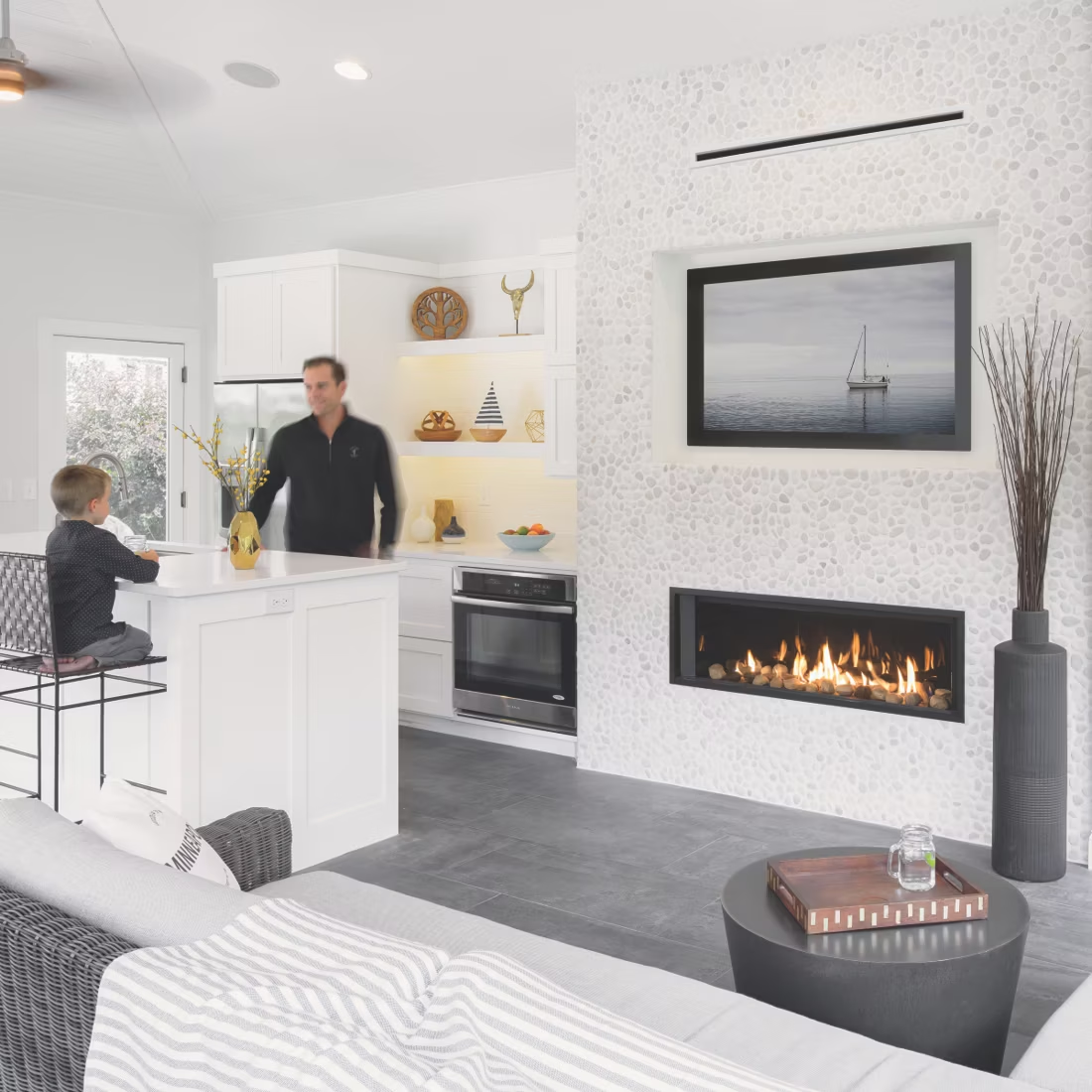
Yes—with an asterisk. Fireplaces are hot and TVs don't like heat. Either put a mantel between them to deflect rising warmth, or choose a fireplace with heat-management technology that creates a cool zone on the wall above—the wall stays around 125 degrees, barely warm, while the room still gets full heat. If you like clean lines and don't want a mantel, heat management is the answer.
Why is a fireplace insert so efficient?
An insert does two things: it seals the chimney completely, so you stop losing air you already paid to heat, and it radiates warmth into the room through the firebox and glass. Most add a heat-exchange fan that pulls cool room air underneath, wraps it around the hot firebox, and pushes it back out warm. Your home is more efficient before you've even lit the first fire.
Does a fireplace add value to my home?
On average, a fireplace adds back to the home about the same amount you spent installing it. Add the monthly savings from heating the rooms you actually use instead of the whole house—often hundreds of dollars a year—and the value case is strong before you even count what a fire does for how your family uses the room.
Can a fireplace actually lower my heating bill?
Yes—by creating a comfort zone. A furnace heats every square foot of the house just to warm the one room you're in; a gas fireplace on low burns roughly a sixth of the gas a typical furnace does. Set the furnace around 55–60 degrees as a baseline, then heat the rooms your family actually uses. Families who heat this way commonly save $20–$60 a month.
Nearby Dealers
Hearth shops serving Pennsburg and the surrounding area. Every listing shows whether it is a WhyFire partner, a dealer we have verified as authorized for the brands we recommend, or a local business carrying hearth products. No manufacturer pays for placement. How we verify dealers →
Pennsburg Ace Hardware
Independence Propane
Atlantic Building Prodcuts Inc
Krings Hearth & Home - Bechtelsville
Progressive Propane
Stoves N Stuff Ltd
Sequoia Supply Hatfield Showroom
Ambler Fireplace & Patio - Chalfont
Estates Chimney Sweep
Scandia Stoves Of Pa Inc.
Abe Fence / Landscape Supply
Tor Chimney & Fireplace
Glen-Gery Brick
Norristown Chimney
A Chimney King
Penn Hearth Llc.
Keller Enterprises
Krings Hearth & Home - Schnecksville
Find your gas fireplace in Pennsburg.
Tell us a bit about your home and we'll put together a free Project Guide & Parts List for your Pennsburg gas project—the right unit, the vent kit it needs, and a trusted local dealer to install it.
Find Your Fireplace →